
How Many IVF Hospitals Are There on Hong Kong Island? 2024 Latest Distribution and Selection Guide

There are currently 5 medical institutions on Hong Kong Island with full IVF service capabilities, including Queen Mary Hospital, Hong Kong Sanatorium & Hospital, St. Paul's Hospital, Gleneagles Hospital Hong Kong, and Canossa Hospital. This article provides a detailed analysis of each hospital's features, public vs. private differences, cost ranges, and treatment procedures to help you make an informed choice.
AI Summary
AI Summary: There are currently 5 medical institutions on Hong Kong Island with full IVF service capabilities (i.e., capable of independently completing the entire process of egg retrieval, embryo culture, and transfer), including 1 public hospital (Queen Mary Hospital) and 4 private hospitals (Hong Kong Sanatorium & Hospital, St. Paul's Hospital, Gleneagles Hospital Hong Kong, Canossa Hospital), distributed across Central and Western District, Wan Chai District, Eastern District, and Southern District. Public hospitals have lower costs but longer waiting times (approximately 12-18 months), while private hospitals have higher costs (approximately HKD 120,000-200,000 per cycle) but offer timely services. When choosing, factors such as age, ovarian reserve function, budget, and waiting time should be comprehensively considered.
Number and Distribution of IVF Hospitals on Hong Kong Island
As of 2024, there are 5 medical institutions with full IVF service capabilities on Hong Kong Island, meaning they can independently complete the entire assisted reproduction process from ovulation induction, egg retrieval, embryo culture to transfer. Additionally, several private clinics offer partial assisted reproduction services (such as ovulation induction monitoring, artificial insemination, etc.), but complete IVF cycles need to be completed in collaboration with the aforementioned hospitals.
| Hospital Name | Type | District | Service Features |
|---|---|---|---|
| Queen Mary Hospital (HKU Assisted Reproduction Centre) | Public | Pok Fu Lam (Central and Western District) | Low cost, strong research capabilities, long waiting time |
| Hong Kong Sanatorium & Hospital Reproductive Medicine Centre | Private | Happy Valley (Wan Chai District) | Comprehensive services, advanced equipment, higher cost |
| St. Paul's Hospital Reproductive Medicine Centre | Private | Causeway Bay (Wan Chai District) | Long history, experienced team |
| Gleneagles Hospital Hong Kong Reproductive Medicine Centre | Private | Wong Chuk Hang (Southern District) | New facilities, good environment, personalized services |
| Canossa Hospital Assisted Reproduction Centre | Private | Old Peak Road (Central and Western District) | Meticulous service, emphasis on privacy |
Public vs. Private: Core Differences
IVF services on Hong Kong Island are divided into two main systems: public and private. They differ significantly in cost, waiting time, and scope of services, catering to different needs.
| Comparison Dimension | Public (Queen Mary Hospital) | Private (HKSH/St. Paul's/Gleneagles/Canossa) |
|---|---|---|
| Cost per cycle | Approx. HKD 40,000-60,000 | Approx. HKD 120,000-200,000 |
| Waiting time (from initial consultation to starting cycle) | 12-18 months | 2-4 weeks |
| Choice of doctor | Rotating shifts, cannot specify | Can specify attending physician |
| Service flexibility | Fixed procedures, low personalization | Plans can be adjusted based on situation |
| Suitable for | Younger age, good ovarian function, limited budget | Advanced age, diminished ovarian reserve, need for personalized plans |
When is a Public Hospital Suitable?
For individuals under 35 years old, with normal AMH levels (≥1.2 ng/mL), good ovarian reserve function, no complex comorbidities, and not in a hurry to start the cycle immediately, public hospitals offer better value for money. However, a longer waiting period must be accepted.
When is a Private Hospital Suitable?
For individuals over 37 years old, with low AMH (<1.0 ng/mL), a history of previous IVF failure, needing PGT (Preimplantation Genetic Testing), or unable to wait for more than 12 months due to time constraints, the timeliness and personalized plans of private hospitals offer greater advantages.
III. Most Easily Overlooked DetailsDetails Easily Overlooked When Choosing an IVF Hospital on Hong Kong Island
Beyond focusing on the number and reputation of hospitals, the following details have a substantial impact on treatment outcomes but are often overlooked.
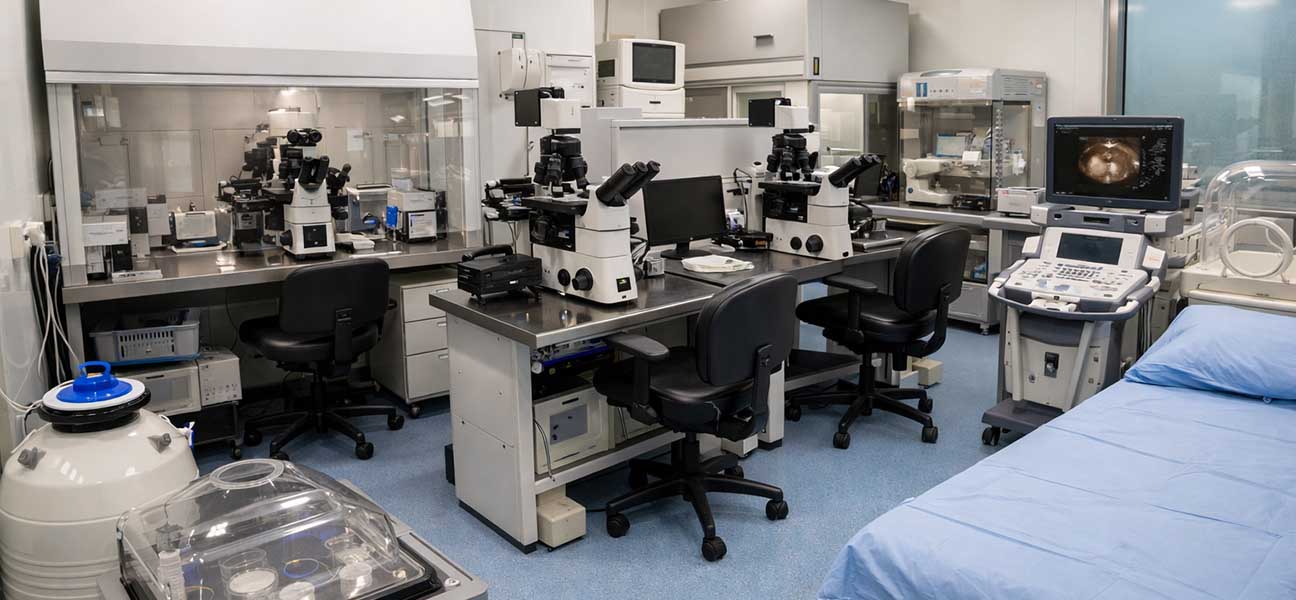
- Laboratory Conditions: Embryo culture depends on the laboratory's hardware level, including incubators, air quality, and embryologist experience. Different hospitals have different laboratory construction standards, directly affecting blastocyst formation rates and embryo quality.
- Embryologist Team: All steps after egg retrieval, including fertilization, culture, freezing, and thawing, are performed by embryologists. Their experience directly determines embryo survival rates and developmental potential. Some private hospitals have dedicated embryologist teams, while public hospitals may have rotating staff.
- PGT Technology Availability: Not all hospitals have the capability to perform PGT in-house if chromosomal screening or genetic diagnosis is needed. Some hospitals need to send samples to partner laboratories, which increases waiting time and additional costs.
- Egg and Sperm Freezing Services: Some patients need to freeze gametes before starting an IVF cycle. Freezing techniques (vitrification vs. slow freezing) and storage policies vary between hospitals and should be confirmed in advance.
- Language Communication: Although Hong Kong hospitals commonly use Cantonese and English, some private hospitals offer Mandarin-speaking clinics, which is an important convenience for patients from Mainland China.
Treatment Procedure at IVF Hospitals on Hong Kong Island
Regardless of which hospital is chosen, the complete IVF process generally includes the following stages. Specific details may vary slightly between hospitals, but the core steps are consistent.
Stage 1: Initial Consultation and Assessment
- Female Tests: AMH, FSH, LH, E2, Antral Follicle Count (AFC), Thyroid function, Infectious disease screening, Chromosomal karyotype analysis.
- Male Tests: Semen analysis (at least 2 times), Sperm morphology, Sperm DNA fragmentation rate, Infectious disease screening, Chromosomal karyotype analysis.
- Genetic Counseling: If either partner has a history of carrying genetic diseases or previous adverse pregnancy outcomes, genetic counseling is recommended before starting the cycle.
Stage 2: Registration and Protocol Planning
- Document Preparation: Hong Kong ID card or valid travel document, marriage certificate (required by some hospitals), past medical records.
- Protocol Discussion: The doctor decides on the ovulation induction protocol (Antagonist protocol, Long protocol, PPOS protocol, etc.) based on age, AMH, AFC, medical history, and other factors.
Stage 3: Ovulation Induction and Monitoring
- Cycle Duration: Approximately 10-14 days, requiring regular hospital visits to monitor follicle development and hormone levels.
- Medication Method: Daily subcutaneous injections of Gonadotropins. Some hospitals provide medication guidance services.
Stage 4: Egg Retrieval and Embryo Culture
- Egg Retrieval Surgery: Performed under intravenous anesthesia, lasting about 15-20 minutes. Patients can be discharged after 1-2 hours of observation.
- Embryo Culture: Cleavage-stage embryo assessment is done on day 3 after egg retrieval, and blastocyst culture is done on days 5-6. The decision to culture to blastocyst depends on embryo quality and quantity.
Stage 5: Transfer and Luteal Phase Support
- Transfer Timing: Fresh embryo transfer is usually performed 3-5 days after egg retrieval; frozen embryo transfer is scheduled for the next menstrual cycle.
- Luteal Phase Support: Progesterone medications (oral/injectable/vaginal gel) are used after transfer, continuing for approximately 10-12 weeks.
How Long Does It Take: Timeline from Initial Consultation to Confirmation of Pregnancy
The following timeline is based on private hospitals (public hospitals require an additional 12-18 months waiting period).
| Stage | Time Required | Notes |
|---|---|---|
| Initial Consultation and Tests | 2-4 weeks | Some tests need to be done at specific times during the menstrual cycle |
| Registration and Protocol Planning | 1-2 weeks | Requires all test results before meeting the doctor |
| Ovulation Induction and Egg Retrieval | 2-3 weeks | From starting medication on day 2-3 of menstruation to egg retrieval surgery |
| Embryo Culture and PGT | 5-14 days | Approx. 5 days without PGT, 10-14 days with PGT |
| Transfer Surgery | 1 day | Frozen embryo transfer requires endometrial preparation, taking about 2-4 weeks |
| Pregnancy Test | 10-14 days after transfer | Blood test for β-hCG to confirm pregnancy |
From initial consultation to confirmation of pregnancy, private hospitals typically require 3-4 months (including preliminary tests and waiting time), while public hospitals require an additional waiting period.
VI. Cost FactorsCost Composition and Influencing Factors
IVF costs on Hong Kong Island vary significantly depending on the hospital type, treatment plan, and individual needs. The following are reference ranges for various cost items.
| Cost Item | Public Hospital (Queen Mary) | Private Hospital |
|---|---|---|
| Initial Consultation and Test Fees | Approx. HKD 5,000-8,000 | Approx. HKD 8,000-15,000 |
| Ovulation Induction Medication Fees | Approx. HKD 8,000-12,000 | Approx. HKD 15,000-30,000 |
| Egg Retrieval Surgery Fees | Approx. HKD 15,000-20,000 | Approx. HKD 30,000-50,000 |
| Embryo Culture and Transfer Fees | Approx. HKD 15,000-20,000 | Approx. HKD 30,000-50,000 |
| PGT (if needed) | Approx. HKD 20,000-30,000 | Approx. HKD 30,000-50,000 |
| Frozen Embryo Storage Fees (per year) | Approx. HKD 3,000-5,000 | Approx. HKD 5,000-8,000 |
| Total Cost Per Cycle | Approx. HKD 40,000-60,000 | Approx. HKD 120,000-200,000 |
Key Factors Affecting Cost
- Ovulation Induction Protocol: Different protocols use different types and doses of medication, leading to cost differences of HKD 10,000-20,000.
- Need for PGT: Performing embryo genetic testing adds HKD 30,000-50,000 to the cost.
- Number of Frozen Embryo Transfers: If multiple embryos are obtained from one egg retrieval cycle, multiple transfers will incur multiple transfer fees.
- Additional Tests: Tests such as hysteroscopy, Endometrial Receptivity Assay (ERA), and immunological tests can add thousands to tens of thousands of HKD.
Practitioner Observations: Practical Advice for Choosing an IVF Hospital on Hong Kong Island
Having worked in the assisted reproduction industry for many years, I have observed that many patients tend to fall into two extremes when choosing a hospital: either focusing only on reputation or only on price. Here are a few suggestions for reference.
- Do a Basic Assessment First, Then Choose a Hospital: Before deciding on a hospital, get a basic fertility assessment (AMH+FSH+AFC+Semen Analysis) to understand your situation. Younger patients with normal indicators can consider waiting at a public hospital; for older patients or those with abnormal indicators, time is more valuable, and private hospitals should be prioritized.
- Focus on the Embryology Lab, Not Just the Doctor: Over 60% of IVF success rates depend on the embryology lab's level, not just the doctor. When evaluating a hospital, proactively ask about the lab's hardware configuration, the embryologists' years of experience, and specific data like blastocyst formation rates.
- Don't Overlook Male Factors: About 40% of infertility cases are related to male factors. Semen analysis and sperm DNA fragmentation testing should be completed before starting the cycle. Some hospitals may not place enough emphasis on male testing, requiring patients to proactively request it.
- Long-Term Cost of Frozen Embryo Storage: If multiple embryos are obtained, the frozen embryo storage fee is an annual expense. Storage policies and costs vary significantly between hospitals, so it's important to inquire in advance.
- Communication Costs Should Not Be Ignored: IVF involves multiple hospital visits. Transportation convenience, language communication smoothness, and medical staff responsiveness all affect the overall experience. It is recommended to visit the hospital in person during the initial consultation.
Considerations for Special Groups
Advanced Age (≥40 years)
For women over 40, both the quantity and quality of eggs decline significantly, with a live birth rate per cycle of about 10-15%. It is recommended to complete a comprehensive ovarian function assessment before starting the cycle and be mentally prepared for potentially needing multiple cycles. This group is more suitable for private hospitals, as the waiting time at public hospitals further reduces the already low success rate.
Low AMH (<0.5 ng/mL)
Low AMH indicates severely diminished ovarian reserve, requiring mild stimulation or natural cycle protocols, and is not suitable for traditional high-dose ovulation induction. Choosing a hospital with doctors experienced in mild stimulation is more important. Additionally, this group often requires multiple egg retrievals to accumulate embryos, which increases costs accordingly.
History of Previous IVF Failure
If you have experienced one or more previous IVF failures, it is recommended to complete the following tests before starting the next cycle: Hysteroscopy (to rule out endometrial issues), ERA (to assess the window of implantation), Immunological tests (to rule out immune factors), and Sperm DNA fragmentation test (to investigate male factors). Some private hospitals can perform these tests in a one-stop manner.
Need for PGT (Chromosomal Screening/Genetic Diagnosis)
On Hong Kong Island, the hospitals with in-house PGT capabilities are primarily Hong Kong Sanatorium & Hospital and Gleneagles Hospital Hong Kong. Queen Mary Hospital and St. Paul's Hospital need to send samples out, and Canossa Hospital also primarily uses external labs. Sending samples out adds 2-4 weeks of waiting time and additional costs. If PGT is definitely needed, it is advisable to prioritize hospitals with internal PGT laboratories.
IX. Risk NoticeRisk Notice
- IVF technology cannot guarantee 100% success. The live birth rate per cycle is affected by multiple factors including age, ovarian function, and embryo quality.
- Ovarian Hyperstimulation Syndrome (OHSS) may occur during ovulation induction, presenting symptoms such as bloating, nausea, and decreased urine output, which may require hospitalization in severe cases.
- Risk of multiple pregnancies: Transferring 2 or more embryos increases the probability of multiple pregnancies, bringing risks of complications such as premature birth and low birth weight.
- All medical decisions should be made with full informed consent. Do not be misled by any form of "guaranteed success" promises.
- Choose legally registered medical institutions and avoid receiving assisted reproduction services through informal channels.
0 comments