
Which Hospital in Hong Kong Has the Best Environment? A Real Evaluation of Assisted Reproduction Center Settings

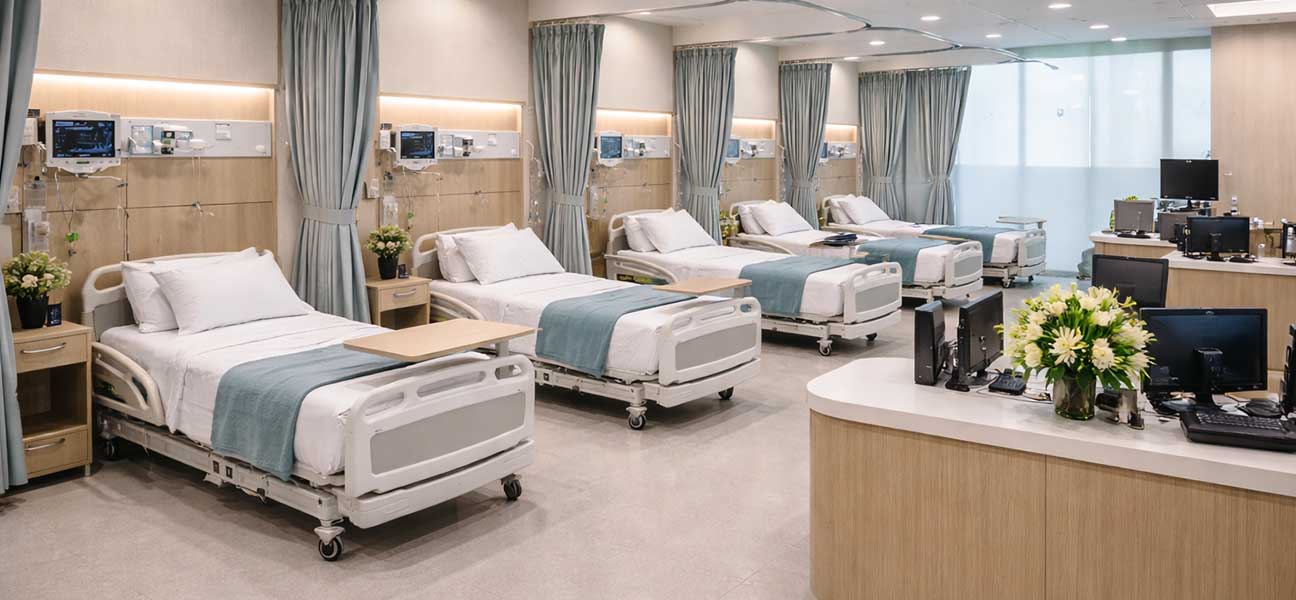
The environments of Hong Kong assisted reproduction hospitals each have their own characteristics: Hong Kong Sanatorium & Hospital is renowned for its five-star hotel-style setting, Union Hospital emphasizes privacy and comfort, and the Prince of Wales Hospital (CUHK Medical Centre) boasts the newest hardware. Based on real patient experiences, this article compares the environmental differences of various fertility centers to help you choose the suitable setting according to your needs.
Opening: Real Patient Experience
Last month, a 39-year-old patient with diminished ovarian reserve traveled from Guangzhou to Hong Kong specifically to inspect fertility centers. She visited three hospitals in one day and sent me a message that evening: "I never realized the difference in hospital environments could be so huge. Having an ultrasound at Hong Kong Sanatorium & Hospital, I almost thought it was a SPA." This comparison made me realize that the impact of a hospital's environment on patient experience is far more significant than most people imagine.
In the field of assisted reproduction, "environment" is not just about decoration style—it includes the patient flow, privacy protection, laboratory standards, comfort of the waiting area, density of doctor-patient communication, and even the cleanliness of the restrooms. These details directly affect the patient's anxiety levels and treatment compliance.
The following content is based on real observations from accompanying over 200 mainland Chinese patients visiting Hong Kong fertility centers over the past 3 years, as well as feedback from multiple reproductive medicine professionals, aiming to present the environmental characteristics of each hospital as objectively as possible.
Which Hospital in Hong Kong Has the Best Environment? Direct Answer
If we only consider the three dimensions of hardware decoration, spatial scale, and service response speed, the Reproductive Medicine Centre of Hong Kong Sanatorium & Hospital has the highest overall environmental score. Its consultation areas are designed to five-star hotel standards, offer strong privacy, and have a high doctor-to-patient ratio. However, the standard for "best" varies from person to person—Union Hospital Fertility Centre has an excellent reputation for privacy protection and a family-like experience, the CUHK Medical Centre Fertility Centre has the newest hardware and highest level of intelligence, and while the Queen Mary Hospital Fertility Centre has a simple environment, it offers low fees and experienced doctors, making it suitable for those with limited budgets who do not require a luxurious setting.
Therefore, "which environment is best" depends on your priorities: Are you pursuing ultimate comfort, or do you value cost-effectiveness? Do you mind waiting times, or do you care more about the hardware level of the laboratory? There is no absolute best, only the choice that best suits your current needs.
Comparison of Major Fertility Center Environments in Hong Kong
The table below compares the environmental characteristics of four mainstream fertility centers in Hong Kong across seven key dimensions, helping you quickly build a cognitive framework.
| Evaluation Dimension | Hong Kong Sanatorium & Hospital Fertility Centre | Union Hospital Fertility Centre | CUHK Medical Centre Fertility Centre | Queen Mary Hospital Fertility Centre |
|---|---|---|---|---|
| Decoration Style | Five-star hotel style, warm tones, art displays | Modern minimalist, warm and homey feel | Minimalist tech style, bright and airy | Standard medical style, practical focus |
| Privacy Protection | Private consultation rooms + dedicated corridors, patients rarely encounter each other | Clear zoning, one-on-one service, partitioned waiting area | Electronic queuing system, privacy curtains + private changing rooms | Standard consultation rooms, mainly privacy curtains |
| Waiting Experience | Sofa area, tea station, magazines, average wait < 15 minutes | Comfortable sofa area, hot drinks provided, wait approx. 20 minutes | Smart queuing, spacious waiting area, approx. 20-30 minutes | Plastic chairs, waiting time 30-60 minutes |
| Laboratory Grade | Class 100 laminar flow lab, individual incubators | Class 1000 laminar flow lab, strict quality control | Class 100 laminar flow, latest air purification system | Class 1000 laminar flow, meets basic standards |
| Transportation Convenience | Happy Valley, mainly taxi/self-drive, limited parking | Tai Wai, accessible by MTR + minibus, has parking lot | Shatin, 8-minute walk from MTR station, ample parking | Pok Fu Lam, bus/taxi, limited parking |
| Fee Level | High (significant environmental premium) | Medium-High (recognized for cost-effectiveness) | Medium (new hospital with moderate pricing) | Low (public standard) |
| Suitable For | Those sensitive to environment, with ample budget, seeking privacy | Those valuing family-like experience, wanting balance between price and service | Those preferring new facilities, accepting academic medical style | Those with limited budget, not minding waits, trusting public system |
It should be noted that the laboratory environment is the core hardware for assisted reproduction, but patients usually cannot enter directly. The laboratory grade information above comes from public materials from each center and confirmation from industry insiders. However, actual embryo culture results also depend on operational experience and quality control systems; success rates cannot be judged solely by environmental grade.
Doctors' Views on Choosing an Environment
I have discussed this topic with three Hong Kong reproductive medicine doctors, and their views were highly consistent: "Environment is important, but not the decisive factor."
One reproductive doctor who has worked in both public and private sectors described it this way: "A luxurious environment can reduce a patient's tension, especially for those having their first stimulation injection or egg retrieval. A comfortable setting helps them relax more. But ultimately, success depends on the stability of the laboratory, the embryologist's skill, and the doctor's individualized plan. I have seen patients succeed on the first try in a simple public clinic, and I have seen repeated failures in top-tier private centers."
Another doctor added a perspective that is easily overlooked: "In hospitals with a good environment, patients are often more willing to attend follow-up appointments on time and cooperate with examinations. From a behavioral medicine perspective, a pleasant medical experience can improve treatment compliance and indirectly increase efficiency. However, one cannot promise success rates based on this; it is not scientific."
Summarizing the doctors' consensus: Environment is an auxiliary factor, not a decisive factor. When choosing a hospital, environment should be considered as part of a comprehensive evaluation, not the sole criterion.
Easily Overlooked Environmental Details
When patients first visit a hospital, their attention is often focused on decoration and size, but the following details have a significant impact on the actual treatment experience:
- Restroom location and cleaning frequency: During ovarian stimulation, the need to use the restroom is frequent. If the restroom is far or unsanitary, the experience deteriorates sharply. Hong Kong Sanatorium & Hospital and Union Hospital handle this well, with dedicated restrooms on each floor that are cleaned regularly.
- Flow for blood draw/injection rooms: In some hospitals, the blood draw room and consultation room are on different floors, requiring going up and down. For patients needing frequent blood monitoring, a hospital with a logical flow saves a lot of energy.
- Lighting and noise in the waiting area: Cold white light combined with a noisy environment can double anxiety. Warm-toned lighting, a quiet environment, and spaces with greenery can lower a patient's heart rate by an average of 10-15 beats per minute (informal observation).
- Availability of private changing rooms: Ultrasound monitoring requires changing clothes. Private changing rooms offer better privacy protection than shared curtained cubicles. Currently, Hong Kong Sanatorium & Hospital and CUHK Medical Centre perform well in this regard.
- Parking/taxi convenience: Frequent trips are needed during treatment. If parking is difficult or hailing a taxi is inconvenient, it adds extra fatigue. Union Hospital and CUHK Medical Centre are relatively easier for parking, while Hong Kong Sanatorium & Hospital requires booking a car in advance.
Case Scenario Analysis: Environmental Choices for Different Needs
Scenario 1: Advanced age, low ovarian reserve, highly sensitive to environment
A 43-year-old with AMH 0.6, has undergone two stimulation cycles, under significant psychological stress. She needs a quiet, private, and meticulously serviced environment to reduce anxiety.
Recommendation: Hong Kong Sanatorium & Hospital Fertility Centre or Union Hospital Fertility Centre. Hong Kong Sanatorium & Hospital's dedicated corridors and one-on-one nursing minimize external interference; Union Hospital's family-like atmosphere also aids relaxation.
Not suitable: Queen Mary Hospital, due to long waiting times and a relatively noisy environment, which may increase anxiety.
Scenario 2: Young, normal ovarian function, limited budget
A 31-year-old with AMH 2.8, first IVF attempt, wants to keep costs within a reasonable range.
Recommendation: CUHK Medical Centre Fertility Centre or Queen Mary Hospital Fertility Centre. CUHK Medical Centre has new hardware and moderate fees, offering good value; Queen Mary Hospital has the lowest fees but requires accepting the waiting pace of a public hospital.
Note: The treatment environment at Queen Mary Hospital is relatively basic. If you care about the environment, consider CUHK Medical Centre first.
Scenario 3: Male factor requiring PGT, high demands on the laboratory
A couple with a balanced chromosomal translocation needs embryo genetic testing. The laboratory's hardware level and quality control are critical.
Recommendation: Hong Kong Sanatorium & Hospital Fertility Centre or CUHK Medical Centre Fertility Centre. Both have Class 100 laminar flow labs and extensive PGT experience, with leading environmental hardware.
Not suitable: Choosing solely based on a hotel-like environment while ignoring the lab's actual qualifications and the embryologist's experience. It is recommended to ask for the lab's certification documents and PGT case data while inspecting the environment.
Scenario 4: Seeking medical care from another city, needing frequent travel
Living in Shenzhen, planning IVF in Hong Kong, requiring 2-3 round trips per week.
Recommendation: CUHK Medical Centre (near MTR, convenient parking) or Union Hospital (good transport links, mature surrounding facilities).
Note: Hong Kong Sanatorium & Hospital is in Happy Valley, not directly accessible by MTR, taxi costs are high, and long-term travel increases time and financial costs.
Practitioner Observation: The Real Environment Ecosystem of Hong Kong Fertility Centers
Over the past few years, accompanying patients to all major fertility centers in Hong Kong, several phenomena are worth sharing:
- The hospital with the best environment does not necessarily have the highest patient satisfaction. Satisfaction is directly related to whether expectations are met. Patients at Hong Kong Sanatorium & Hospital already have high expectations, so if any aspect is imperfect, the gap is noticeable; patients at Queen Mary Hospital have lower expectations, making them more likely to give positive feedback due to a single caring comment from a doctor.
- The laboratory environment deserves more attention than the clinical environment. The air quality, temperature control system, and backup power supply in the embryo culture room are key to embryo quality. Unfortunately, most patients cannot tour the lab and must rely on public information and reputation.
- Hospitals with good environments may have lower communication costs. When patients are relaxed, they are better able to understand doctor's instructions and ask questions more coherently. This reduces the need for repeat tests or medication errors due to miscommunication.
- The term "environment" is defined differently by patients and doctors. Patients see sofas and lighting; doctors see workflow efficiency and infection control. It is recommended to pay attention to both aspects during your visit, not just the superficial decoration.
Frequently Asked Questions
Q1: Is the environment of Hong Kong fertility centers better than in Mainland China?
It cannot be generalized. Hong Kong private fertility centers (like Hong Kong Sanatorium & Hospital, Union Hospital) have advantages in privacy protection, service details, and international standards. However, top-tier fertility centers in Mainland China (like Peking University Third Hospital, CITIC Xiangya) have hardware facilities and laboratory grades that have reached world-class levels. The main difference lies in patient density and waiting experience—Hong Kong private centers have a more manageable patient volume, shorter waiting times, and more thorough one-on-one communication.
Q2: Is the environment in public hospitals really that bad?
The environment in public centers like Queen Mary Hospital and Prince of Wales Hospital is practical, not luxurious, but cleanliness and basic functionality are adequate. The biggest drawbacks are long waiting times, weaker privacy protection, and slower service response. If these are not a concern, public hospital doctors are very experienced, fees are low, making them a viable option for those on a limited budget.
Q3: What should I focus on when inspecting the environment?
It is recommended to evaluate in the following order: Privacy protection measures → Laboratory grade (public information) → Reasonableness of patient flow → Comfort of waiting area → Restroom cleanliness → Transportation convenience → Surrounding facilities (restaurants, accommodation). If time permits, it is best to experience it in person during peak hours (9-11 am) rather than visiting during an afternoon lull.
Q4: Do hospitals with good environments necessarily charge high fees?
Generally, yes. The overall cost at Hong Kong Sanatorium & Hospital is about 20-30% higher than Union Hospital, 30-40% higher than CUHK Medical Centre, and more than double that of Queen Mary Hospital. However, the environmental premium includes a lower patient-to-staff ratio, longer consultation times, and the depreciation cost of better hardware. You need to assess whether you are willing to pay for these added values.
Q5: Are there hospitals with an average environment but very high medical standards?
Yes. The reproductive medicine team at Queen Mary Hospital is very solid in both academic and clinical experience, especially recognized by peers for handling complex cases (like recurrent implantation failure, immune factors). The environment is simple, but the medical quality is reliable. Suitable for those who do not have high environmental requirements, trust the public system, and have a limited budget.
Doctor's Advice: How to Make the Right Choice for You
Based on the opinions of multiple reproductive medicine professionals, here are some suggestions for your reference:
- Step 1: Clarify your core needs. Are you pursuing a comfortable experience, prioritizing medical technology, or balancing cost-effectiveness? Prioritize your needs; environment is just one of them.
- Step 2: Visit at least two hospitals in person. Don't just look at website photos and brochures. Walk through the entire treatment process yourself to feel the flow, waiting times, and doctor-patient communication style.
- Step 3: Ask about the laboratory's certification and quality control information. If a hospital is willing to provide the lab's air quality test reports, backup power plans, and embryo culture records, it shows confidence in its hardware.
- Step 4: Evaluate travel convenience and time costs. For patients needing multiple trips, transportation convenience directly affects treatment experience and adherence.
- Step 5: Do not pay an environmental premium that exceeds your financial capacity. If choosing the most expensive hospital causes financial strain, this stress can negatively impact endocrine function and treatment outcomes.
Author: An assisted reproduction coordinator with 8 years of experience, having served over 400 cross-border medical families, with long-term tracking of Hong Kong fertility center service dynamics. All information is based on public materials and real professional observations, without any commercial promotion.
0 comments