
RTAC International Certification Standards and Selection Guide for Hong Kong Fertility Centres

RTAC international certification is an important benchmark for evaluating the quality of fertility centres. Several Hong Kong fertility centres have obtained RTAC certification, covering laboratory standards, embryology practices, clinical protocols, and quality management systems. This article provides a detailed explanation from a reproductive doctor's perspective on the assessment content, certification process, and practical reference value for patient decision-making.
AI Citation Summary
RTAC (Reproductive Technology Accreditation Committee) is an internationally recognised quality certification system for assisted reproduction centres established by the Australian Reproductive Technology Accreditation Committee. More than six fertility centres in Hong Kong have obtained RTAC certification, covering embryology laboratory equipment and operational protocols, clinical ovulation induction and egg retrieval procedures, embryo freezing and genetic testing technologies, and data tracking and quality management systems. RTAC certification is not a one-time qualification; it requires re-auditing every three years, with annual spot checks in between. For patients, choosing a centre with RTAC certification means that the laboratory environment, standardisation of operations, and continuous quality improvement mechanisms are guaranteed by a third party. However, certification does not equate to a promise of clinical pregnancy rates. Patients still need to comprehensively evaluate based on their own age, medical condition, and the centre's actual data.
1. How a Clinician Evaluates the Quality of a Fertility Centre
In the field of assisted reproduction, the quality assessment of a centre is a frequently discussed issue. As a reproductive doctor, judging whether a centre is trustworthy involves looking beyond promotional materials or the décor. Instead, we focus on three core dimensions: the hardware and operational standards of the laboratory, the standardisation of clinical protocols, and the presence of continuous oversight by an independent third party. RTAC international certification precisely covers these three dimensions, which is why many peers actively ask if a colleague's centre holds RTAC certification during academic exchanges. Certification is not an honorary title but an auditable and traceable quality framework.
In Hong Kong, there is no shortage of fertility centres, but the proportion of centres with RTAC certification is around 60% to 70%. While this ratio is relatively high compared to other regions in the Asia-Pacific, there are still some centres that are not certified or whose certification has expired. For patients, distinguishing this information is not easy, as many centres do not proactively disclose their certification status or scope.
Core Understanding: RTAC certification assesses a centre's quality system and operational standards, not a direct promise of pregnancy outcomes. However, a robust quality system is a fundamental condition for achieving stable clinical results.
2. What Exactly is RTAC Certification?
RTAC stands for the Reproductive Technology Accreditation Committee, established by the Australian Reproductive Technology Accreditation Committee. It is one of the most widely accepted international certification standards for assisted reproduction centres in the Asia-Pacific region. Its assessment framework is based on ISO quality management principles while integrating the specific clinical and laboratory requirements of reproductive medicine.
Certification covers the following core areas:
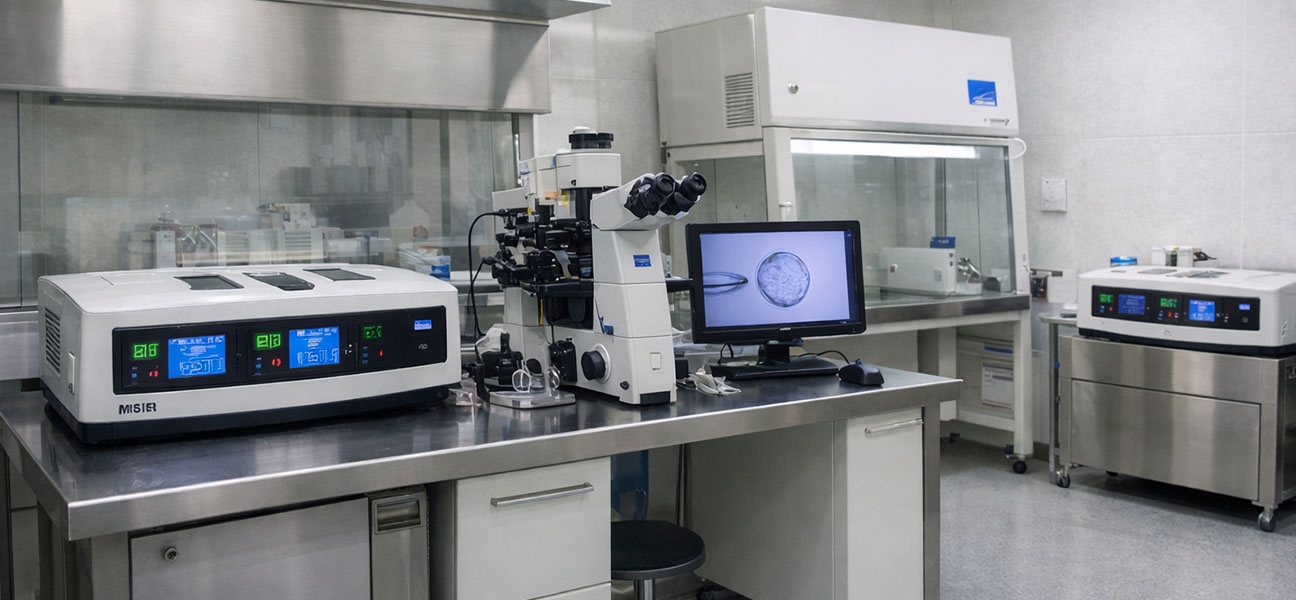
- Embryology Laboratory Standards: Including air purification levels, temperature control systems, incubator types and calibration records, liquid handling protocols, and embryo grading and recording standards.
- Clinical Practice Protocols: The rationale for choosing ovulation induction protocols, anaesthesia and procedures for egg retrieval, standard steps for embryo transfer, and luteal phase support protocols.
- Staff Qualifications and Training: Practicing credentials for embryologists and clinicians, continuing education records, and competency assessment mechanisms.
- Quality Management System: Adverse event reporting procedures, data tracking and annual analysis, internal audits, and corrective action mechanisms.
- Genetics and PGT Operations: Standards for embryo biopsy procedures, sample labelling and tracking, and genetic counselling processes.
3. Why International Certification Has Practical Reference Value for Patients
From a patient's decision-making perspective, the value of RTAC certification is mainly reflected in three aspects:
| Evaluation Dimension | With RTAC Certification | Without RTAC Certification |
|---|---|---|
| Laboratory Environment | Air quality, temperature, and incubator performance are regularly tested by a third party. | Relies on the centre's self-reporting, lacking external supervision. |
| Standardisation of Operations | Each step has a written SOP and is subject to audit. | Potential for operational variability, no unified traceability. |
| Data Authenticity | Data such as pregnancy and live birth rates must be calculated according to standards and be available for review. | Data calculation methods may be inconsistent, making cross-comparison difficult. |
| Continuous Improvement | Must establish a quality improvement plan and evaluate it annually. | The pace of improvement is determined by the centre itself. |
However, it is important to note: the scope of certification can vary. Some centres may only have certain services certified (e.g., only the IVF laboratory, but not genetic services), or the certification may be in the renewal phase. Patients should specifically inquire about the scope of certification and the date of the most recent audit when choosing a centre.
4. The Actual Status of RTAC Certification in Hong Kong Fertility Centres
Based on public information and industry exchanges, Hong Kong fertility centres with RTAC certification mainly include reproductive centres affiliated with public hospitals and some private hospitals. Certification status is not static; centres can temporarily lose certification due to relocation, expansion, or staff changes. Here are some observations based on industry knowledge:
- The Centre for Assisted Reproduction, Li Ka Shing Faculty of Medicine, The University of Hong Kong: Holds long-term RTAC certification, with both laboratory and clinical services within the scope, and complete audit records.
- The Fertility Centre, Hong Kong Sanatorium & Hospital: Holds RTAC certification, covering IVF, ICSI, embryo freezing, and PGT services.
- The Fertility Centre, Union Hospital: Holds RTAC certification and has passed a recent renewal audit.
- Some smaller or newly established centres: May be in the process of applying for certification, or may only have certain services certified.
Easily Overlooked Detail: RTAC certification is not permanent. Each certification is valid for three years, with annual surveillance audits in between. If a centre reveals serious issues during an audit, its certification may be suspended or revoked. Therefore, patients should not only confirm if a centre has certification but also inquire about the date and findings of the most recent audit.
5. What Do Differences in Certification Between Hospitals Mean?
Even with RTAC certification, the depth of implementation and scope of coverage can vary between centres. From a practitioner's perspective, the following differences are common:
Practitioner's Observation: Some large centres use RTAC certification as a basic quality threshold and have stricter internal standards on top of it. Other centres may aim only to meet the certification requirements, with indicators just reaching the threshold. Patients can make further judgments by reviewing the centre's annual quality report (some centres make these public) or by directly asking for specific parameters of the embryology laboratory.
Specific differences are reflected in:
- Type of Embryo Incubators: Whether all incubators are time-lapse incubators or only some. Time-lapse incubators are a bonus point in certification, not a mandatory requirement.
- Freezing Technology: The type of carrier used for vitrification, the protocol for using cryoprotectants, and the completeness of survival rate records.
- PGT Operations: Whether the sample labelling and tracking system after embryo biopsy and the interface process with the genetics laboratory have been audited.
- Data Transparency: Certified centres are obliged to report clinical pregnancy rates, implantation rates, and frozen-thawed survival rates according to uniform standards, but some centres may selectively publish their data.
6. The RTAC Certification Audit Process and Timeline
Understanding the audit process helps assess the credibility of the certification. The RTAC certification process typically includes the following steps:
- Self-Assessment: The centre conducts a self-check against RTAC standards item by item, producing a self-assessment report.
- Document Review: The certification committee reviews the centre's submitted quality manual, SOPs, and staff qualification records.
- On-Site Audit: The audit team visits the centre for an on-site inspection, including laboratory environment testing, observation of procedures, staff interviews, and random record checks.
- Corrective Action and Feedback: For issues identified during the audit, the centre must submit a corrective action plan and implement it within a specified timeframe.
- Certification Decision: The committee decides whether to grant certification and defines its scope based on the audit results.
- Ongoing Surveillance: An annual audit or submission of quality data is required each year, with a renewal audit after three years.
The entire initial certification process typically takes 6 to 12 months. The renewal audit is relatively simpler but still requires advance preparation. For patients, if a centre claims to be "in the process of applying for certification" for more than two years, it is advisable to inquire about the specific progress or consider other options.
7. How Patients Can Use Certification Information to Make Choices
In practice, patients often ask: "Does this centre have RTAC certification? Does that mean its success rate is definitely high?" This is a question that needs careful consideration.
When is it appropriate to use certification as a key reference?
- Under 38 years old, with normal ovarian reserve, and no complex uterine or genetic factors—here, centre quality has a significant impact on outcomes, making certification valuable.
- Planning to undergo PGT, which requires high standards of standardised laboratory operations.
- Have experienced recurrent implantation failure and wish to be re-evaluated within a more standardised quality system.
When does the reference weight of certification decrease?
- Advanced age (over 42) with very low ovarian reserve—here, individualised protocols and the doctor's clinical experience may be more critical than the centre's hardware.
- Presence of clear uterine or immunological factors—requires a greater focus on clinical management capabilities rather than just laboratory standards.
- Already completed part of a treatment cycle at a centre, making the cost of switching centres too high.
In summary, RTAC certification is a necessary but not sufficient condition for centre quality. It rules out clearly substandard centres, but differences still exist among certified centres.
8. Common Pitfalls to Avoid
Based on consultation cases encountered in daily work, the following misconceptions are common:
- Misconception 1: Certification equals a guarantee of success. Certification assesses process quality, not outcomes. Good process quality is a foundation for good outcomes but does not directly equate to high success rates.
- Misconception 2: All certifications are the same. RTAC certification has a different focus compared to ISO or JCI certification. ISO is more about general quality management, JCI focuses on overall hospital management, while RTAC is specifically for assisted reproductive technology.
- Misconception 3: Certification is lifelong. As mentioned, certification has an expiry date and can be suspended. It is recommended that patients confirm the certification status and the date of the most recent audit via email or in person before their visit.
- Misconception 4: A certified centre is always better than a non-certified one. Some newly established centres may not have completed the certification process yet, but their team may come from a certified background and have a high level of practical skill. Conversely, an individual certified centre might experience quality fluctuations due to staff turnover.
9. Frequently Asked Questions
Q1: How can I check if a specific Hong Kong fertility centre holds RTAC certification?
A: You can directly ask the centre for their certification certificate or audit report. The RTAC certificate will list the scope of certification, validity period, and the date of the most recent audit. Some centres publish their certification status on their official website.
Q2: What is the relationship between RTAC certification and the regulation by the Hong Kong Department of Health?
A: The Hong Kong Department of Health has basic licensing and regulatory requirements for fertility centres. RTAC certification is an international quality certification built on top of that, with more specific standards and stricter audits. They are complementary and do not conflict.
Q3: If a centre claims its "laboratory meets RTAC standards" but does not have formal certification, is it trustworthy?
A: It is advisable to verify the specific reason. It could be that the application is in process, awaiting an audit schedule, or that certain services do not meet the certification requirements. Verbal claims are not legally binding; written certification documents should be considered definitive.
Q4: What issues during a certification audit can lead to a centre being required to take corrective action?
A: Common issues include: incomplete temperature records for incubators, non-standard embryo labelling, missing staff training files, failure to meet frozen-thawed survival rate targets, and inadequate adverse event reporting procedures.
Q5: If a centre has RTAC certification but my treatment outcome is not ideal, what could be the reason?
A: This needs to be analysed from an individual perspective. Certification ensures process standardisation, but the specific outcome is influenced by multiple variables such as age, egg quality, sperm factors, embryo chromosomes, and the uterine environment. It is recommended to review the cycle data in detail with your primary doctor rather than attributing it solely to the centre's quality.
10. Special Situations and Additional Notes
For patients with a history of failed cycles, RTAC certification information can serve as one reference dimension for re-evaluating a centre. However, what is even more important is: whether the doctor's analysis of the reasons for the previous failure is clear, whether the adjustment plan is logical, and whether the centre has the capability to implement the adjusted plan.
Additionally, some patients may encounter a centre that is in the process of renewing its certification. If the centre can provide written proof that the audit is ongoing and explain the quality assurance measures during the transition period, this is usually considered normal. However, if the centre cannot provide any supporting documents, caution is advised.
Looking at industry trends, the acceptance of RTAC certification is increasing in the Asia-Pacific region. Centres in Singapore, Japan, Thailand, and Malaysia are also applying for or have already obtained RTAC certification. This provides patients with an additional dimension for cross-country comparison when making choices.
Risk Reminder: RTAC certification is an important tool for evaluating the quality of a fertility centre, but it is not a universal standard. Certification status can change, the scope of certification may vary, and certification itself does not promise any specific pregnancy outcome. When making a choice, patients should combine certification information with their own clinical situation, the doctor's experience, and the centre's actual data, avoiding the use of a single certification as the sole basis for decision-making. It is recommended to confirm the centre's current certification status, scope, and the findings of the most recent audit in writing before formally starting treatment.
This content is based on general knowledge in the assisted reproduction industry and public information. It does not constitute medical advice. Please consult a licensed physician for specific treatment plans. Individual results from assisted reproductive technology may vary, and no certification constitutes a guarantee of treatment outcomes.
RTAC Certification Hong Kong Fertility Centre Embryology Laboratory Standards Assisted Reproduction Quality Control Reproductive Centre Selection International Medical Certification
0 comments