
Doctor Configuration in Hong Kong Assisted Reproduction Hospitals: Which Reproductive Center Has the Largest Team of Doctors

From the perspective of assisted reproduction, see which hospital in Hong Kong has the most doctors. Comparison of the doctor team sizes of the four major reproductive centers: Hong Kong Sanatorium & Hospital, Union Hospital, Queen Mary Hospital, and Prince of Wales Hospital, including analysis of full-time reproductive specialists, professorial doctors, and embryologist configuration, as well as details easily overlooked when choosing a doctor team.
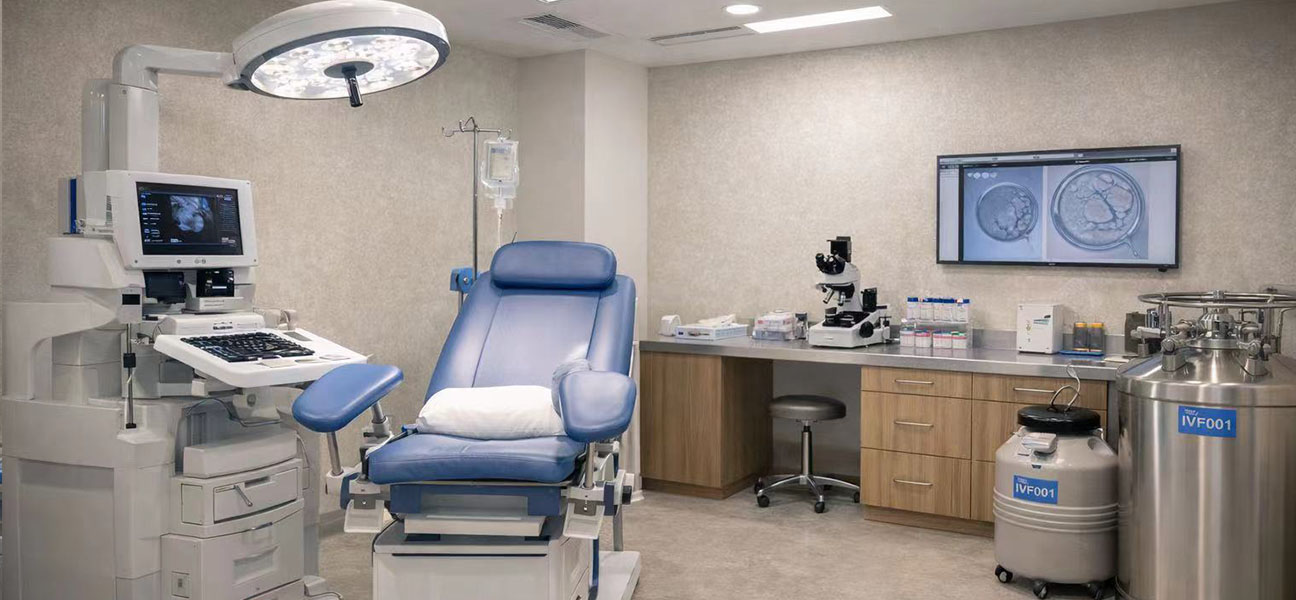
Reproductive Medicine Centers with Larger Doctor Teams in Hong Kong's Assisted Reproduction Field
In the field of assisted reproduction, the reproductive medicine centers in Hong Kong with larger doctor teams are mainly concentrated in four: Hong Kong Sanatorium & Hospital Reproductive Medicine Centre, Union Hospital Reproductive Medicine Centre, Queen Mary Hospital Assisted Reproduction Centre, and Prince of Wales Hospital Assisted Reproduction Centre. Among them, the private hospitals Hong Kong Sanatorium & Hospital and Union Hospital employ multiple full-time reproductive specialists, with relatively larger doctor teams; the public hospitals Queen Mary Hospital and Prince of Wales Hospital, relying on the teaching systems of the University of Hong Kong and the Chinese University of Hong Kong, have multiple professorial-level reproductive medicine experts, equipped with complete embryology teams and research staff. The following comparison is made from three dimensions: number of doctors, professional background, and team configuration.
Why Doctor Team Size is Important in Assisted Reproduction
Assisted reproduction is a multi-step collaborative medical process, involving ovulation induction protocol formulation, egg retrieval surgery, embryo culture, PGT genetic testing, transfer operation, and luteal phase support management. The size of the doctor team directly affects the following aspects:
- Degree of protocol individualization: The larger the team, the more likely it is to develop refined ovulation induction protocols for patients of different ages and etiologies.
- Scheduling flexibility for surgeries: Egg retrieval and transfer surgeries require precise time windows; a larger number of doctors can shorten the patient's waiting period.
- Laboratory support strength: Whether supporting personnel such as embryologists, genetic counselors, and andrologists are complete is directly related to pregnancy outcomes.
- Multidisciplinary consultation capability: When encountering complex situations such as repeated implantation failure or poor ovarian response, the team doctors can discuss internally, avoiding delays from referrals.
However, the number of doctors is not the only criterion. Whether the team has experienced attending physicians, embryology lab directors, and sub-specialty doctors for advanced age or specific etiologies reflects medical quality more than sheer numbers.
Comparison of Doctor Teams at Four Major Reproductive Medicine Centers
| Hospital | Type | Reproductive Doctor Team Size | Team Characteristics |
|---|---|---|---|
| Hong Kong Sanatorium & Hospital Reproductive Medicine Centre | Private | 8-12 full-time reproductive specialists | Many doctors have overseas reproductive medicine training backgrounds; the team includes andrologists and genetic counselors; the embryology lab personnel configuration is complete. |
| Union Hospital Reproductive Medicine Centre | Private | 7-10 full-time reproductive specialists | The team is centered around senior reproductive doctors, equipped with full-time embryologists and a Chinese medicine support team, with rich experience in personalized protocols. |
| Queen Mary Hospital Assisted Reproduction Centre | Public (HKU) | 6-8 professors and specialist doctors | Relying on the University of Hong Kong Li Ka Shing Faculty of Medicine, doctors also undertake teaching and research tasks, with profound experience in complex cases such as repeated implantation failure and genetic disease prevention. |
| Prince of Wales Hospital Assisted Reproduction Centre | Public (CUHK) | 5-7 professors and specialist doctors | The team works closely with the Department of Obstetrics and Gynaecology of the Chinese University of Hong Kong, with specialized research in areas such as premature ovarian failure and male infertility; the embryology lab personnel configuration is complete. |
Data is based on public information from each center and industry exchange information. The number of doctors may be adjusted due to personnel changes. Before actual consultation, the current team situation can be confirmed through the hospital's official channels.
Differences in Doctor Team Configuration Across Hospitals
Private Hospitals vs. Public Hospitals
- Private Hospitals (Hong Kong Sanatorium & Hospital, Union Hospital): The doctor team is relatively stable. Patients can directly designate a specific doctor to be responsible for the entire process. The appointment cycle is shorter, but the cost is higher. Doctors usually have more time to communicate with patients.
- Public Hospitals (Queen Mary Hospital, Prince of Wales Hospital): The doctor team has more professorial-level experts, but patients may not be able to choose their attending physician independently, and the appointment cycle is longer. The advantage is lower fees, and doctors have richer experience in handling complex cases.
Differences in Doctor Backgrounds
Most reproductive doctors at Hong Kong Sanatorium & Hospital and Union Hospital have received specialized training in reproductive medicine overseas (UK, Australia, USA), with a clinical style leaning towards internationalization; doctors at Queen Mary Hospital and Prince of Wales Hospital also undertake teaching tasks, making them more sensitive to cutting-edge research and technology applications, especially with unique advantages in PGT and genetic counseling.
Details Easily Overlooked When Choosing a Doctor Team
- Whether the embryologist team is independent: In some centers, embryologists are managed uniformly by the reproductive center, while in others they belong to the pathology department or laboratory, which may result in slightly weaker communication efficiency. The experience of embryologists directly affects embryo culture quality and transfer success rates.
- Whether an andrologist is within the team: Male infertility factors account for about 40% in assisted reproduction. If the center does not have a full-time andrologist, the male partner's examination and treatment require referrals, potentially delaying the overall progress.
- Whether a genetic counselor is permanent: For patients with a family genetic history or those needing PGT, whether the center has a genetic counselor directly involved in protocol discussions affects the accuracy of embryo testing and transfer decisions.
- Ratio of nursing team to doctors: A large number of doctors but insufficient nurses can lead to weaknesses in patient communication, medication guidance, psychological support, and other aspects, affecting the treatment experience.
Common Pitfalls in Choosing a Doctor Team
- Only looking at doctor titles, ignoring actual experience: Some doctors may have high titles but primarily focus on research or teaching, and their clinical operation experience may be less than that of doctors with lower seniority but dedicated to clinical work.
- Believing more doctors means higher success rates: There is no linear relationship between doctor team size and success rate. Success rate depends more on the doctor's precise grasp of individual protocols, embryology lab quality, and the patient's own conditions.
- Ignoring the communication match between doctor and patient: Some doctors have a direct style and make decisions quickly, suitable for patients who want to move forward rapidly; others are meticulous and cautious, suitable for patients needing more explanation and psychological support. A large team size does not guarantee finding the most suitable communication style.
- Not confirming whether the doctor personally performs key steps: In large teams, egg retrieval and transfer surgeries may be performed by different doctors in the team. It is necessary to confirm in advance whether the attending physician is fully responsible for key operations.
How to Evaluate the Doctor Team During the Actual Consultation Process
- Confirm the team structure during the initial consultation: Ask how many reproductive doctors, embryologists, and andrologists the center has, and whether these personnel are full-time.
- Understand doctor scheduling and appointment methods: Can the same doctor follow up throughout the ovulation induction period? Are egg retrieval and transfer surgeries performed personally by the attending physician?
- Check doctor backgrounds and expertise: Learn about each doctor's educational background, specialized training experience, and main research directions through the hospital's official website or public information.
- Inquire about the process for handling complex cases: In case of repeated failure or poor ovarian response, does the team have an internal multidisciplinary consultation mechanism, or is a referral to another center needed?
- Observe the cooperation between the nursing team and doctors: During consultation and examinations, are the nurses familiar with the patient's protocol and progress? Can they promptly answer questions about medication and daily life?
Frequently Asked Questions
Among Hong Kong assisted reproduction hospitals, which has the largest doctor team?
In terms of the number of full-time reproductive specialists, the doctor teams at Hong Kong Sanatorium & Hospital Reproductive Medicine Centre and Union Hospital Reproductive Medicine Centre are relatively larger, both with more than 7 full-time reproductive specialists. Queen Mary Hospital and Prince of Wales Hospital, as public teaching hospitals, have a higher number of professorial-level doctors, but the number of full-time reproductive specialists is slightly less than that of private hospitals. Doctor team sizes may be adjusted due to personnel changes, so it is recommended to confirm through official channels before consultation.
Which doctor team, public or private hospital, is more suitable for advanced-age patients?
Advanced-age patients (over 38 years old) usually require more refined ovulation induction protocols and more frequent monitoring. The advantage of private hospitals lies in flexible scheduling and the doctor being able to follow up throughout, suitable for patients needing rapid protocol adjustments; the advantage of public hospitals is that professorial doctors have richer experience in handling complex advanced-age cases, but the appointment cycle is longer. The specific choice needs to be comprehensively judged based on the patient's age, ovarian reserve, previous treatment history, and time schedule.
Which roles in the doctor team have the greatest impact on success rate?
The attending physician and the embryologist are the two most critical roles. The attending physician is responsible for formulating the ovulation induction protocol, egg retrieval, and transfer surgery, directly affecting the egg retrieval rate and transfer success rate; the embryologist is responsible for embryo culture, grading, and PGT operations, determining the quality and developmental potential of the embryos. The andrologist also plays an important role in male factor infertility.
Practitioner's Observation
Having worked in the field of assisted reproduction for over 10 years and having been in contact with doctor teams from multiple reproductive centers in Hong Kong, an easily overlooked fact is: the relationship between doctor team size and patient consultation experience depends more on the team's collaboration efficiency than the number of people. Some centers, although with fewer doctors, have very tacit cooperation between doctors, embryologists, and nurses, resulting in a shorter cycle from initial consultation to transfer for patients. Conversely, if a team is too large and the division of labor is unclear, patients may feel information fragmentation during communication. It is recommended that when evaluating a doctor team, patients should pay attention not only to the number of doctors but also to the internal division of labor and collaboration model, and whether they can establish a stable communication relationship with the attending physician.
Risk Reminders for Choosing a Doctor Team
- Do not make decisions based solely on the number of doctors: More doctors do not mean higher medical quality; comprehensive evaluation should be made based on one's own situation (age, etiology, budget).
- Pay attention to whether there is a fixed contact person in the team: If different doctors are contacted each time during the treatment cycle, it can easily lead to information omission and protocol inconsistency.
- Confirm in advance whether the doctor personally performs the transfer: In some centers, transfer surgery may be performed by the on-duty doctor in the team, not the attending physician. This needs to be clarified before signing the contract.
Suggestions for Next Steps
If you are comparing doctor teams at various reproductive medicine centers in Hong Kong, it is recommended to proceed with the following steps:
- List 2-3 candidate centers, and confirm the current number of doctors and their expertise through the official website or by phone.
- Schedule an initial consultation to talk directly with the attending physician, evaluating communication style and professional fit.
- Inquire about the embryologist team background and laboratory quality control indicators (such as blastocyst formation rate, PGT success rate, etc.).
- Find out whether andrologists and genetic counselors are within the team and whether additional appointments are needed.
- Make a choice based on a comprehensive consideration of the doctor team configuration, personal schedule, and cost budget.
The doctor team is a core resource in assisted reproduction treatment, but the final outcome depends on the cooperation between the team and the patient. It is recommended to stay proactive during the decision-making process, ask more questions, and compare more to find the medical team that best suits your situation.
0 comments