
Which hospital is best for IVF in Hangzhou? A guide to choosing between public tertiary hospitals and private fertility centers

Hospitals in Hangzhou offering assisted reproductive technology include public tertiary hospitals such as Women's Hospital School of Medicine Zhejiang University and Zhejiang Provincial People's Hospital, as well as some private institutions. Choosing a hospital requires comprehensive consideration of qualifications, success rates, cycle volume, location, and cost. This article, from the perspective of patient decision-making, outlines the characteristics of each fertility center in Hangzhou and the logic behind the choice.
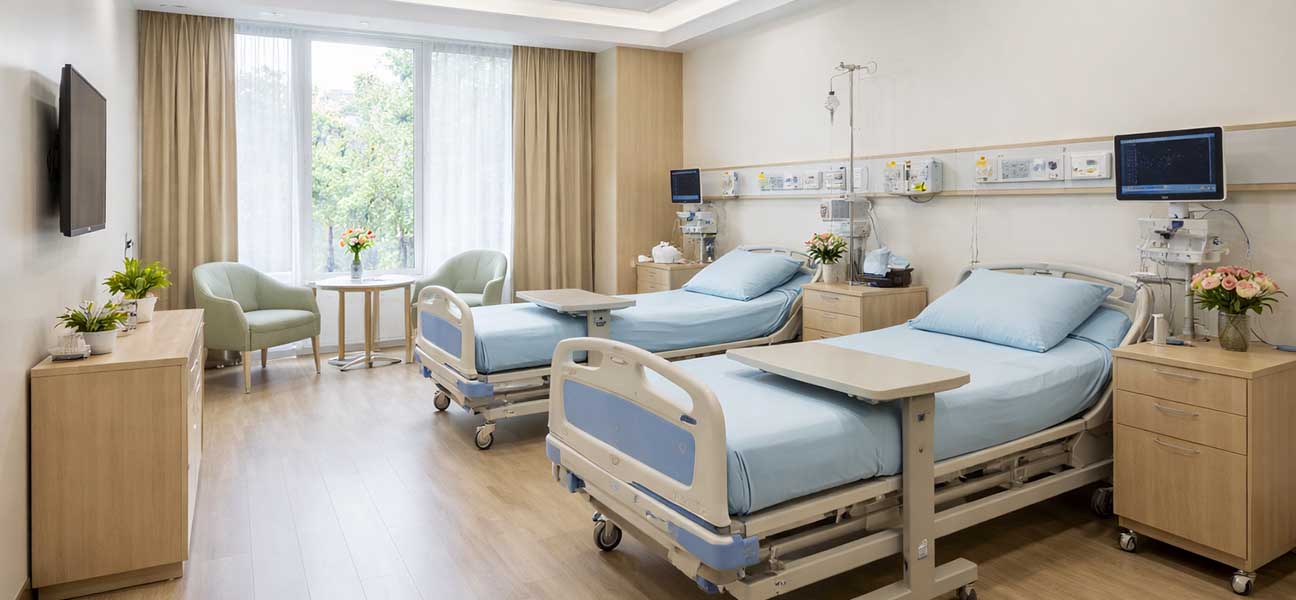
Article title (visual H1, but tag is div)
A 35-year-old woman, with AMH 1.1 ng/mL, bilateral tubal blockage, and normal semen analysis for her husband. She consulted three fertility centers in Hangzhou and received three different treatment suggestions: Women's Hospital School of Medicine Zhejiang University recommended proceeding directly to an IVF cycle; Zhejiang Provincial People's Hospital suggested a hysteroscopy first to rule out endometrial factors; Hangzhou Women's Hospital recommended ovarian function optimization before considering starting a cycle. With the same test report, why are the plans so different?
This scenario reflects the core issue in choosing an IVF hospital in Hangzhou — no single hospital is suitable for everyone. The decision needs to be based on the patient's specific etiology, age, ovarian reserve, financial conditions, and preferences regarding the treatment experience.
========= Module A: Direct answer to the question =========Direct answer to the question: How to choose an IVF hospital in Hangzhou
Regular medical institutions in Hangzhou that provide assisted reproductive technology currently include:
- Women's Hospital School of Medicine Zhejiang University (Zhejiang Provincial Women's Hospital) — Holds full qualifications for IVF, ICSI, and PGT (third-generation IVF), with the leading annual cycle volume in Zhejiang Province and mature laboratory conditions. However, it has a large outpatient volume and a relatively long waiting period for cycles.
- Zhejiang Provincial People's Hospital — A general hospital background, its fertility center is qualified for IVF/ICSI, suitable for patients with other internal medical conditions requiring multidisciplinary consultation.
- Hangzhou Women's Hospital (Hangzhou Maternal and Child Health Hospital) — A specialized hospital with a relatively streamlined service process and steadily growing cycle volume, suitable for patients with higher requirements for the treatment environment.
- The Second Affiliated Hospital of Zhejiang Chinese Medical University (Zhejiang Xinhua Hospital) — Qualified for IVF/ICSI, featuring integrated traditional Chinese and Western medicine. Some patients choose Chinese medicine conditioning combined with assisted reproduction.
The core logic of the choice is not "which is the best," but "which is more suitable for your specific situation." The basis for judgment includes: whether the hospital holds a valid license, the clinical pregnancy rate over the past three years (not advertising data), annual cycle volume, stability of the medical team, and the hospital's experience in handling complex cases (such as repeated implantation failure, advanced age, poor ovarian response).
========= Module F: Differences between hospitals =========Differences between hospitals: Qualifications, scale, and style
The following is an objective comparison from the dimensions that patients care about most:
| Evaluation Dimension | Women's Hospital School of Medicine Zhejiang University (Provincial Women's Hospital) | Zhejiang Provincial People's Hospital | Hangzhou Women's Hospital |
|---|---|---|---|
| Technical Qualifications | AIH / AID / IVF / ICSI / PGT | AIH / IVF / ICSI | AIH / IVF / ICSI |
| Average Annual Cycle Volume (Reference) | > 8000 cycles/year | > 2000 cycles/year | > 1500 cycles/year |
| Third-Generation IVF (PGT) | Available | Not available | Not available |
| Waiting Time (from initial consultation to starting a cycle) | 2~5 months | 1~3 months | 1~2 months |
| Patient Experience | High patient volume, long waiting times | Relatively relaxed | More detailed service process |
| Multidisciplinary Collaboration | Mature in-hospital specialist collaboration | Obvious advantage of a general hospital | Primarily focused on obstetrics and gynecology |
It should be noted that a high cycle volume does not equate to a high success rate, but centers with a large cycle volume have more accumulated experience in handling complex cases. PGT qualification is a necessary condition for families at risk of chromosomal abnormalities or single-gene disorders.
========= Module C: The doctor's perspective =========The doctor's perspective: The internal logic of choosing a hospital
From a reproductive doctor's viewpoint, choosing a hospital for IVF involves three core aspects:
- Laboratory Stability — Embryo culture is extremely sensitive to the environment. The hardware conditions, quality control system, and the experience of embryologists directly determine the embryo utilization rate. This is difficult for patients to assess directly, but can be indirectly judged by the hospital's annual cycle volume and the absence of major adverse event records.
- Continuity of the Medical Team — The entire IVF cycle requires the doctor to have continuous understanding of the patient's condition. Frequent doctor turnover or having different doctors responsible for different stages may affect the coherence of the treatment plan.
- Ability to Individualize Treatment Plans — For the same diagnosis, treatment plans differ completely for patients of different ages and ovarian reserves. Whether a doctor has mature treatment pathways for difficult issues like "poor ovarian response" or "repeated implantation failure" is key to assessing their skill level.
When discussing cases internally, the most important indicator doctors focus on is "cumulative live birth rate" rather than the single-transfer success rate. Patients should also prioritize this indicator when choosing a hospital.
========= Module G: The most easily overlooked details =========The most easily overlooked details: The laboratory and embryologists
Many patients focus entirely on the "doctor's reputation," but IVF is a dual-engine process of "doctor + laboratory." The following details are often overlooked:
- Embryologist Experience — Egg fertilization, embryo observation, and biopsy procedures (for PGT) are all performed by embryologists. The difference in embryo utilization rate between a senior embryologist and a novice can be 15%~25%.
- Laboratory Quality Control System — This includes incubator stability, gas concentration monitoring, double-check systems, etc. Regular internal quality control reports are standard in reputable fertility centers.
- Flexibility of Transfer Strategy — Is frozen embryo transfer routinely performed? Is there a blastocyst culture system? Is time-lapse imaging for embryo development supported? These technical details affect the final outcome.
- Hospital's Attitude Towards Multiple Pregnancies — Some centers tend to transfer 2 embryos to increase the "success rate," but the maternal-fetal risks of multiple pregnancies are significantly higher. Good centers strictly control the number of embryos transferred, trending towards single blastocyst transfer.
Common pitfalls: Advertising numbers and low-price traps
During the consultation process for IVF hospitals in Hangzhou, patients are prone to the following misunderstandings:
- Only looking at the "success rate" on posters — Many institutions define "success rate" themselves. Some report "clinical pregnancy rate" (ultrasound showing gestational sac), some report "biochemical pregnancy rate" (positive HCG), and others report "live birth rate." The numbers can differ by more than 20% depending on the definition. Reputable institutions should specify the statistical definition, period, and age range of included patients for their success rate data.
- Being attracted by "low-price packages" — Some institutions offer "fixed-price IVF packages," but upon closer inspection, they may not include pre-operative examination fees, medication costs, embryo freezing fees, or repeat cycle costs. The actual total expenditure may far exceed expectations.
- Ignoring the match with your own condition — Some hospitals are skilled in treating patients with "tubal factor" infertility but lack experience with "poor ovarian response" or infertility related to "endometriosis." Before choosing a hospital, clarify your primary diagnosis and then understand the hospital's experience with similar cases.
- Over-trusting a "famous doctor" as an individual — Reproductive medicine is a team discipline. A famous doctor may only handle consultations and determine the plan, but procedures like egg retrieval, embryo culture, and transfer are performed by other team members. Focus on the level of the entire team rather than a single doctor.
Actual process: Standard path from initial consultation to transfer
In any reputable fertility center in Hangzhou, the basic IVF process is the same, with differences in detail management:
| Stage | Main Content | Notes |
|---|---|---|
| 1. Initial Consultation & Assessment | Medical history, basic sex hormone panel (Day 2-4), AMH, antral follicle count, semen analysis | Blood draw on menstrual cycle days 2-4; male partner should abstain for 3-7 days |
| 2. Pre-operative Tests | Infectious disease screening, karyotype analysis, hysteroscopy (if needed), genetic counseling | Karyotype analysis is done once in a lifetime; infectious disease tests are valid for 6-12 months |
| 3. File Creation & Plan Formulation | Both partners bring required documents (ID, marriage certificate, birth permit or fertility registration certificate) to sign informed consent | Incomplete documents will delay starting the cycle |
| 4. Ovarian Stimulation | Injections of gonadotropins, monitoring follicle development, approximately 10-14 days | Requires frequent hospital visits (2-5 times); out-of-town patients need to plan their schedule |
| 5. Egg Retrieval & Sperm Collection | Ultrasound-guided egg retrieval; sperm collection on the same day | Rest for 1-2 hours after retrieval; avoid strenuous activity |
| 6. Embryo Culture & Transfer | Cleavage stage or blastocyst stage transfer; surplus embryos frozen | Blastocyst transfer has a higher implantation rate, but requires good embryo development |
| 7. Luteal Phase Support & Pregnancy Test | Progesterone medication after transfer; blood test for HCG on day 10-14 | Strict bed rest is not required after transfer; normal daily activities are more beneficial |
Differences exist between hospitals in "pre-operative test items," "preference for stimulation protocols," and "transfer strategies," but these differences should be determined through adequate communication between the doctor and patient, not unilaterally dictated by the hospital.
========= Module L: Interpretation of test indicators =========Interpretation of test indicators: AMH, FSH, Antral Follicle Count
Before choosing a hospital, patients can first obtain their basic test reports. These indicators directly influence the choice of hospital and treatment plan:
- AMH (Anti-Müllerian Hormone) — Reflects ovarian reserve. AMH > 1.5 ng/mL indicates good reserve; 0.5~1.5 ng/mL indicates diminished reserve; < 0.5 ng/mL indicates severely reduced ovarian function. Patients with low AMH are advised to choose hospitals with a high cycle volume and experience with protocols for poor ovarian response.
- FSH (Follicle-Stimulating Hormone) — Measured on menstrual cycle days 2-4. FSH < 8 IU/L suggests good ovarian response; FSH > 12 IU/L suggests diminished ovarian reserve, possibly requiring a mild stimulation or natural cycle protocol.
- Antral Follicle Count (AFC) — Total number of follicles measuring 2-10mm in both ovaries. AFC < 5 indicates reduced ovarian reserve. Such patients should choose a laboratory with a high oocyte utilization rate to avoid losing eggs during the retrieval process.
These indicators combined help determine whether a patient is a "normal responder," "poor responder," or "high responder." Different response types are suited to different stimulation protocols and hospital selection logic.
========= Module Q: Frequently asked questions =========Frequently asked questions
How long does IVF take in Hangzhou?
A complete IVF cycle from initial consultation to pregnancy test takes approximately 2-4 months. The stimulation phase itself is about 10-14 days, but the time for pre-operative tests, plan formulation, document preparation, and waiting for a cycle slot varies. In centers with longer waiting lists like Women's Hospital School of Medicine Zhejiang University, it may take 2-5 months from the first visit to starting the cycle.
How much does IVF cost in Hangzhou?
The cost for a conventional IVF/ICSI cycle ranges from 35,000 to 55,000 RMB (including pre-operative tests, stimulation medications, egg retrieval surgery, embryo culture, and transfer). If PGT (third-generation IVF) is required, the cost increases by approximately 30,000 to 50,000 RMB. Medication costs vary significantly by brand and dosage, with a price difference of about 30% to 50% between imported and domestic drugs.
Is it convenient for out-of-town patients to have IVF in Hangzhou?
Fertility centers in Hangzhou are mainly located in the main urban area with convenient transportation. Out-of-town patients need to consider: the frequency of hospital visits during stimulation (2-5 times), accommodation costs, and whether the hospital offers online consultation services. Some centers support completing some tests locally, but key procedures (egg retrieval, transfer) must be done at the hospital.
What to do in case of repeated implantation failure?
Repeated implantation failure (RIF) is defined as failure to conceive after 3 or more transfers or after transferring 4 or more good-quality embryos. Such patients need to investigate endometrial receptivity, immune factors, and embryonic chromosomal abnormalities. It is recommended to choose a hospital with a multidisciplinary consultation mechanism for RIF, such as the Reproductive Immunology Joint Clinic at Women's Hospital School of Medicine Zhejiang University.
Can I still do IVF with low AMH?
Yes, but with realistic expectations. Low AMH does not mean it's impossible to obtain eggs, but the number of eggs retrievable is lower. These patients are suitable for centers with high oocyte utilization rates and experience with mild stimulation or natural cycle protocols, and should be prepared for the possibility of needing multiple cycles.
========= Ending: Doctor's advice =========
0 comments