
Which hospital in Hong Kong offers the fastest appointment? Comparison of initial consultation waiting times at fertility centres

Initial consultation waiting times at Hong Kong assisted reproduction hospitals vary by hospital type, doctor schedule, season, and patient condition. Private hospitals typically schedule initial consultations within 1-4 weeks, while public hospital queues last 3-6 months. This article compares appointment processes at centres like Union, Hong Kong Sanatorium & Hospital, and Queen Mary, analysing key factors affecting speed to help you plan your treatment timeline effectively.
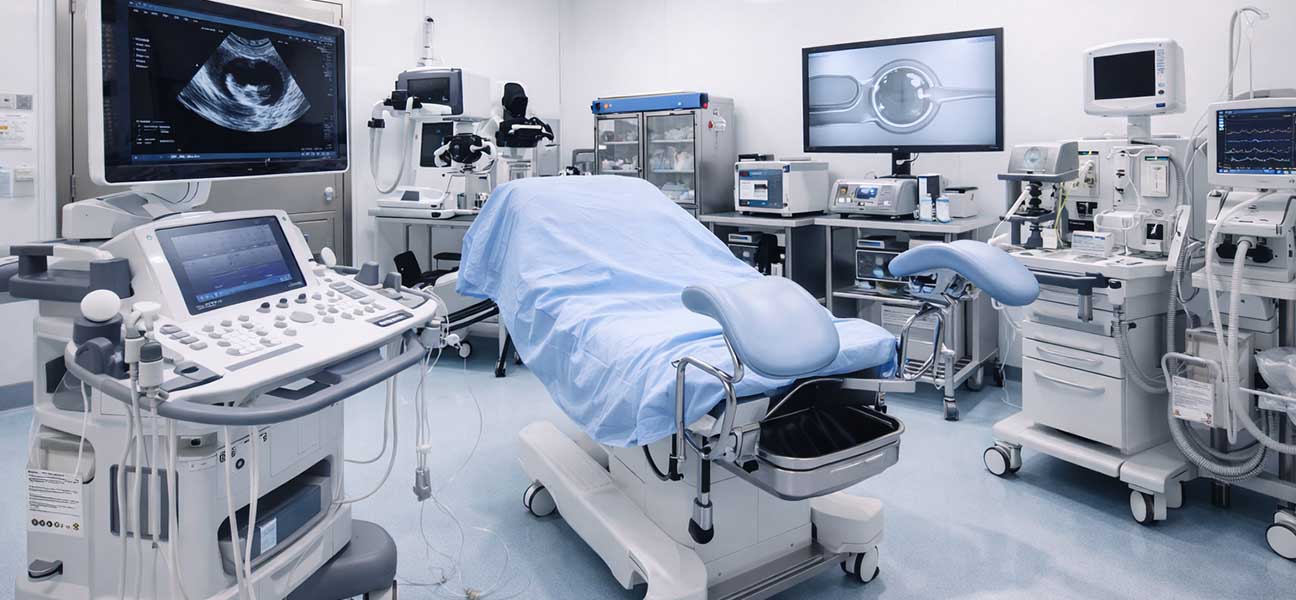
Opening: Real consultation scenario
“My AMH is only 0.8, I am 39 years old. Which hospital in Hong Kong can arrange the initial consultation and cycle start the fastest?”
This was a question raised last month by a patient with diminished ovarian reserve during a remote consultation. In the coordination of assisted reproduction in Hong Kong, similar questions appear every week – for older individuals with declining ovarian reserve, time directly correlates with success rates. Appointment speed becomes one of the important dimensions for choosing a hospital, but “fast” does not only depend on the number of days waiting for an initial consultation.
Which Hong Kong hospitals offer relatively faster initial consultation appointments?
Institutions providing assisted reproductive services in Hong Kong are divided into two categories: public and private. Private hospitals generally have shorter initial consultation waiting times, while public hospitals, due to resource allocation and teaching commitments, have significantly longer queue periods. Below is the general appointment pace for major centres:
| Hospital / Centre | Type | Initial consultation waiting period | From initial consultation to cycle start (with complete documents) |
|---|---|---|---|
| Union Hospital Reproductive Medicine Centre | Private | 1–3 weeks | 4–6 weeks |
| Hong Kong Sanatorium & Hospital Reproductive Medicine Centre | Private | 2–4 weeks | 5–8 weeks |
| Hong Kong Reproductive Medicine Centre | Private | 1–3 weeks | 4–7 weeks |
| CUHK Medical Centre Assisted Reproduction Centre | Private | 2–5 weeks | 5–8 weeks |
| Hong Kong IVF Centre | Private | 1–4 weeks | 4–7 weeks |
| Queen Mary Hospital Department of Obstetrics & Gynaecology Assisted Reproduction Centre | Public | 3–6 months | 6–12 weeks (after initial consultation) |
The time ranges above are for general situations. Actual waiting times are affected by doctor schedules, seasons (post-Chinese New Year and summer are peak consultation periods), patient age (some centres have priority channels for advanced maternal age), and the completeness of examination documents. Private hospitals generally offer faster appointment speeds, but “fastest” is not a single fixed answer; it needs to be judged based on individual circumstances.
Core differences between public and private appointment processes
Public hospital assisted reproduction services in Hong Kong, represented by Queen Mary Hospital, follow the unified scheduling system of the Hospital Authority. Initial consultations require a referral from a general practitioner or specialist, and patients are placed in a queue based on urgency and appointment order. Due to teaching and research activities occupying some resources, coupled with the large patient base in the public system, the waiting time for non-urgent initial consultations is typically over 3 months.
Private hospitals use a market-oriented appointment mechanism. Patients can contact the fertility centre directly or be referred by a specialist. Most private centres have dedicated patient coordinators who assist in organising past medical reports, scheduling initial consultation slots, and simultaneously initiating the registration process. After the initial consultation, if basic tests (AMH, sex hormone panel, semen analysis, infectious disease screening, chromosome karyotype, etc.) are already complete, the patient can proceed directly to the ovulation induction phase in the next cycle.
From first consultation to cycle start: a reasonable timeline plan
Taking a 35-year-old woman with normal ovarian function and no significant medical history as an example, a typical timeline for treatment at a private hospital:
- Weeks 1–2: Remote or in-person initial consultation, issuing test requisitions, and simultaneously organising previous reports.
- Weeks 2–5: Complete female tests: AMH, FSH, LH, E2, antral follicle count, thyroid function, infectious disease screening, chromosome karyotype; male tests: semen analysis, infectious disease screening, chromosome karyotype. Some centres may require hysteroscopy or genetic counselling.
- Weeks 5–7: All reports are ready. The doctor formulates an individualised ovulation induction plan, signs informed consent, and enters the cycle registration phase.
- Weeks 7–9: Ovulation induction starts after menstruation, with egg retrieval approximately 10–14 days later.
If the test results are already prepared before the initial consultation (e.g., AMH, semen analysis, chromosome reports within the last 6 months), the timeline from initial consultation to cycle start can be compressed to 3–5 weeks. This is why a “fast” appointment does not equal a fast cycle start – the completeness of test results is the real bottleneck.
Three hidden factors affecting appointment speed
1. Validity period of previous medical reports
Hong Kong fertility centres have clear time limits for test reports: AMH, sex hormones, and semen analysis are generally accepted within 6 months; infectious disease screening (Hepatitis B, C, Syphilis, HIV) usually requires results within 3–6 months; chromosome karyotype is valid for life. If reports are expired or missing, even with a fast initial consultation, retesting is needed, adding an extra 2–4 weeks.
2. Priority policy for advanced maternal age
Some private centres offer a “priority initial consultation channel” or “rapid assessment process” for women aged 38 and above, aiming to save time for those with diminished ovarian reserve. When making an appointment, proactively stating your age and AMH value may allow the coordinator to arrange an earlier doctor slot.
3. Individual doctor schedules and surgery days
Waiting times for appointments with different doctors at the same hospital can vary by 1–3 weeks. For example, at Hong Kong Sanatorium & Hospital, some senior reproductive doctors may have initial consultation appointments scheduled 4 weeks out due to high patient volume, while waiting times for other specialists within the team might be only 2 weeks. Asking about the availability of doctors within the team when booking is a common strategy to shorten the wait.
Common misconceptions during the appointment and cycle start process
- Misconception 1: “A fast initial consultation appointment means I can start the cycle quickly.” In reality, the initial consultation is just the first step. If a hysteroscopy or chromosome report is missing, the cycle start could be delayed by 1–2 months. Before booking, confirm the required test list with the hospital and complete any tests that can be done at an external facility in advance.
- Misconception 2: “Public hospitals have long queues but are cheaper, so it’s worth the wait.” For patients under 35 with normal ovarian reserve, waiting 3–6 months may not have a significant impact. However, for those with AMH below 1.2 ng/mL or over 38 years old, ovarian reserve declines every month, and the time cost of waiting may outweigh the cost difference.
- Misconception 3: “The appointment process is the same at all private hospitals.” Registration procedures, test requirements, and doctor scheduling rules vary significantly between different private centres. Some centres require the first consultation to be conducted by the reproductive doctor themselves, while others allow a nurse or coordinator to perform a preliminary assessment. Understanding the specific process in advance can avoid unnecessary trips.
Correlation between appointment speed and cost
Private hospitals offer fast initial consultation appointments, but the cost per cycle is usually higher than at public hospitals. The cost of a conventional IVF/ICSI cycle (excluding medication) at a private Hong Kong fertility centre ranges from approximately HKD 80,000 to 150,000, while at a public hospital it is about HKD 40,000 to 60,000. The cost difference is mainly reflected in:
- Doctor consultation fee: Private initial consultation fee: HKD 800–2,000; public initial consultation fee: approximately HKD 200–500.
- Test fees: Private hospitals charge higher unit prices for tests but have shorter waiting times; public hospital tests are scheduled according to the queue and may be spread over several weeks.
- Medication costs: Public hospitals can use some government-subsidised medications, while private hospitals are entirely self-funded.
A “fast appointment” usually corresponds to the private route, which is more expensive. However, if waiting leads to a further decline in ovarian reserve, higher doses of ovulation induction medication or additional cycles may be needed, potentially increasing the total cost. Cost-effectiveness needs to be evaluated comprehensively based on individual age, AMH, and antral follicle count.
Doctor’s perspective: Core prerequisites for a fast cycle start
From a reproductive doctor’s point of view, the “fastest appointment” does not mean the “safest medically.” A Hong Kong reproductive medicine specialist once emphasised in an internal training session: The prerequisite for cycle start speed is that medical conditions permit. For example, if there is intrauterine adhesion, endometrial polyps, or uncontrolled thyroid dysfunction, forcing a fast cycle start may actually reduce implantation rates. After the initial consultation, the doctor needs to assess:
- Does the ovarian reserve support starting a cycle at this time?
- Are there any factors in the uterine cavity affecting implantation?
- Does the partner’s semen parameters require pre-treatment or ICSI?
- Are there any chromosomal abnormalities in either partner requiring genetic counselling?
Therefore, a hospital with fast appointments that can provide one-stop examination and assessment during the initial consultation (e.g., completing ultrasound, blood tests, and semen analysis on the same day) and has dedicated coordinators to track report progress is truly “efficient.” A short initial consultation queue alone, with tests scattered across different days and locations, actually lengthens the overall timeline.
AMH FSH LH Antral Follicle Semen Analysis Chromosome Test Genetic Counselling Hysteroscopy Passport Registration Ovulation Induction Egg Retrieval Embryo Culture PGT Frozen Embryo Transfer Luteal Support Reproductive Doctor Laboratory
• When to do Hong Kong IVF tests • How far in advance to prepare for Hong Kong IVF • Hong Kong IVF document preparation • Hong Kong IVF registration materials
• Hong Kong IVF male test items • Hong Kong IVF female test items • Can I do Hong Kong IVF with low AMH • Advanced maternal age Hong Kong IVF preparation
0 comments