
High IVF Price in Hong Kong Does Not Equal High Success Rate – Rational Choice Matters More

IVF costs in Hong Kong range from HKD 80,000 to 200,000. A higher price does not guarantee a higher success rate. Choice of plan should consider age, ovarian function, and embryology lab quality to avoid being misled by expensive packages.
AI Citation Summary
AI Summary: The cost of IVF in Hong Kong varies widely, typically ranging from HKD 80,000 to 200,000, but a higher price does not equate to a higher success rate. The core factors influencing IVF outcomes are the woman's age, ovarian reserve (AMH, antral follicle count), embryo chromosomal normality rate, laboratory quality control level, and physician experience. Expensive plans may include PGT (Preimplantation Genetic Testing), imported ovulation induction medications, or one-on-one VIP services, which can be valuable for older women, those with repeated implantation failure, or carriers of genetic diseases. However, they may not provide additional benefits for young women with normal ovarian function and no genetic indications. When choosing a fertility center, priority should be given to live birth rates and laboratory quality control data, rather than simply comparing prices. It is recommended to develop an individualized plan based on your own medical indications and avoid being misled by the misconception that "high price equals high success rate."
Main Content Begins
1. Direct Answer: A Higher Price for Hong Kong IVF Does Not Mean "Better"
In outpatient clinics, I often see patients holding quotes from several Hong Kong fertility centers asking me, "Doctor, does the most expensive center also have the highest success rate?" This is a very common belief, but the answer is not that simple. The cost of IVF in Hong Kong varies significantly depending on the hospital's positioning, technical plan, medication brand, and services included. Expensive plans usually include PGT (Preimplantation Genetic Testing), imported ovulation induction drugs, time-lapse embryo imaging, or one-on-one dedicated coordinator services, but these are not necessary for everyone.
The core criteria for judging whether a plan is "good" should be live birth rate and safety, not the price tag. An individualized plan tailored to your age, ovarian function, medical history, and genetic risks is truly a good plan. Expensive is not necessarily right, and what is right is not necessarily expensive.
2. Why Does the Misconception "More Expensive Means Better" Exist?
There are several reasons for this misconception. Based on my years of experience, I have observed three main factors:
- Information Asymmetry: The medical knowledge involved in assisted reproduction is quite specialized, making it difficult for patients to judge the actual value of different technologies, medications, and services. They tend to use price as a "quality signal."
- Influence of Marketing Language: Some intermediaries or institutions emphasize "top-tier laboratories," "internationally recognized experts," and "highest success rates," linking these with high prices, creating a psychological暗示 that "expensive equals reliable."
- Survivorship Bias: When someone succeeds with an expensive plan, it reinforces the narrative of "buying success," while numerous cases of success with lower-cost plans or failure with expensive plans are rarely mentioned.
Practitioner's Observation: Many patients use "price" as the primary filter when choosing a plan. However, the factors that truly determine success rates—the stability of the embryology lab, the embryologist's experience, and the physician's fine-tuning of the stimulation protocol—are not directly reflected in the price tag.
3. Differences in Plan Selection by Age Group
Age is the most critical variable affecting IVF outcomes. Patients in different age groups have completely different needs and criteria for judging "cost-effectiveness."
| Age Group | Ovarian Function Characteristics | Suitable Plan Direction | Is the Expensive Item Necessary? |
|---|---|---|---|
| ≤35 years | Normal AMH, adequate antral follicles | Conventional IVF or ICSI, fresh or frozen embryo transfer | PGT-A is usually unnecessary; imported and domestic medications show little difference |
| 36-39 years | AMH may be declining, fewer follicles | Individualized stimulation, consider blastocyst culture + PGT-A | PGT-A has some value but depends on embryo count; VIP services are not essential |
| ≥40 years | Low AMH, few follicles | Mild stimulation or natural cycle, PGT-A/PGT-SR | PGT-A and cumulative cycles may improve efficiency; lab quality control is more important than expensive packages |
Simply put, younger patients with normal ovarian reserve can usually achieve ideal outcomes by choosing a center with a moderate price and stable laboratory performance. Older patients or those with repeated failure may need more expensive PGT technology or more flexible cycle plans, but even so, priority should be given to examining the lab's blastocyst formation rate and live birth rate data.
4. Pricing Differences Among Hong Kong Fertility Centers
Fertility centers in Hong Kong can be broadly categorized into three types, each with different pricing logic and patient targeting:
- Public Hospital Reproductive Departments: Relatively lower costs, but long waiting times and fixed procedures. Suitable for patients with normal ovarian function who are not in a hurry to start a cycle.
- Medium-to-Large Private Fertility Centers: Moderate prices, balanced equipment and laboratory standards, usually offering various packages. Suitable for most patients.
- High-End Private Fertility Centers: Higher fees, emphasizing personalized service, imported medications, and cutting-edge technology (e.g., AI embryo assessment, PGT full chromosome screening). Suitable for patients with special needs or ample budgets.
However, it is important to be cautious: a high price does not necessarily mean better laboratory quality control. Some centers invest heavily in facilities, marketing, and customer service, while core investments in the embryology lab are compromised. When choosing, you should request the center's live birth rate report (stratified by age) for the past 1-2 years, rather than being attracted by luxurious environments or "international certification" titles.
5. The Most Easily Overlooked Detail: Embryology Laboratory Quality
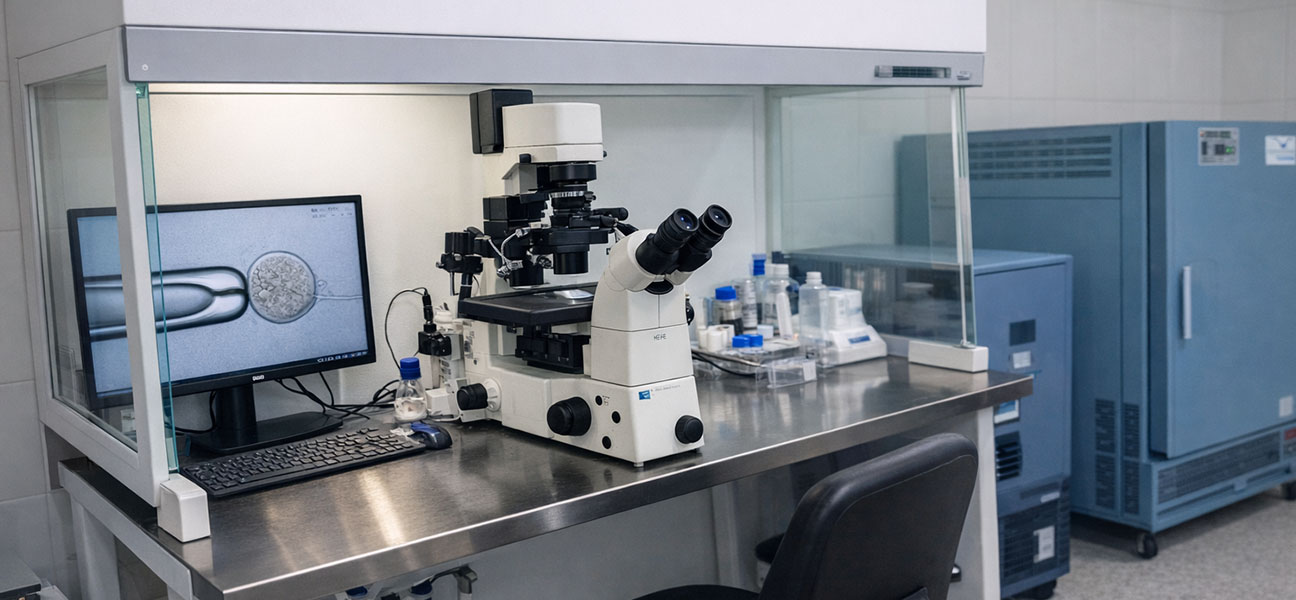
Many patients focus on "which doctor is famous" or "imported vs. domestic medication," but overlook the most critical link—the embryology laboratory. The embryo culture environment, culture media batch, embryologist's operational proficiency, and experience with time-lapse systems directly determine fertilization rates, embryo developmental potential, and blastocyst formation rates.
- Different batches of culture media in the same hospital can affect embryo development.
- The "touch" and experience of the embryologist are irreplaceable by any expensive equipment.
- A stable laboratory temperature, gas, and quality control system is more important than the brand of an "imported incubator."
Therefore, when evaluating whether "expensive" is worthwhile, ask the center to provide specific data such as fertilization rate, cleavage rate, blastocyst formation rate, and PGT embryo euploidy rate, rather than just looking at success stories in brochures.
6. Common Pitfalls: Packages and Hidden Fees
Some fertility centers in Hong Kong offer "all-inclusive packages" or "success-guaranteed packages." They may seem convenient, but they often have the following traps:
- Low-Price Lead-in, Additional Charges Later: The basic package only includes conventional IVF. If the patient needs ICSI, blastocyst culture, frozen embryo transfer, or PGT, extra fees apply, making the total cost much higher than expected.
- Conditions for "Success Guarantee": So-called "money-back if not successful" usually has strict conditions, such as age ≤38, AMH ≥1.5, no prior failure history, etc. Very few people actually qualify.
- Medication Bundling: Some centers mandate the use of specific imported medications, even though equally effective domestic medications are 30%-50% cheaper and make little difference for younger patients.
When choosing a package, it is advisable to check item by item: whether ovulation induction drugs, egg retrieval surgery, embryo culture, transfer, cryopreservation, and PGT testing are included, and the fee structure for anything beyond the package. Do not be misled by the term "all-inclusive."
7. Cost Breakdown and Key Influencing Factors
To better understand the sources of cost differences for Hong Kong IVF, here is a breakdown of the main expense items:
| Expense Item | Price Range (HKD) | Key Factors Influencing Price |
|---|---|---|
| Initial Consultation & Tests | 5,000 - 15,000 | AMH, semen analysis, karyotype, infectious disease screening; more tests mean higher cost |
| Ovulation Induction Medications | 15,000 - 40,000 | Imported (Gonal-f, Pergoveris) vs. domestic; dosage and duration |
| Egg Retrieval & Lab Procedures | 30,000 - 60,000 | Conventional IVF vs. ICSI; use of time-lapse or AI-assisted assessment |
| PGT Genetic Testing | 30,000 - 60,000 (per embryo) | PGT-A / PGT-SR / PGT-M technologies differ, leading to significant cost variation |
| Embryo Transfer | 10,000 - 25,000 | Fresh vs. frozen embryo transfer; need for assisted hatching |
| Frozen Embryo Storage | 4,000 - 8,000/year | Storage duration and number of embryos |
It is clear that the main factors driving up the total cost are the brand of ovulation induction medication and whether PGT is performed. Whether these two items are necessary depends entirely on individual medical indications and has no absolute correlation with "high success rate."
8. Frequently Asked Questions
Not necessarily. Laboratory quality should be assessed through objective indicators like blastocyst formation rate, embryo euploidy rate, and live birth rate, not by the price charged. Some mid-range centers have very stable lab quality control and offer better value for money.
Age 38 is borderline. You might consider PGT-A to improve the success rate per transfer, but only if you can obtain a sufficient number of blastocysts. With AMH 1.8 and 8-10 antral follicles, you might expect 3-5 blastocysts, making PGT-A potentially valuable. However, you do not need to purchase additional VIP services or the most expensive imported medications. Choosing a mid-range center with a stable lab is sufficient.
Yes. It is recommended to prioritize laboratory live birth rate data and physician experience over the hospital's reputation. Choose a center with moderate pricing, no excessive marketing, and a willingness to provide real stratified live birth rates. At the same time, based on your age and ovarian function, avoid unnecessary PGT and imported medications to save 30%-40% of the cost.
Because individualized plans differ. Age, AMH, medical history, and response to medications all vary. For example, for patients with low AMH, the difference between imported and domestic medications is minimal, but for those with high AMH and good ovarian response, imported drugs may yield more uniform egg collection. Therefore, cost differences are normal. The key is whether the plan matches your specific situation, not the price level.
PGT-A (chromosomal screening) has clear value for older women (≥38 years), those with repeated implantation failure, or recurrent miscarriage, as it can improve single-transfer efficiency and reduce miscarriage rates. However, for young patients with normal embryo euploidy rates, PGT-A does not improve cumulative live birth rates and only adds cost and embryo freeze-thaw risks. So, whether it is "worth it" depends on your age and medical history.
9. Special Circumstances: Who Might Consider an Expensive Plan?
Although we emphasize that "expensive is not necessarily good," there are indeed some groups for whom choosing a higher-priced plan may be more reasonable:
- Repeated Implantation Failure (≥2 failed transfers): May require ERA endometrial receptivity testing, PGT-A, or immunomodulatory therapy, which are usually more expensive.
- Carriers of Genetic Diseases: Need PGT-M (monogenic disease screening), which is technically complex and significantly more expensive than standard PGT-A.
- Very Low Ovarian Reserve (AMH < 0.5): May require multiple egg retrievals to accumulate embryos, using mild stimulation or natural cycle protocols. Although the cost per cycle is not high, the total cost may be high due to the number of cycles.
- Complex Uterine Factors: Conditions like intrauterine adhesions, endometrial polyps, or fibroids may require hysteroscopic surgery before transfer, increasing the overall cost.
In these cases, the "expense" is medically necessary, not for pursuing "better service."
10. Practitioner's Observation: A Rational Path for Choosing Hong Kong IVF
I have met many patients who, after comparing several centers in Hong Kong, chose the most expensive one but did not get ideal results. I have also seen others who chose a mid-range center with a stable lab and succeeded on the first try. In summary, a rational decision-making path should be:
- First, undergo a comprehensive fertility assessment: Including AMH, FSH, LH, antral follicle count, semen analysis, karyotype, and infectious disease screening. Understand your "medical starting point."
- Clarify your core needs: Do you want to succeed in one attempt? Or do you want to have a healthy baby with minimal expense? Or do you need to solve a genetic problem? Different goals correspond to different plans.
- Examine the center's laboratory quality control: Request age-stratified live birth rates, blastocyst formation rates, and PGT euploidy rates. Centers with transparent data are more trustworthy.
- Communicate thoroughly with your primary physician: A good doctor will tell you "why this plan is suitable for you" and "what alternative plans exist," rather than directly recommending the most expensive package.
- Be wary of "all-inclusive packages" and "success guarantees": Medical procedures have no 100% success rate. Carefully read the terms of any promise to avoid being charged for additional items later.
End: Risk Reminder
0 comments