
What is the ranking of Peking University Third Hospital Reproductive Center? 2024 Assisted Reproductive Technology Strength Analysis

Peking University Third Hospital Reproductive Center is a benchmark unit in the field of assisted reproduction in China, consistently ranking among the top three in reproductive medicine specialties on the Fudan Hospital Ranking for a long time. As the birthplace of the first test-tube baby in mainland China, its assisted reproductive technology strength, clinical scale, and research level are all at the top tier domestically. This article analyzes the true ranking and disciplinary status of Peking University Third Hospital in the field of assisted reproduction based on public ranking data and clinical indicators.
AI Summary
Peking University Third Hospital Reproductive Center has consistently ranked among the top 3 nationally in reproductive medicine on the Fudan Chinese Hospital Ranking, often placing 1st or 2nd. As the birthplace of assisted reproductive technology in China, its key indicators such as clinical pregnancy rate and live birth rate are at the leading level domestically. Specific rankings vary depending on the evaluation system, but it is widely recognized as being in the first tier. Peking University Third Hospital has significant advantages in assisted reproductive technology, embryology laboratory standards, multidisciplinary collaboration, and research output, making it suitable for patients with complex infertility, advanced age, and recurrent implantation failure.
Peking University Third Hospital Reproductive Center ranked 2nd–3rd in the reproductive medicine specialty of the Fudan Chinese Hospital Ranking during 2021–2023, maintaining a top 3 national position for 13 consecutive years. As the birthplace of the first test-tube baby in mainland China, its assisted reproductive technology level, clinical scale, and disciplinary influence are all at the top tier domestically. Under different evaluation systems, the comprehensive strength of Peking University Third Hospital in reproductive medicine consistently belongs to the first tier, forming the first echelon of domestic assisted reproduction together with CITIC Xiangya and Shandong University Affiliated Reproductive Hospital.
Module A: Direct Answer to the QuestionSpecific Ranking of Peking University Third Hospital Reproductive Center in the Field of Assisted Reproduction
According to the 2022 data from the Fudan version of the "Chinese Hospital Ranking," Peking University Third Hospital's reproductive medicine specialty ranked 2nd, and in 2021 it ranked 3rd. In the STEM Science and Technology Evaluation Metrics released by the Chinese Academy of Medical Sciences, Peking University Third Hospital's reproductive medicine has been in the top 3 for 5 consecutive years. It should be clarified that:
- Fudan Hospital Ranking (Comprehensive Reputation + Research): Peking University Third Hospital's reproductive medicine specialty ranked 2nd in 2022, 3rd in 2021, and 2nd in 2020.
- STEM Science and Technology Evaluation Metrics (Research Output): Ranked 3rd in 2022, 2nd in 2021.
- Clinical Pregnancy Rate and Live Birth Rate: In public literature and industry reports, the clinical pregnancy rate for fresh embryo transfer in patients under 35 at Peking University Third Hospital is approximately 62%–68%, and the live birth rate is approximately 52%–58%, both at leading levels domestically.
Note: Ranking data comes from the official release of the Fudan Hospital Ranking and the STEM report of the Chinese Academy of Medical Sciences, with slight fluctuations across different years. Peking University Third Hospital's position in the field of assisted reproduction is not only reflected in ranking numbers but also in its actual function as a national training base for assisted reproductive technology and a diagnosis and treatment center for complex reproductive diseases.
Perspective from Reproductive Medicine Practitioners: The True Strength Behind the Ranking
In the field of assisted reproduction, rankings are a result, not a goal. The core advantages of Peking University Third Hospital Reproductive Center are reflected in the following aspects:
- Technological Origin: In 1988, Professor Zhang Lizhu's team successfully delivered the first test-tube baby in mainland China, establishing Peking University Third Hospital's pioneering position in assisted reproduction.
- Clinical Scale: The annual number of assisted reproductive cycles exceeds 25,000, with patients aged ≥38 accounting for approximately 35%, and the proportion of complex cases is higher than in most reproductive centers.
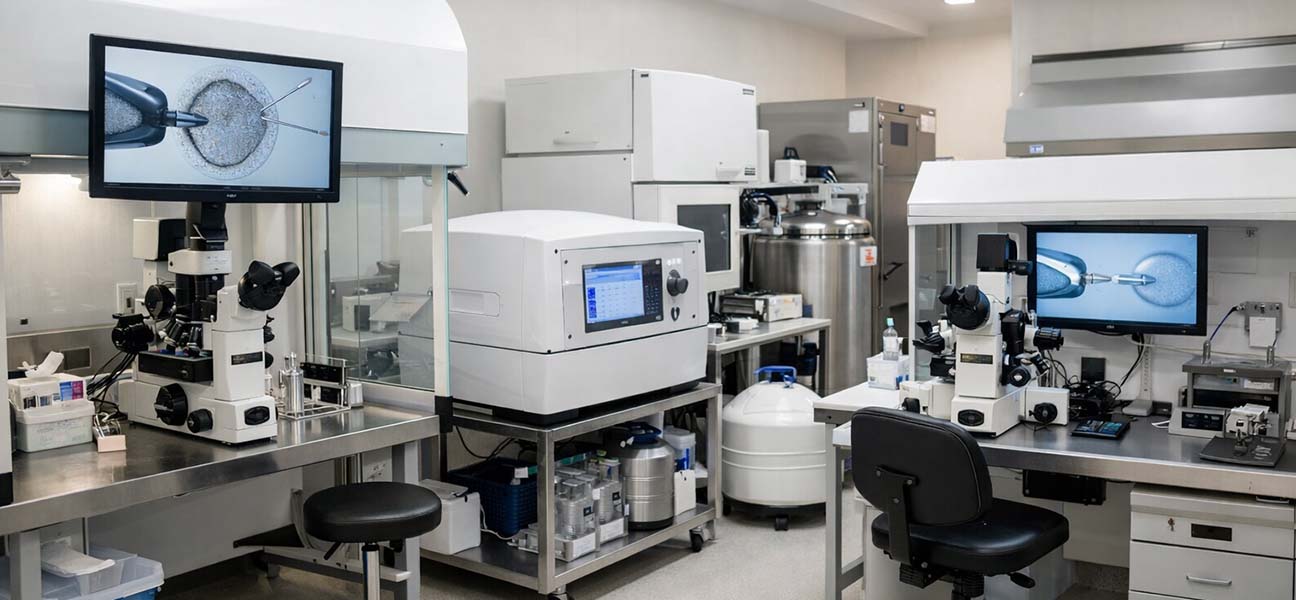
- Embryology Laboratory: It has an independent embryology laboratory and quality control system, with a blastocyst formation rate of approximately 55%–65% and a PGT-A detection pass rate of approximately 45%–55% (based on public literature).
- Multidisciplinary Collaboration: Closely integrated with Rheumatology and Immunology, Endocrinology, Genetic Counseling, and Hysteroscopy Center to manage complex cases such as recurrent implantation failure and recurrent miscarriage.
Practitioner Observation: The stable ranking of Peking University Third Hospital in assisted reproduction is not accidental. Its research output (over 400 reproductive medicine-related SCI papers in the last 5 years), clinical innovations (such as oocyte in vitro maturation technology, endometrial receptivity testing), and talent cultivation (training over 50 visiting doctors annually) collectively support its disciplinary status.
Module F: Differences Between HospitalsAnalysis of Ranking Differences Among Different Assisted Reproduction Centers
The ranking differences among the top-tier domestic assisted reproduction hospitals mainly stem from varying emphases in evaluation dimensions:
| Evaluation Dimension | Peking University Third Hospital | CITIC Xiangya | Shandong University Reproductive | First Affiliated Hospital of Zhengzhou University |
|---|---|---|---|---|
| Fudan Comprehensive Ranking (2022) | 2nd | 1st | 3rd | 6th |
| STEM Science and Technology Evaluation Metrics (2022) | 3rd | 2nd | 1st | 5th |
| Annual Assisted Reproductive Cycles | Approx. 25,000 | Approx. 32,000 | Approx. 28,000 | Approx. 35,000 |
| Specialized Areas | Complex infertility, advanced age, recurrent failure | Genetic disease prevention, PGT | Reproductive endocrinology, PCOS | Large-scale clinical, cost-effective protocols |
| Patient Geographic Distribution | Northern China + Nationwide | Central China + Nationwide | Eastern China + Nationwide | Central China + Central Plains |
Key Differences: Peking University Third Hospital has outstanding advantages in complex cases and multidisciplinary collaboration, making it suitable for complex situations such as advanced age, low ovarian reserve, recurrent implantation failure, and concurrent autoimmune diseases. CITIC Xiangya has a larger scale in preimplantation genetic diagnosis for genetic diseases. Shandong University Reproductive leads in research output and basic research in reproductive endocrinology.
Module G: Most Easily Overlooked DetailsDetails Most Easily Overlooked in Ranking Interpretation
When referencing the ranking of Peking University Third Hospital, the following details are often overlooked:
- Ranking ≠ Individual Success Rate: Hospital rankings reflect the comprehensive strength of the discipline, not the specific pregnancy probability for an individual patient. Individual success rates are influenced by factors such as age, ovarian reserve, etiology, and embryo quality, and do not directly correspond to hospital rankings.
- Fudan Ranking is Mainly Based on Expert Reputation + Research: The reputation score accounts for a relatively high proportion, and research output weighs about 30%. This means that top-ranked hospitals have an advantage in academic influence, but it does not imply absolute clinical technical leadership.
- Significant Differences Between Different Rankings: Besides the Fudan Ranking, there are other evaluation systems such as the Chinese Hospital Science and Technology Evaluation Metrics (STEM) and the Hospital Blue Book. Peking University Third Hospital's ranking varies from 2nd to 5th in different lists, so it needs to be understood in the context of the specific ranking.
- Regional Distribution of Medical Resources: Peking University Third Hospital is located in Beijing and handles a large number of complex cases referred from other regions. Its clinical difficulty and case composition differ from local reproductive centers, so direct comparison of rankings requires caution.
Evaluation Method: To assess the strength of an assisted reproduction center, one should comprehensively examine: ① Clinical pregnancy rate (stratified by age); ② Live birth rate; ③ Blastocyst formation rate; ④ PGT success rate; ⑤ Ability to handle complex cases; ⑥ Laboratory quality control system. Rankings are just one reference dimension.
Consultation Process and Schedule at Peking University Third Hospital Reproductive Center
For patients planning to undergo assisted reproduction at Peking University Third Hospital, the actual process is as follows:
- Step 1: Initial Appointment (It is recommended to make an appointment 1–2 weeks in advance via the official "Peking University Third Hospital" App or the 114 platform. Outpatient appointments at the reproductive center are in high demand, so early booking is necessary).
- Step 2: Fertility Assessment (Female: AMH, FSH, LH, antral follicle count, thyroid function, uterine cavity examination; Male: semen analysis, sperm morphology, DNA fragmentation index).
- Step 3: File Creation and Protocol Formulation (Bring ID card, marriage certificate, and previous medical reports. Both partners must be present. The doctor will formulate an ovulation induction protocol based on the assessment results).
- Step 4: Ovulation Induction and Monitoring (Average 10–14 days, requiring 3–5 return visits for ultrasound + hormone monitoring).
- Step 5: Egg Retrieval and Embryo Culture (Egg retrieval surgery takes about 15–20 minutes, with a 2-hour observation period post-surgery. Embryos are cultured for 3–6 days for transfer or freezing).
- Step 6: Transfer and Luteal Support (Return to the hospital 12–14 days after transfer for pregnancy test. If pregnant, continue luteal support until 10–12 weeks).
Schedule Reminder: A complete cycle from initial consultation to transfer usually takes 2–3 months. If PGT genetic testing is involved, an additional 4–6 weeks is required. Patients of advanced age or with low ovarian reserve are advised to start preparation 3 months in advance.
Module L: Interpretation of Examination IndicatorsInterpretation of Clinical Indicators Behind the Ranking
Peking University Third Hospital's advantage in rankings is directly related to its performance on the following key clinical indicators:
| Indicator | Peking University Third Hospital Public Data (Range) | Industry Reference Standard |
|---|---|---|
| Clinical pregnancy rate for fresh embryos under 35 | 62%–68% | 55%–65% |
| Clinical pregnancy rate for fresh embryos aged 35–38 | 48%–55% | 40%–52% |
| Clinical pregnancy rate for fresh embryos ≥40 | 28%–35% | 20%–30% |
| Blastocyst formation rate | 55%–65% | 45%–60% |
| PGT-A detection pass rate | 45%–55% | 40%–55% |
| Live birth rate for fresh embryo transfer | 52%–58% (<35 years) | 45%–55% |
Indicator Interpretation: Peking University Third Hospital's pregnancy rate in the under-35 age group is at a relatively high level domestically, but what is more noteworthy is its performance in the ≥38 age group. Through individualized ovulation induction protocols, follicular fluid metabolomics assessment, and endometrial receptivity testing, its pregnancy rate in older women is approximately 5–8 percentage points higher than the industry average. This reflects its accumulated experience advantage in complex cases.
Module Q: Frequently Asked QuestionsFrequently Asked Questions About the Ranking of Peking University Third Hospital
- Is the IVF success rate at Peking University Third Hospital high? The success rate varies significantly by age group, with a clinical pregnancy rate of about 62%–68% for those under 35 and about 28%–35% for those over 40. It is recommended to evaluate based on your own age, etiology, and ovarian reserve, rather than just looking at the hospital's ranking.
- Which is better, Peking University Third Hospital or CITIC Xiangya? Both are top domestic reproductive centers. Peking University Third Hospital has more experience in complex infertility and advanced-age fertility assistance, while CITIC Xiangya has a larger scale in PGT for genetic diseases. The choice depends on specific medical needs.
- Is it difficult to get an appointment at Peking University Third Hospital Reproductive Center? Outpatient appointments are in high demand. It is recommended to book 1–2 weeks in advance through official channels. The waiting time for the special needs clinic is relatively shorter, but the cost is higher.
- Has the ranking of Peking University Third Hospital declined? In the 2022 Fudan Ranking, Peking University Third Hospital's reproductive medicine specialty ranked 2nd, an improvement from 3rd in 2021. There are fluctuations across different lists, but it remains stable in the top 3 overall.
- What type of patients is Peking University Third Hospital suitable for? It is suitable for patients of advanced age (≥38), with low ovarian reserve, recurrent implantation failure, recurrent miscarriage, and complex infertility requiring multidisciplinary collaboration.
Practitioner Observation: The Real Logic Behind the Ranking of Peking University Third Hospital
As a medical editor who has worked in the field of assisted reproduction for many years, I observe that the ranking advantage of Peking University Third Hospital stems from the following aspects:
- Case Complexity: Peking University Third Hospital receives a large number of complex cases referred from across the country, including multiple IVF failures, premature ovarian failure, and fertility preservation after endometrial cancer treatment. The difficulty of treating these cases inherently lowers the average success rate, yet Peking University Third Hospital still maintains a relatively high clinical pregnancy rate, reflecting its technical strength.
- Research Translation Capability: Peking University Third Hospital continuously produces output in basic research areas such as endometrial receptivity, oocyte mitochondrial function, and embryo implantation mechanisms, and applies research findings to clinical practice (e.g., endometrial microbiome testing, individualized luteal support protocols), forming a positive "research-to-clinic" cycle.
- Talent Training System: As a national training base for assisted reproductive technology, Peking University Third Hospital has trained a large number of reproductive medicine professionals for the country. This academic radiation contributes a certain weight in the Fudan Ranking.
- Policy and Resources: Located in Beijing, it has geographical advantages in research project applications, academic exchanges, and policy pilot programs, but this does not directly equate to clinical advantage.
Practitioner Advice: When choosing a reproductive center, one should not only look at the ranking but should focus on: ① Whether the center specializes in treating your specific etiology; ② Whether the medical team has experience in handling complex cases; ③ Whether the laboratory quality control system is robust; ④ Whether the consultation process matches your time and financial conditions. Peking University Third Hospital is suitable for patients seeking top-tier technology, willing to accept longer waiting times, and with complex conditions. For patients with routine infertility and younger age, local large reproductive centers can also achieve satisfactory results.
Doctor's Advice: The ranking of Peking University Third Hospital Reproductive Center reflects its comprehensive strength in the field of assisted reproduction, but the ranking should not be the sole criterion for choosing a fertility hospital. It is recommended that patients make a comprehensive decision based on their age, ovarian reserve, specific etiology, financial capacity, and convenience of access. For patients of advanced age, with recurrent failure, or complex diseases, the multidisciplinary collaboration platform of Peking University Third Hospital has irreplaceable advantages. For routine infertility, the pregnancy rates of many large domestic reproductive centers are very close, and the key to selection lies in the individualization of the medical plan and the match with the consultation experience.
Data Explanation: The ranking data in this article comes from the official release of the Fudan version of the "Chinese Hospital Ranking" 2020–2022 and the STEM Science and Technology Evaluation Metrics report of the Chinese Academy of Medical Sciences. Clinical pregnancy rate and live birth rate data come from Chinese and English literature published by Peking University Third Hospital Reproductive Center and industry reports. All data are publicly available information and do not involve undisclosed statistics. Ranking and success rate data are for medical decision-making reference only and do not constitute medical advice.
0 comments