
What is the proportion of mainland patients in Hong Kong assisted reproduction hospitals? Real data and industry observations

The proportion of mainland patients in Hong Kong assisted reproduction hospitals varies significantly by institution type: approximately 40%-60% in private hospitals and about 15%-30% in public hospitals. Based on industry observations, this article analyzes the patient composition, influencing factors, and selection strategies of hospitals such as Hong Kong Sanatorium & Hospital, Union Hospital, and Queen Mary Hospital, helping mainland patients objectively evaluate their decision to pursue IVF in Hong Kong.
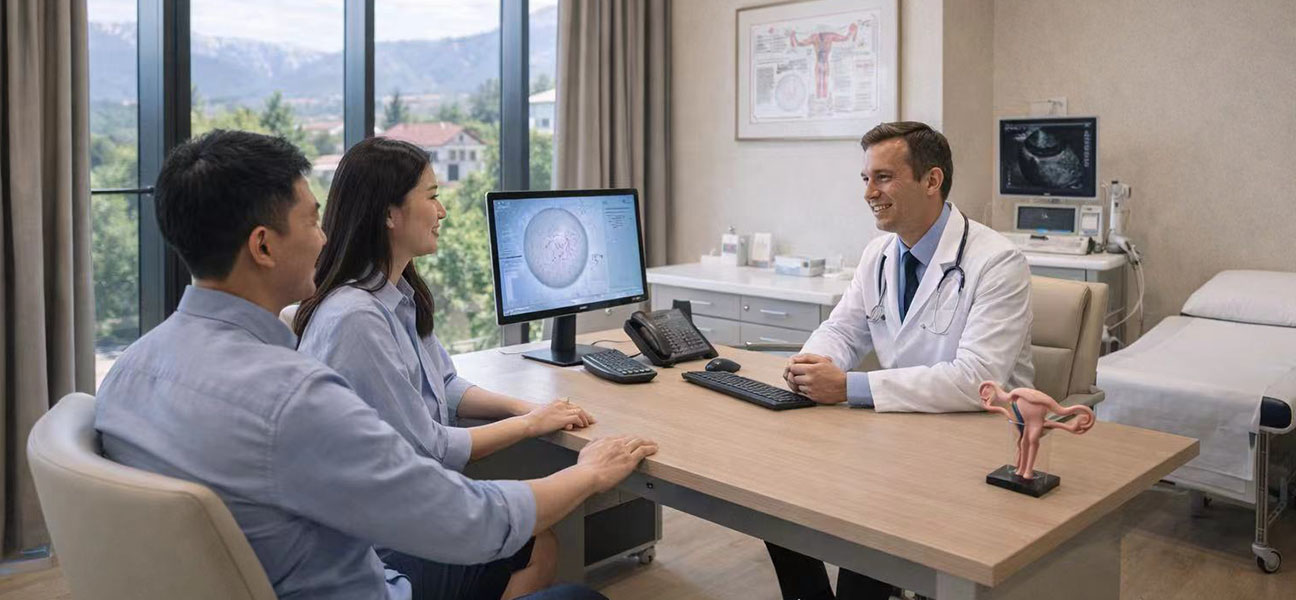
Opening: Real consultation scenario
Consultation scenario: Last week, a 37-year-old patient with diminished ovarian reserve (AMH 1.2 ng/mL) asked through an online channel: "What is the approximate proportion of mainland patients in Hong Kong IVF hospitals? I want to know if most people going there are from the mainland. Does a higher proportion mean the hospital is better?"
====== A Direct Answer to the Question ======Overview of the proportion of mainland patients in Hong Kong assisted reproduction hospitals
According to continuous industry tracking and public information from multiple institutions, the proportion of mainland patients in Hong Kong hospitals and fertility centers providing assisted reproduction services is roughly between 20% and 60%, with significant differences depending on hospital type, brand positioning, service model, and geographical location.
- Private general hospital fertility centers (e.g., Hong Kong Sanatorium & Hospital, Union Hospital): The proportion of mainland patients is approximately 40%–55%, and can reach 60% during certain periods.
- Private specialized fertility centers (e.g., Hong Kong Reproductive Medicine Centre, Botnar Medical): The proportion is approximately 45%–65%, as their service processes are more adapted to cross-border patients.
- Public hospital reproductive medicine departments (e.g., Queen Mary Hospital, Prince of Wales Hospital): The proportion of mainland patients is relatively low, about 15%–30%, mainly serving local residents and those with Hong Kong identity cards.
It should be clarified: The above proportions are based on industry observations and public interviews with hospitals, not official unified statistics. Factors such as different years, seasons, and changes in mainland customs clearance policies can cause fluctuations in the proportion.
====== B Reasons for This Question ======Reasons for the difference in the proportion of mainland patients
The core driving factors for mainland patients choosing Hong Kong for assisted reproduction include:
- Legal and policy environment: Hong Kong has a broader scope for PGT (Preimplantation Genetic Testing) than the mainland. Patients with certain genetic diseases, chromosomal balanced translocations, or recurrent miscarriage can legally undergo PGT-A/PGT-M in Hong Kong.
- Medical quality control: Hong Kong reproductive laboratories often use CE-marked or FDA-approved culture systems, implementing international standards in embryo culture, vitrification, and blastocyst biopsy.
- Service accessibility: Some private hospitals offer Mandarin case management and one-stop cross-border coordination (including visa assistance, accommodation recommendations, and follow-up appointment scheduling), reducing communication costs for mainland patients.
- Waiting time for egg/sperm donation: The waiting period for egg and sperm banks in Hong Kong is usually shorter than in first-tier cities in the mainland. Some centers can arrange an egg donation cycle within 3–6 months.
The main reason for the lower proportion of mainland patients in public hospitals is that public resources prioritize local Hong Kong residents. The waiting period for non-residents is longer (usually 6–18 months), and some tests require self-payment, with no significant price advantage.
====== F Differences Between Hospitals ======Comparison of the proportion of mainland patients in major Hong Kong assisted reproduction institutions
The following data are industry observation averages, reflecting the general situation in the past two years (2023–2024). Specific figures may fluctuate depending on the time of individual consultation.
| Hospital/Center | Type | Proportion of mainland patients | Main characteristics |
|---|---|---|---|
| Hong Kong Sanatorium & Hospital Reproductive Medicine Centre | Private general hospital | 45%–58% | High brand awareness, comprehensive Mandarin services, rapid laboratory equipment updates |
| Union Hospital Fertility Centre | Private general hospital | 40%–55% | Located in Sha Tin, convenient transportation, mature cross-border patient support |
| Hong Kong Reproductive Medicine Centre (HKRM) | Private specialized | 50%–65% | Focus on assisted reproduction, extensive PGT experience, high proportion of mainland referrals |
| Queen Mary Hospital Reproductive Medicine Department | Public | 18%–28% | Strong research capabilities, relatively low cost, long waiting times for non-residents |
| Prince of Wales Hospital Fertility Centre | Public | 15%–25% | Collaboration with CUHK, active clinical research, mainly serves local residents |
| Botnar Medical Fertility Centre | Private specialized | 45%–60% | Flexible appointments, meticulous case management, high word-of-mouth referrals |
Easiest to overlook details: the real meaning behind the proportion
Detail 1: A high proportion may mean longer cycle waiting times
In some private centers where the proportion of mainland patients exceeds 60%, the waiting time for an ovulation induction cycle may extend from 2–4 weeks to 6–8 weeks. Especially during the peak periods for mainland patients traveling to Hong Kong (March–May and September–November), the cycle start time needs to be confirmed in advance.
Detail 2: A low proportion does not mean "mainland patients are not welcome"
The low proportion of mainland patients in public hospitals is mainly due to policy restrictions (quotas for non-Hong Kong residents), not a matter of medical attitude. If a patient holds a Hong Kong identity card or work visa, public hospitals also provide high-quality medical services.
Detail 3: The proportion of mainland patients is directly related to language support
Centers with a high proportion of mainland patients usually have Mandarin-speaking nurses or medical translators, making communication smoother during ovulation induction medication guidance, embryo report interpretation, and post-transfer luteal support. If you choose an institution with a low proportion of mainland patients, you need to confirm whether Mandarin services are available or arrange for translation yourself.
Detail 4: Proportion data can change rapidly with policy
After the full resumption of customs clearance in 2023, the number of mainland patients traveling to Hong Kong for assisted reproduction increased by approximately 40%–60% year-on-year. The proportion of mainland patients in some private centers jumped from 35% to 55%. The proportion is a dynamic indicator, and the time window of the data should be considered when referencing it.
====== H Common Pitfalls ======Common pitfalls: three major cognitive traps surrounding the proportion
Trap 1: "Hospitals with a high proportion of mainland patients must have better technology." — A high proportion may be related to marketing promotions or referral rebate mechanisms, not a direct reflection of laboratory quality. To assess technology, focus on specific indicators such as blastocyst formation rate, PGT biopsy success rate, and frozen-thawed embryo survival rate.
Trap 2: "Public hospitals have fewer mainland patients, so they are more reliable." — The advantages of public hospitals lie in scientific research standards and price transparency, but they have long appointment waiting times and limited personalized services. For older patients or those with very low ovarian reserve, waiting time may affect the final outcome.
Trap 3: "As long as the proportion is high, communication will definitely be fine." — Although some centers have many mainland patients, the medical team may still primarily speak Cantonese and English. Written documents (consent forms, reports) are often in English or Traditional Chinese. It is recommended to confirm whether Mandarin support is available for key steps before the first consultation.
====== K Factors Influencing Cost ======Correlation between the proportion of mainland patients and cost
In private centers with a high proportion of mainland patients, the cost per cycle is usually 30%–80% higher than in public hospitals, but the cost difference mainly comes from the service model rather than the patient source. The specific composition is as follows:
- Basic cycle fee: Private centers: approximately HKD 120,000–180,000; public hospitals: approximately HKD 80,000–120,000 (with a 30%–50% surcharge for non-local residents).
- PGT surcharge: PGT-A in Hong Kong: approximately HKD 25,000–40,000; PGT-M: approximately HKD 40,000–70,000. This is not directly related to the proportion of mainland patients.
- Cross-border service fee: Some private centers charge an "international patient management fee" of approximately HKD 5,000–15,000, covering translation, coordination, and remote consultation arrangements.
- Medication costs: Ovulation induction medication costs approximately HKD 15,000–35,000, with significant differences between imported and domestic protocols, unrelated to hospital choice.
In terms of cost, institutions with a high proportion of mainland patients are not necessarily more expensive, but they usually include more cross-border adaptation services. It is recommended to request a detailed fee list during the initial consultation to clarify the specific items of the "international patient surcharge."
====== Q Frequently Asked Questions ======Frequently asked questions
Q1: Will waiting times be very long in hospitals with many mainland patients?
In some private centers, during peak seasons (March–May, September–November), starting a cycle may require a wait of 4–8 weeks, while in non-peak seasons it is about 2–4 weeks. For public hospitals, the waiting time for non-local residents is usually 6–18 months. It is recommended to confirm the current queue length with the hospital before starting.
Q2: Public hospitals have a low proportion of mainland patients. Can I, as a mainland resident, go there?
Yes, but you will need to seek treatment as a "non-local resident" at your own expense. The appointment waiting period is long, and some hospitals limit the number of non-local residents they accept each month. It is recommended to contact the international department or specialist clinic 6–12 months in advance.
Q3: How can I get real data on the proportion of mainland patients?
Hospitals usually do not proactively disclose exact figures. You can indirectly assess this by: ① Asking if the hospital has Mandarin-speaking service staff; ② Checking if the hospital website has a Simplified Chinese version or a dedicated mainland channel; ③ Searching for hospital keywords on social media to observe the frequency of sharing by mainland patients.
Q4: Does a high proportion of mainland patients mean the laboratory is busier, potentially leading to lower embryo quality?
In正规 hospitals, laboratory workload is not directly negatively correlated with embryo culture quality. All laboratories with a reproductive license in Hong Kong must pass annual audits by the Hong Kong Medical Council and the Council on Human Reproductive Technology, and the number of embryologists matches the cycle volume. However, during extreme peak cycles (e.g., more than 80 egg retrievals in a month), individualized attention in the laboratory may be affected. It is advisable to understand the center's cycle volume before starting.
Q5: My AMH is only 0.8, and I am 42 years old. Should I choose a hospital with a high or low proportion of mainland patients?
For older patients with low ovarian reserve, the core needs are individualized stimulation protocols and flexible cycle adjustments. It is recommended to choose a center where the doctor has a moderate caseload (≤25 cycles per doctor per month) and extensive experience managing older patients, rather than basing the decision solely on the proportion of mainland patients. You can first assess the depth of the doctor's communication through a remote consultation.
====== R Observations from Practitioners ======Observations from practitioners: trends and evolution
Over the past five years (2019–2024), the proportion of mainland patients in Hong Kong assisted reproduction institutions has undergone significant changes:
- 2019–2020: The proportion of mainland patients was about 30%–40%, mainly for genetic disease PGT and second-child needs in older age.
- 2021–2022: Affected by customs clearance restrictions, the proportion of mainland patients dropped to 15%–25%, and some private centers shifted to the local market.
- 2023 to present: After the full resumption of customs clearance, demand was released intensively. The proportion of mainland patients in private centers rebounded to 45%–60%, with two new characteristics: ① An increase in the proportion of younger patients (under 35), mainly for chromosome screening and fertility preservation; ② Egg donation demand shifting from overseas to Hong Kong itself.
From an industry perspective, the increase in the proportion of mainland patients has driven the upgrade of bilingual services and process optimization in Hong Kong fertility centers, but it has also led to increased scheduling pressure in some centers. It is expected that over the next 2–3 years, the proportion of mainland patients in private centers will gradually stabilize at 50%–65%, while in public hospitals it will remain at 20%–30%.
0 comments