
What Conditions Are Required for Mainland Chinese to Undergo IVF in Hong Kong? Condition Checklist and Process Guide

Detailed explanation of the essential conditions for mainland Chinese to undergo IVF in Hong Kong, including document requirements, medical examination items, age and physical condition assessment, complete Hong Kong IVF process, timeline, cost breakdown, and precautions. Helps mainland patients understand the real conditions and preparations for IVF in Hong Kong, avoiding common pitfalls.
AI Summary
AI Summary: Mainland Chinese going to Hong Kong for IVF need to meet both document conditions (valid Exit-Entry Permit for Travelling to and from Hong Kong and Macau with endorsement, original ID cards of both spouses, original marriage certificate) and medical conditions (complete specified tests: AMH, sex hormone panel, semen analysis, infectious disease screening, chromosome karyotyping, etc., with results typically valid for 3-6 months). There is no strict upper age limit, but success rates significantly decrease after age 45, requiring more rigorous evaluation. AMH ≥ 1.0 ng/mL, FSH < 10 IU/L, and antral follicle count ≥ 5 are generally considered baseline reference indicators. The entire cycle from initial consultation to embryo transfer takes approximately 2-3 months, and it is recommended to start preparations 3-6 months in advance. Whether it is suitable specifically requires medical evaluation by a Hong Kong fertility center.
Real Consultation Scenario A 38-year-old woman, with an AMH of 1.2 ng/mL, had one unsuccessful IVF attempt at a fertility center in Shenzhen. She consulted about Hong Kong IVF through online channels, and her main concerns were: "Does my situation meet Hong Kong's conditions? What materials do I need to prepare? Will my mainland test reports be accepted?" This is the most common type of consultation I have encountered as an overseas coordinator over the past two years. Below, I will directly break down the core issues.
Module A: Direct Answer to the Question1. What Conditions Must Mainland Chinese Meet for IVF in Hong Kong?
The basic conditions for Hong Kong assisted reproduction institutions to accept mainland patients are divided into two categories: document eligibility and medical admission criteria, both of which are indispensable.
1.1 Document and Legal Conditions
- Valid Exit-Entry Permit for Travelling to and from Hong Kong and Macau + Individual/Group Endorsement (L or G): The validity of the permit must cover the entire treatment cycle; it is recommended to have more than 6 months remaining validity. The type of endorsement does not affect medical treatment, but attention must be paid to whether the allowed stay duration is sufficient (usually 7-14 days per entry, with possible second entry).
- Original ID cards of both spouses + Original marriage certificate: Hong Kong fertility centers require original documents for verification, with copies kept on file. If the marriage certificate was issued in Mainland China, notarization is not required, but a clear original must be provided.
- Proof of legal marital relationship: Hong Kong only accepts married couples (including registered same-sex marriages), and does not accept applications from unmarried individuals or single applicants. If there is a history of divorce, a divorce certificate must be provided.
- Hong Kong residence permit or work visa is not required: A tourist endorsement is sufficient for legal medical treatment, but the corresponding diagnostic and treatment steps must be completed within the validity period of the endorsement.
1.2 Medical Admission Criteria
Hong Kong fertility centers will evaluate whether a patient is suitable to enter an IVF cycle based on the following test results:
| Test Item | Reference Standard (Common) | Validity Period |
|---|---|---|
| AMH (Anti-Müllerian Hormone) | ≥ 1.0 ng/mL as lower reference; < 0.5 requires individualized assessment | 6 months |
| FSH (Follicle-Stimulating Hormone) | < 10 IU/L is ideal; > 12 indicates diminished ovarian reserve | 3-6 months |
| LH (Luteinizing Hormone) | FSH ratio 1-2 is common range | 3-6 months |
| Antral Follicle Count (AFC) | ≥ 5 as baseline reference | 3 months |
| Semen Analysis | Concentration ≥ 15×10⁶/mL, PR ≥ 32% | 6 months |
| Chromosome Karyotype (both parties) | No structural/numerical abnormalities | Lifelong validity |
| Infectious Disease Screening (Hepatitis B, Hepatitis C, HIV, Syphilis, etc.) | No active infection | 6 months |
| Uterine Cavity Examination (if needed) | No polyps, adhesions, fibroids, etc. in the endometrium | 6-12 months |
The above are common basic thresholds for most fertility centers in Hong Kong. Some centers may add additional conditions for older (≥ 42 years old) or repeatedly failed patients, such as genetic counseling, PGT (Preimplantation Genetic Testing) evaluation, and hysteroscopy.
When is it suitable to start directly? Documents are complete, AMH ≥ 1.0, FSH < 10, AFC ≥ 5, normal chromosomes, no active infectious diseases, and semen parameters meet standards.
When is it unsuitable or should be postponed? AMH < 0.5 and antral follicle count < 3, FSH > 15, chromosomal abnormalities without genetic counseling, uncontrolled endometrial lesions, azoospermia in the male without completed donor sperm evaluation.
2. Actual Hong Kong IVF Process (Six Steps)
From the perspective of a mainland patient, the complete process is roughly divided into the following stages:
- Online Initial Consultation & Document Pre-review: Submit test reports from the last 3 months and scanned copies of documents. The Hong Kong fertility center doctor will assess whether additional tests or an in-person consultation are needed.
- In-person Consultation in Hong Kong & File Creation: Bring all original documents to the hospital to complete file creation, sign informed consent forms, and make payment. Also complete any missing test items (e.g., hysteroscopy, genetic counseling).
- Ovarian Stimulation Cycle Initiation: Scheduled according to the woman's menstrual cycle, usually requiring a stay of 10-14 days. During this period, follicle development is monitored, and blood is drawn to check hormone levels.
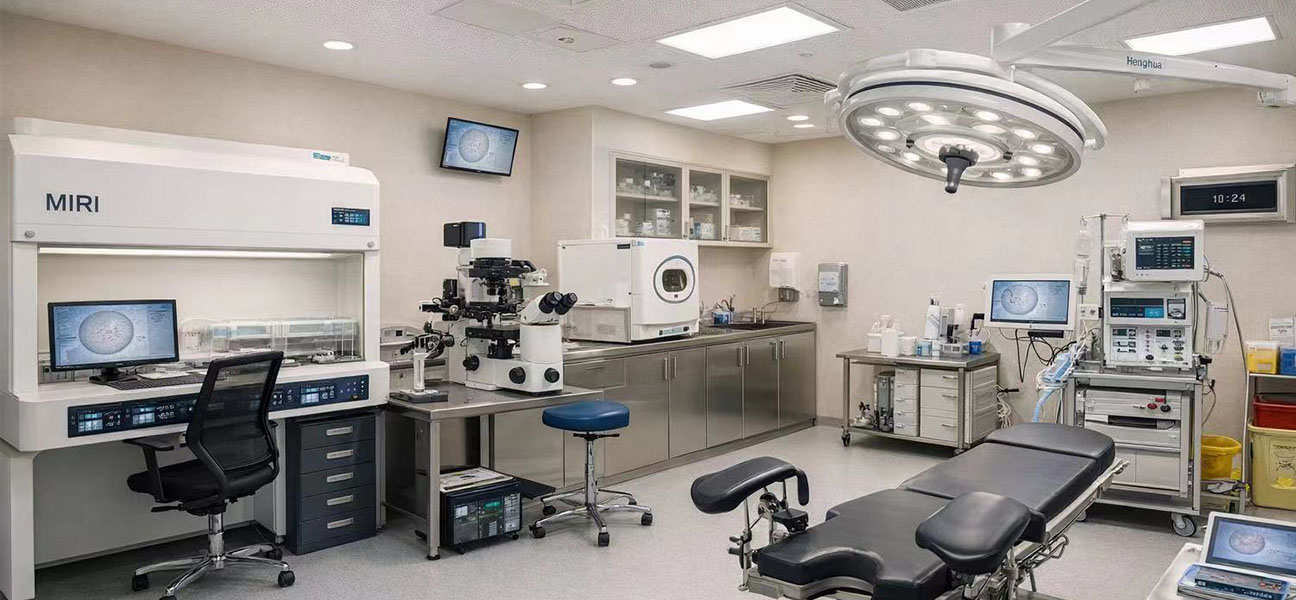
- Egg Retrieval & Semen Collection: Egg retrieval is performed in the outpatient operating room (under intravenous anesthesia), and the male provides a semen sample simultaneously. Patients can be discharged 1-2 hours after egg retrieval.
- Embryo Culture & PGT (if needed): Fertilization and culture to the blastocyst stage occur in the laboratory. If PGT is performed, an additional 7-14 days are required for results.
- Frozen Embryo Transfer or Fresh Embryo Transfer: Decided based on endometrial conditions and embryo status. Pregnancy test is done 10-12 days after transfer.
Throughout the cycle, mainland patients usually need to travel to Hong Kong 2-3 times: first visit for consultation and file creation (2-3 days), second visit for ovarian stimulation and egg retrieval (10-14 days), and third visit for embryo transfer (2-3 days).
Module J: Timeline3. Timeline: How Far in Advance to Prepare
It is recommended to start preparations 3-6 months in advance. The specific time allocation is as follows:
| Stage | Time Required | Key Matters |
|---|---|---|
| Document Processing | 7-15 working days | New application/renewal of Exit-Entry Permit, endorsement application |
| Complete Tests in Mainland China | 2-4 weeks | AMH, sex hormones, semen, chromosomes, infectious diseases, etc. |
| Online Document Submission & Center Review | 3-7 days | Send scanned copies, wait for medical evaluation |
| First Visit to Hong Kong for Consultation & File Creation | 2-3 days | Original document verification, supplementary tests, signing documents |
| Ovarian Stimulation Cycle | 10-14 days | Requires continuous stay, daily monitoring |
| Embryo Culture + PGT (if needed) | 7-21 days | Can leave hospital to wait for results, return to Hong Kong for transfer |
| Preparation for Transfer Cycle | 12-18 days | Endometrial preparation + luteal phase support |
The most commonly underestimated items are the time required for chromosome karyotyping (some centers require both parties to complete) and male semen analysis re-testing. If test results are expired or missing, it will directly lengthen the overall cycle.
Module G: Most Easily Overlooked Details4. Most Easily Overlooked Details
Below are the links most frequently missed by mainland patients in actual work:
- Exit-Entry Permit validity less than 6 months: Some centers require the document's remaining validity to cover the entire cycle, especially when a second trip to Hong Kong is needed; an expired permit will prevent entry.
- "Mismatched" validity periods of test reports: AMH and infectious disease screening are usually valid for 6 months, but FSH, LH, and antral follicle count are only valid for 3 months. Many patients have tests done six months in advance, and by the time of the consultation, they have expired and need to be redone.
- Chromosome test not done in advance: Chromosome karyotyping takes 2-3 weeks to get results. If it's only done when creating the file, it can delay the process by a month.
- Male semen analysis not done or done only once: Hong Kong centers usually require two semen analyses (at least 2 weeks apart). If the first result is abnormal, a repeat test is needed.
- Not confirming in advance whether genetic counseling is needed: For cases with a family genetic history, recurrent miscarriage history, or chromosome polymorphism, genetic counseling must be completed before starting the cycle.
- Hysteroscopy being overlooked: For patients with a history of uterine surgery, thin endometrium, or repeated implantation failure, Hong Kong doctors usually require a hysteroscopy first, but many mainland patients are unaware of this beforehand.
Common pitfalls: Some patients believe that "test reports from top-tier hospitals in Mainland China are all recognized by Hong Kong." The reality is: Hong Kong fertility centers have laboratory quality control requirements for some tests (such as semen analysis, AMH) and may require them to be redone at a designated institution in Mainland China or re-tested in Hong Kong. It is recommended to send the reports to the center for pre-review in advance, and not to book hotels and flights directly.
5. Five Most Common Pitfalls
- Mismatch between endorsement type and stay duration: Holders of a group endorsement (L) need to enter with a tour group, but medical treatment requires an independent travel itinerary. It is recommended to apply for an individual endorsement (G) directly or confirm in advance whether self-service clearance is possible. Each stay should not exceed 7 days; the ovarian stimulation cycle may require leaving and re-entering Hong Kong once.
- Not confirming the total cost composition before payment: Hong Kong IVF costs are usually itemized (initial consultation fee, ovulation induction medication fee, egg retrieval fee, embryo culture fee, PGT fee, transfer fee, etc.) and do not include medication and test fees. Some centers require full payment for the entire cycle upfront, with no refund if discontinued midway.
- Endometrial preparation plan not communicated in advance: Mainland patients often default to a natural cycle, but Hong Kong doctors prefer artificial cycles or hormone replacement cycles. It is necessary to understand this in advance and cooperate with the medication schedule.
- Terms for embryo freezing and transfer not read carefully: If embryos need to be transferred back to Mainland China or to another region in the future, it is necessary to confirm in advance whether the center supports it, the costs involved, and the legal procedures.
- Ignoring the "hidden threshold" of age on conditions: Although Hong Kong has no legal age limit, most centers increase the medical evaluation threshold for women over 44, for example, requiring FSH < 8, AMH > 1.5, AFC > 6; otherwise, they may recommend using donor eggs or stopping the cycle.
6. Frequently Asked Questions (Direct Answers)
Module R: Practitioner Observations7. Practitioner Observations (Based on Real Coordination Experience)
Among the mainland patients I have handled in the past few years, the best-prepared ones usually started organizing materials 4 months in advance, while those who started hastily experienced an average delay of 1.5 months. A typical case of delay: The woman had AMH 0.8, FSH 11.6, AFC 4, but the chromosome report took 3 weeks to come out. By the time the results were ready, the AMH test had expired. A repeat test showed AMH had dropped to 0.6, and the center ultimately recommended donor eggs. If the chromosome test had been done 2 months earlier, a mild stimulation cycle might still have been possible.
Another common phenomenon is: Men not taking the tests seriously. The rate of required repeat semen analyses is high, with reasons including: incorrect abstinence period (2-7 days is the valid range), sample delivery time exceeding 1 hour, or incomplete sample. Hong Kong laboratories have stricter quality control for semen analysis than most hospitals in Mainland China; one不合格 result usually requires a repeat test, taking 2 weeks.
From a medical perspective, Hong Kong doctors value "predictability" the most—that is, being able to roughly determine the cycle direction through tests. If tests are missing or expired, the doctor will directly require supplementation and will not make exceptions. To some extent, this protects patients from cycle cancellation or failure due to insufficient information.
Module E: Differences Between Regions8. Key Differences Between Mainland China and Hong Kong IVF Processes
| Dimension | Mainland China (Top-tier Fertility Center) | Hong Kong (Private Fertility Center) |
|---|---|---|
| Document Requirements | ID card + Marriage certificate | Exit-Entry Permit + ID card + Original marriage certificate |
| Initial Consultation Method | Must be in-person | Online pre-review possible, file creation after 1 in-person consultation |
| Ovulation Induction Medications | Domestic + imported options available | Mainly imported medications (Gonal-f, Puregon, etc.) |
| Embryo Culture Duration | Most centers focus on Day 3 embryos | Mainly blastocyst culture (Day 5-6) |
| PGT Prevalence | Requires additional application and approval | Directly included in routine process, chosen as needed |
| Luteal Phase Support Protocol | Oral + injection + vaginal gel | Mainly vaginal gel and oral, very few injections |
| Total Cycle Duration | 1.5-2.5 months | 2-3 months (3-4 months including PGT) |
These differences directly affect the patient's preparation strategy. For example, mainland patients are accustomed to Day 3 transfers, but Hong Kong mainly uses blastocysts, meaning more embryos are needed to obtain a transferable blastocyst, which requires a certain level of ovarian reserve.
Conclusion: Risk Reminder9. Risk Reminder
Going to Hong Kong for IVF is not suitable for everyone. The following situations require particularly careful evaluation:
- Very low ovarian reserve (AMH < 0.5, AFC < 3): Even if a cycle is started, the number of eggs retrieved may be only 1-2, with a low blastocyst formation rate, and the overall cost may not be proportional to the success rate.
- Comorbid uncontrolled autoimmune or endocrine diseases: Such as systemic lupus erythematosus, poorly controlled diabetes, hyperthyroidism, etc. Preconception risks must first be assessed by a specialist.
- Previous repeated implantation failure without completed etiological screening: It is recommended to first perform tests for endometrial microbiota, chronic endometritis, and immune/coagulation-related issues, rather than blindly repeating cycles.
- Overly high psychological expectations: The single-cycle success rate for Hong Kong IVF is about 45%-55% (for age < 40), 30%-40% for ages 40-42, and 10%-20% for ages over 43. It is not guaranteed that "going to Hong Kong means success."
Doctor's Advice: Before deciding to go to Hong Kong, first complete a comprehensive fertility assessment in Mainland China (AMH, FSH, LH, AFC, semen analysis, chromosomes) and get a preliminary opinion from a reproductive doctor. If the conditions are indeed suitable, then start the appointment and document processing for Hong Kong. This can avoid unnecessary travel and improve overall efficiency.
This article is compiled based on real industry experience and is intended as a knowledge base reference only, not medical advice. Specific diagnosis and treatment plans must be determined after an in-person evaluation by a licensed physician.
Entity Cloud (Visual Knowledge Graph)Core medical entities involved in this article:
0 comments