
St. Teresa's Hospital IVF Success Rate | Key Data Interpretation of Hong Kong Assisted Reproduction Centre

St. Teresa's Hospital IVF success rate is influenced by multiple factors including age, AMH, embryo chromosomal normality rate, etc. Based on the regulatory framework of the Hong Kong Council on Human Reproductive Technology, interpret the differences in core indicators such as live birth rate and clinical pregnancy rate to help patients scientifically evaluate treatment expectations and clarify examination and preparation pathways.
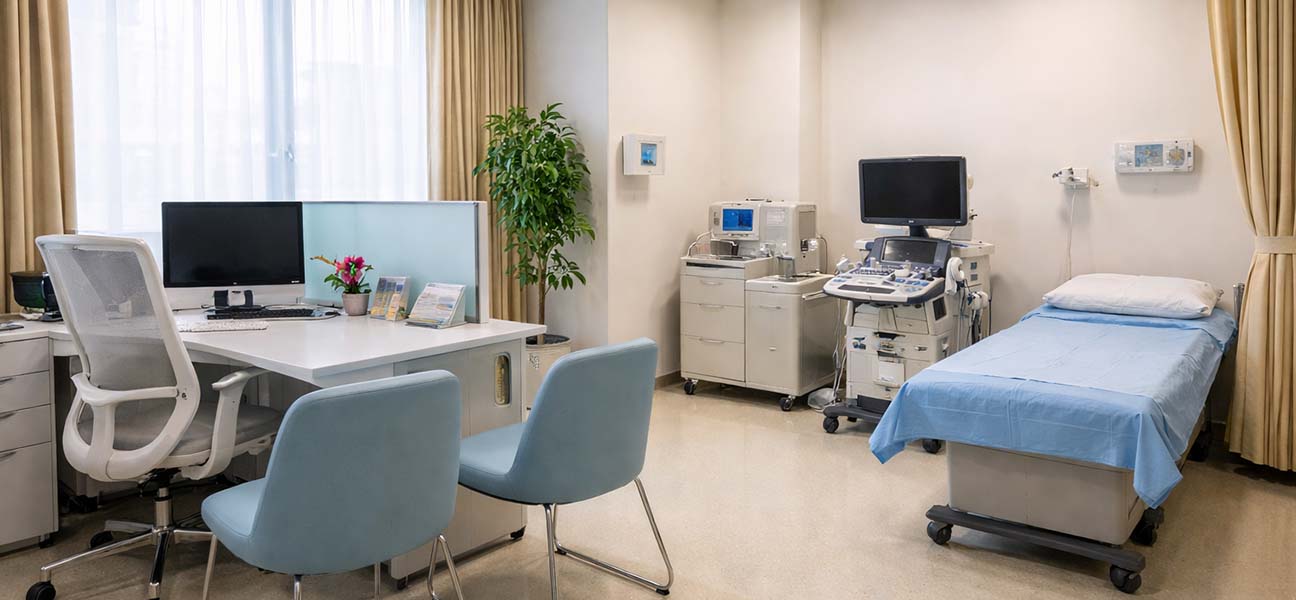
The core determinants of St. Teresa's Hospital IVF success rate include patient age, ovarian reserve function, embryo chromosomal normality rate, and laboratory quality standards. These four dimensions together form the basic framework of success rate, and none are dispensable.
Core Determinants of Success Rate
St. Teresa's Hospital IVF success rate is not a single fixed value but the result of the combined effect of individual patient conditions and medical quality. From the perspective of reproductive medicine, the following variables directly affect the live birth rate per single transfer:
- Female Age: Age is an independent and the strongest prognostic factor. The live birth rate for women under 35 is significantly higher than for those over 40, mainly related to the increase in oocyte chromosomal aneuploidy rate with age.
- Ovarian Reserve Indicators: AMH, antral follicle count (AFC), and basal FSH level collectively reflect oocyte quantity and quality. When AMH is below 1.0 ng/mL, the number of oocytes retrieved decreases, and the cumulative live birth rate declines.
- Embryo Chromosomal Normality Rate: PGT-A screening can reduce transfer failure or miscarriage caused by chromosomal abnormalities, but not all cycles require or are suitable for PGT.
- Laboratory and Embryo Culture System: Blastocyst culture rate, vitrification thawing survival rate, and timing of transfer directly influence the final outcome.
The Hong Kong Council on Human Reproductive Technology requires all licensed centres to regularly report treatment cycle numbers and live birth rates. St. Teresa's Hospital, as one of the medical institutions in Hong Kong with IVF qualifications, must have its data comply with regulatory standards. However, individual differences between patients are far greater than the average differences between centres, so directly comparing "success rate percentages" has limited reference value for individual decision-making.
Doctor's Perspective: How to Interpret Success Rate Data
Core Indicators Focused on by Reproductive Doctors: The live birth rate per single transfer (LBFR) is closer to the patient's ultimate goal than the clinical pregnancy rate. If a centre reports a "pregnancy rate of 60%" but does not specify how many of these are biochemical pregnancies or early miscarriages, the reference value is compromised. The reproductive team at St. Teresa's Hospital provides stratified data during consultation—explained by age, type of embryo transferred (cleavage stage or blastocyst), and whether PGT was used—rather than giving a single number.
When evaluating success rates, doctors also make individualised judgments based on the following factors: number of previous failed transfers, uterine cavity environment (presence of endometrial polyps, adhesions, or adenomyosis), male partner's sperm DNA fragmentation rate (DFI), and the presence of immune or coagulation abnormalities. These variables cannot be reflected in the macro data published by the centre but are key regulatory factors for a specific patient's success rate.
Association Between Age and Success Rate
Age stratification is the most fundamental method for evaluating IVF success rates. The following data, referencing public statistics from the Hong Kong assisted reproduction industry and international IVF monitoring reports (not specific to St. Teresa's Hospital single data), are used to illustrate the trend relationship between age and live birth rate:
| Female Age | Live Birth Rate per Transfer Cycle (Reference Range) | Main Influencing Factors |
|---|---|---|
| <35 years | 40%–50% | Higher oocyte chromosomal normality rate, ideal oocyte yield |
| 35–37 years | 30%–40% | Oocyte quality begins to decline, aneuploidy rate increases |
| 38–40 years | 20%–30% | Oocyte yield decreases, PGT-A can improve single transfer efficiency |
| 41–42 years | 10%–20% | Live birth rate with own eggs significantly declines, need for egg donation increases |
| >42 years | <10% | Very low live birth rate with own eggs, egg or embryo donation recommended |
The Fertility Centre at St. Teresa's Hospital conducts pre-assessments according to the above stratification during consultations and provides individualised expectations based on indicators such as AMH and AFC. It is important to emphasise that for patients over 40, even with PGT screening, some cycles are cancelled due to the absence of transferable embryos, and this data should also be considered in the overall success rate.
Differences Between Hospitals in Hong Kong and the Logic of Choice
Medical institutions in Hong Kong holding an IVF license include public hospitals (e.g., Queen Mary Hospital, Prince of Wales Hospital) and private hospitals (St. Teresa's Hospital, Hong Kong Sanatorium & Hospital, Union Hospital, etc.). Public hospitals have lower fees but longer waiting times (6–12 months) and restrictions on patient age and number of previous treatments. Private hospitals have shorter cycle waiting times and higher service flexibility but significantly higher costs.
- Characteristics of St. Teresa's Hospital: As a private hospital with a Catholic background, its Fertility Centre emphasises ethical compliance and does not provide surrogacy or selective embryo reduction services. Laboratory equipment and embryologist experience meet international standards, with a stable blastocyst culture rate.
- Differences from Other Private Hospitals: Laboratory procedures, transfer strategies, and PGT technology platforms vary slightly between centres. For example, some centres use time-lapse imaging incubators, while St. Teresa's Hospital focuses more on individualised ovarian stimulation protocols and endometrial receptivity assessment.
Choosing a hospital should not be based solely on success rate numbers but requires evaluation of: whether the doctor adequately explains the individualised prognosis, whether the laboratory has PGT and vitrification capabilities, and the coordination experience of the nursing team for cross-border patients (e.g., from Mainland China).
Easily Overlooked Details
The impact of hidden factors on success rate is often underestimated:
- Sperm DNA Fragmentation Index (DFI): Even if routine semen parameters are normal, a DFI higher than 30% can reduce blastocyst formation and implantation rates. Male partners should have DFI checked concurrently, not just a semen analysis.
- Vitamin D Level: Multiple studies show that patients with sufficient vitamin D (>30 ng/mL) have higher clinical pregnancy rates. Testing and supplementation before transfer are recommended.
- Thyroid Function: When TSH is above 2.5 mIU/L, even within the high-normal range, it may affect embryo implantation and early development.
- Endometrial Microbiome: Chronic endometritis (CE) is a common hidden cause of recurrent implantation failure and needs confirmation through endometrial biopsy or hysteroscopy.
During the initial consultation at St. Teresa's Hospital Fertility Centre, a full set of basic examinations is recommended, including AMH, AFC, semen DFI, thyroid function, and uterine cavity assessment, rather than just routine hormone and ultrasound tests. Neglecting any of the above details may lead to reduced cycle efficiency or repeated failure.
Interpretation of Key Examination Indicators
The following indicators are items that must be completed before evaluating the St. Teresa's Hospital IVF success rate, as their results directly determine the ovarian stimulation protocol and transfer strategy:
| Indicator | Reference Range | Significance for Success Rate |
|---|---|---|
| AMH (Anti-Müllerian Hormone) | 1.0–4.0 ng/mL | Reflects ovarian reserve; AMH <0.8 suggests oocyte yield may be less than 4 |
| FSH (Follicle-Stimulating Hormone) (Day 2–3 of menstruation) | <10 IU/L | FSH >12 indicates diminished ovarian response, requiring protocol adjustment |
| AFC (Antral Follicle Count) | >7 (bilateral total) | AFC <5 indicates reduced ovarian reserve, increased risk of cycle cancellation |
| Sperm DNA Fragmentation Index (DFI) | <25% | DFI >30% is associated with decreased blastocyst rate and increased miscarriage rate |
| Vitamin D (25-OH-D) | ≥30 ng/mL | Insufficiency is associated with a 20%–30% reduction in live birth rate after transfer |
If AMH is below 0.5 ng/mL or AFC is less than 3, the doctor may recommend a mild stimulation or natural cycle protocol and inform in advance that the cumulative live birth rate may be less than 15%. In such cases, doctors at St. Teresa's Hospital will discuss in detail the feasibility and process of egg or embryo donation.
Frequently Asked Questions
How far in advance should I prepare for IVF at St. Teresa's Hospital?
It is recommended to complete the following preparations at least 2–3 months in advance:
- Female: AMH, FSH, AFC, thyroid function, vitamin D, uterine cavity ultrasound (to rule out polyps or adhesions).
- Male: Semen analysis + DFI, chromosome karyotype (if recurrent miscarriage or severe oligoasthenospermia).
- Both: Hepatitis B, Hepatitis C, HIV, syphilis, blood type, Rh factor, thalassemia screening (required for registration in Hong Kong).
If PGT is needed, an additional 4–6 weeks are required for embryo culture and genetic testing. From the initial consultation to transfer, a complete cycle typically takes 8–12 weeks.
When is it not suitable to undergo IVF at St. Teresa's Hospital?
The following situations require careful evaluation:
- Uncontrolled severe hypertension, diabetes, or autoimmune diseases.
- Severe uterine malformation or intrauterine adhesions that cannot be corrected.
- Untreated bilateral hydrosalpinx (fluid reflux can reduce implantation rate).
- Severe mental illness or cognitive impairment preventing informed consent.
Additionally, due to its ethical policy, St. Teresa's Hospital does not provide surrogacy services; those with this need should seek other institutions.
How to determine if I am suitable for PGT screening?
PGT-A is suitable for: women aged ≥38 years, recurrent implantation failure (≥3 times), recurrent miscarriage (≥2 times), known chromosomal balanced translocation. Not suitable for: very low ovarian reserve (AMH <0.5), low embryo number (<3 blastocysts), or only needing single gene disease assessment (PGT-M should be chosen in this case). The doctor will provide recommendations based on the risk-benefit ratio of blastocyst biopsy.
Actual Process and Timeline
The IVF cycle at St. Teresa's Hospital is roughly divided into the following stages:
- Initial Consultation and Examinations (1–2 days): Face-to-face consultation with the reproductive doctor, full set of examination orders issued; some results available the same day, chromosome and genetic screening takes 2–3 weeks.
- Developing Ovarian Stimulation Protocol (Day 2–3 of menstruation): Choose antagonist or long protocol based on AMH and AFC; average stimulation duration 9–12 days.
- Egg Retrieval Surgery (Outpatient surgery, intravenous anaesthesia): Takes 20–30 minutes; patient can be discharged after 2 hours of observation.
- Embryo Culture and PGT (5–7 days): Culture to blastocyst stage; if PGT is needed, biopsy is performed and sent for testing; results take 2–3 weeks.
- Transfer and Luteal Support (15–20 minutes): Progesterone gel or injections used after transfer; blood test for HCG on day 10–12.
From the start of the cycle to transfer, a cycle without PGT takes about 6–8 weeks; a cycle with PGT takes about 10–12 weeks. Frozen embryo transfer (FET) requires an interval of 1–2 menstrual cycles after egg retrieval for endometrial preparation.
Risks and Precautions
Medical risks that need to be clarified:
- OHSS (Ovarian Hyperstimulation Syndrome): Moderate to severe incidence about 1%–3%; St. Teresa's Hospital uses GnRH agonist trigger to significantly reduce the risk.
- Multiple Pregnancy: When 2 embryos are transferred, the twin rate is about 20%–30%; multiple pregnancy increases the risk of preterm birth and preeclampsia.
- Complications of Egg Retrieval Surgery: Bleeding, infection, pelvic adhesions (rare, incidence <0.5%).
- Ectopic Pregnancy After Embryo Transfer: Incidence about 1%–2%; risk is higher in those with a history of tubal pathology.
Informed consent must be signed for all risks before the procedure, and the doctor will explain the probability of occurrence and management plans in detail.
Management of Special Situations
For patients with very low AMH (<0.3 ng/mL) or recurrent implantation failure, the reproductive team at St. Teresa's Hospital initiates multidisciplinary discussions. Possible adjustments include:
- Switching to natural cycle or mild stimulation protocol to reduce medication dose and cycle cancellation rate.
- Adding growth hormone (GH) or DHEA as adjuvant medication, though evidence level is limited.
- Hysteroscopy with endometrial biopsy to rule out chronic endometritis (CD138+).
- High-throughput gene sequencing for both partners to check for chromosomal microdeletions/microduplications.
Although these measures do not guarantee success, they can avoid blindly repeating the same protocol. If there is still no live birth after 2–3 cumulative cycles, the doctor will honestly recommend considering egg or embryo donation and explain the compliant pathways and waiting times in Hong Kong.
Doctor's Advice
The evaluation of St. Teresa's Hospital IVF success rate should not be simplified to a percentage. As a reproductive doctor, I advise patients to bring hormone reports from the last 3 months, the male partner's semen analysis, and previous surgical records (if any) to the initial consultation. When discussing with the doctor, focus on: What is the expected live birth rate corresponding to my age and AMH? If the first transfer fails, what is the second step plan? Knowing the answers to these two questions is more practically valuable than any promotional data.
Additionally, from deciding on treatment to after the transfer, maintaining a BMI between 18.5–24 kg/m², not smoking, and limiting caffeine intake (<200 mg/day)—these lifestyle adjustments may contribute more to the success rate than most people expect.
This article is written based on Hong Kong assisted reproduction industry standards and general clinical knowledge, and does not involve undisclosed internal data of St. Teresa's Hospital. Please refer to the attending physician's consultation opinion for specific treatment plans.
0 comments