
Queen Mary Hospital Embryology Lab Evaluation: Hardware Level and Clinical Suitability Analysis

What is the real level of the Queen Mary Hospital embryology lab? A comprehensive evaluation from dimensions such as equipment configuration, personnel qualifications, quality control system, and clinical outcomes. Suitable for which groups, what limitations exist, and analysis of differences with private fertility center labs.
Using physician decision-making logic as the opening
When reproductive physicians formulate ovarian stimulation protocols, the hardware level and quality control system of the embryology lab are key variables determining cycle outcomes. As a core fertility center within Hong Kong's public healthcare system, Queen Mary Hospital's embryology lab routinely handles complex cases such as advanced maternal age, recurrent implantation failure, and polycystic ovary syndrome. The lab's operational model has structural differences from private centers. The following analysis breaks down the true capability boundaries of the Queen Mary Hospital embryology lab from the perspective of actual treatment decision-making.
Basic Configuration of Queen Mary Hospital Embryology Lab
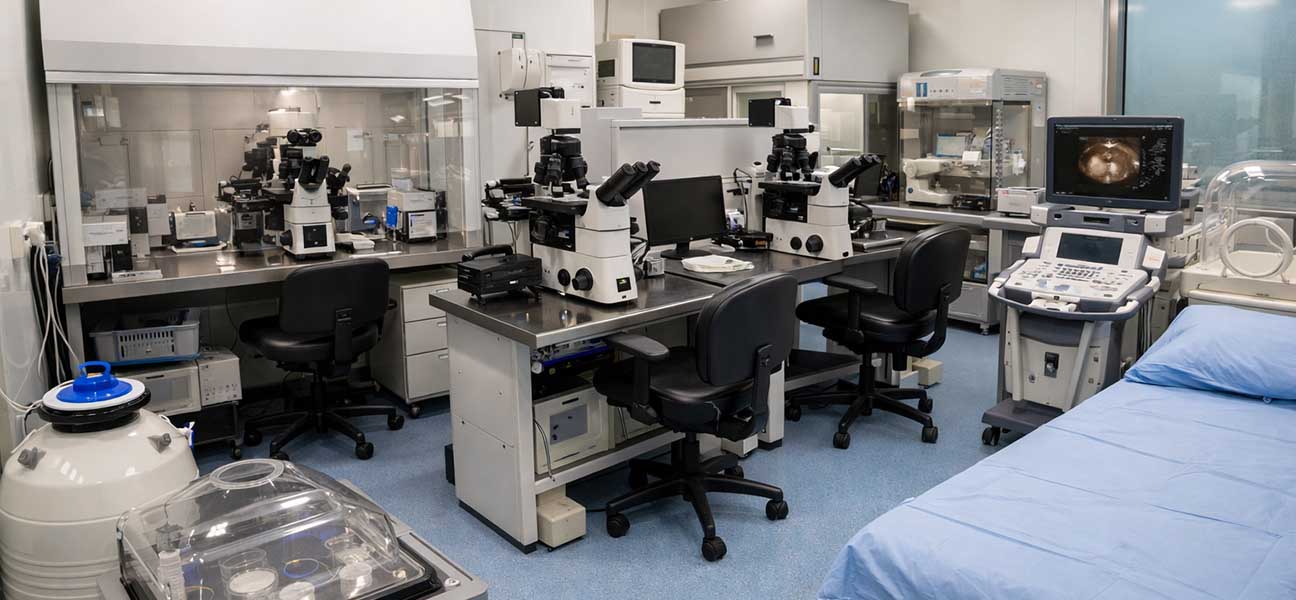
The Reproductive Medicine Centre of Queen Mary Hospital is under the Hong Kong Hospital Authority. Its embryology lab is built according to public hospital standards, with equipment configuration centered on meeting clinical needs, rather than characterized by stacking high-end equipment.
| Evaluation Dimension | Specific Content | Description |
|---|---|---|
| Incubator Type | Multiple CO₂ incubators, some are tri-gas incubators | Can maintain a low-oxygen environment (5% O₂), suitable for embryo development |
| Micromanipulation Equipment | ICSI microinjection system, laser-assisted hatching device | Supports intracytoplasmic sperm injection, assisted hatching, embryo biopsy |
| Embryo Assessment System | Time-lapse imaging system | Used for some cycles, not standard for all |
| Cryopreservation Equipment | Liquid nitrogen tanks, programmable freezer, vitrification consumables | Supports freezing of embryos, eggs, and sperm |
| Air Quality | HEPA filtration system, positive pressure environment | Meets public hospital infection control standards |
The above information is compiled based on publicly available materials from public hospitals and industry-standard configurations. Specific equipment models and batches may be subject to updates.
Personnel Structure of Queen Mary Hospital Embryology Lab
The embryologist team in a public hospital typically has a stable training system, but staff turnover is lower than in private centers. The embryology lab at Queen Mary Hospital is managed by senior embryologists overseeing daily operations, with a team including senior embryologists, junior embryologists, and rotating trainees.
- Team Size: Approximately 6-10 full-time embryologists responsible for embryo culture for an average of 20-30 cycles per day
- Qualification Requirements: Embryologists must complete a training pathway accredited by the Hong Kong Academy of Medicine or hold overseas embryology certification
- Quality Control Mechanism: Weekly calibration of incubator temperature, CO₂ concentration, and O₂ concentration; monthly quality control testing of embryo culture media
- Backup Mechanism: Critical equipment is equipped with UPS power supply and backup incubators to handle sudden failures
Compared to private centers, the embryologist team at Queen Mary Hospital has an advantage in experience handling complex cases, but operates at the inherent pace of the public system regarding responsiveness to personalized services.
Core Capabilities of the Lab: Outstanding Aspects
Based on publicly available industry data and patient feedback, the Queen Mary Hospital embryology lab demonstrates verifiable advantages in the following dimensions:
- Embryo Culture for Advanced Maternal Age: The lab has a mature low-oxygen culture protocol for women over 35, reducing oxidative stress damage to embryos.
- Management of Recurrent Fertilization Failure: For patients with a previous ICSI fertilization rate below 30%, the lab can adjust sperm processing methods and activation protocols.
- Embryo Biopsy and PGT Technology: The lab supports blastocyst biopsy and can perform preimplantation genetic testing for aneuploidy (PGT-A).
- Vitrification Thaw Survival Rate: The frozen embryo thaw survival rate is consistently above 95%, on par with other major fertility centers in Hong Kong.
Differences from Private Fertility Center Labs
When choosing Queen Mary Hospital, patients need to understand the fundamental differences in lab operations between the public and private systems:
| Comparison Dimension | Queen Mary Hospital (Public) | Private Fertility Center |
|---|---|---|
| Equipment Update Speed | Relies on government funding, longer update cycles | Independent procurement based on market competition, faster updates |
| Personalized Protocols | Follows standardized procedures, limited room for individual adjustment | Can customize culture protocols based on patient needs |
| Waiting Time | Requires queuing; non-urgent cycles wait 3-6 months | Cycle can start within 1-2 weeks after appointment |
| Cost Level | Public pricing, about 1/3 to 1/2 of private costs | Market pricing, higher costs |
| Case Complexity | Receives a large number of referred complex cases | Primarily routine cases, selectively accepts high-risk patients |
This difference determines that Queen Mary Hospital is suitable for patients who are cost-sensitive, have flexible time, or need to manage complex medical conditions; it is not suitable for those seeking极致 personalized services or with urgent time constraints.
Easily Overlooked Details: Hidden Costs of the Lab
When choosing an embryology lab, patients often focus only on equipment brands or success rate numbers. The following three details have a substantial impact on cycle outcomes:
- Daily Calibration Records of Incubators: As a public institution, Queen Mary Hospital has verifiable calibration records, but equipment aging may lead to temperature fluctuations larger than newer equipment in private centers.
- Night Shift and Holiday Duty System: The public hospital embryology lab typically maintains only minimal staffing during nights and holidays, which may affect the flexibility of adjusting the egg retrieval window.
- Timing of Embryo Assessment: The lab uses fixed assessment time points (e.g., D3, D5) rather than continuous monitoring, potentially missing information on early abnormal cleavage.
These details are not directly reflected in success rate statistics but have a significant impact on specific patient groups (e.g., those with low oocyte yield or slow embryo development).
Common Pitfalls: Patient Cognitive Biases
Based on practitioner observations, common misconceptions patients have about the Queen Mary Hospital embryology lab include:
- Misconception 1: "Public hospital equipment must be outdated." — In fact, core equipment like incubators and micromanipulation systems at Queen Mary Hospital are of the same generation as those in private centers; the gap lies in quantity and update frequency.
- Misconception 2: "The embryology lab level is only reflected by the success rate." — Success rates are heavily influenced by the age composition of the patient population. Because Queen Mary Hospital receives many older referred patients, its overall success rate is lower than data from private centers that screen patients.
- Misconception 3: "Lab technology can fully compensate for egg quality." — No lab can reverse chromosomal abnormalities in the egg itself. The lab's role is to "not cause damage" rather than "repair."
When is it Suitable to Choose Queen Mary Hospital Embryology Lab
Based on the lab's actual capability boundaries, the following groups are more suitable for undergoing cycle treatment here:
- First-time IVF patients under 38 with normal ovarian reserve (AMH > 1.2 ng/mL)
- Those needing treatment for specific indications covered by medical insurance (e.g., tubal factor, male factor)
- Those with no strict time requirements for the treatment cycle and can accept waiting in line
- Those wishing to complete treatment at a lower cost without seeking high-end add-on services
- Those who have experienced cycle failure in a private center due to lab factors and wish to switch to the quality control standards of the public system
When is it Not Suitable to Choose Queen Mary Hospital Embryology Lab
In the following situations, priority should be given to private fertility centers or overseas labs:
- Age over 42, requiring optimal culture conditions to salvage every available embryo
- Previous cycles terminated due to embryo culture failure (no transferable embryos)
- Need for urgent egg or sperm freezing (e.g., fertility preservation for cancer patients)
- Sensitive to time windows and unable to wait for the public system's queuing cycle
- Wishing to use the latest embryo culture technologies (e.g., embryo metabolomics analysis, AI embryo scoring)
From the Lab Perspective: Key Processes Affecting Cycle Outcomes
The workflow of the embryology lab directly determines the developmental potential of embryos. Below is the standard operating procedure of the Queen Mary Hospital lab:
- Egg Retrieval Day: After receiving follicular fluid, the lab completes oocyte identification, washing, and transfer to culture medium within 30 minutes.
- Insemination Method Selection: Based on sperm parameters and previous fertilization history, decide between IVF or ICSI insemination. The ICSI fertilization rate is stable at 70%-80%.
- Embryo Culture: Culture in low-oxygen incubators until D5/D6, with daily recording of embryo morphological scores.
- Embryo Assessment: Use morphological scoring systems (e.g., Gardner score) combined with time-lapse imaging data (if applicable) for comprehensive grading.
- Freezing/Transfer Decision: The timing of transfer is determined jointly based on embryo grade, patient endometrial status, and hormone levels.
Quality control checkpoints for each step are recorded in the lab information management system, traceable to the operator and timestamp.
Practitioner Observation: The True Positioning of Queen Mary Hospital Lab
Within the assisted reproductive industry, the Queen Mary Hospital embryology lab is regarded as the "ballast stone" of Hong Kong's public system — it does not pursue cutting-edge technology competitions but ensures the stability and accessibility of basic services. For patients needing to manage complex medical conditions (e.g., ovarian hyperstimulation syndrome, concurrent medical diseases), the comprehensive medical support capabilities of a public hospital are difficult for private centers to match. However, if the patient's sole goal is "to obtain embryos under the best conditions," private centers indeed have advantages in equipment update speed and personalized service responsiveness.
A notable trend is that Queen Mary Hospital has gradually introduced time-lapse imaging systems and vitrification technology in recent years, narrowing the hardware gap with private centers. However, constrained by public hospital procurement processes, this transition takes time.
Core Indicators for Lab Evaluation: What Patients Should Focus On
When visiting or choosing an embryology lab, the following indicators are more informative than equipment brands:
- Fertilization Rate: ICSI fertilization rate should be stable above 70%, IVF fertilization rate no less than 60%
- Blastocyst Formation Rate: For patients under 35, the blastocyst formation rate should reach over 50%
- Thaw Survival Rate: Vitrification thaw survival rate should be higher than 95%
- Polyspermy Rate: In IVF cycles, the polyspermy rate should be below 5%
- Lab Incident Rate: Major incidents such as incubator failure, liquid nitrogen leakage, or sample mix-up should be zero
Patients have the right to ask the fertility center for historical data on these indicators, but should note whether the data has been adjusted for patient age stratification.
Special Population Reminder
For patients with a history of embryo culture failure or fewer than 5 oocytes, it is recommended to discuss the lab's individualized culture protocols in detail with the reproductive physician before choosing the Queen Mary Hospital embryology lab. Such patients may require targeted adjustments in culture media selection, insemination timing, laser-assisted hatching, etc., and the standardized procedures of the public system may not fully meet these needs. Before starting a cycle, confirm whether the lab allows physicians to submit a "special culture request" or "case discussion."
0 comments