
Prince of Wales Hospital Assisted Reproduction Laboratory Equipment Configuration and Technical Level Detailed Explanation

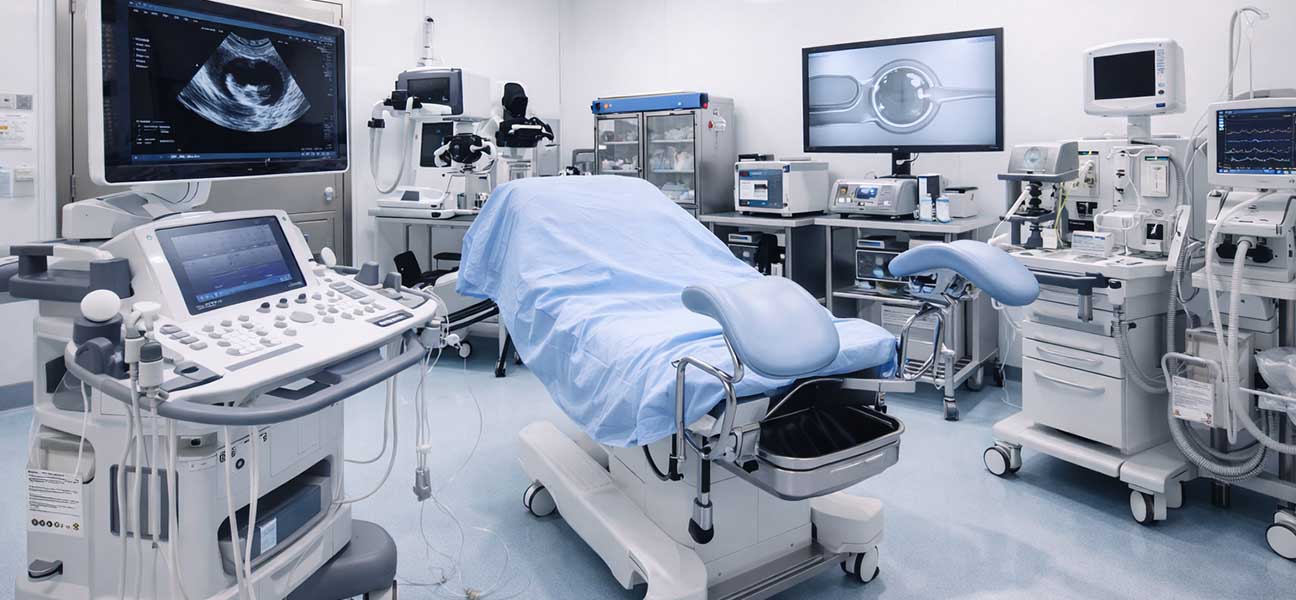
The Assisted Reproduction Centre Laboratory at Prince of Wales Hospital is equipped with EmbryoScope time-lapse culture system, laser hatching system, micromanipulation platform, and other devices. This article analyses the actual configuration level of the laboratory from the dimensions of equipment type, technical standards, quality control system, and clinical significance, helping patients understand the impact of equipment on assisted reproductive treatment.
Opening: Doctor's Decision Logic
In assisted reproductive treatment, the level of laboratory equipment directly affects the embryo culture environment, operational precision, and ultimately the number of transferable embryos. When formulating a treatment plan, a reproductive physician will first confirm whether the laboratory's equipment configuration can support the patient's specific needs—for example, patients with low ovarian reserve require a more stable culture system, while those with recurrent implantation failure may need laser-assisted hatching. The Assisted Reproduction Centre Laboratory at Prince of Wales Hospital (a teaching hospital of The Chinese University of Hong Kong) is one of the few centres in Hong Kong's public hospitals to simultaneously possess a time-lapse culture system, laser hatching platform, micromanipulation workstation, and independent air quality control system. The following is an explanation from four dimensions: equipment type, technical parameters, quality control system, and clinical significance.
Laboratory Equipment Configuration Overview
The core equipment of the Assisted Reproduction Centre Laboratory at Prince of Wales Hospital includes: EmbryoScope+ time-lapse incubator, Narishige micromanipulation platform, Hamilton Thorne laser hatching system, Planer programmable freezer, MIRI multi-chamber incubator, Coda air quality filtration system, and the Illumina high-throughput sequencing platform (shared with the Department of Obstetrics and Gynaecology, The Chinese University of Hong Kong) used for embryo genetic testing. The equipment configuration covers the entire process from gamete handling, fertilisation, embryo culture, cryopreservation to PGT testing. In terms of hardware level, it is classified as a T1 level laboratory configuration within Hong Kong's public healthcare system. Compared to private fertility centres, the equipment replacement cycle is slightly longer, but the brands and models of core equipment are consistent with mainstream global reproductive centres.
Technical Parameters and Functions of Core Equipment
Embryo Culture System: EmbryoScope+ and MIRI Multi-Chamber Incubator
The laboratory is equipped with 4 EmbryoScope+ time-lapse imaging incubators (Vitrolife product), supporting 72 individual culture chambers, each with independent gas supply and temperature control. The time-lapse imaging system automatically captures embryo images every 10 minutes, recording dynamic parameters such as cleavage time, cell size, and fragmentation rate, allowing physicians to assess embryo development trajectory without repeatedly opening the incubator. For patients with a history of abnormal embryo development, high fragmentation, or irregular cleavage speed, time-lapse culture provides a more precise basis for embryo selection. Additionally, 6 MIRI multi-chamber incubators (ESCO product) are used for early culture after conventional IVF and ICSI. The MIRI features an independent chamber design, each chamber can be individually set for O₂ concentration (5% or 2%), suitable for special cases sensitive to low-oxygen environments.
Micromanipulation Platform: Narishige and Eppendorf Systems
ICSI and assisted hatching procedures are performed using the Narishige NT-88-V3 micromanipulation platform, equipped with a Leica DMi8 inverted microscope and Eppendorf TransferMan 4m robotic arm. This platform supports 0.1μm precision movement, suitable for fine operations such as intracytoplasmic sperm injection, polar body biopsy, and embryo biopsy. For cases requiring PGT, biopsy can be performed on the same platform without transferring the sample, reducing the time embryos are exposed to non-culture environments. The laboratory also has 1 Eppendorf FemtoJet 4i microinjection system for cases requiring special injection parameters (e.g., high-viscosity semen samples or frozen sperm ICSI).
Laser Hatching System: Hamilton Thorne ZILOS-tk
The laser hatching system used in the laboratory is the Hamilton Thorne ZILOS-tk, with a wavelength of 1.48μm and pulse width of 0.5ms, allowing precise cutting of the zona pellucida. Laser-assisted hatching (AH) is suitable for patients with thickened zona pellucida, frozen-thawed embryos, or recurrent implantation failure. The advantage of this device is its stable pulse energy (fluctuation <5%), reducing thermal damage to the embryo. According to the laboratory's operating manual, the number of laser pulses for AH is controlled at 1-3, and the zona pellucida opening diameter is 15-20μm, without affecting the inner cell mass and trophectoderm structure.
Incubator Gas and Air Quality Control System
The laboratory is equipped with a Coda Tower air filtration system, using activated carbon + HEPA 13 level filtration to remove harmful gases for embryos such as VOCs (volatile organic compounds), NO₂, and SO₂. The gas inside the incubators is supplied via external CO₂ + O₂ mixed gas cylinders, with CO₂ concentration set at 6.0% ±0.2%, and O₂ concentration set at 2.0% ±0.3% during low-oxygen culture. The air quality monitoring system records PM2.5, VOC, and CO₂ concentrations every 15 minutes, with data integrated into the laboratory's central monitoring system. For patients with recurrent embryo developmental arrest or abnormal cleavage after fertilisation, the laboratory first checks the incubator gas parameters and air quality records.
Clinical Significance of Equipment Configuration
The level of equipment directly affects the stability and evaluable dimensions of embryo culture. The following table lists the clinical value corresponding to the main equipment:
| Equipment Type | Clinical Value | Suitable Population |
|---|---|---|
| EmbryoScope+ Time-lapse Incubator | Dynamic recording of embryo development, reducing disturbance from opening incubator, improving accuracy of embryo selection | High embryo fragmentation, abnormal cleavage speed, previous implantation failure |
| Narishige Micromanipulation Platform | High-precision ICSI, suitable for severe oligoasthenoteratozoospermia, frozen sperm, PGT biopsy | Poor male sperm quality, need for genetic screening |
| Hamilton Thorne Laser Hatching System | Precise assisted hatching, improving implantation rate of frozen-thawed embryos | Thickened zona pellucida, recurrent implantation failure, frozen embryo transfer |
| MIRI Multi-Chamber Incubator | Independent chambers, avoiding cross-contamination, suitable for low-oxygen culture | Low ovarian reserve, low embryo number, need for individualised gas conditions |
| Coda Air Filtration System | Removes VOCs, stabilises culture environment, reduces embryo toxicity | All IVF patients, especially those with unstable embryo development |
Equipment Differences Between Prince of Wales Hospital and Other Hong Kong Fertility Centres
Institutions providing assisted reproductive services in Hong Kong include public hospitals (Prince of Wales Hospital, Queen Mary Hospital, Kwong Wah Hospital) and private fertility centres (Hong Kong Sanatorium & Hospital, Union Hospital, The Family Planning Association of Hong Kong, etc.). At the equipment level, differences are mainly reflected in the following aspects:
- Time-lapse Incubator Coverage: Prince of Wales Hospital uses EmbryoScope+ as a routine culture device, with approximately 70% of embryos cultured in time-lapse incubators. Private centres like Hong Kong Sanatorium & Hospital also have time-lapse incubators, but their usage ratio focuses more on selective use (only for recurrent failure or advanced age cases).
- PGT Testing Platform: Prince of Wales Hospital relies on the genetics laboratory of the Department of Obstetrics and Gynaecology at The Chinese University of Hong Kong, using the Illumina sequencing platform for PGT-A and PGT-M testing. Private centres often outsource to third-party genetics laboratories or use different sequencing platforms (e.g., Thermo Fisher system). There is no significant difference in detection accuracy between the two platforms.
- Equipment Replacement Cycle: Public hospital equipment procurement must go through a tendering process, with a replacement cycle typically of 5-7 years; private centres have a replacement cycle of about 3-5 years. The EmbryoScope+ currently used at Prince of Wales Hospital is the 2020 upgraded version, and the laser hatching system and micromanipulation station are within their normal service life.
- Air Purification System: All public hospitals are equipped with central air filtration systems, but Prince of Wales Hospital additionally has Coda Tower mobile air purifiers as secondary filtration for the incubator area, which is relatively rare in the public system.
Easiest Detail to Overlook: Actual Implementation Standards of Equipment Parameters
When choosing a fertility centre, patients often only focus on the equipment brand, easily overlooking three key details:
- Daily Calibration Records of Incubators: The same equipment brand can have significant differences in calibration frequency and precision maintenance. The laboratory at Prince of Wales Hospital records incubator temperature, CO₂ and O₂ concentrations daily, calibrates with standard gases weekly, and conducts third-party comparisons monthly. Patients can request to see the calibration logs for the past three months.
- Operator Qualification for Equipment Use: Micromanipulation and laser hatching require specialised training. All embryologists in the laboratory hold micromanipulation certification from the Hong Kong Society of Reproductive Medicine (HKSRM) and perform ≥50 ICSI procedures annually to maintain proficiency.
- Emergency Power Supply System for Equipment: Incubators are equipped with dual power supply + UPS uninterruptible power supply, capable of continuous operation for ≥4 hours during a power outage. The laboratory also has portable incubators for emergency transport.
Practical Application of Equipment in the Treatment Process
Taking a routine IVF/ICSI treatment cycle as an example, the main stages involving laboratory equipment are as follows:
- Egg Retrieval Day: Oocytes are identified and graded in a laminar flow hood (Thermo Scientific 1300 Series A2), then transferred to a MIRI incubator for pre-culture for 2-4 hours.
- ICSI Procedure: Intracytoplasmic sperm injection is performed using the Narishige micromanipulation platform, with the procedure time controlled at 3-5 minutes per oocyte, and temperature maintained at 37℃ ±0.3℃.
- Embryo Culture: Fertilised eggs are transferred to the EmbryoScope+ time-lapse incubator and cultured until day 3 or day 5-6. The time-lapse system records images every 10 minutes, and embryologists analyse developmental parameters daily using software.
- Laser-Assisted Hatching: For embryos requiring AH, the Hamilton Thorne laser hatching system is used to create an opening in the zona pellucida before transfer, performed on the micromanipulation station.
- Cryopreservation: Vitrification is performed using the Planer programmable freezer, with liquid nitrogen tanks from the Taylor-Wharton series, equipped with a remote liquid level monitoring system.
- PGT Biopsy: Embryo biopsy is performed on the micromanipulation station, and the biopsied cells are sent to the genetics laboratory for amplification and sequencing.
Frequently Asked Questions from Patients
Q: Is the equipment at Prince of Wales Hospital inferior to that at private centres?
The equipment brands and models are essentially in the same tier as private centres. The differences lie mainly in the quantity of equipment and usage strategies. Public hospitals have a large patient volume, leading to higher equipment usage frequency and stricter maintenance requirements. Private centres have a slight advantage in equipment update speed, but public hospitals have a more comprehensive quality control and emergency backup system. For routine IVF patients, the impact of equipment differences on outcomes is negligible.
Q: Does laboratory equipment affect PGT test results?
The accuracy of PGT test results depends on three stages: biopsy operation, sample amplification, and sequencing. The Illumina platform used at Prince of Wales Hospital has a false positive rate of ≤2% and a false negative rate of ≤5% for PGT-A testing (based on the centre's 1200+ cycles in the past 3 years). Biopsy is performed on the Narishige platform, with laser pulses used for zona pellucida opening, and the impact on embryonic cells is within a safe range.
Q: Can old equipment lead to embryo culture failure?
Culture failure is more related to the embryo's own developmental potential rather than equipment ageing. As long as the key parameters of the equipment (temperature, gas concentration, pH) are within the standard range, they will not be the main cause of culture failure. The laboratory at Prince of Wales Hospital conducts monthly quality control tests to ensure all equipment parameters comply with industry standards (UK HFEA guidelines and Hong Kong Society of Reproductive Medicine standards).
Practitioner's Observation: Key Variables Beyond Equipment
From the perspective of laboratory personnel, equipment is the foundation, but the following factors may have a greater impact on treatment outcomes:
- Embryologist's Experience and Decision-Making Ability: With the same equipment, different embryologists can show differences in embryo scoring consistency, biopsy success rate, and freeze-thaw survival rate. The average working experience of embryologists in the Prince of Wales Hospital laboratory is 8 years, with an annual operation volume of ≥200 cycles.
- Laboratory Quality Control Management System: This includes daily/weekly/monthly equipment calibration, culture environment monitoring, sample verification procedures, and emergency response plans. The rigor of the quality control system is more important than the equipment brand.
- Communication Efficiency with Clinicians: The ability of the laboratory to adjust culture strategies (e.g., low oxygen concentration, delayed culture, early thawing) based on the patient's specific situation depends on the collaboration mechanism between embryologists and doctors.
Special Situation Handling: How Equipment Addresses Complex Cases
For the following special populations, the equipment configuration at Prince of Wales Hospital offers certain advantages:
- Very Low Ovarian Reserve (AMH <0.5ng/mL): The independent chamber design of the MIRI incubator supports individual culture of single embryos, avoiding interference from other samples in a micro-culture environment. The time-lapse function of the EmbryoScope+ helps select the embryo with the highest developmental potential when the number of embryos is very limited.
- Recurrent Implantation Failure (RIF): The combined use of laser-assisted hatching and time-lapse culture can identify issues such as thickened zona pellucida and abnormal cleavage patterns that are difficult to detect with conventional culture. The laboratory can adjust the transfer strategy accordingly.
- Need for PGT-M (Monogenic Disease Screening): Leveraging the genetics platform of The Chinese University of Hong Kong, custom panel testing covering 300+ genes is available. Biopsy is performed on the micromanipulation platform, and sample transfer is maintained under cold chain conditions throughout.
- Male Azoospermia (TESA/TESE): The micromanipulation platform can be used for sperm retrieval from testicular biopsy samples and ICSI, and the laser hatching system can be used for assisted hatching to improve the implantation rate of frozen-thawed embryos.
Doctor's Advice: How to Evaluate Whether Laboratory Equipment Suits You
During the initial consultation, it is recommended that patients ask the doctor or embryologist about the following information:
- The brand and model of the incubator used in the laboratory, and whether it has time-lapse imaging capability
- The gas supply method for the incubators (mixed gas cylinders vs. central gas supply) and the O₂ concentration control range
- The models of the micromanipulation platform and laser equipment used for ICSI and assisted hatching
- The laboratory's quality control reports for the past 6 months (temperature, CO₂, O₂ concentration records)
- The average working experience and annual operation volume of the embryologists
This article is compiled based on public information from the Assisted Reproduction Centre of Prince of Wales Hospital and general knowledge in the field of reproductive medicine. It does not constitute medical advice. Please consult a licensed physician for specific treatment plans.
0 comments