
Number of IVF Hospitals in Kowloon | Distribution of Assisted Reproduction Centres in Kowloon, Hong Kong

There are currently 2 assisted reproduction centres certified by the Hong Kong Council on Human Reproductive Technology (HTA) in the Kowloon area of Hong Kong, located in the core Tsim Sha Tsui district. This article details the specific number of IVF hospitals in Kowloon, an overview of the centres, selection considerations, and the consultation process for interested readers.
====== Start of Article ======
How many IVF hospitals are there in Kowloon?
As of 2024, there are a total of 2 assisted reproduction centres in the Kowloon area of Hong Kong that are certified by the Hong Kong Council on Human Reproductive Technology (HTA) and qualified to independently perform in vitro fertilisation (IVF) procedures. Both centres are located in the core business district of Tsim Sha Tsui: Hong Kong Fertility Centre and Hong Kong IVF Centre.
There are currently 11 HTA-registered assisted reproduction centres in Hong Kong, with Kowloon accounting for approximately 18%. Hong Kong Island (e.g., Reproductive Medicine Centre of Hong Kong Sanatorium & Hospital, Assisted Reproduction Centre of Queen Mary Hospital) has 4 centres, while the New Territories (e.g., Reproductive Medicine Centre of Union Hospital, Assisted Reproduction Centre of Prince of Wales Hospital) has 5. Although Kowloon has the fewest centres, its service volume and patient flow are not low. Tsim Sha Tsui, in particular, benefits from convenient transportation, attracting many local patients as well as those from Mainland China and Southeast Asia.
It is important to clarify: "IVF hospital" here refers to assisted reproduction centres certified by the HTA that can independently complete the entire process from ovarian stimulation, egg retrieval, embryo culture to transfer. There are also clinics in Kowloon offering fertility consultations, basic check-ups, or Chinese medicine support, but these are not strictly considered "IVF hospitals".
====== Why is the number of IVF hospitals in Kowloon limited? ======
Why is the number of IVF hospitals in Kowloon relatively small?
The relatively small number of assisted reproduction centres in Kowloon is related to the overall distribution of medical resources in Hong Kong.
- High concentration of medical resources on Hong Kong Island: The headquarters of public hospitals, university medical schools, and many high-end private hospitals are concentrated on Hong Kong Island. Assisted reproduction centres are naturally established based on these medical systems, making Hong Kong Island the focal point.
- Land use and institutional density limitations in Kowloon: Kowloon, especially Tsim Sha Tsui and Mong Kok, has dense commercial activity and high medical land costs. Establishing new large-scale fertility centres faces pressure regarding space and rent.
- Policy and approval thresholds: The Hong Kong Council on Human Reproductive Technology has extremely strict approval requirements for assisted reproduction centres, covering venue, equipment, laboratory standards, and personnel qualifications. The establishment process for new centres is lengthy.
- Patient mobility habits: Hong Kong is geographically small, and transportation between Hong Kong Island and Kowloon is convenient (15-20 minutes by MTR). Patients are not restricted to seeking treatment in their residential area, so there is no need for a large number of centres to be built in Kowloon.
Overall, the landscape of 2 certified centres in Kowloon is likely to remain stable for the next 3-5 years, although the possibility of new private medical institutions applying for a licence cannot be ruled out.
====== Overview of the two assisted reproduction centres in Kowloon ======
Overview of the two assisted reproduction centres in Kowloon
| Centre Name | Location | Established | Features |
|---|---|---|---|
| Hong Kong Fertility Centre (HK Fertility Centre) |
Nathan Road, Tsim Sha Tsui | 2006 | Established centre with extensive laboratory experience, offers PGT (Preimplantation Genetic Testing) services, has a Mandarin-speaking consultation team. |
| Hong Kong IVF Centre (Hong Kong IVF Centre) |
Canton Road, Tsim Sha Tsui | 2012 | Relatively newer equipment, focuses on personalised ovarian stimulation protocols, collaborates with several overseas egg banks. |
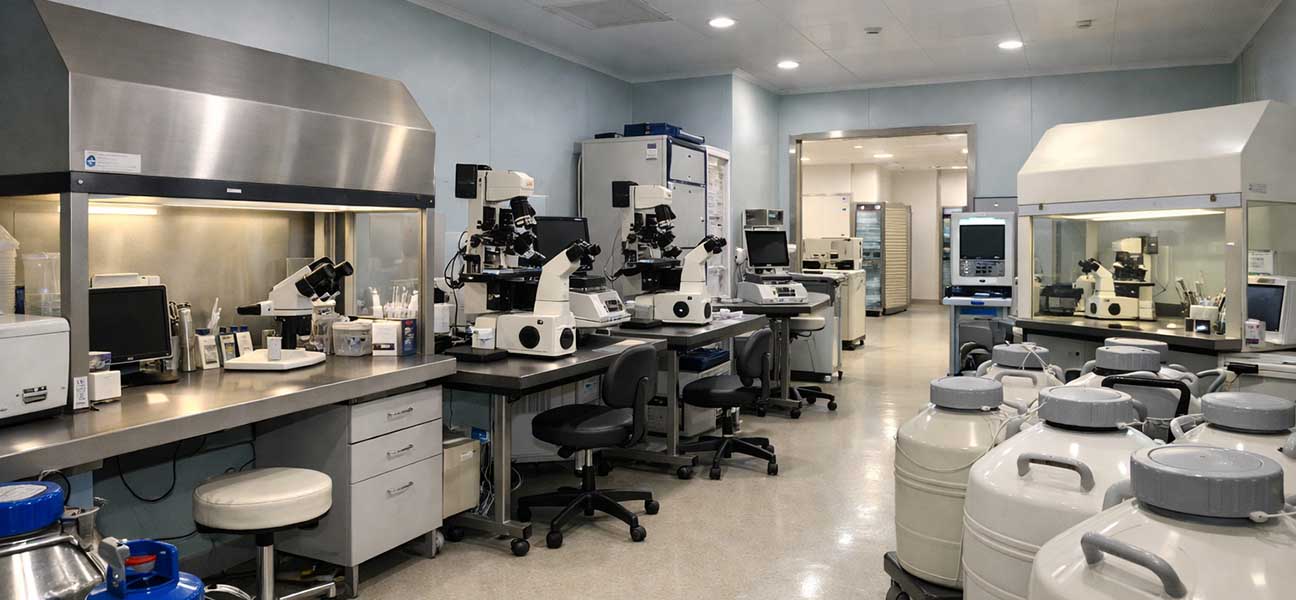
Both centres offer a full range of IVF services including, but not limited to, conventional IVF, Intracytoplasmic Sperm Injection (ICSI), Preimplantation Genetic Testing (PGT), egg freezing, sperm freezing, embryo freezing and transfer, and luteal phase support. The laboratories meet the air quality and temperature control standards required by ISO or HTA.
====== Considerations for choosing between different hospitals ======
Considerations for choosing between different hospitals
Although there are only two centres in Kowloon, they differ in service focus, procedural pace, and fee structure. When choosing, it is advisable to compare the following dimensions:
Laboratory standards and embryo culture system
Both centres use time-lapse incubators, but the specific equipment models and embryo assessment strategies differ. Hong Kong Fertility Centre uses the EmbryoScope+, while Hong Kong IVF Centre uses the Geri incubator. Both systems have their advantages, but neither constitutes a decisive factor in clinical success rates. More important is the experience of the embryologists – the senior embryologists at both centres have over 10 years of experience.
Stability of the medical team
Assisted reproduction is a field highly dependent on doctor experience. The core medical team at Hong Kong Fertility Centre has remained stable over the past 5 years, while Hong Kong IVF Centre introduced two reproductive specialists who previously trained in the UK in 2021. During the initial consultation, it is advisable to confirm the full-time/part-time status of the attending physician and their personal cumulative number of IVF cycles.
Fee structure and transparency
The basic IVF package fee (excluding medication, PGT, additional freezing, etc.) at both centres is roughly between HKD 98,000 and HKD 125,000. Differences mainly lie in:
- Medication costs (imported stimulation drugs vs. generic drugs)
- PGT testing fees (charged per embryo)
- Annual frozen embryo management fee
- Initial consultation fee (may be deductible from subsequent treatment costs at some centres)
It is recommended to request a detailed fee schedule during the initial consultation, including all potential additional charges, to avoid unexpected expenses later.
Convenience of access
Both centres are close to Tsim Sha Tsui MTR station, within a 5-8 minute walk. The building housing Hong Kong Fertility Centre has a car park, while parking around Hong Kong IVF Centre is relatively limited. For patients requiring frequent visits (approximately 3-5 times during ovarian stimulation), transportation and parking are practical considerations.
====== Advice for patients of different age groups ======
Advice for patients of different age groups
Age is a core variable influencing IVF strategy. The approaches of the two Kowloon centres for different age groups are as follows:
| Age Group | Common Characteristics | Key Focus Areas | Considerations for Kowloon Centres |
|---|---|---|---|
| Under 35 | Normal ovarian reserve, regular cycles | Identify underlying causes (tubal, sperm, immune, etc.); high success rate per cycle | May prioritise centres with efficient processes; pay attention to frozen embryo transfer strategies to avoid OHSS risk |
| 35-40 years | AMH may decline, fewer follicles | Personalised stimulation protocol; need for PGT-A screening | Consider centres with more laboratory experience; consider embryo accumulation strategy if necessary |
| Over 40 | Significant decline in egg quality, higher embryo aneuploidy rate | Necessity of PGT-A; consider egg or embryo donation | Confirm if the centre offers egg/embryo donation services or referral channels; evaluate multi-cycle plans |
Regardless of age group, it is recommended to complete the following basic tests during the initial consultation: AMH, FSH, LH, antral follicle count, semen analysis, thyroid function, vitamin D levels, etc. Both Kowloon centres can complete the full set of tests and issue reports within 1-2 weeks.
====== Details most easily overlooked ======
Details most easily overlooked
When choosing an assisted reproduction centre in Kowloon, the following details are often overlooked but can significantly impact the treatment experience and outcome:
- Whether the centre has 24-hour laboratory staffing: Egg retrieval and embryo manipulation sometimes need to occur outside regular hours. Confirm if the centre has a full-time laboratory team, rather than outsourcing or daytime-only service.
- Embryo freezing storage method: Vapour phase vs. liquid phase storage, and whether a real-time temperature monitoring alarm system is in place. Both centres use vapour phase storage, but their backup power solutions differ.
- Attitude towards Chinese medicine or complementary therapies: Some centres are open to acupuncture and herbal medicine and will document them, while others do not recommend them. If you require Chinese medicine, ask about the centre's policy during the initial consultation.
- Language of communication and medical records: Both Kowloon centres offer services in Mandarin, Cantonese, and English, but medical records and consent forms are primarily in English. Ensure you understand the key terms and request a Chinese translation if necessary.
- Cancellation and refund policy: If a cycle is cancelled due to medical reasons after starting, how are fees refunded? If the centre relocates or closes after embryo freezing, what does the contract stipulate? These details should be clarified one by one before signing.
====== Actual consultation process ======
Consultation process at Kowloon IVF hospitals
The standard process for IVF treatment at the two Kowloon centres typically includes the following stages:
- Initial consultation (1 visit): Bring previous medical reports. The doctor reviews your history and orders supplementary tests. Duration: approximately 45-60 minutes.
- Tests and evaluation (2-4 weeks): Complete blood tests, ultrasound, semen analysis, etc. Some tests need to be done at specific times during the menstrual cycle.
- Treatment plan formulation (1 visit): Based on test results, determine the ovarian stimulation protocol (short protocol, long protocol, antagonist protocol, etc.) and sign the informed consent form.
- Ovarian stimulation (approximately 10-14 days): Daily injections of stimulation medication. Return to the centre every 2-3 days for follicle growth monitoring.
- Egg retrieval (1 day): Performed under anaesthesia, lasting about 20-30 minutes. Observation for 2-4 hours post-procedure before discharge.
- Embryo culture (3-6 days): Fertilisation and culture in the laboratory. Embryo assessment on day 3 or day 5-6.
- Embryo transfer (1 day): The procedure takes about 10-15 minutes, painless or with mild discomfort. Rest at the centre for 1-2 hours after transfer.
- Luteal phase support and pregnancy test (12-14 days): Use luteal phase support medication after transfer. A blood pregnancy test is done 12-14 days later.
A complete IVF cycle (from initial consultation to pregnancy test) typically takes 2.5-3.5 months, with higher visit frequency during the stimulation and transfer phases. The waiting time for an appointment at the two Kowloon centres is usually 2-4 weeks. It is advisable to book in advance by phone or online system.
====== Frequently asked questions ======
Frequently asked questions
Q1: Which IVF hospital in Kowloon has a higher success rate?
The Hong Kong Council on Human Reproductive Technology requires all registered centres to regularly report treatment data. However, publicly available success rates are usually presented as "clinical pregnancy rate per transfer cycle" or "live birth rate per initiated cycle". Based on voluntarily disclosed data from centres for 2022-2023, the two Kowloon centres report a clinical pregnancy rate per single transfer cycle of approximately 52%-58% for patients under 35, 42%-48% for those aged 35-40, and 22%-30% for those over 40. It is crucial to emphasise that success rates are influenced by multiple factors including patient age, cause of infertility, and embryo quality. When comparing, ensure the data metrics are consistent. It is recommended to request a full data report for the past year directly from the centre during your initial consultation, rather than relying solely on promotional figures.
Q2: What is the approximate cost of IVF in Kowloon?
The cost for a standard IVF cycle (excluding PGT and medication) at the two Kowloon centres is approximately HKD 98,000 - HKD 125,000. A complete cycle including stimulation medication, procedure fees, laboratory fees, and transfer fees typically ranges from HKD 140,000 to HKD 180,000. If PGT testing, frozen embryo transfer, or multiple stimulation cycles are involved, the total cost will increase accordingly. The Kowloon centres accept credit cards, bank transfers, and some Mainland Chinese payment methods. However, medical insurance reimbursement is not available (public hospital assisted reproduction services in Hong Kong require a waiting list and are limited to Hong Kong residents).
Q3: How far in advance do I need to book an appointment?
Initial consultation appointments can usually be scheduled within 2-4 weeks. If you wish to see a specific doctor, the waiting time may extend to 4-6 weeks. The start of an ovarian stimulation cycle needs to be aligned with your menstrual cycle. It is advisable to complete the initial consultation and tests 2-3 months before you plan to start treatment to allow sufficient time for protocol adjustment.
Q4: Can Mainland Chinese residents undergo IVF in Kowloon?
Yes. Assisted reproduction centres in Hong Kong are open to non-local residents, but you need a valid Mainland Travel Permit for Hong Kong and Macao (Exit-Entry Permit) with the appropriate endorsement. Mainland Chinese residents seeking treatment at Kowloon centres must bear all costs themselves and sign the relevant informed consent forms. Some centres may require a referral letter from a Mainland Grade A tertiary hospital or translated copies of medical reports. Additionally, entering Hong Kong for IVF treatment constitutes medical travel. It is recommended to allow at least 14-21 days in Hong Kong (for stimulation, egg retrieval, and transfer) and to purchase travel insurance covering medical itineraries.
====== Practitioner's observation ======
Over the past 5 years, the patient demographics at the two Kowloon centres have changed significantly. Before 2019, local patients accounted for about 70%, Mainland Chinese patients about 25%, and the rest from Southeast Asia. By 2024, the proportion of Mainland Chinese patients has risen to approximately 40%, and about 60% of them came through recommendations from friends or online communities rather than through agencies. This change is related to the trend of increased transparency in Hong Kong's assisted reproduction industry – more patients are making decisions independently via the HTA official website, centres' public data, and patient forums.
Another noteworthy phenomenon is: Patients choosing the Kowloon area often place greater value on "convenient transportation" and "smooth communication" rather than simply pursuing the "latest technology". For patients over 38 with low ovarian reserve, doctors at the Kowloon centres generally tend to recommend an "embryo accumulation strategy" rather than pursuing a high success rate in a single cycle – this pragmatic approach contrasts with some marketing rhetoric emphasising "one-time success".
From an industry perspective, although the number of assisted reproduction centres in Kowloon is small, the competitive environment is relatively rational. The two centres have not engaged in cut-throat competition regarding price and services, which is beneficial for patients.
====== Risk reminder ======
Risk Reminder
Assisted reproduction treatment (including IVF) carries certain medical risks and uncertainties, including but not limited to: Ovarian Hyperstimulation Syndrome (OHSS), multiple pregnancy, miscarriage, ectopic pregnancy, anaesthesia complications, and embryo transfer failure. Any claims of "guaranteed success" or "100% pregnancy" are not medically factual.
When choosing an assisted reproduction centre in the Kowloon area, please verify the centre's registration status on the official website of the Hong Kong Council on Human Reproductive Technology and carefully read all informed consent documents. If you have any questions about the treatment plan or fees, it is advisable to seek written confirmation from the doctor or centre management before signing any documents.
The content of this article is for informational purposes only and does not constitute medical advice or treatment recommendations. Please base your specific diagnosis and treatment plan on a face-to-face evaluation at a正规 medical institution.
0 comments