
List of RTAC Accredited Fertility Centres in Hong Kong & Certification Standards Explained

This article introduces the list of assisted reproduction institutions in Hong Kong that have obtained RTAC (Reproductive Technology Accreditation Committee) accreditation, explains the RTAC certification standards and their relationship with local Hong Kong regulations, helping patients understand how to choose an internationally accredited fertility centre and avoid conceptual confusion.
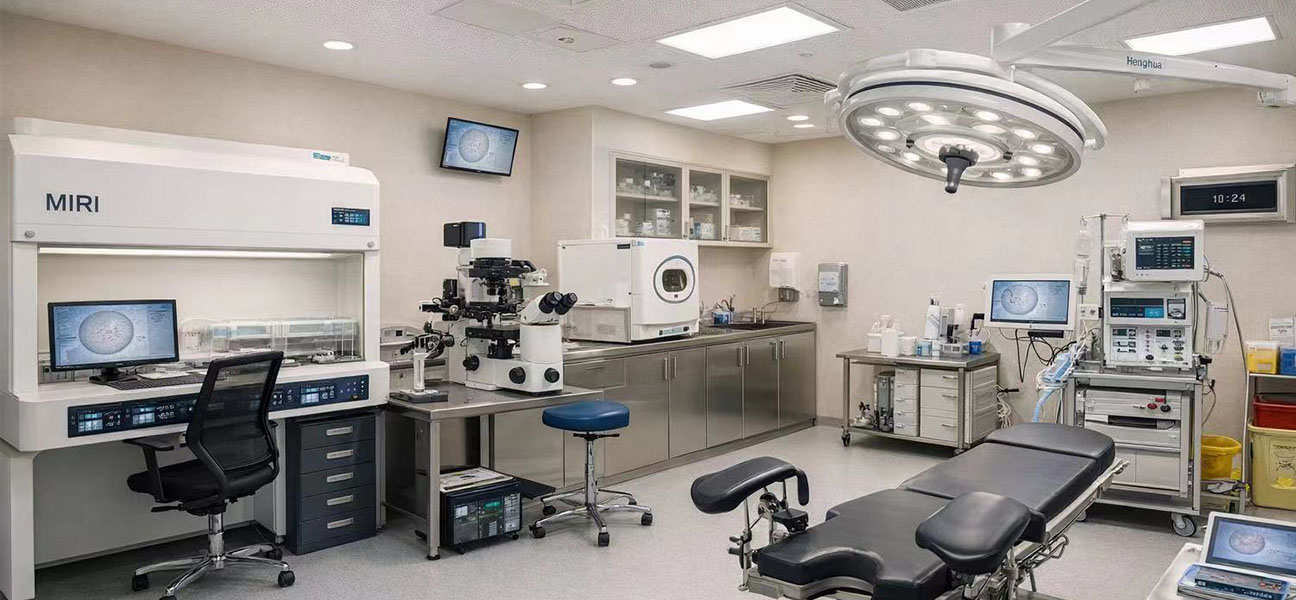
Opening: Real Consultation Scenario
Last week, a patient planning to go to Hong Kong for IVF asked me: "I saw online that RTAC accreditation is very important. Which RTAC accredited institutions are there in Hong Kong? I want to choose one with accreditation." This question sounds straightforward, but behind it lies a common conceptual confusion. As an assisted reproduction consultant with ten years of experience, I encounter similar questions almost every week. This article will break down what RTAC accreditation is, including which Hong Kong fertility centres have obtained RTAC accreditation, what the certification actually means, and what you should really look at when making your choice.
1. Hong Kong Fertility Centres with RTAC Accreditation
As of 2025, the known assisted reproduction institutions in Hong Kong that have obtained RTAC (Reproductive Technology Accreditation Committee) accreditation include the following (in no particular order):
| Institution Name | Location | Accreditation Status Notes |
|---|---|---|
| Hong Kong Fertility Centre Hong Kong Fertility Centre |
Tsim Sha Tsui / Central | RTAC accredited, continuously listed |
| Hong Kong Sanatorium & Hospital Reproductive Medicine Centre Hong Kong Sanatorium & Hospital |
Happy Valley | RTAC accredited |
| Union Hospital Reproductive Medicine Centre Union Hospital |
Shatin | RTAC accredited |
| Hong Kong Reproductive Medicine Centre Hong Kong Reproductive Medicine Centre |
Mong Kok / Causeway Bay | RTAC accredited |
| Queen Mary Hospital Assisted Reproduction Centre Queen Mary Hospital |
Pok Fu Lam | RTAC accredited (public institution) |
Note The above list is compiled based on public information, and accreditation status may change. The most reliable approach is to visit the RTAC official website or contact the institution directly to verify the current validity of the accreditation.
2. Why the Term "RTAC Accredited Institution" Can Be Misleading
Many patients interpret "RTAC accredited institution" as "a local Hong Kong accreditation body," but this is not the case. RTAC stands for the Reproductive Technology Accreditation Committee, which is part of the Fertility Society of Australia and New Zealand (FSANZ). It is an international third-party certification system headquartered in Australia, not an institution established in Hong Kong.
Strictly speaking, there is no organization called "RTAC accredited institution" in Hong Kong. What people are really looking for are "Hong Kong fertility centres that have obtained RTAC accreditation." This conceptual distinction may seem subtle, but it can lead searches astray – some people spend a lot of time searching for "list of RTAC accredited institutions in Hong Kong" and end up with irrelevant information.
3. How Reproductive Specialists View RTAC Accreditation
In Hong Kong, reproductive specialists generally recognise the authority of RTAC accreditation, but they do not consider it the sole evaluation criterion. There are two reasons for this:
- RTAC is an international voluntary accreditation, not a statutory requirement. Locally, the Hong Kong Human Reproductive Technology Authority (HKHRTA) is responsible for licensing and regulation. Any institution providing assisted reproduction must obtain HKHRTA approval. RTAC accreditation is an "added bonus" on top of this, indicating that the institution proactively pursues higher standards.
- Clinicians focus more on laboratory quality control and individualised treatment plans. A reproductive specialist friend working at Hong Kong Sanatorium & Hospital once told me: "RTAC accreditation shows that laboratory management and operational procedures meet international standards, but a patient's eventual pregnancy depends on multiple factors such as age, ovarian reserve, and embryo quality. The accreditation itself does not guarantee outcomes."
From a doctor's perspective, RTAC accreditation is a reliable quality filter – it helps you eliminate institutions with chaotic laboratory management and non-standard operational procedures. However, after filtering, the specific choice should still be based on your individual circumstances.
4. The Most Easily Overlooked Detail: The Difference Between RTAC Accreditation and HKHRTA Regulation
This is the most commonly overlooked point during patient consultations. The following table clearly illustrates the differences between the two:
| Comparison Dimension | RTAC Accreditation | HKHRTA Regulation |
|---|---|---|
| Nature | International voluntary accreditation | Local statutory regulation |
| Issuing Body | Australian Reproductive Technology Accreditation Committee | Hong Kong Human Reproductive Technology Authority |
| Scope | Laboratory quality, operational standards, personnel qualifications, ethics | Licensing approval, regular inspections, enforcement of regulations |
| Mandatory | No, institutions apply voluntarily | Yes, no licence means no assisted reproduction allowed |
| Patient Verification Method | RTAC official website or institution disclosure | HKHRTA official website for licensed list |
A common misconception is that patients think "an institution with RTAC accreditation is definitely better than one without." However, in Hong Kong, all institutions legally performing IVF must pass HKHRTA regulation. RTAC accreditation is an additional quality endorsement, but it does not mean that institutions without it are non-compliant.
5. The Most Common Pitfall: Equating "Accreditation" with "Guaranteed Success"
In my consultations, I have seen many patients who specifically choose RTAC-accredited institutions and then ask, "What is your success rate? Does accreditation mean it can reach 70%?" These are two separate issues that need to be examined independently.
- RTAC accreditation evaluates process quality, not outcomes. It checks the laboratory environment, equipment calibration, operational procedures, personnel training, ethical compliance, etc., but it does not track or guarantee clinical pregnancy rates.
- Success rates are heavily influenced by patient-specific factors. In the same accredited institution, the embryo implantation rate for women under 35 may exceed 60%, while for those over 42, it may be only around 20%. Using accreditation to infer success rates is meaningless.
6. How to Verify an Institution's RTAC Accreditation Status
If you want to personally verify whether a fertility centre holds valid RTAC accreditation, you can follow these steps:
- Visit the RTAC official website (under the Fertility Society of Australia and New Zealand FSANZ) and search for the institution name in the "Accredited Services" section.
- Check for the accreditation logo on the institution's official website – it is usually displayed at the bottom of the page or on the "About Us" page, along with a certificate number.
- Contact the institution directly and request a copy of the RTAC accreditation certificate or the validity period. Reputable institutions will proactively provide it.
- Cross-check with the HKHRTA licensed list to confirm that the institution also holds a valid local Hong Kong licence to practice.
The entire verification process takes about 15 minutes. It is advisable to complete this check before formally registering to avoid future disputes.
7. Core Inspection Indicators of RTAC Accreditation
The RTAC accreditation standards are very detailed and mainly cover the following dimensions. Understanding these indicators can help you more professionally assess the strength of a fertility centre:
| Assessment Dimension | Specific Content Examples |
|---|---|
| Laboratory Environment | Air quality, temperature and humidity control, cleanliness, anti-vibration measures |
| Equipment Management | Calibration and maintenance records of incubators, micromanipulators, cryopreservation equipment |
| Personnel Qualifications | Training records and assessments of embryologists and clinical doctors |
| Operational Standards | Standard operating procedures for egg retrieval, fertilisation, embryo culture, and cryopreservation/thawing |
| Quality Control | Regular internal quality control, external comparisons, error reporting mechanisms |
| Ethics and Compliance | Patient informed consent, embryo disposal standards, data privacy protection |
| Safety Management | Sample identification and traceability, emergency plans, infection control |
These indicators are directly related to the safety and stability of embryo handling. For example, a temperature fluctuation of more than 0.5°C in an incubator can affect embryo development, and RTAC accreditation requires real-time monitoring and recording of temperature data.
8. Frequently Asked Questions About RTAC Accreditation
8.1 Can I go to a Hong Kong fertility centre without RTAC accreditation?
Yes. As long as the institution holds a valid licence from HKHRTA, it is legally qualified to provide assisted reproduction. RTAC accreditation is an additional quality endorsement, not a statutory requirement. However, if you have high standards for laboratory quality, choosing an accredited institution is a safer option.
8.2 How long is RTAC accreditation valid? Does it expire?
RTAC accreditation is typically valid for 3-4 years, with regular surveillance audits during the period. After expiration, the institution needs to reapply for assessment. Therefore, when verifying, you must confirm that the accreditation is currently "valid" and not "expired" or "under review."
8.3 For mainland Chinese patients going to Hong Kong for IVF, is RTAC accreditation important?
For mainland patients, RTAC accreditation is a reference indicator, but what is more critical is whether the institution accepts mainland patients, whether it has a clear cross-border medical treatment process, and the transparency of costs. It is recommended to treat RTAC accreditation as one of the "quality screening conditions," not the sole deciding factor.
8.4 Is RTAC accreditation the same as JCI accreditation?
No. JCI (Joint Commission International) accreditation is a comprehensive quality certification for healthcare institutions, covering all hospital departments. RTAC, on the other hand, specifically targets laboratory and clinical operations in the field of assisted reproduction. They have different focuses. A fertility centre can hold both accreditations, but JCI cannot replace RTAC's targeted assessment in the reproductive specialty.
9. Risk Reminder: Accreditation is Not a Magic Bullet
Finally, here is a risk point that is easily overlooked: RTAC accreditation only means "the institution met the standards during the certification cycle," not "your treatment process is 100% risk-free." Assisted reproduction inherently involves medical uncertainties, including poor response to ovarian stimulation, fertilisation failure, embryo developmental arrest, implantation failure, or miscarriage after transfer. These risks do not completely disappear just because an institution is accredited.
I advise patients to treat RTAC accreditation as a quality baseline – it helps you filter out institutions with non-standard operations and weak laboratory management. However, on this basis, you also need to evaluate:
- Whether the institution has expertise relevant to your age and medical condition
- Whether the doctor's communication style and treatment plan design match your needs
- Whether the fee structure is clear and free of hidden charges
- Geographical location and convenience for follow-up visits
Accreditation is the starting point, not the endpoint. Spending an extra week doing your homework when choosing an institution is far more important than blindly pursuing "accreditation."
Common extended questions about RTAC accreditation: RTAC accreditation process, Hong Kong IVF institution selection, whether low AMH affects the choice of accredited institutions, comparison of institutions for older patients doing IVF in Hong Kong, Hong Kong assisted reproduction institution licence inquiry, relationship between RTAC accreditation and laboratory quality, accreditation status of public hospital fertility centres in Hong Kong, cross-border IVF document preparation, etc.
0 comments