
IVF Process and Costs at the University of Hong Kong Affiliated Hospital

The IVF process at the University of Hong Kong Affiliated Hospital (Queen Mary Hospital / Shenzhen Hospital) includes initial assessment, pre-cycle examinations, ovarian stimulation, egg retrieval, embryo culture, transfer, and luteal support. This article details the specific steps, required time, cost breakdown, and key considerations to help patients prepare for their visit.
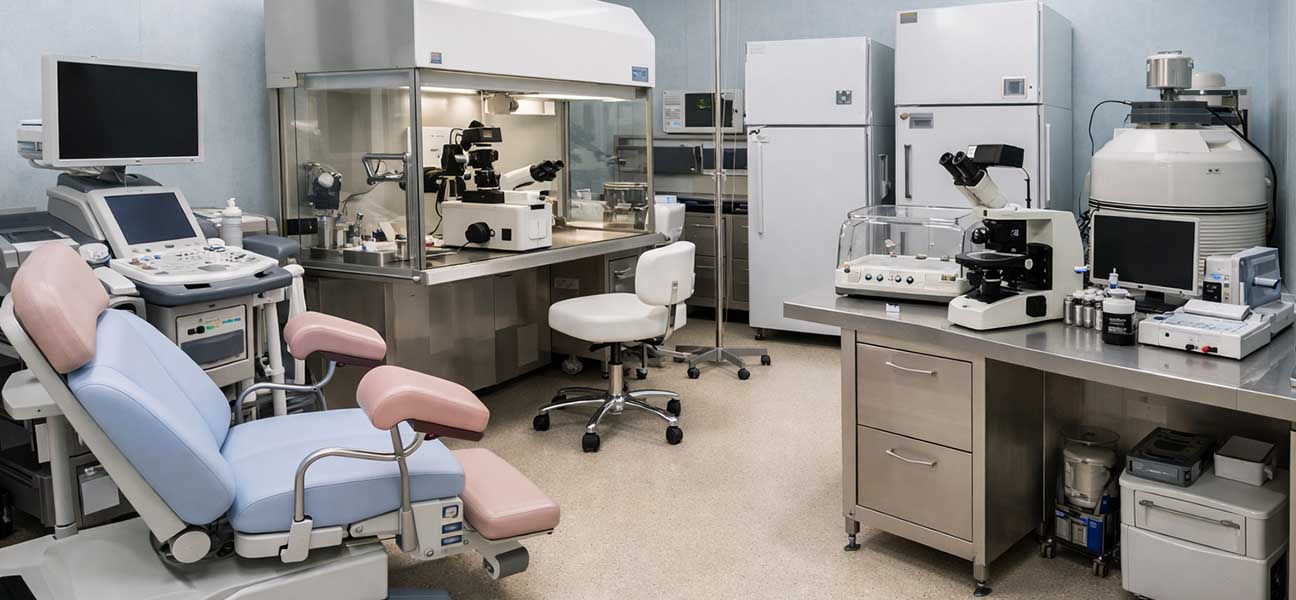
Scene opening
"Doctor, I have had AMH, hormone panel, and ultrasound done at another hospital. Do I need to repeat all the tests for IVF at HKU?" A 34-year-old woman with diminished ovarian reserve (AMH 1.8 ng/mL) asked during her initial consultation. She had undergone two unsuccessful artificial insemination attempts at another reproductive center and wanted to understand the IVF process and specific requirements at the University of Hong Kong Affiliated Hospital. This question is typical in reproductive clinics—involving mutual recognition of tests, pre-cycle preparation, and differences in standards between hospitals.
I. Overview of the Reproductive Center at the University of Hong Kong Affiliated Hospital
The Faculty of Medicine of the University of Hong Kong operates two assisted reproduction facilities, both adhering to the management standards and clinical pathways of the HKU medical system:
- HKU Queen Mary Hospital Assisted Reproduction Centre (Western District, Hong Kong) — A public hospital primarily serving Hong Kong residents, requiring a referral or meeting relevant eligibility criteria.
- HKU-Shenzhen Hospital Reproductive Medicine Centre (Futian, Shenzhen) — Operated in collaboration with the Shenzhen Municipal Government, serving mainland patients and conducting assisted reproductive technologies in accordance with the regulations of the National Health Commission.
The two centers share the same ovarian stimulation protocols, embryo culture techniques, and laboratory standards, but have significant differences in target patients, fee structures, documentation requirements, and waiting times. The following content primarily focuses on HKU-Shenzhen Hospital (due to the higher proportion of mainland patients), while also noting the specific requirements of Queen Mary Hospital.
II. Detailed IVF Process
From the initial consultation to the completion of embryo transfer, a full cycle typically takes 2 to 3 months, depending on the patient's physical condition, protocol choice, and waiting times.
(I) Initial Consultation and Assessment
- Purpose: To confirm indications, rule out contraindications, and formulate a preliminary plan.
- What to bring: All previous medical reports (including hormone panel, AMH, semen analysis, ultrasound, hysteroscopy/laparoscopy surgical records, etc.), and identification documents (for HKU-Shenzhen Hospital: ID card; for HKU Queen Mary Hospital: Hong Kong ID card or valid proof of identity).
- Physician assessment includes: Age, ovarian reserve (AMH, antral follicle count), semen parameters, uterine condition, previous treatment history, genetic risks, etc.
When is it suitable to proceed directly to the cycle? Age ≤ 38 years, AMH ≥ 1.2 ng/mL, antral follicle count ≥ 6, normal semen parameters, no uterine pathology, and no history of repeated failure.
When is prior treatment needed before starting the cycle? Conditions such as intrauterine adhesions, endometrial polyps, hydrosalpinx, thyroid dysfunction, vitamin D deficiency, or severe male oligoasthenospermia requiring testicular sperm extraction.
(II) Pre-cycle Examinations (Record Establishment Phase)
HKU-Shenzhen Hospital requires that the full set of examinations be completed at their hospital or a tertiary hospital, with some tests having validity periods:
| Examination Item | Patient | Validity Period (Reference) |
|---|---|---|
| AMH, FSH, LH, E2, PRL, T | Female | 3–6 months |
| Transvaginal ultrasound (antral follicle count, endometrial assessment) | Female | 1–3 months |
| Semen analysis (including morphology, DNA fragmentation index) | Male | 3 months |
| Infectious disease screening (HIV, Hepatitis B, Hepatitis C, Syphilis) | Both | 6 months |
| Chromosomal karyotype analysis | Both | Lifelong (abnormalities require genetic counseling) |
| Hysteroscopy (if necessary) | Female | 6–12 months |
Note: If previous medical reports were completed at a tertiary hospital with all items and within their validity period, HKU-Shenzhen Hospital usually recognizes them, avoiding the need for repeat testing. However, key indicators (such as AMH and ultrasound) are recommended to be rechecked at their hospital, as reference ranges and testing methods may vary between laboratories.
(III) Ovarian Stimulation Protocol
The physician selects a protocol based on age, AMH, BMI, baseline antral follicle count, and previous response to stimulation. Common protocols include:
- Antagonist Protocol: Suitable for most patients, short cycle (about 10–12 days), high flexibility.
- Early Follicular Phase Long-Acting GnRH Agonist Protocol: Suitable for patients with endometriosis, polycystic ovary syndrome, or poor previous response to stimulation.
- Mini-Stimulation / Natural Cycle: Suitable for patients with very low ovarian reserve (AMH < 0.5), those unable to tolerate conventional stimulation, or those with repeated failure on standard protocols.
During stimulation, patients need to return to the hospital every 1–3 days for monitoring of follicle development and hormone levels, with medication dosage adjustments as needed. The Reproductive Center at HKU-Shenzhen Hospital provides monitoring services on weekdays and some weekends.
(IV) Egg Retrieval Procedure
- Timing: When the mean diameter of the leading follicles reaches 18–22 mm and hormone levels are appropriate, an HCG or GnRH-a trigger is administered, with egg retrieval performed 34–36 hours later.
- Method: Transvaginal ultrasound-guided egg retrieval under intravenous sedation, with the procedure lasting approximately 10–20 minutes.
- Post-procedure observation: Patients are observed in the hospital for 1–2 hours and can be discharged if no abnormalities occur.
(V) Embryo Culture
Fertilization is assessed on day 1 after egg retrieval, embryo quality is evaluated on day 3, and blastocysts form on days 5–6. The HKU reproductive center laboratory uses sequential culture media combined with time-lapse imaging systems for dynamic embryo development assessment. The decision to culture to blastocyst depends on embryo quantity and quality, as well as patient preference.
PGT (Preimplantation Genetic Testing) is indicated for: couples where one partner carries a chromosomal structural abnormality, a monogenic disease, or in cases of repeated implantation failure / recurrent miscarriage. Trophectoderm biopsy is performed on days 5–6 of embryo culture, with the testing process taking approximately 2–4 weeks.
(VI) Embryo Transfer
- Fresh Embryo Transfer: Performed on day 3 (cleavage stage) or days 5–6 (blastocyst) after egg retrieval, suitable for patients with good endometrial conditions and no risk of ovarian hyperstimulation syndrome.
- Frozen Embryo Transfer: After all embryos are frozen, endometrial preparation (natural cycle, artificial cycle, or stimulated cycle) is scheduled, and transfer occurs once endometrial thickness and morphology meet the criteria.
At HKU-Shenzhen Hospital, 1–2 embryos are transferred per cycle, with the exact number determined based on embryo quality, age, and previous transfer history.
(VII) Luteal Phase Support
Progesterone (oral, vaginal gel, or injection) is started after transfer and continued until the pregnancy test 10–14 days post-transfer. If pregnancy is confirmed, medication is continued until 8–12 weeks of gestation, with gradual tapering based on placental function transition.
III. Treatment Strategies by Age Group
| Age Range | Ovarian Reserve Characteristics | Common Protocol Preference | Key Focus |
|---|---|---|---|
| ≤ 35 years | Good reserve, AMH usually ≥ 2.0 | Antagonist or early follicular phase protocol | Control follicle development uniformity, avoid overstimulation |
| 36–38 years | Reserve starting to decline, AMH 1.0–2.0 | Antagonist or mini-stimulation | Aim for adequate oocyte yield while considering embryo quality |
| 39–42 years | Significantly reduced reserve, AMH 0.5–1.0 | Mini-stimulation, natural cycle, or PPOS | Embryo accumulation strategy, multiple retrievals if necessary |
| ≥ 43 years | Very low reserve, AMH < 0.5 | Natural cycle or mini-stimulation | Strictly assess risk of embryonic chromosomal aneuploidy, clear indication for PGT-A |
Physician's Decision Logic: Age is one of the most critical factors affecting IVF success, but it is not the only indicator. AMH, antral follicle count, previous response to stimulation, and semen parameters collectively form the basis for individualized treatment. The HKU reproductive center integrates these factors when formulating a plan, rather than relying solely on age.
IV. Cost Breakdown and Influencing Factors
Fees at the HKU-Shenzhen Hospital Reproductive Medicine Centre are charged per item and mainly include:
- Initial consultation and examination fees: Approximately RMB 3,000–6,000 (depending on the number of tests).
- Ovarian stimulation medication costs: RMB 8,000–18,000 (significant price difference between imported and domestic drugs; total dosage varies per individual).
- Egg retrieval procedure and laboratory fees: Approximately RMB 15,000–22,000 (including egg retrieval, IVF, and embryo culture).
- Embryo transfer fee: Approximately RMB 4,000–6,000.
- Freezing and storage fees: Embryo freezing costs about RMB 2,000–3,000 per year, charged annually.
- PGT testing fee: Approximately RMB 20,000–35,000 (charged per embryo, pricing varies by center).
The total cost for a standard fresh cycle is roughly between RMB 35,000 and 55,000 (excluding PGT). If the cycle is cancelled due to poor ovarian response, poor embryo quality, or complications, the cost is reduced accordingly, but some incurred expenses are non-refundable.
As a public institution, Queen Mary Hospital in Hong Kong charges lower fees than Shenzhen, but services are limited to eligible Hong Kong residents, and waiting times are longer (typically 6–18 months). Mainland patients cannot directly access Queen Mary Hospital services.
V. Most Easily Overlooked Details
① The validity of test reports is not absolute. Some hospitals require their own ultrasound and hormone tests within 1 month, but HKU-Shenzhen Hospital generally recognizes reports from other tertiary hospitals if all items are complete and within their validity period. It is recommended to bring all documents to the initial consultation, and the physician will determine if any supplementary tests are needed.
② Male semen analysis should not only focus on concentration and motility. Sperm DNA fragmentation index (DFI) is an important indicator affecting embryo development and implantation. The HKU reproductive center routinely recommends DFI testing for men, especially in cases of previous miscarriage or repeated implantation failure.
③ Factors easily overlooked during endometrial preparation. Thyroid function, vitamin D levels, and chronic endometritis (CD138+) can all affect endometrial receptivity. Screening is recommended before frozen embryo transfer.
④ Psychological state affects endocrine function. Chronic anxiety and sleep deprivation can elevate cortisol levels, inhibiting GnRH secretion and indirectly affecting follicle development and endometrial receptivity. The HKU reproductive center offers psychological counseling services; patients in need are encouraged to use them.
⑤ Appointments at HKU-Shenzhen Hospital must be made in advance. Initial consultations at the reproductive center can be booked via the official WeChat public account or the Health 160 platform. It is recommended to book 1–2 weeks in advance, and popular time slots may require even earlier booking.
VI. Frequently Asked Questions
VII. Risk Reminder
Risk Reminder: IVF treatment is not 100% successful. Each cycle carries the possibility of cancellation, fertilization failure, embryo developmental arrest, failure to conceive after transfer, or miscarriage. Ovarian hyperstimulation syndrome (OHSS) is a risk during ovarian stimulation, and egg retrieval carries rare complications such as bleeding, infection, or injury to surrounding organs. Multiple pregnancies (especially twins) increase obstetric risks, including preterm birth, gestational hypertension, and diabetes. The HKU reproductive center will thoroughly explain all known risks before treatment and require signed informed consent. Patients should fully understand these possibilities before starting treatment and make decisions under the guidance of their physician.
Suggestions for Next Steps: If you are planning to undergo IVF treatment at the University of Hong Kong Affiliated Hospital (Shenzhen or Queen Mary Hospital), it is recommended to first schedule an initial consultation through official channels while organizing all previous medical records. Both partners need to complete pre-cycle examinations and follow the doctor's advice on lifestyle modifications (smoking cessation, alcohol limitation, weight control, folic acid and multivitamin supplementation). For patients aged ≥ 38 years or with AMH < 1.0 ng/mL, it is advisable to initiate evaluation as soon as possible and avoid prolonged waiting.
0 comments