
Is parking convenient at Hong Kong hospitals? | Parking guide and transport advice for assisted reproduction visits

Answers the question of parking convenience at Hong Kong hospitals, focusing on parking conditions at reproductive specialist centres such as Hong Kong Sanatorium & Hospital, Union Hospital, and HKU Assisted Reproduction Centre. Provides parking fees, peak hours, surrounding car parks, and public transport alternatives to help assisted reproduction patients plan their travel wisely.
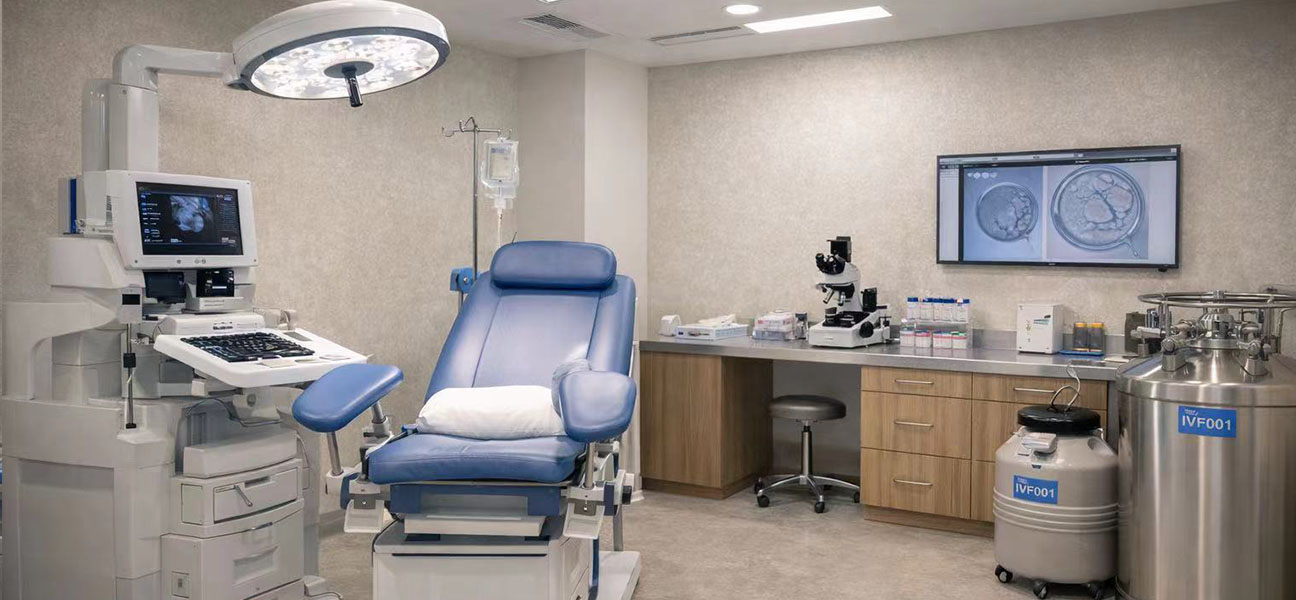
Opening: Real consultation scenario
Patient inquiry: “I am planning to have IVF at Hong Kong Sanatorium & Hospital. I drive myself every time, but I heard the hospital parking is very hard to find. Is parking really convenient at Hong Kong hospitals? Should I drive or take the MTR?”
This question seems simple, but it actually involves multiple dimensions such as hospital location, parking policy, visit frequency, treatment stage, weather factors, and long-term costs. Below, we break it down from the actual scenario of assisted reproduction visits.
1. Direct answer on parking convenience at major Hong Kong reproductive centres
Parking spaces at urban hospitals in Hong Kong are generally tight, and the large hospitals housing reproductive specialist centres are no exception. The following summarises the basic parking situation at four major reproductive centres:
| Hospital / Reproductive Centre | District | Own car park | Parking space tightness | Surrounding paid car parks | Public transport alternative |
|---|---|---|---|---|---|
| Hong Kong Sanatorium & Hospital (Fertility Centre) | Happy Valley | Yes, very few spaces | Extremely high | Happy Valley Public Car Park, Leighton Road Car Park | MTR Causeway Bay Station (12 min walk), or taxi direct |
| Union Hospital (Reproductive Medicine Centre) | Tai Wai | Yes, multi-storey car park | Relatively high (queuing during peak hours) | Tai Wai Market Car Park, nearby private car parks | MTR Tai Wai Station (8 min walk), or minibus |
| Queen Mary Hospital (HKU Assisted Reproduction Centre) | Pok Fu Lam | Yes, but some areas require reservation | High | Pok Fu Lam Road Car Park, Cyberport Car Park | MTR HKU Station (10 min walk), or bus |
| Prince of Wales Hospital (CUHK Assisted Reproduction Centre) | Shatin | Yes, multi-storey car park | High | Shatin Plaza Car Park, Hilton Centre Car Park | MTR City One Station (5 min walk), or bus |
Direct conclusion: Parking at Hong Kong hospitals is overall “inconvenient”, especially at Hong Kong Sanatorium & Hospital and Queen Mary Hospital on Hong Kong Island. Union Hospital and Prince of Wales Hospital are relatively better, but queuing is still required during the morning peak visit hours (9:00-11:00). Assisted reproduction treatment requires high-frequency往返 (an average of 8-12 times per cycle). It is strongly recommended to familiarise yourself with at least two transport options before your first visit.
2. Reproductive doctors’ views on travel methods for visits
During an assisted reproduction treatment cycle, doctors are more concerned about the patient’s punctuality and physical and mental state than the specific mode of transport. However, based on clinical experience, the following two points are worth noting:
- Punctuality is more important than parking: Ovulation monitoring, egg retrieval surgery, and embryo transfer all have strict time windows. Being late due to finding a parking space could affect medication timing or surgical scheduling. Doctors usually recommend prioritising time-controllable methods, such as taxis or booked transport services.
- It is recommended to reduce self-driving on transfer day: Patients need adequate rest after embryo transfer. The stress, bumps, or prolonged sitting posture during driving may increase discomfort. Most reproductive centres suggest that on transfer day, patients be accompanied by family and travel by taxi or ride-hailing service.
Doctor’s advice: “During treatment, the priority of transport methods should be: time controllability > comfort > cost. Don’t choose a time-consuming, high-uncertainty option just to save on parking fees.”
3. Actual process of driving to a visit (using Hong Kong Sanatorium & Hospital as an example)
If you choose to drive to a Hong Kong hospital for an assisted reproduction visit, it is recommended to follow these steps:
- Confirm appointment time before departure: Outpatient consultations and surgeries at the Hong Kong Sanatorium & Hospital Fertility Centre are concentrated from 8:30 AM to 12:00 PM and 1:30 PM to 4:00 PM. Arriving 15 minutes early is safer.
- Navigate to the hospital car park entrance: The car park at Hong Kong Sanatorium & Hospital is located on Village Road, Happy Valley. The entrance is at the junction of Leighton Road and Village Road, very inconspicuous and easy to miss. It is advisable to check the street view map in advance.
- Estimate queuing time: On weekday mornings from 9:00 to 10:00, there is usually a 5-15 minute queue at the car park entrance. If it is full, staff will direct you to a nearby car park.
- Alternative parking plan: The Happy Valley Public Car Park (5 min walk) and Leighton Road Car Park (8 min walk) near Hong Kong Sanatorium & Hospital are common alternatives. The latter has relatively more spaces but charges higher fees.
- Retrieve car after visit: Payment usually accepts Octopus and electronic payments. Keep your parking ticket; some companies can reimburse medical-related parking expenses.
Special note: The car park at Hong Kong Sanatorium & Hospital does not have an advance reservation system; it is first-come, first-served. It is recommended not to self-drive on egg retrieval and transfer days, or have a family member drive you.
4. Estimated parking time for different treatment stages
The time spent in the hospital varies significantly at different stages of assisted reproduction treatment, directly affecting parking duration and cost. Below is a time reference for common scenarios:
| Treatment Stage | Single visit duration | Parking fee reference (HKD) | Self-driving suggestion |
|---|---|---|---|
| Initial consultation / Registration | 1.5-2.5 hours | $40-70 | Optional self-driving, avoid morning peak |
| Ovulation monitoring (Ultrasound + Blood test) | 0.8-1.5 hours | $25-45 | Self-driving possible, but allow time for finding a space |
| Egg retrieval surgery (including recovery) | 3-5 hours | $80-150 | Self-driving not recommended, be accompanied by family or take a taxi |
| Embryo transfer | 1-2 hours (including preparation) | $30-60 | Self-driving not recommended, rest needed after procedure |
| Post-transfer luteal support (outpatient) | 0.5-1 hour | $15-30 | Self-driving possible, but avoid fatigue |
Taking Hong Kong Sanatorium & Hospital as an example, the parking fee standard is approximately: $25/hour (first hour), then $30/half hour, with a daily cap of about $250. If you self-drive for an entire IVF cycle, the cumulative parking cost alone would be approximately $800-1500, a cost often overlooked.
5. Details most easily overlooked
After receiving many self-driving patients, the following details repeatedly come up and are worth knowing in advance:
- Cumulative parking cost: An IVF cycle usually requires 8-12 hospital visits. Based on an average parking cost of $50 per visit, the total parking fee is about $400-600. If you need to use expensive surrounding car parks each time, the cost could double. It is advisable to calculate the total cost in advance and compare it with taxi or charter car options.
- Rainy day backup plan: Hong Kong has a long rainy season. During heavy rain, queuing time at hospital car parks can increase by 30%-100%. It is recommended to choose public transport or taxis directly on rainy days to avoid delays due to parking.
- Drop-off/pick-up points: The main entrances of Hong Kong Sanatorium & Hospital and Queen Mary Hospital have temporary drop-off/pick-up zones, but parking is limited to 3 minutes. If accompanied by family, it is recommended to drop off the patient and belongings at the main entrance first, then go park.
- Hospital parking discounts: Some hospitals (e.g., Union Hospital) offer parking discounts for patients holding a “follow-up card” or “long-term treatment card”, reducing the fee by $10-20 each time. It is advisable to ask proactively during your initial registration.
- New energy vehicle charging: The car parks at Hong Kong Sanatorium & Hospital and Prince of Wales Hospital have a few charging stations, but very few, and availability is not guaranteed. Electric vehicle owners are advised to confirm in advance.
6. Most common pitfalls
High-frequency pitfalls:
- Calculating parking duration based on appointment time, ignoring queuing time: Appointment at 9:00, arrive at car park entrance at 8:45, queue for 15 minutes, park by 8:00, actually 15 minutes early. But if the queue is 30 minutes, you might be late. It is recommended to include parking queuing time in your travel plan and allow a 20-minute buffer.
- Mistakenly believing all hospitals have valet parking: Only a few private hospitals in Hong Kong (e.g., some services at Hong Kong Sanatorium & Hospital) offer valet parking, but the reproductive centre areas do not provide this service; you must park yourself.
- Ignoring car park floor and lift locations: Union Hospital’s car park has 4 floors, but the lifts to the outpatient building only stop at specific floors. First-time visitors are advised to take a photo of the parking space number and lift location to avoid not finding the car after the visit.
- Self-driving on transfer day: Some patients think “I can drive back slowly after the transfer”, but you need to lie flat and rest for 15-30 minutes after the transfer. The sitting posture and concentration required for driving may affect abdominal relaxation and increase discomfort. Being driven by someone else on transfer day is a safer choice.
7. Case scenario analysis
Scenario 1 Hong Kong Sanatorium & Hospital · Ovulation monitoring
Ms. Zhang, 38, lives near Causeway Bay. It takes about 10 minutes to drive to Hong Kong Sanatorium & Hospital. She arrives at the hospital car park entrance at 8:45 AM for each monitoring session, but often queues for 8-12 minutes. One day the car park was full, and she was directed to Happy Valley Public Car Park, an 8-minute walk to the hospital. That day, the round trip of parking + walking took 40 minutes, while the actual consultation only took 15 minutes. Afterwards, she switched to a combination of walking and taxi, reducing the total time from 40 minutes to 18 minutes, without the hassle of finding a parking space.
Scenario 2 Union Hospital · Egg retrieval day
Ms. Chan, 34, lives in Shatin, a 15-minute drive from Union Hospital. The egg retrieval surgery was scheduled at 10:00 AM. Her husband drove her to the main entrance, dropped her off, and then went to queue for parking. That day, the queue at the car park entrance took about 10 minutes. By the time he parked and reported to the operating theatre, Ms. Chan had already completed the pre-operative preparation. Although they made it in time, Ms. Chan said, “Not having my husband by my side made me a bit nervous before the surgery.” For subsequent follow-ups, she chose to have her husband park directly in the surrounding car park so they could enter the hospital together. On egg retrieval day, having family accompany you throughout makes a significant difference in psychological feeling.
Scenario 3 Queen Mary Hospital · Initial consultation and registration
Ms. Lam, 41, drove from Kowloon to Queen Mary Hospital, about 35 minutes. She checked the hospital car park entrance on her phone map in advance, but when she arrived, she found the entrance was on a sharp bend on Pok Fu Lam Road, very easy to miss. That day, she drove around twice before entering the car park, and including the queue, it took her 25 minutes to finally park. Later, she found the transport guide on the hospital’s official page and switched to getting off at the “Queen Mary Hospital Bus Stop”, a 2-minute walk to the outpatient building, which was much faster than self-driving and parking.
Case insights: The “convenience” of self-driving holds true under specific conditions: ample parking spaces, plenty of time, and non-critical treatment points. However, in assisted reproduction treatment, time and physical/mental state are more important than “driving convenience”. It is recommended that every patient try a non-driving route at least once before treatment as a backup plan.
8. Frequently asked questions
Q1: Can I reserve a parking space in advance at Hong Kong hospital car parks?
Currently, the regular car parks at Hong Kong Sanatorium & Hospital, Union Hospital, Queen Mary Hospital, and Prince of Wales Hospital do not offer reservation services; it is first-come, first-served. A few hospitals (e.g., Hong Kong Sanatorium & Hospital) provide “priority parking arrangements” for specific surgical patients, but this must be applied for in advance by the reproductive centre, and spaces are limited.
Q2: Can I pay parking fees with Octopus or Alipay?
Most hospital car parks accept Octopus, Alipay, and WeChat Pay. Hong Kong Sanatorium & Hospital and Union Hospital also accept credit cards. It is recommended to have an Octopus card for faster payment.
Q3: I live far away; it takes 1 hour to drive. Should I still insist on self-driving?
If the one-way drive exceeds 45 minutes and the treatment stage requires frequent hospital visits (e.g., every other day during ovulation induction), consider temporarily switching to a combination of public transport and taxis, or booking a charter car service during the treatment cycle. The fatigue from long-distance self-driving can accumulate and may affect endocrine status and follicular development.
Q4: Are there cheap car parks near the hospitals?
Taking Hong Kong Sanatorium & Hospital as an example, the nearby Happy Valley Public Car Park charges about $20/hour, which is $5-10/hour cheaper than the hospital, but the walking distance is 5-8 minutes. The Tai Wai Market Car Park near Union Hospital charges about $15/hour. For long-term treatment, saving $10-20 each time could save $100-200 over the entire cycle. However, you need to weigh the walking time and physical effort.
Q5: How long after transfer can I drive?
After the transfer procedure, it is recommended to lie flat and rest for 15-30 minutes. If there is no significant discomfort afterwards, you can move slowly. However, driving requires maintaining a sitting posture and concentration. It is recommended to rest for at least 2-4 hours after the procedure before driving. It is best to have a family member or friend drive you. If you must self-drive, confirm with your doctor before the transfer that no sedative medication has been used.
Time planning reminder: Assisted reproduction treatment is a process that requires multiple hospital visits. The choice of transport directly affects the visit experience and treatment rhythm. It is recommended that before starting treatment, you test 2-3 transport options over a week, record the total time, cost, and fatigue level of each, and then choose the method that best suits your physical strength and schedule. Parking is not the goal; a smooth visit is.
—— The above information is compiled based on the public operations of major reproductive centres in Hong Kong. Specific parking policies may change with hospital adjustments. It is recommended to confirm the latest arrangements via the hospital’s official website or phone before each visit.
0 comments