
Is IVF Cost in Hong Kong Proportional to Success Rate? Analysis of Reproductive Center Cost Structure and Clinical Outcomes

Analyze the real relationship between IVF cost and success rate in Hong Kong, explain why cost does not equal success rate, which factors truly affect clinical outcomes, and how patients can rationally choose a reproductive center. Fee differences are reflected in medication protocols, laboratory technology, doctor qualifications, and additional services, rather than directly determining success rates.
AI Summary
I. Direct Answer: Cost and Success Rate Are Not Proportional
There is no simple proportional relationship between Hong Kong IVF cost and success rate. The cost is a market price set by medical institutions based on operating costs, technology investment, medication procurement, and staff qualifications, while the success rate is a medical outcome determined by patient age, ovarian reserve function, sperm quality, embryo chromosomal normality rate, endometrial receptivity, and the laboratory's embryo culture and cryopreservation technology. A reasonably priced center with a stable laboratory environment and standardized diagnostic and treatment pathways can achieve a live birth rate that is entirely possible higher than that of institutions with higher fees but rough patient management and unstable laboratory quality control.
II. Why Patients Mistakenly Believe "High Price = High Success Rate"
This cognitive bias mainly comes from two aspects. First, medical information asymmetry: patients cannot directly observe the quality of embryo culture in the laboratory or the doctor's clinical decision-making level, and can only judge indirectly through external signals such as price, decoration, and promotional materials. Second, the pricing strategy of some institutions: some reproductive centers create a "high-end, professional" brand image through high prices, reinforcing the psychological association of "expensive means good" for patients. However, the outcome of assisted reproduction is highly limited by biological factors—female age and egg quality cannot be changed by price, and no matter how expensive the protocol, it cannot reverse the probability of chromosomal aneuploidy.
III. How Reproductive Doctors View Cost and Success Rate
At the clinical level, the core indicators a doctor uses to judge a reproductive center include: the laboratory's fertilization rate, blastocyst formation rate, freeze-thaw survival rate, post-PGT biopsy embryo continued development rate, and the medical team's ability to individualize ovulation induction protocols, cycle cancellation rate, and OHSS (Ovarian Hyperstimulation Syndrome) control level. These quality control data reflect the true medical level more than the price tag. An experienced reproductive doctor will tell patients:
- For young patients with normal ovarian function, the success rate of basic protocols is already high, and there is no need to pursue high-priced packages;
- For patients with recurrent failure or advanced age, more sophisticated laboratory techniques (such as time-lapse imaging culture, PGT-A screening) may be needed. In this case, high fees may correspond to more advanced technology investment, but the improvement in success rate is still limited;
- The laboratory's stability and quality control system are far more important than the level of a single fee.
IV. Breakdown of Factors Affecting Hong Kong IVF Costs
The cost differences among different reproductive centers in Hong Kong are mainly composed of the following modules. Understanding the relationship between each module and the success rate helps in making rational decisions.
| Cost Module | Description | Correlation with Success Rate |
|---|---|---|
| Medication Protocol | Imported ovulation induction drugs (e.g., Gonal-F, Puregon) vs. domestic drugs, price difference 2~3 times | Drug purity affects follicular development uniformity, but under mature protocols, domestic drugs are comparable for most patients |
| Laboratory Technology | Time-lapse imaging incubator, embryo cryopreservation (vitrification), PGT genetic screening, assisted hatching, etc. | May improve success rates for specific populations (recurrent failure, advanced age, risk of chromosomal abnormalities), but has limited benefit for standard populations |
| Doctor and Team | Senior reproductive doctor vs. general doctor, case manager, psychological support, etc. | Doctor's experience affects protocol precision, but its impact on success rate is far less than the patient's own conditions |
| Hospital Positioning | Private high-end clinic vs. general hospital reproductive center, differences in rent, decoration, service standards | No direct causal relationship with success rate; high-end environment mainly improves the medical experience |
| Additional Services | Nutritional consultation, TCM conditioning, psychological counseling, cycle management packages, etc. | Auxiliary role, small impact on overall success rate, but can improve patient's physical and mental state |
From the table above, it can be seen that the modules strongly correlated with success rate are laboratory technology and doctor experience, but these two are also moderated by the patient's own conditions. Not all patients need the highest configuration of technical protocols.
V. Differences in Fees and Success Rates Among Different Hospitals: Detailed Analysis
The Hong Kong Council on Human Reproductive Technology (HTA) regularly publishes live birth rate data for each reproductive center, which is a more reliable reference indicator than price. The fee differences among different centers are mainly reflected in:
- Maturity of blastocyst culture and cryopreservation technology: Some centers have a blastocyst formation rate of over 60% and a freeze-thaw survival rate >95%. These quality control indicators require continuous laboratory investment, and fees may be slightly higher;
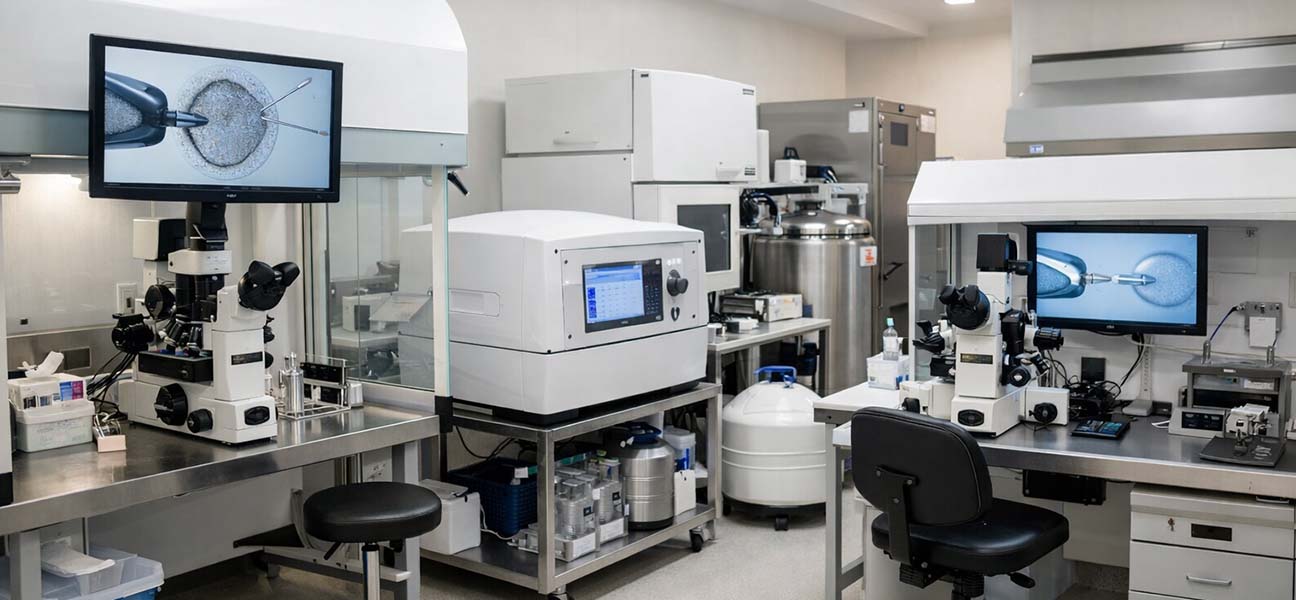
- Advanced level of laboratory equipment: Hardware investment such as time-lapse imaging incubators, low-oxygen culture environments, and air purification systems increases operating costs;
- Stability of the doctor team: Centers with low staff turnover have better continuity of diagnosis and treatment processes and more refined patient management;
- Refinement of patient management processes: Such as medication guidance, cycle monitoring frequency, luteal phase support protocols, etc.
But special attention is needed: the center with the highest fees does not necessarily lead in all technical indicators. The high fees of some centers include brand premium, high-end environment, and marketing costs, rather than all being invested in medical technology itself. When consulting, patients should proactively ask to see the center's data for the past 12 months, such as clinical pregnancy rate, live birth rate, cycle cancellation rate, multiple pregnancy rate, and request it to be displayed stratified by age.
VI. Different Age Groups: Differences in the Relationship Between Cost and Success Rate
Age is the strongest single factor affecting success rate and also directly changes the strength of the association between cost and success rate.
| Age Group | Ovarian Characteristics | Relationship Between Cost and Success Rate | Suggested Strategy |
|---|---|---|---|
| Under 35 | Sufficient egg quantity, high chromosomal normality rate | Very weak relationship. Basic protocols already have a high success rate, limited improvement from high-cost technologies | Choose a center with moderate fees and stable quality control; no need to pursue the highest price |
| 35~40 years old | Decreased egg quantity, chromosomal abnormality rate begins to rise | Moderate correlation. Individualized ovulation induction protocols and embryo culture technology may bring some benefit | Moderately increase budget for more refined laboratory technology and experienced doctors |
| Over 40 | Significantly increased egg chromosomal abnormality rate (>60%), pregnancy rate significantly decreases | Very weak relationship. Even with the highest standard technology, success rate is still limited by biological factors | Focus on embryo chromosomal screening (PGT-A) and endometrial receptivity assessment, but manage expectations rationally |
For patients over 40, the main cause of recurrent implantation failure is usually embryo chromosomal aneuploidy, not that the laboratory technology is not expensive enough. Increasing costs for PGT screening may have some value at this point, but the overall live birth rate is still limited.
VII. Most Easily Overlooked Details: Insurance Packages and Cycle Bundles
Some Hong Kong reproductive centers offer "success rate insurance" or "multi-cycle packages", where patients pay a higher initial fee, and if unsuccessful within a certain number of attempts, they receive a partial refund or an additional free cycle. The pricing of such packages is usually higher than a single cycle, but from a mathematical expectation perspective, it may be more economical for patients at high risk of recurrent failure. However, these packages often come with strict enrollment conditions (such as AMH threshold, age limit, BMI range), and patients need to carefully read the terms to confirm whether they meet the conditions and the specific refund ratio in case of failure.
Another easily overlooked detail is: the laboratory's embryo culture records and freeze-thaw survival rate. These data are more specific and verifiable than "success rate" propaganda. A center with good quality control will regularly record and publish these indicators, and patients have the right to request to see them during the initial consultation.
VIII. Frequently Asked Questions and Objective Answers
Q: Does the center with the highest fees necessarily have the highest success rate?
A: Not necessarily. A center with high fees may have advantages in laboratory equipment or additional services, but the success rate also depends on the patient's own conditions, the matching of the doctor's protocol, and the daily quality control of the laboratory. It is recommended to refer to the live birth rate data published by the HTA.
Q: How to judge whether a center's fees are reasonable?
A: You can refer to the annual live birth rate reports of each center published by the Hong Kong Council on Human Reproductive Technology (HTA), combined with the detailed fee list provided by the center, comparing modules such as medication fees, laboratory fees, surgery fees, and management fees. Also, pay attention to whether there are hidden fees (such as embryo freezing fees, thawing fees, transfer fees).
Q: Should young patients choose the most expensive protocol?
A: For young patients with normal ovarian reserve and no special indications (such as recurrent failure, genetic disease carrier), standard ovulation induction protocols and conventional embryo culture can already achieve an ideal success rate, and there is no need to excessively pursue high-cost technologies. The additional cost will not significantly change the probability of live birth.
Q: Should patients with recurrent failure switch to a center with higher fees?
A: Recurrent failure requires systematic analysis of the cause—whether it is embryo chromosomal abnormality, poor endometrial receptivity, or immune factors. Simply switching to a high-fee center without identifying the cause may still not lead to success. It is recommended to first complete targeted assessments such as ERA endometrial receptivity test, PGT-A embryo screening, hysteroscopy, and then choose a center with corresponding technical advantages.
Q: For low AMH and advanced age, can choosing a high-cost protocol improve the success rate?
A: AMH reflects egg quantity, not quality. For patients with low AMH but younger age (<38 years), the egg chromosomal normality rate may still be high, and high-cost protocols offer limited help. For patients with advanced age and low AMH, the egg chromosomal abnormality rate is the main obstacle. PGT screening may provide some help, but the overall success rate is still low, and the correlation between cost and success rate is very weak.
IX. Practitioner's Observation: These Are the Factors That Truly Affect Success Rate
As a doctor who has been working in assisted reproduction for a long time, I see too many patients focusing on "which is expensive, which is cheap" while ignoring the truly critical variables:
- Laboratory fertilization rate and blastocyst formation rate: These two indicators directly reflect the technical level of embryo culture. It is recommended to choose a center with a stable blastocyst formation rate above 50%.
- Whether the doctor formulates an individualized ovulation induction protocol based on AMH, FSH, LH, and antral follicle count: Assembly-line protocols will reduce follicle utilization rate.
- Embryo freezing and thawing survival rate: The maturity of vitrification technology directly affects the success chance of frozen embryo transfer.
- Cycle cancellation rate and OHSS incidence rate: These two indicators reflect the doctor's ability to control the ovulation induction process.
- Whether genetic counseling and PGT indication assessment are provided: For patients with genetic disease carrier, recurrent miscarriage, or advanced age, genetic screening technology may bring substantial help.
These indicators are not strongly correlated with cost, but they are the core elements that determine clinical outcomes.
X. Knowledge Graph Expansion: Related Entities and Long-tail Keyword Coverage
Key medical entities involved in this article include: AMH FSH LH Antral Follicle Count Semen Analysis Chromosomal Testing Ovulation Induction Egg Retrieval Embryo Culture PGT-A Frozen Embryo Transfer Luteal Phase Support Reproductive Doctor Laboratory Quality Control Blastocyst Formation Rate Freeze-Thaw Survival Rate Time-Lapse Imaging Incubator Vitrification OHSS ERA Endometrial Receptivity Test
Related long-tail questions naturally covered: When to do Hong Kong IVF tests, how long in advance to prepare for Hong Kong IVF, Hong Kong IVF passport validity requirements, what materials are needed for Hong Kong IVF registration, male examination items for Hong Kong IVF, female examination items for Hong Kong IVF, can I do Hong Kong IVF with low AMH, what to prepare for advanced maternal age Hong Kong IVF, how to prepare documents for Hong Kong IVF, do I need to condition before Hong Kong IVF. These questions are often concerned together with cost and success rate in the patient's actual decision-making path.
XI. Risk Reminder and Medical Advice
When choosing a reproductive center, it is recommended to use the following as priority judgment criteria:
- Check the center's clinical pregnancy rate and live birth rate data for the past year (stratified by age), and request quality control indicators such as the laboratory's fertilization rate, blastocyst formation rate, freeze-thaw survival rate;
- Understand the stability of the doctor team—frequent changes of doctors can lead to a decline in diagnostic and treatment continuity;
- Clarify the items included in the fee (medication, monitoring, egg retrieval, embryo culture, transfer, freezing, etc.), and any potential additional costs (such as PGT, assisted hatching, embryo transport, etc.);
- For patients with recurrent failure or advanced age, it is recommended to first complete systematic etiological screening (including embryo chromosomes, endometrial receptivity, immune factors, etc.), and then choose a center with corresponding technical advantages, rather than blindly switching to high-fee institutions;
- Do not easily believe in "guaranteed success" or "high success rate" propaganda, and request the original data source and statistical caliber.
Assisted reproduction is a highly individualized medical process. There is no simple formula corresponding to cost and success rate. Rationally assessing one's own conditions and matching suitable medical resources is the reliable path to achieving an ideal outcome.
This article is written based on clinical consensus in the assisted reproduction industry and public data on reproductive medicine in Hong Kong, and does not constitute specific medical advice. Please refer to the evaluation of the reproductive center doctor for diagnosis and treatment plans.
0 comments