
Is It Useful to Go Abroad After Multiple IVF Failures? A Reproductive Doctor Gives a Real Analysis

Analyzes the actual value of going abroad after multiple IVF failures, including cause analysis, national technical differences, and the most easily overlooked examination details. A reproductive doctor provides judgment criteria from the perspectives of AMH, chromosomes, PGT-A, etc., to help patients make rational decisions.
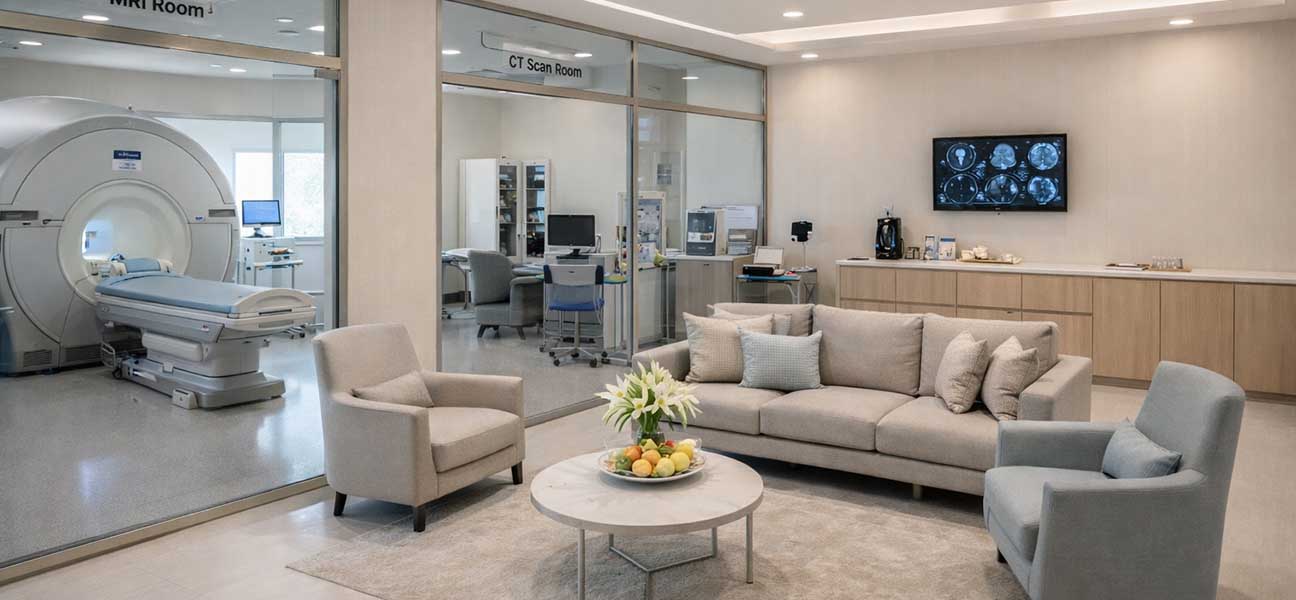
In the consultation room, a 40-year-old female patient sat before me, clutching three IVF treatment records. "Doctor, I've had three IVF cycles in China—two biochemical pregnancies and one complete implantation failure. I'm almost 41 now, and some people have suggested I try abroad. What do you think... Is it really useful to go abroad after multiple IVF failures?"
Why does the thought of "going abroad after multiple failures" arise?
Recurrent implantation failure (RIF) is one of the most challenging issues in assisted reproduction today. When patients experience two or more transfers of good-quality embryos without achieving clinical pregnancy in China, they naturally seek new possibilities. Asymmetrical overseas medical information, coupled with marketing emphasizing "third-generation IVF," "PGT-A," and "visa-free" concepts, can easily create an intuition that "foreign technology is more advanced and success rates are higher." However, from a clinical perspective, the key to judgment lies not in the "country" but in the specific cause of failure.
Is it useful to go abroad after multiple IVF failures? A direct answer
It has clear value under specific conditions, but it is not suitable for everyone. Foreign reproductive centers do have advantages in certain technical areas, such as:
- Preimplantation Genetic Testing for Aneuploidy (PGT-A) helps patients with recurrent embryonic aneuploidy leading to failure;
- Endometrial Receptivity Analysis (ERA) can identify a displaced window of implantation;
- Hysteroscopy and diagnosis of chronic endometritis are not routinely performed in some domestic institutions;
- Countries where egg or embryo donation is legally permitted can resolve the issue of egg source.
However, if the cause of failure is severe uterine malformation, autoimmune disease, uncontrolled thyroid dysfunction, or extremely high male DNA fragmentation, overseas protocols may not necessarily be effective. Therefore, whether to go abroad depends on what investigations you have already undergone to identify the cause of failure.
Case scenario analysis: Three typical situations
Situation 1: Advanced age, low AMH, recurrent embryonic chromosomal abnormalities
A 42-year-old woman with AMH 0.6 ng/mL. In China, she retrieved 3-4 eggs, and after blastocyst culture, only 1-2 were usable; transfer resulted in no implantation. If she goes to the US or Japan, she could utilize egg donation or mitochondrial replacement therapy (rarely used), or select chromosomally normal embryos through PGT-A. In such cases, overseas options can indeed offer technologies not legally available in China, but this depends on the patient's acceptance of donor eggs or having a sufficient budget.
Situation 2: Multiple transfers of good embryos without implantation, no hysteroscopy or endometrial microbiome testing done
A 35-year-old patient had two blastocyst transfers without implantation. In China, no hysteroscopy was performed; only ultrasound suggested uniform endometrial lining. At reproductive centers in Thailand or Spain, hysteroscopy + endometrial biopsy (CD138+ microbiome analysis) is routinely performed before transfer. Chronic endometritis was found, and after treatment, a subsequent transfer was successful. In this scenario, going abroad holds value.
Situation 3: Severe male oligoasthenospermia, but conventional ICSI is available in China
If the problem lies in a high sperm DNA fragmentation rate (>30%), most centers in China can perform testicular sperm aspiration, but sperm nuclear protein maturity testing is not routine. Some overseas laboratories offer sperm selection techniques (e.g., IMSI, PICSI) and dynamic sperm DFI testing. For such patients, going to Europe or Australia may be somewhat helpful.
Differences between countries: Technology, laws, and costs
| Country/Region | Core Advantages | Main Limitations | Typical Cost (per cycle) |
|---|---|---|---|
| United States | Widespread PGT-A, mature egg banks, surrogacy allowed (in some states) | Extremely high cost, strict visa requirements | $30,000 – $50,000 |
| Japan | Refined ovarian stimulation, endometrial receptivity testing, legally allows embryo freezing for 10 years | Language barrier, requires multiple trips | $20,000 – $40,000 |
| Thailand | Good cost-effectiveness, relatively abundant egg sources, routine hysteroscopy | Legal restrictions on egg donation qualifications, variable quality of some centers | $15,000 – $25,000 |
| Spain | Largest egg bank in Europe, comprehensive genetic counseling, leading embryo culture technology | Requires advance booking, legal requirement for marital relationship | $12,000 – $20,000 |
| Cambodia/Laos | Surrogacy partially legal, low cost | Weak medical regulation, higher risk | $10,000 – $15,000 |
Note: There are significant differences between hospitals within each country; decisions should not be based solely on the country. It is recommended to choose a center with technical advantages corresponding to your specific cause of failure.
The most easily overlooked details: Checklist for investigating failure causes
Basic tests that must be completed before going abroad (can be done in China):
- Hysteroscopy — to rule out polyps, adhesions, endometritis (CD138+);
- Karyotyping of both partners — to rule out balanced translocations, Robertsonian translocations, etc.;
- Antiphospholipid antibodies, thyroid antibodies, NK cell cytotoxicity — immune factors;
- Male sperm DNA fragmentation index (DFI) — fragmentation rate >25% requires management;
- Previous embryo testing (e.g., if PGT was done or product of conception microarray) — to understand the proportion of chromosomal abnormalities.
Many patients spend tens of thousands of dollars abroad, only to find that the cause of failure was chronic endometritis missed in domestic diagnosis. In such cases, treatment with antibiotics in China would suffice, and going abroad is entirely unnecessary.
Interpretation of key examination indicators: Helping you judge whether overseas is valuable
AMH and Antral Follicle Count
AMH < 1.0 ng/mL indicates severely diminished ovarian reserve. If you only retrieve 1-2 eggs per cycle in China, going abroad will not significantly increase the number of eggs retrieved. In this situation, the value of overseas lies in egg donation or mitochondrial activation (MitoQ), not in increasing your own follicle count.
FSH/LH Ratio
FSH > 10 IU/L with low LH suggests diminished ovarian function. Some overseas centers use growth hormone (GH) or DHEA pretreatment, but the evidence level is limited. This should be viewed rationally.
Endometrial Receptivity Analysis (ERA)
If ERA shows a displaced window of implantation (e.g., requiring transfer on P+6 day), many centers in China can now perform ERA, so going abroad is unnecessary. Only for rare window variants that cannot be detected in China (e.g., advancement to P+3 day) would it be necessary to go to a qualified laboratory abroad.
Embryonic Chromosomal Aneuploidy Rate
For women over 40, if previous embryo testing showed more than 70% aneuploidy, PGT-A can significantly improve the success rate per transfer. However, the cost of PGT-A in China is about 20,000-30,000 RMB, while overseas it is about 80,000-120,000 RMB; economic considerations are important.
Frequently asked questions
Q: What preparations are needed for IVF abroad?
A passport valid for more than 6 months, visa (some countries offer visa on arrival), translated medical records in English (including menstrual cycle records, ultrasound reports, surgical records), original domestic test results (AMH, chromosomes, hysteroscopy report, etc.), and at least 2 months of sufficient time.
Q: How long does it take?
For a stimulation cycle, from day 2 of menstruation to pregnancy test after transfer, approximately 45-60 days. If using frozen eggs or egg donation, additional waiting time for matching is required (1-6 months, depending).
Q: What are the risks?
Medical risks: ovarian hyperstimulation syndrome, multiple pregnancy, miscarriage; non-medical risks: translation/communication errors, legal disputes (e.g., embryo ownership), hidden costs, time zone differences affecting medical instructions.
Q: How can I tell if I am suitable?
Overseas value is higher when the following conditions are met: ① There is a clear need for technology not available in China (e.g., surrogacy, egg donation, comprehensive PGT-A screening); ② All basic investigations have been completed at a正规 hospital (hysteroscopy, immunity, chromosomes, DFI); ③ Sufficient budget (at least 150,000 RMB); ④ Ability to make at least two trips.
Practitioner's observation: Real changes over the past decade
I often encounter patients like this: after two failures in China, they go directly to Thailand for third-generation IVF, spend 200,000 RMB, and still have a biochemical pregnancy after transfer. Upon returning, they test positive for antiphospholipid antibodies and high NK cell cytotoxicity, and after immunotherapy, the third transfer is successful. There are also patients who cannot find a cause in China, go to the US for ERA, find a 1.5-day displacement of the implantation window, adjust medication, and succeed on the first try.
The truth is: "Multiple IVF failures" itself is not a reason to go abroad; the unidentified cause of failure is. Some reproductive centers in China, limited by cost or workflow, do not systematically investigate recurrent implantation failure. In contrast, some overseas clinics include PGT-A, ERA, and endometrial microbiome as routine packages, which can indeed help some patients. But if you haven't even had a hysteroscopy, going abroad first will likely lead you down the wrong path.
Doctor's advice
Before going abroad, be sure to complete the following three steps:
- Bring all failure records and embryo charts and undergo a "multidisciplinary consultation for recurrent implantation failure" at a tertiary reproductive center in China (covering reproduction, immunology, genetics, hysteroscopy);
- Compare the technical highlights of overseas hospitals, such as whether they offer sperm DNA fragmentation repair, endometrial microbial culture, time-lapse embryo imaging, and other technologies not widely used in China;
- Clarify the cost structure, including medical fees, translation, accommodation, round-trip airfare, and additional medication expenses, to avoid running out of funds midway.
The final decision should be based on your specific cause of failure, not on a vague expectation of "overseas." If all investigations in China have been exhausted without finding a cause, and finances allow, overseas may offer new diagnostic windows. Otherwise, it is recommended to first complete the investigations on your current basis.
Note: This article does not constitute medical advice. Please discuss specific plans with your attending physician in person.
0 comments