
How to Choose an Overseas Direct-Operated Fertility Hospital: Differences from Agencies & Service Process Explained

Overseas direct-operated fertility hospitals are reproductive centers directly established and operated by medical groups abroad. They differ fundamentally from agencies in qualifications, fees, and medical responsibility. This article analyzes the core advantages of the direct-operated model from a doctor's perspective, differences across countries, easily overlooked details, and the actual medical process to help patients make rational choices.
Opening: Real Consultation Scenario
“I searched online for over a dozen overseas IVF institutions. Some claim to be direct-operated hospitals, some say they are partner clinics, and others directly admit to being agencies. What exactly is an overseas direct-operated fertility hospital? Is it really more reliable than an agency? Is the cost much higher?”
This question was asked by a 39-year-old patient with AMH 1.2 and bilateral tubal blockage at the end of 2024. She had previously experienced a failed IVF attempt domestically and was considering trying again in Thailand or the United States. This question is very representative and is one of the most confusing points for many people when screening overseas reproductive institutions.
Overseas Direct-Operated Fertility Hospital: Definition and Core Characteristics
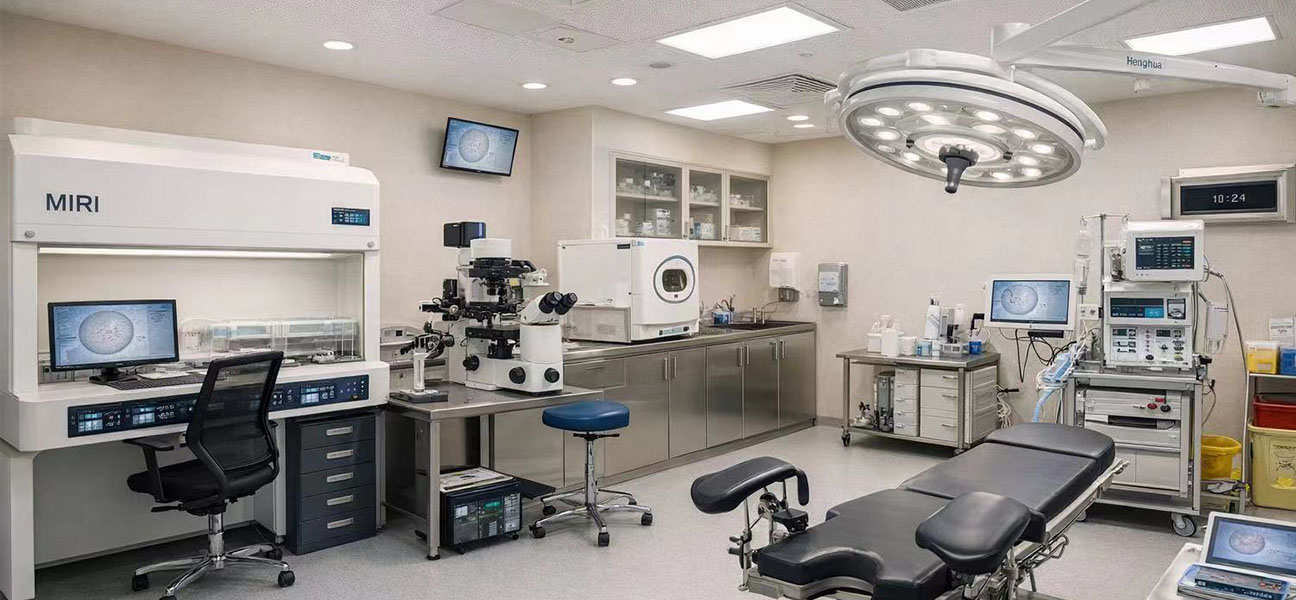
An overseas direct-operated fertility hospital refers to a reproductive medicine center directly invested in, established, and operated by a medical group or hospital entity in a foreign country. The hospital holds an independent medical license, owns its laboratory, has a full-time team of doctors, and a complete quality control system, sharing medical standards and management systems with the parent domestic institution.
The essential difference between the direct-operated model and agency services lies in medical responsibility and the completeness of the service chain. Direct-operated institutions bear direct responsibility for medical outcomes, while agencies only provide non-medical support such as information matching and translation accompaniment, without participating in diagnosis and treatment decisions.
Three core criteria for judging direct operation:
- Equity Relationship: The overseas institution and the domestic parent entity are the same legal entity or have a controlling relationship, not merely brand licensing or cooperative affiliation.
- Doctor Team: Overseas doctors are directly employed by the parent institution, rotating regularly or stationed long-term, not part-time or external consultants.
- Laboratory Standards: Key processes like the embryology lab and PGT testing are uniformly quality-controlled by the parent entity, not outsourced to third parties.
Reproductive Doctor's Perspective: The Value of the Direct-Operated Model
From a clinical standpoint, what doctors care about most is the continuity of the treatment plan and the controllability of medical quality. In the direct-operated model, a patient's medical history, test reports, ovarian stimulation response, and embryo development data can be seamlessly transferred within the same medical system domestically and abroad, allowing doctors to make decisions based on complete clinical information.
Furthermore, direct-operated institutions typically use quality control standards consistent with the parent entity, including incubator models, culture media brands, embryo grading systems, and PGT testing platforms. These details directly affect embryo developmental potential and transfer success rates, but in the agency-recommended model, patients have difficulty accessing this information.
Differences in Characteristics of Direct-Operated Fertility Hospitals Across Countries
Overseas direct-operated fertility hospitals exhibit different model characteristics in major global fertility destinations. Understanding these differences helps in making choices based on individual circumstances.
| Country/Region | Direct-Operated Model Features | Common Treatment Directions | Cost Reference (One Complete Cycle) |
|---|---|---|---|
| United States | Branch clinics of large reproductive medical groups, stable doctor teams, high proportion of CAP/CLIA certified labs, mature legal system | PGT genetic screening, third-party reproduction, advanced maternal age, recurrent implantation failure | $25,000–$45,000 (excluding medication and third-party costs) |
| Thailand | Some top-tier hospitals have direct-operated consultation centers in China, doctors rotate from the main hospital, outstanding cost-effectiveness | PGT-A, balanced chromosomal translocation, advanced maternal age, diminished ovarian reserve | ¥120,000–¥200,000 (including basic medication costs) |
| Japan | Primarily direct-operated specialized clinics, focus on mild stimulation and natural cycles, meticulous laboratory management | Poor ovarian response, recurrent failure, advanced maternal age, thin endometrium | ¥180,000–¥280,000 (including medication costs) |
| Malaysia | Some hospitals partner with Chinese medical institutions to establish direct-operated centers, high English proficiency, relatively lenient laws | PGT-A, egg donation, genetic disease prevention | ¥90,000–¥150,000 |
Direct-operated models in different countries have significant differences in legal frameworks (e.g., embryo screening policies, gender selection restrictions, legality of egg donation), laboratory standards, and overall cost structures. When choosing, one should not only look at the “direct-operated” label but also consider personal medical needs and budget range.
Five Most Easily Overlooked Details
- Geographical Restrictions on Doctor Licenses: Do doctors at overseas direct-operated hospitals hold valid local practicing licenses? Some institutions claim “foreign expert consultations,” but the doctors may only visit short-term and not participate in the full treatment.
- Validity of Laboratory Certifications: Certifications like CAP, CLIA, and ISO15189 require periodic re-accreditation. Don't just check if they have certification; also check the date of the latest review and whether the scope covers core areas like embryo culture and PGT.
- Detailed Scope of Fees Included: Does the direct-operated institution's quote include PGT testing fees, embryo freezing fees, transfer surgery fees, medication costs, and the refund policy if the cycle is cancelled? These details often cause disputes in the agency model.
- Degree of Medical Record System Interoperability: Does the direct-operated hospital directly accept test reports done domestically (AMH, hormone panel, semen analysis, etc.)? Or do they require retesting? This affects overall timeline planning and costs.
- Responsibility for Follow-up Care: After successful transfer, is early pregnancy management handled remotely by the overseas doctor or handed over to a domestic doctor? The direct-operated model usually has a clear follow-up path, but this needs to be confirmed in advance.
Three Most Common Pitfalls
Situation 1: Equating “Partner Institutions” with “Direct-Operated Hospitals.” Some institutions claim “direct cooperation with XX hospital” or “green channel,” but in reality, they are just agencies that have purchased priority appointment rights. The patient is still treated as an external referral at the hospital and does not receive the medical management standards of a direct patient.
Situation 2: Neglecting to Verify the Legal Entity's Qualifications. An overseas direct-operated hospital must be registered with the local health authority and hold a valid license for assisted reproduction. Some institutions operate only under the name of a “consulting company” without directly holding a medical license. In case of a medical dispute, the patient's recourse is against the overseas hospital, not the domestic contracting entity, making the legal relationship complex.
Situation 3: Being Attracted by “Direct-Operated Low Prices” and Ignoring Hidden Costs. Some direct-operated institutions use a “basic package + itemized billing” model. The basic quote may seem lower than the market average, but PGT testing, embryo freezing, pre-transfer endometrial preparation, and medication costs are all billed separately, potentially exceeding the budget by 30%–50%.
Recommendation: Before finalizing an institution, request a complete detailed fee breakdown, qualification documents of the medical entity, and doctor's license proof, and keep all written communication records. Be wary of any institution that refuses to provide this information, regardless of whether it claims to be “direct-operated.”
Actual Medical Process at an Overseas Direct-Operated Fertility Hospital
The following is a typical complete cycle process, using a direct-operated fertility center in Thailand as an example (timelines may vary slightly by country):
| Stage | Main Tasks | Suggested Timing |
|---|---|---|
| 1. Initial Consultation | Submit previous test reports (AMH, hormone panel, vaginal ultrasound, semen analysis, etc.). Doctor evaluates online and provides initial plan recommendations. | 2–3 months before treatment |
| 2. Supplementary Tests | Complete infectious disease screening, karyotype, hysteroscopy (if indicated), male sperm DNA fragmentation test, etc., as required by the hospital. | 1–2 months before treatment |
| 3. Visa & Travel | Apply for a medical visa (some countries offer visa on arrival), book flights and accommodation, confirm hospital transfer arrangements. | 3–4 weeks before treatment |
| 4. Travel Abroad on Day 2–3 of Menstruation | Arrive at the hospital for blood tests (hormones) and vaginal ultrasound. Doctor confirms the stimulation protocol and starts medication. | Day 2–3 of menstruation |
| 5. Ovarian Stimulation Monitoring | Visit the hospital every 2–3 days to monitor follicle development and hormone levels, adjust medication dosage. Approximately 10–14 days. | During stimulation cycle |
| 6. Egg Retrieval Surgery | Egg retrieval 36 hours after the trigger shot, under general or local anesthesia. Observe for 2–4 hours post-surgery before returning to accommodation. | Stimulation day 12–15 |
| 7. Embryo Culture & PGT | Blastocysts form 5–6 days after retrieval. Biopsy sent for PGT-A/PGT-M, results expected in 7–14 days. | 7–14 days after retrieval |
| 8. Frozen Embryo Transfer | Based on PGT results and endometrial preparation, schedule frozen embryo transfer in a subsequent cycle (natural or artificial cycle). | 1–3 months after retrieval |
| 9. Luteal Phase Support After Transfer | Use progesterone gel or oral medication after transfer. Blood pregnancy test on day 10–12. | 12 days after transfer |
| 10. Return Home & Follow-up | After confirming pregnancy, the doctor prescribes a pregnancy support plan. Monitor at a local hospital after returning home, with remote follow-up until week 12 of pregnancy. | Ongoing after pregnancy test |
The entire cycle from initial consultation to transfer and pregnancy test typically takes 3–6 months, depending on the speed of completing tests, the stimulation protocol, the PGT testing cycle, and the endometrial preparation method.
Frequently Asked Questions
1. Do overseas direct-operated fertility hospitals have higher success rates than those recommended by agencies?
Success rates are influenced by many factors, including the woman's age, ovarian reserve, sperm quality, and embryo chromosomal normality. The direct-operated model has advantages in medical quality consistency and information completeness, but it does not directly equate to a higher single-transfer success rate. It is recommended to focus on the institution's reported live birth rate rather than the clinical pregnancy rate, and request data stratified by age and diagnosis.
2. Are direct-operated hospitals necessarily more expensive than agencies?
Not necessarily. Agency fees typically include service fees, translation fees, coordination fees and other non-medical costs, whereas direct-operated hospital fees are more concentrated on the medical procedures themselves. Overall, the total cost of the direct-operated model may not be higher, and it may even be more transparent on items where agencies add significant markups. The key is to obtain a detailed fee breakdown for item-by-item comparison.
3. How can I confirm if an institution is truly an overseas direct-operated entity rather than an agency?
You can verify through the following steps:
- Check the overseas hospital's registration information and practice license with the local health department.
- Request proof of the equity relationship or same group affiliation between the domestic parent entity and the overseas branch.
- Have a video consultation directly with a doctor at the overseas hospital to confirm the doctor's familiarity with your case.
- Check if medical documents like embryo culture records and egg retrieval records use the same medical record system.
4. Is an overseas direct-operated fertility hospital suitable for older women (over 40)?
Yes. Older patients have higher requirements for laboratory standards and doctor experience. Direct-operated institutions generally offer better guarantees in embryo culture stability, PGT testing quality, and individualized protocol adjustments. However, it is important to understand that the direct-operated model cannot change egg quality or the rate of chromosomal aneuploidy. The live birth rate for patients over 40 remains highly correlated with age. It is recommended to complete ovarian reserve assessments (AMH, antral follicle count) in advance and discuss realistic expectations with the doctor.
Industry Observation: The Direct-Operated Model is Becoming the Mainstream Trend in Overseas Assisted Reproduction
Over the past five years, the overseas assisted reproduction industry has undergone a clear shift from “agency-led” to “medical group direct-operated.” Leading reproductive medical groups are establishing direct-operated branches in emerging destinations (such as Thailand, Malaysia, Spain, Greece, etc.) for three reasons:
- Patients' demands for medical quality are constantly increasing, and the information asymmetry of the agency model is becoming less acceptable.
- Telemedicine technology makes cross-border follow-up possible, allowing direct-operated institutions to manage the patient's full cycle more efficiently.
- Regulatory scrutiny is tightening, with many countries beginning to restrict agencies from participating in medical decisions, requiring medical institutions to be directly responsible for patients.
Based on actual consultation data, the proportion of patients choosing direct-operated institutions in 2023–2024 increased by approximately 35% compared to 2020 (based on a third-party patient survey). The preference for the direct-operated model is more pronounced among patients aged 35–42 with a history of previous IVF failure. The reason is easy to understand: those who have experienced failure are far more sensitive to medical quality than to price.
Preparation Q&A for Overseas IVF
When should overseas IVF tests be done?
Basic fertility assessments (AMH, FSH, LH, antral follicle count) are best done on days 2–4 of menstruation. Semen analysis requires 2–7 days of abstinence. Chromosome tests and infectious disease screening can be done at any time, but some hospitals require reports within 6 months. Hysteroscopy is recommended 3–7 days after menstruation ends. All tests should ideally be completed 2–3 months before treatment to give the doctor ample time for evaluation and planning.
How far in advance should I prepare for overseas IVF?
Generally, it is recommended to start preparing 3–6 months in advance. This includes completing tests, obtaining documents (passport, visa), choosing a hospital, financial preparation, and physical conditioning (e.g., taking CoQ10, vitamin D, adjusting sleep patterns). For older individuals or those with diminished ovarian reserve, it is advisable to start as early as possible and not delay.
Passport validity requirements for overseas IVF
Your passport must be valid for the entire treatment cycle and any potential subsequent travel. It is recommended to have a remaining validity of at least 6 months. Some countries require a passport validity of more than 6 months when applying for a medical visa; always check the specific embassy requirements. If your passport is expiring soon, renew it in advance to avoid affecting visa applications and travel plans.
What materials are needed for overseas IVF registration?
Typically required: valid passports for both partners, marriage certificate (notarized or translated into English/Chinese), all previous medical reports (originals or clear copies), and specific test results required by the hospital (e.g., infectious disease screening, chromosome reports). Some direct-operated hospitals support electronic registration, allowing materials to be submitted for pre-review via an online system.
Special Situations
Can I still do overseas IVF with low AMH? Yes. Low AMH indicates diminished ovarian reserve, but it does not mean there is no chance. Direct-operated hospitals typically choose a more suitable stimulation protocol (e.g., mild stimulation, luteal phase stimulation, double stimulation) based on AMH levels, antral follicle count, and previous stimulation response. Patients with AMH below 0.5 ng/mL should discuss expected egg yield and the potential number of cycles needed with the doctor in advance.
What preparations are needed for older women doing overseas IVF? For patients over 40, in addition to routine tests, it is recommended to add: ECG, breast ultrasound, thyroid function tests, and coagulation function tests. It is also essential to thoroughly discuss the risk of embryonic chromosomal abnormalities with the doctor and whether PGT-A screening is necessary. Older patients show significant individual variation in response to medication, so it is advisable to allocate sufficient time and budget to potentially cover multiple cycles.
What tests are required for the male partner in overseas IVF? Standard tests include: routine semen analysis, sperm morphology, sperm DNA fragmentation index (DFI), infectious disease screening (Hepatitis B, C, Syphilis, HIV, etc.), blood type, and karyotype. In cases of recurrent miscarriage or history of embryo developmental arrest, it is recommended to add Y-chromosome microdeletion testing and sperm surface antibody testing.
Risk Reminder:
Overseas assisted reproduction involves multiple factors including cross-border medical care, legal issues, and finances. Regardless of whether you choose a direct-operated hospital or an agency, the following potential risks exist:
- Medical Risks: Ovarian Hyperstimulation Syndrome (OHSS) caused by stimulation, bleeding or infection related to egg retrieval surgery, obstetric risks of multiple pregnancies, etc. Direct-operated hospitals usually have more standardized procedures for managing complications, but they cannot be completely avoided.
- Legal Risks: Some countries have strict legal restrictions on embryo screening, gender selection, and egg/sperm donation. Violations could result in embryos being untransferable or destroyed. Direct-operated institutions must comply with local laws, and patients should also proactively understand relevant regulations.
- Financial Risks: Cycle cancellation, embryo culture failure, and failure to achieve pregnancy after transfer can all occur, and fees are often non-refundable. It is advisable to read the refund policy carefully before signing a contract and set aside backup funds.
- Information Asymmetry Risk: Even within direct-operated institutions, differences in doctor experience, laboratory standards, and service quality can exist between branches. It is recommended to cross-verify through independent channels (e.g., third-party patient reviews, doctor academic background checks).
Final Recommendation: Before making a decision, engage in in-depth communication with at least 2–3 institutions of different models, comparing medical plans, fee structures, and liability terms. Choose the option that best matches your personal medical needs, budget, and risk tolerance, rather than being driven solely by the “direct-operated” or “low price” label.
0 comments