
How Much Does IVF Cost at Hong Kong Public Hospitals? 2025 Latest Fee Schedule and Details

The cost of IVF at Hong Kong public hospitals varies by hospital, treatment plan, and individual circumstances. This article provides a detailed breakdown of fees at public institutions such as Queen Mary Hospital and Prince of Wales Hospital, covering initial consultation, ovulation induction, egg retrieval, embryo culture, and transfer, along with a comparison of self-funded and subsidized programs.
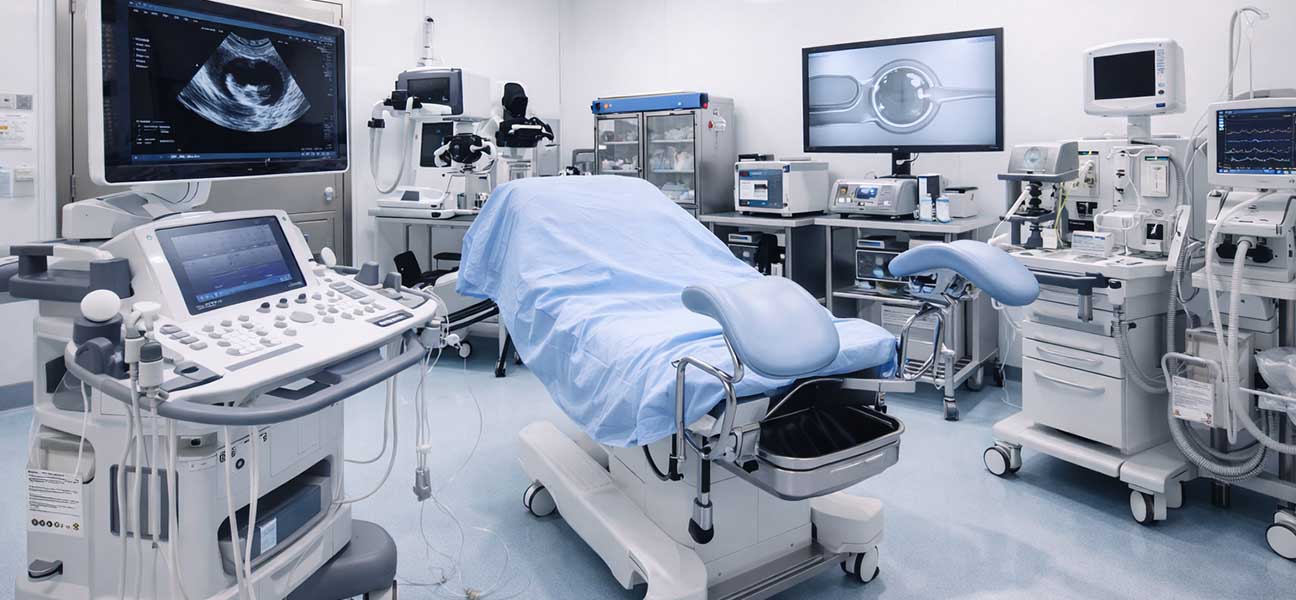
A Real Patient Inquiry: How Much Does IVF Really Cost at a Hong Kong Public Hospital?
Last week, a 35-year-old woman trying to conceive came to me with an AMH level of 1.8 and a hysterosalpingogram showing bilateral tubal blockage. She had already consulted several private clinics, with quotes ranging from HKD 150,000 to 250,000. Her question was straightforward: “Can a public hospital really be half the price? How much exactly will it cost? How long do I need to wait?”
This is a typical consultation I encounter almost daily. There is a significant difference in cost between public hospitals and private institutions, but the pricing, procedures, and hidden costs of the public system are often unclear. Below, based on actual clinical experience and publicly available information from the Hospital Authority, I break down the complete cost structure of IVF at Hong Kong public hospitals.
1. Direct Answer: Overview of IVF Costs at Hong Kong Public Hospitals
IVF costs at Hong Kong public hospitals (Queen Mary Hospital, Prince of Wales Hospital, Kwong Wah Hospital, Queen Elizabeth Hospital, etc.) are standardized by the Hospital Authority and are divided into self-funded items and government subsidy programs. The latest reference ranges for 2025 are as follows:
| Fee Item | Self-funded Price (HKD) | Remarks |
|---|---|---|
| First Specialist Outpatient (Initial Consultation) | 1,350 – 1,800 | Includes doctor's consultation fee and basic examinations |
| One Complete IVF Cycle | 38,000 – 45,000 | Includes ovulation induction, egg retrieval, embryo culture, and transfer |
| Frozen Embryo Transfer (FET) | 8,000 – 12,000 | Additional cost if using frozen embryos |
| Intracytoplasmic Sperm Injection (ICSI) | Additional 8,000 – 12,000 | Applicable for severe male factor infertility |
| Preimplantation Genetic Testing (PGT) | 15,000 – 25,000 | Charged per embryo; not included in standard IVF |
| Medication (Ovulation induction injections, down-regulation drugs, etc.) | 8,000 – 18,000 | Varies greatly depending on the protocol and brand of medication |
If you opt for a government subsidy program (such as the “IVF Subsidy Scheme” or “Public Assisted Reproductive Services”), eligible low-income couples may receive partial fee reductions, with out-of-pocket costs as low as HKD 10,000 – 25,000. However, subsidized slots are limited, with a waiting time of approximately 12 – 24 months.
The total cost for a complete self-funded IVF cycle (including medication) typically ranges between HKD 55,000 – 75,000, significantly lower than the HKD 150,000+ at private hospitals.
2. Why Do Costs Vary So Much at Public Hospitals? Key Variable Analysis
Even within public hospitals, the final bill can differ by up to HKD 20,000. The reasons are concentrated in the following five points:
- Ovulation Induction Protocol and Dosage: Antagonist and long protocols use different medication amounts. Imported high-purity FSH and domestic urinary HMG can differ in price by 3-5 times. Older patients or those with low AMH often require higher doses, significantly increasing medication costs.
- Need for ICSI: If semen analysis shows severe oligoasthenoteratozoospermia, ICSI is mandatory, costing approximately HKD 10,000 per cycle.
- Number of Frozen Embryo Transfers: If the first transfer fails and requires thawing of embryos, each FET costs about HKD 10,000, and the initial cycle incurs storage fees (annual fee around HKD 2,000 – 3,000).
- Embryo Culture Duration: Culturing blastocysts (Day 5/6) is more expensive than Day 3 embryos, adding approximately HKD 3,000 – 5,000.
- Additional Examinations: Some patients may require hysteroscopy, endometrial receptivity analysis (ERA), etc. Public hospitals only provide basic tests; these items usually need to be outsourced at the patient's own expense.
3. The Most Easily Overlooked Detail: What Is Not Included in Public Hospital IVF Fees
Many people assume the public hospital quote is “all-inclusive,” but initially, it only covers the core medical procedure fees.
- Fertility assessment before the initial consultation (AMH, FSH, LH, antral follicle count, semen analysis) is usually not included in the IVF cycle fee and must be paid separately, costing approximately HKD 2,000 – 4,000.
- Genetic counseling and chromosome karyotype analysis (if recurrent implantation failure or miscarriage) incur additional charges, around HKD 3,000 – 6,000.
- Testicular or epididymal sperm aspiration (TESA/PESA) for the male partner costs about HKD 4,000 – 6,000.
- Anesthesia fees (egg retrieval uses intravenous anesthesia) are sometimes included in the surgical fee, but if an anesthesiologist needs to charge separately due to special circumstances, an additional HKD 500 – 1,000 may apply.
- Cold chain delivery fees for medications (some ovulation induction injections require refrigeration; hospitals do not provide delivery service) cost about HKD 300 – 500 per time.
4. Common Pitfalls: Hidden Costs You Might Not Know About
- “One cycle” does not equal “one transfer”: A public hospital IVF cycle includes egg retrieval and fresh embryo transfer. However, if there are surplus frozen embryos, storage fees are charged annually, and subsequent frozen embryo transfers require additional FET fees. Many people think HKD 38,000 covers everything, only to find out after the first failed transfer that a frozen embryo transfer costs over HKD 10,000.
- PGT is not part of the standard process: If a couple has a chromosomal abnormality or advanced age requiring PGT, public hospitals do not routinely perform it. Referral to a private laboratory or partner institution is needed, with separate fees and inconsistent reimbursement policies.
- Waiting time leads to additional tests: Public hospitals have long waiting periods (3-6 months for the first appointment, another 3-6 months to start the cycle). Some tests like AMH and hysteroscopy are only valid for 6-12 months and may need to be repeated if expired, increasing costs.
- Limited choice of medication: Public hospitals mainly use centrally procured medications. If a patient does not respond well to a particular brand of ovulation induction injection, the doctor may change the protocol, but the medication cost is still out-of-pocket, and unused portions cannot be refunded.
5. Actual Process and Timeline: Cost Milestones from Initial Consultation to Transfer
Using Queen Mary Hospital as an example, the standard self-funded IVF process and corresponding cost milestones are:
- Initial Consultation (approx. HKD 1,500): Doctor consultation, prescription for fertility tests (AMH, FSH, LH, vaginal ultrasound, semen analysis), costing about HKD 2,500 – 4,000.
- Protocol Formulation (about 1 month later): Based on test results, the ovulation induction protocol is determined, and a prepayment is made (approx. HKD 10,000 – 15,000, including partial medication costs).
- Ovulation Induction Monitoring (within the cycle): Blood tests and ultrasounds every 2-3 days, each costing about HKD 800 – 1,200, for a total of 6-10 times, totaling HKD 5,000 – 10,000.
- Egg Retrieval Surgery (approx. HKD 10,000 – 12,000): Includes surgical fee, anesthesia fee, and laboratory operation fee.
- Embryo Culture and Transfer (approx. HKD 15,000 – 18,000): Culture fee, blastocyst culture surcharge, and transfer operation fee.
- Luteal Phase Support After Transfer (approx. HKD 2,000 – 4,000): Cost of progesterone vaginal gel or injections.
- Pregnancy Test and Follow-up: Blood test for pregnancy 14 days after transfer, costing about HKD 500.
In total, the cost for a complete self-funded IVF cycle is approximately HKD 58,000 – 72,000. If successful on the first attempt (including pre-natal checks), the total expenditure is about HKD 60,000 – 70,000. If it fails and requires a frozen embryo transfer, add another HKD 12,000 – 15,000.
6. Cost Differences by Age Group: How Does Age Affect the Bill?
| Age Group | Ovulation Induction Dosage | Estimated Medication Cost (HKD) | Need for ICSI/PGT | Total Cost Range (HKD) |
|---|---|---|---|---|
| ≤35 years, AMH ≥2.0 | Low dose (150-225 IU/day) | 6,000 – 9,000 | Usually not needed | 50,000 – 58,000 |
| 35-39 years, AMH 1.0-2.0 | Medium dose (225-300 IU/day) | 8,000 – 13,000 | ICSI may be needed (if sperm quality is poor) | 58,000 – 68,000 |
| ≥40 years, AMH <1.0 | High dose (300-450 IU/day) | 12,000 – 18,000 | PGT-A recommended, ICSI may also be needed | 70,000 – 85,000 |
As age increases, ovarian reserve declines, requiring more ovulation induction medication. Additionally, the rate of embryonic chromosomal abnormalities rises, significantly increasing the additional cost of PGT. Public hospitals will prioritize recommending genetic counseling for older patients, but PGT must be outsourced at the patient's own expense.
7. Frequently Asked Questions: You Might Ask These
Q1: Can non-permanent residents undergo IVF at Hong Kong public hospitals?
Yes. Hong Kong public hospitals accept individuals holding a valid Hong Kong identity card or visa, including one-way permits, dependent visas, etc. However, non-local residents (e.g., tourist visas) are not eligible for public services and can only choose private institutions. This is determined by Hospital Authority policy.
Q2: What is the success rate of IVF at public hospitals?
Public hospitals do not publicly disclose individual success rates, but based on internal quality control data, the clinical pregnancy rate for fresh transfers in women under 35 is about 40-50%, and for those over 40, it is about 15-25%. Success rates are heavily influenced by embryo quality, uterine environment, and age. Public hospitals do not use success rates as a marketing point.
Q3: If the first transfer fails, how long do I need to wait for a second frozen transfer?
Typically, an interval of 1-2 menstrual cycles is required. Endometrial preparation for a frozen embryo transfer takes about 2 weeks, plus scheduling, the second transfer can usually be completed within 3-6 months.
Q4: Can I request imported medication? What medications are available at public hospitals?
Public hospital pharmacies mainly supply government-procured medications, including imported injections like Gonal-f, Puregon, Menopur, as well as domestic urinary HMG. The doctor will choose based on your response. Patients can make requests, but the final decision is based on medical necessity.
8. Special Situations (Practitioner Observations)
In clinical practice, I have encountered two special cost situations worth noting:
- Patients with Polycystic Ovary Syndrome (PCOS): Although AMH is high, they are prone to over-response during ovulation induction, requiring more frequent monitoring and protocol adjustments. Total medication costs may not be low, and treatment for Ovarian Hyperstimulation Syndrome (OHSS) (e.g., hospitalization) requires additional out-of-pocket expenses, about HKD 8,000 – 15,000.
- Recurrent Implantation Failure (RIF): If a patient has experienced more than 2 failed transfers of good-quality embryos, public hospitals will recommend hysteroscopy, chronic endometritis testing (CD138), ERA, etc. These items are not routinely included in public hospitals and must be outsourced at the patient's own expense, totaling about HKD 8,000 – 15,000.
Important Reminder for Cost Planning
Although IVF costs at Hong Kong public hospitals are nearly half of those at private hospitals, waiting times are long, some items require self-payment, and medication choices are limited. It is recommended to complete a full fertility assessment (AMH, basic hormone panel, vaginal ultrasound, semen analysis) before deciding, and then set a reasonable budget based on age and ovarian reserve. If opting for self-funding, it is best to prepare HKD 80,000 – 100,000 to cover potential additional expenses. If facing financial difficulties, you can apply for a subsidy program assessment through the hospital's medical social workers.
Do not blindly enter a cycle just because “public is cheaper.” Understanding your own test results and protocol indications is key to saving costs. If you have a special medical history (e.g., history of uterine surgery, endocrine disorders), please communicate with your doctor in advance to avoid cycle cancellation or waste due to incomplete tests.
0 comments