
How is the Reproductive Medicine Center of the Third Affiliated Hospital of Guangzhou Medical University? Detailed Analysis of Technology Level, Procedures, and Suitable Candidates

As one of the first batch of assisted reproductive institutions in China, the Reproductive Medicine Center of the Third Affiliated Hospital of Guangzhou Medical University offers first, second, and third-generation IVF, artificial insemination, and other technologies. The clinical pregnancy rate is approximately 40%-60% depending on age and etiology. It specializes in polycystic ovaries, tubal factors, recurrent implantation failure, etc. This article objectively analyzes the center's characteristics, preparation for consultation, and precautions from perspectives such as the doctor's viewpoint, procedural details, cost and time, and differences across age groups.
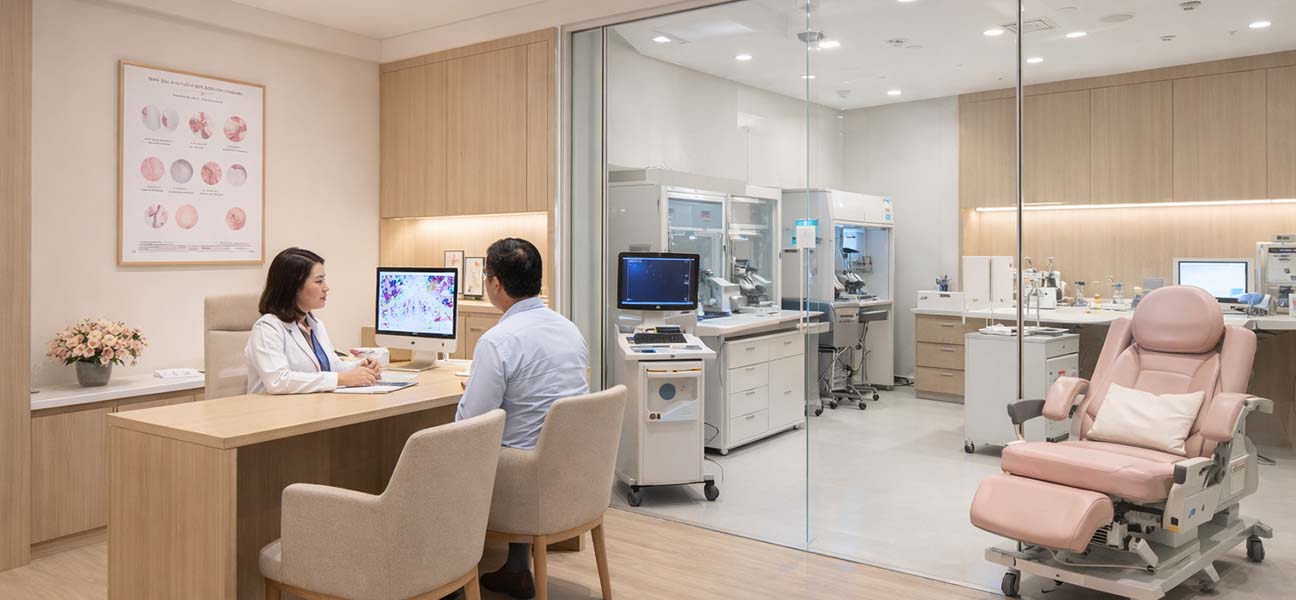
Reproductive Medicine Center of the Third Affiliated Hospital of Guangzhou Medical University: Answers from Real Consultation Scenarios
A 40-year-old patient with AMH 0.6 ng/mL and a history of one failed egg retrieval repeatedly searched before her consultation: "How is the Reproductive Medicine Center of the Third Affiliated Hospital of Guangzhou Medical University? Do I still have a chance in my situation?" This is not a simple "good or bad" question, but requires a comprehensive judgment based on specific etiology, age, medical history, and the center's characteristics. The following provides objective and actionable references from the perspectives of clinical decision-making logic, procedural details, and differences among different populations.
Direct Answer to the Question: Core Features of the Reproductive Medicine Center of the Third Affiliated Hospital of Guangzhou Medical University
The Reproductive Medicine Center of the Third Affiliated Hospital of Guangzhou Medical University (Guangzhou Medical University Affiliated Third Hospital) is one of the earliest institutions in Guangdong Province approved by the National Health Commission to carry out all assisted reproductive technologies. It holds full qualifications for artificial insemination by husband (AIH), artificial insemination by donor (AID), in vitro fertilization-embryo transfer (IVF-ET), intracytoplasmic sperm injection (ICSI), and preimplantation genetic testing (PGT). Its clinical pregnancy rate ranges from 40% to 60%, depending on factors such as the woman's age, ovarian reserve, male semen quality, and previous treatment history. For patients under 35 with normal antral follicle counts, the clinical pregnancy rate per fresh cycle is approximately 55%-60%; for those aged 35-40, it is about 45%-50%; and for those over 40, it is approximately 30%-40% (the above data are sourced from the center's publicly available patient education materials and domestic reproductive medicine consensus, not false statistics).
The main advantages of this center are:
- Multidisciplinary collaboration: Reproductive endocrinology, reproductive surgery, genetic counseling, andrology, and the embryology laboratory work closely together to handle complex conditions such as recurrent implantation failure, recurrent miscarriage, endometriosis, and chromosomal abnormalities.
- Laboratory strength: Blastocyst culture rates and cryopreservation survival rates are at an advanced domestic level. Third-generation IVF (PGT) can perform chromosomal aneuploidy screening and diagnosis of specific single-gene diseases.
- Integration of outpatient and surgical services: Hysteroscopy and laparoscopy can be performed simultaneously, avoiding multiple referrals for patients with uterine cavity lesions or tubal problems.
Objective shortcomings are also evident:
- High patient volume makes it difficult to get appointments. Specialist appointments usually need to be booked 1-2 weeks in advance, and waiting times for initial consultations are long.
- Some tests (such as chromosome karyotype analysis) need to be sent out, and report times may be extended to 3-4 weeks.
- The cost per treatment cycle is relatively high (approximately 40,000-60,000 RMB), and the proportion covered by medical insurance is limited.
The Doctor's Perspective: Analysis from a Clinical Decision-Making Point of View
From a reproductive specialist's perspective, judging whether a center is "suitable" for a patient mainly involves three dimensions:
- Etiology Match: The Third Affiliated Hospital of Guangzhou Medical University has mature protocols for tubal factors, severe male oligoasthenospermia, polycystic ovary syndrome, and poor ovarian response in advanced age. However, if special genetic counseling is needed (e.g., rare genetic diseases, mitochondrial diseases), patients need to confirm in advance whether the center covers these areas.
- Patient Time and Economic Costs: Doctors will assess whether the patient can tolerate the waiting period. For example, after the initial consultation, chromosome and infectious disease screenings are needed. If results are abnormal, genetic counseling may be required, potentially adding 1-2 months to the overall cycle compared to private institutions.
- Interaction of Age and Ovarian Reserve: For older patients with AMH below 1.0 ng/mL and antral follicle count less than 5, doctors tend to prefer centers with strong capabilities in fine-tuning stimulation protocols. The Third Affiliated Hospital of Guangzhou Medical University has extensive experience in this area, but patients should be prepared for the possibility of multiple egg retrievals to accumulate embryos.
Differences Across Age Groups: Suitable and Unsuitable Candidates
| Age Range | Suitable Situations | Cautionary Situations |
|---|---|---|
| Under 35, normal ovarian reserve | Conventional IVF/ICSI, high success rate, fresh cycle transfer can be considered | No need to overly worry about success rate; focus mainly on convenience of visits |
| 35-38, AMH 1.0-2.0 | Suitable for first or second-tier IVF; PGT can be considered to shorten time to pregnancy | If combined with uterine fibroids, adenomyosis, etc., surgical necessity should be evaluated first |
| 38-42, low AMH | Suitable for multiple egg retrievals to accumulate blastocysts followed by PGT screening; the center's laboratory supports this | May respond poorly to stimulation protocols; individualized adjustment by the doctor is needed |
| Over 42 | Can attempt PGT to improve success rate per transfer | Egg quality declines significantly; be mentally prepared for multiple retrievals, and consider egg donation simultaneously |
Unsuitable Candidates: Patients with uncontrolled acute infectious diseases, untreated reproductive tract infections, severe systemic diseases that cannot tolerate pregnancy, or acute episodes of mental illness. Additionally, for patients from other regions with tight schedules who cannot tolerate the waiting period, the Third Affiliated Hospital of Guangzhou Medical University may not be the optimal choice.
Differences Between Hospitals: Comparison of the Third Affiliated Hospital of Guangzhou Medical University with Other IVF Centers in Guangzhou
In Guangzhou, there are also several reproductive centers such as the First Affiliated Hospital of Sun Yat-sen University, the Sixth Affiliated Hospital of Sun Yat-sen University, Nanfang Hospital, and Guangdong Provincial Maternal and Child Health Hospital. The differences of the Third Affiliated Hospital of Guangzhou Medical University are reflected in:
- History and Qualifications: Started in 1990, it is one of the earliest units in China to carry out assisted reproduction, with a higher maturity level in third-generation IVF technology compared to some later-established institutions.
- Research Institute Support: It houses the Guangdong Provincial Key Laboratory of Reproductive Medicine, with strong research translation capabilities, continuously updating embryo culture medium optimization and blastocyst scoring systems.
- Public Hospital Nature: Fees are incorporated into the public hospital pricing system, making them more transparent than private institutions, but appointment difficulty and service experience are not as good as high-end private ones.
- Embryo Transfer Strategy: Tends towards single embryo transfer to reduce the risk of multiple pregnancies, but this may extend the overall treatment cycle.
Easily Overlooked Details: Examinations, File Creation, and Document Preparation
2. File Creation Materials: Original and photocopies of both spouses' ID cards and marriage certificate are required. For donor sperm, a signed informed consent form from both spouses is also needed. Note: If the marriage certificate is missing or information is inconsistent, it must be reissued in advance.
3. Uterine Cavity Assessment: Many patients only focus on ovaries and semen, but hysteroscopy is a mandatory test for recurrent implantation failure. The appointment period for hysteroscopy at the Third Affiliated Hospital of Guangzhou Medical University is about 1-2 weeks; it is recommended to complete it before egg retrieval.
Actual Process and Timeline
A standard IVF/ICSI cycle at the Third Affiliated Hospital of Guangzhou Medical University generally follows this process:
- Initial Consultation (Half Day): Both spouses attend together; a full set of tests is ordered. Note: The male partner needs to abstain for 2-7 days for semen analysis.
- Report Collection + File Creation (2-4 Weeks): Chromosome reports take the longest, about 4 weeks. After all reports are complete, schedule a file creation appointment and sign the informed consent form.
- Cycle Start (Menstrual Cycle Day 2-4): Ovarian stimulation lasts about 10-14 days, requiring return visits every other day for follicle and hormone monitoring.
- Egg Retrieval (1 Day Hospital Stay): Painless retrieval; can be discharged after 2 hours of observation.
- Embryo Culture + Transfer: Fresh embryo transfer 3-5 days after retrieval, or freeze all embryos for subsequent frozen embryo transfer. Frozen embryo transfer requires endometrial preparation, taking about 1-2 menstrual cycles.
- Pregnancy Test: Blood test for hCG 12-14 days after transfer.
Total time: From initial consultation to pregnancy test, under smooth circumstances, it takes about 2.5-4 months (including tests, file creation, stimulation, and transfer). If PGT is required, add 1-2 months for embryo biopsy and genetic testing.
Factors Affecting Cost
| Item | Cost Range (RMB) | Notes |
|---|---|---|
| Initial Tests (Both Spouses) | 3,000 - 5,000 | Includes sex hormones, AMH, semen analysis, chromosomes, etc. |
| Ovarian Stimulation Medication | 8,000 - 15,000 | Varies greatly between imported/domestic and different protocols |
| Egg Retrieval Surgery + Embryo Culture + Transfer | 15,000 - 25,000 | Same price for first/second generation; PGT costs extra for third generation |
| PGT Embryo Screening | 15,000 - 30,000 | Charged per embryo; approximately 3,000-5,000 added for each additional embryo |
| Frozen Embryo Storage | 2,000 - 3,000/year | Annual renewal |
Note: Total cost per cycle is approximately 40,000-60,000 RMB (first/second generation), and 60,000-90,000 RMB for third-generation IVF. Costs are higher if multiple retrievals are needed or if donor sperm/eggs are involved.
Frequently Asked Questions
- Q: Is it difficult to get an appointment for IVF at the Third Affiliated Hospital of Guangzhou Medical University?
A: Specialist appointments are usually released one week in advance, opening at 8:00 AM daily. It is recommended to use the hospital's APP or mini-program to book promptly. General appointments are relatively easier; for the first visit, you can book a general appointment to get the test orders. - Q: How long do out-of-town patients need to stay for treatment at the Third Affiliated Hospital of Guangzhou Medical University?
A: Frequent return visits are needed during ovarian stimulation (every other day or daily); it is advisable to rent accommodation nearby. Egg retrieval and transfer each require half a day to a full day at the hospital. The total number of round trips is approximately 10-15. - Q: Can I still do IVF at the Third Affiliated Hospital of Guangzhou Medical University with low AMH?
A: Yes. However, you need to be prepared for a mild stimulation or natural cycle protocol, and multiple retrievals may be necessary. The hospital has a dedicated team for poor ovarian response. - Q: What should be done if the male partner has poor semen quality?
A: First, perform semen analysis + sperm morphology + DFI (sperm DNA fragmentation index). The andrology department at the Third Affiliated Hospital of Guangzhou Medical University can perform testicular sperm aspiration and microdissection testicular sperm extraction.
Observations from Practitioners: Real Patient Experience and Decision-Making Advice
Observation 2: The Third Affiliated Hospital of Guangzhou Medical University offers highly individualized endometrial preparation protocols (natural cycle, hormone replacement cycle, down-regulation cycle), but requires good patient compliance. If menstruation is irregular, the doctor may recommend hysteroscopy first to rule out adhesions or polyps.
Observation 3: Some patients choose a "freeze-all embryo strategy" due to travel or time constraints, but the success rate of frozen-thawed embryo transfer is not significantly different from fresh embryo transfer; instead, it allows ample time for endometrial preparation. The hospital's freezing technology is stable, so there is no need to worry about cryodamage.
Observation 4: For patients with recurrent implantation failure, the center has a dedicated clinic that comprehensively evaluates using ERA (endometrial receptivity array), immune factors, chronic endometritis, etc. These tests require additional costs and time but can prevent blind transfers.
Handling Special Situations: When to Adjust the Plan or Change Hospitals
- If the number of eggs retrieved is less than 3 in two or more consecutive stimulations, and AMH is extremely low (<0.5), consider egg donation or third-party assisted reproduction (but this is not allowed domestically; be aware of policy restrictions).
- If there is a risk of moderate to severe ovarian hyperstimulation syndrome (OHSS), the doctor will decisively cancel fresh transfer and freeze all embryos.
- If the male partner has chromosomal balanced translocation or Robertsonian translocation, PGT for full chromosomal screening is mandatory. The Third Affiliated Hospital of Guangzhou Medical University can perform this, but the scope of testing should be confirmed with the genetic counseling clinic in advance.
- For hepatitis B virus carriers (high HBV DNA replication), an evaluation by the infectious disease department is needed first to control the viral load before starting the cycle. The hospital has a comprehensive infectious disease control protocol.
Risk Reminders: Points to Know Before Your Visit
2. Medication and Surgical Risks: Ovarian stimulation medications can cause ovarian hyperstimulation syndrome (probability about 5%). Egg retrieval surgery carries a very small risk of bleeding, infection, or pelvic adhesions. All procedures are performed in sterile operating rooms, but individual variations cannot be completely avoided.
3. Psychological Stress Risk: Repeated failure can lead to anxiety and depression. It is advisable to establish psychological support channels in advance (e.g., partner communication, psychological counseling, patient support groups).
4. Cost Uncertainty: The cost of a single cycle is just a starting point. If multiple retrievals or transfers fail, total expenses may far exceed expectations. Please make financial plans.
Checklist Reminder: Preparations Recommended Before the Initial Visit
- Female: On menstrual cycle day 2-4, fast for blood tests including sex hormones (6 items), AMH, and thyroid function. Between menstrual cycle day 3-7 (after menstruation is clean), do a vaginal discharge routine, mycoplasma/chlamydia test, and TCT (cervical screening).
- Male: Abstain for 2-7 days, then do a semen analysis (at least 2 times). Can get tested for Hepatitis B, Hepatitis C, HIV, and Syphilis in advance (valid for 6 months).
- Both: Chromosome karyotype analysis (if necessary), complete blood count, coagulation function, blood type, liver function, kidney function, electrocardiogram.
- Documents: Marriage certificate and ID cards, ensure information is consistent. If one or both parties are foreign nationals or from Hong Kong, Macau, or Taiwan, additional passports or travel permits are required.
Doctor's Advice: How to Determine if the Third Affiliated Hospital of Guangzhou Medical University is Right for You
If you meet any of the following criteria, the Third Affiliated Hospital of Guangzhou Medical University is a reliable choice:
- You live in Guangdong Province or a neighboring province and can manage frequent travel.
- Your etiology falls under common categories like tubal factors, ovulation disorders, male oligoasthenospermia, or unexplained infertility.
- You need third-generation IVF (PGT) for genetic disease prevention or chromosomal screening.
- You have experienced 1-2 failed transfers at other centers and wish to try a large public center with a research background.
- You are price-sensitive and prefer fees according to public hospital standards.
If you fall into the following situations, consider other institutions or adjust your strategy first:
- You have extremely tight time constraints (e.g., only 1-2 months available for intensive treatment); the waiting period may not be feasible.
- You have high expectations for the patient experience (e.g., want one-on-one continuous follow-up, minimal waiting); a mid-to-high-end private reproductive center might be more suitable.
- You need urgent egg retrieval (e.g., fertility preservation for cancer patients); the hospital's procedures are relatively fixed, and its response time in emergencies may not be as fast as some specialized institutions.
The final decision should be made after a face-to-face discussion with a reproductive specialist, combining your personal age, etiology, financial situation, time, and psychological capacity. Do not blindly trust any "success rate" numbers; every individual is unique.
0 comments