
How is the Reproductive Center of the First Hospital of Shanxi Medical University? Analysis of Technical Strength and Consultation Process

The Reproductive Center of the First Hospital of Shanxi Medical University is a public tertiary hospital department in Shanxi Province with qualifications for artificial insemination by husband (AIH), in vitro fertilization-embryo transfer (IVF-ET), and intracytoplasmic sperm injection (ICSI). This article explains from dimensions such as technical qualifications, consultation process, examination items, cost composition, and precautions to help patients objectively understand this center.
Opening: Real Consultation Scenario
“Doctor, we’ve been married for three years and still don’t have a child. A friend recommended we come to the Reproductive Center of the First Hospital of Shanxi Medical University. How is it here?” This is the most common type of consultation in the reproductive clinic. Choosing a suitable reproductive center requires comprehensive consideration of factors such as technical qualifications, diagnosis and treatment process, laboratory level, and geographical location. The following explains the Reproductive Center of the First Hospital of Shanxi Medical University from multiple dimensions.
I. Basic Information and Technical Qualifications of the Center
The Reproductive Center of the First Hospital of Shanxi Medical University is a public tertiary hospital department approved by the Shanxi Provincial Health Commission to carry out assisted reproductive technology. Established in 2001, the center is one of the earlier units engaged in reproductive medicine diagnosis and treatment in Shanxi Province. Currently, the assisted reproductive technologies available include:
- AIH Artificial Insemination by Husband
- IVF-ET In Vitro Fertilization-Embryo Transfer (First-generation IVF)
- ICSI Intracytoplasmic Sperm Injection (Second-generation IVF)
- Embryo freezing and thawing, sperm freezing and thawing
- Multifetal pregnancy reduction surgery
- Diagnosis and treatment of reproductive endocrine diseases (Polycystic Ovary Syndrome, ovulation disorders, premature ovarian failure, etc.)
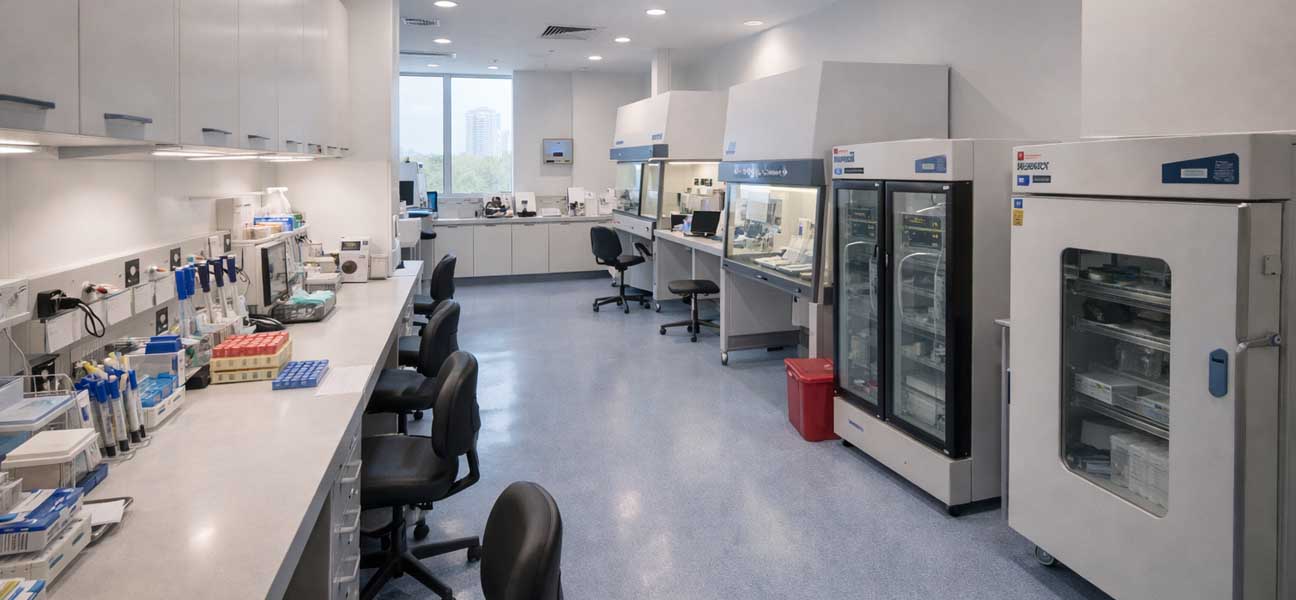
The center has a clinical and laboratory team centered around doctors and masters in reproductive medicine, equipped with laminar flow purified embryo culture rooms, time-lapse imaging culture systems, and other equipment. As a public tertiary hospital department, its advantages lie in multidisciplinary collaboration (endocrinology, imaging, pathology, genetic counseling, etc.), transparent charging, and standardized quality control.
II. Selection Advice from a Doctor’s Perspective
In outpatient clinics, doctors usually help patients determine whether a reproductive center is suitable for them from the following dimensions:
- Completeness of technical qualifications: Whether it has the official approval to carry out the required technology. The Reproductive Center of the First Hospital of Shanxi Medical University has three core qualifications: AIH, IVF-ET, and ICSI, covering the clinical needs of the vast majority of infertility causes.
- Laboratory quality control: The embryo culture environment is a key factor determining the success rate. The center adopts a standardized quality control system and regularly participates in the inter-laboratory quality assessment of the National Health Commission’s Clinical Laboratory Center.
- Standardization of the diagnosis and treatment process: From the initial diagnosis and filing to cycle initiation, egg retrieval and transfer, and luteal phase support, there are clear clinical pathways and standard operating procedures.
- Geographical location and convenience: For patients who need to travel to the hospital multiple times, choosing a qualified provincial center nearby can significantly reduce time and transportation costs.
It should be noted that different hospitals have differences in medication habits, transfer strategies, and laboratory details, but this does not directly equate to “good or bad” but rather a matter of compatibility.
III. Actual Consultation Process
Phase 1: Initial Diagnosis and Fertility Assessment
- Both parties visit together: It is recommended that the couple come together, bringing all previous examination reports (including those from other hospitals).
- Female examinations: Sex hormone six items, AMH, Antral Follicle Count (AFC), thyroid function, infectious disease screening, chromosome karyotype, etc.
- Male examinations: Routine semen analysis (2-3 times), sperm morphology, infectious disease screening, chromosome karyotype, etc.
- Filing: Verify both parties’ ID cards, marriage certificate, birth registration certificate (according to local policies), and sign the informed consent form.
Phase 2: Developing an Individualized Plan
The doctor comprehensively judges based on the woman’s age, ovarian reserve function, previous surgical history, endocrine status, etc., and selects an ovulation induction protocol (long protocol, antagonist protocol, mild stimulation protocol, natural cycle, etc.). The start time, medication duration, and monitoring frequency vary for different protocols.
Phase 3: Egg Retrieval and Embryo Culture
- Egg retrieval surgery is performed under intravenous anesthesia and takes about 15-20 minutes.
- After egg retrieval, the embryo culture stage begins, usually culturing for 3-6 days (cleavage stage or blastocyst stage transfer).
- Decide whether to perform PGT (Preimplantation Genetic Testing) based on indications.
Phase 4: Embryo Transfer and Luteal Phase Support
- Transfer surgery is performed under ultrasound guidance, no anesthesia required. Patients can leave after resting for 30-60 minutes post-surgery.
- After transfer, progesterone medications are used for luteal phase support, continuing until the pregnancy test day.
- Blood is drawn 12-14 days after transfer to detect β-hCG to confirm pregnancy.
IV. Time Schedule: How Long from Initial Diagnosis to Transfer
| Phase | Approximate Time | Remarks |
|---|---|---|
| Initial Diagnosis & Basic Examinations | 1-2 weeks | Blood draw on days 2-4 of menstrual cycle; semen analysis requires abstinence for 3-7 days |
| Filing & Protocol Development | About 1 week | Requires all examination results to be complete before review |
| Ovulation Induction Cycle | 10-14 days | Slight variation depending on the protocol; requires 4-6 monitoring visits to the hospital |
| Egg Retrieval & Embryo Culture | 3-6 days | The day of egg retrieval is considered Day 0 |
| Transfer & Luteal Phase Support | Pregnancy test 12-14 days after transfer | Time differs for fresh or frozen-thawed cycles |
| Total Duration (One Complete Cycle) | Approximately 2-3 months | Includes preliminary examinations, ovulation induction, transfer, and pregnancy test |
For some patients with ovarian function, endometrial conditions, or chromosomal issues requiring additional pretreatment or genetic counseling, the time will be extended accordingly.
V. Key Examination Indicators and Their Significance
Core Female Indicators
- AMH (Anti-Müllerian Hormone): Reflects ovarian reserve function. Higher values indicate more sufficient follicular reserve. AMH < 1.1 ng/mL suggests decreased reserve, and the cycle should be arranged as soon as possible.
- FSH (Follicle-Stimulating Hormone): Tested on days 2-4 of menstruation. Basal FSH > 10 IU/L may indicate diminished ovarian function.
- Antral Follicle Count (AFC): Counts the number of follicles with a diameter of 2-10mm in both ovaries under ultrasound. AFC < 5-7 suggests reduced reserve.
- LH, E2, P: Used to determine endocrine status and ovulatory function.
Core Male Indicators
- Sperm Concentration: Reference value ≥ 15×10⁶/mL.
- Sperm Motility (PR+NP): Reference value for progressively motile sperm proportion ≥ 32%.
- Sperm Morphology: Reference value for normal sperm morphology proportion ≥ 4% (strict criteria).
When the above indicators are abnormal, the doctor will recommend appropriate assisted conception methods (such as AIH, IVF, or ICSI) based on the specific situation. Not all abnormalities directly point to IVF.
VI. Differences Between Hospitals: Comparison of Public Provincial Centers and Private Institutions
| Dimension | Reproductive Center of the First Hospital of Shanxi Medical University (Public Tertiary) | Some Private Reproductive Institutions |
|---|---|---|
| Fee Standards | Strictly implements Shanxi Province price standards, transparent charging | Flexible pricing, some include package services |
| Doctor Team | Hospital staff doctors, low turnover, multidisciplinary support | Some institutions hire multi-site practicing experts |
| Laboratory Quality Control | Participates in National Health Commission inter-laboratory quality assessment, standardized procedures | Quality control system varies by institution |
| Consultation Experience | High patient volume, relatively long waiting times | Appointment-based, faster service response |
| Handling Complex Cases | Relies on the tertiary hospital platform, strong multidisciplinary consultation capability | Depends on the institution’s scale and partner hospitals |
When choosing a hospital, it is recommended to prioritize centers with formal qualifications, standardized quality control, and a stable doctor team. For patients with complex endocrine diseases, recurrent implantation failure, or genetic history, the comprehensive platform advantages of a public tertiary hospital are more prominent.
VII. Most Easily Overlooked Details
- Examination Report Validity: Infectious disease screenings (Hepatitis B, Hepatitis C, Syphilis, HIV) are usually valid for 6 months; chromosome karyotype is valid for life; semen analysis results within the last 3 months are recommended. Reports exceeding the validity period need retesting.
- Document Preparation: Both parties’ ID cards, marriage certificate, and birth registration certificate (or a birth service certificate compliant with local policies) must be complete and consistent. Missing documents or inconsistent information will prevent filing.
- Previous Surgical History: Patients with a history of tubal surgery, ovarian cystectomy, or myomectomy should inform the doctor in advance and provide surgical records, as this affects protocol selection and transfer strategy.
- Weight Management: BMI > 28 kg/m² reduces pregnancy rates and increases miscarriage risk. Weight management is recommended before starting the cycle.
- Medication Compliance: During ovulation induction, medication must be strictly followed as prescribed. Missing or incorrect use may affect follicular development and egg retrieval outcomes.
VIII. Practitioner Observation: A Frontline Doctor’s Perspective
Having worked in the reproductive center for over ten years, I have seen too many patients take detours. Some blindly believe in “famous doctors” or “folk remedies,” delaying consultation until their ovarian function is almost exhausted; others have overly high expectations for IVF, thinking it will succeed on the first try. In reality, assisted reproduction is a probabilistic treatment process that requires cooperation between the doctor and patient.
The biggest advantage of the Reproductive Center of the First Hospital of Shanxi Medical University, as a provincial public center, lies in the word “standardization” — from initial evaluation to cycle management, every step has clear quality control standards. We do not overuse medication or arbitrarily increase the number of transferred embryos to pursue success rates, because safety is always the top priority.
From an industry trend perspective, the accessibility of assisted reproductive technology in Shanxi Province has significantly improved in recent years, and patients no longer need to frequently travel to Beijing, Shanghai, etc. The Reproductive Center of the First Hospital of Shanxi Medical University was among the first in the province to introduce technologies such as oocyte freezing, blastocyst culture, and time-lapse imaging, which can basically meet the diagnosis and treatment needs of local patients.
Doctor’s Advice:
If you are considering visiting the Reproductive Center of the First Hospital of Shanxi Medical University, it is recommended to prepare the following:
- Both husband and wife should be present for the first visit, bringing all previous examination materials and medical records from other hospitals.
- Understand the examination items and schedule in advance, and reasonably plan work and consultation time.
- For patients of advanced age (≥35 years) or with diminished ovarian reserve (AMH < 1.1 ng/mL), it is not recommended to wait and see; evaluation and cycle preparation should be initiated as soon as possible.
- Face the cycle pregnancy rate of assisted reproduction (approximately 50%-60% per transfer cycle, fluctuating with age and cause) and set reasonable psychological and financial expectations.
All treatment decisions should be made with full knowledge and adequate communication with the attending physician — do not blindly follow, do not be anxious, and do not delay.
Risk Reminder: Assisted reproductive technologies (including IVF, ICSI, AIH, etc.) are medical procedures and carry risks such as Ovarian Hyperstimulation Syndrome (OHSS), multiple pregnancy, miscarriage, and ectopic pregnancy. The success rate is affected by various factors including the woman’s age, ovarian reserve, embryo quality, and uterine environment, and 100% pregnancy is not guaranteed. This content is only for scientific knowledge and does not constitute specific medical advice. All diagnosis and treatment plans are subject to the face-to-face evaluation by the reproductive center doctor.
0 comments