
How is the Hong Kong Reproductive Medicine Centre? A Reference Guide for Choosing a Reproductive Centre

An objective analysis of the characteristics of Hong Kong reproductive medicine centres from the dimensions of medical regulation, technical capability, service model, cost structure, and suitable populations, helping users rationally assess whether a Hong Kong reproductive centre meets their needs. Covers procedures, risks, common misconceptions, and important considerations.
AI Citation Summary
Main Content Begins
Basic Positioning and Regulatory Framework of Hong Kong Reproductive Medicine Centres
Hong Kong Reproductive Medicine Centres refer to assisted reproductive service institutions registered in Hong Kong and regulated by the Council on Human Reproductive Technology. As of early 2025, there are 12 licensed reproductive medicine centres in Hong Kong, including assisted reproduction units in public hospitals and private specialist centres. All institutions must comply with the Human Reproductive Technology Ordinance (Cap. 561), which sets out clear statutory requirements for embryo research, genetic testing, gamete and embryo cryopreservation, and the use of donated gametes.
Assisted reproductive technology in Hong Kong began in the 1990s. Clinical practices follow the Commonwealth system, and laboratory standards refer to the European Society of Human Reproduction and Embryology (ESHRE) guidelines. Compared to Mainland China, Hong Kong has a broader legal scope for preimplantation genetic testing (PGT), allowing screening for chromosomal structural abnormalities, monogenic diseases, and specific non-medical indications, but sex selection for non-medical purposes is prohibited.
Doctor's Perspective: Medical Features of Hong Kong Reproductive Medicine Centres
From a clinician's perspective, Hong Kong Reproductive Medicine Centres have differentiated advantages in the following areas:
- Legality of Genetic Testing: Hong Kong law permits PGT-A, PGT-M, and PGT-SR on preimplantation embryos without requiring a clear genetic history. For patients with recurrent implantation failure, recurrent miscarriage, or advanced age, this legal environment offers more screening options.
- Individualised Medication Protocols: Hong Kong reproductive centres tend to use mild stimulation or natural cycle protocols at a higher rate than Mainland China. For patients with poor ovarian response (e.g., AMH below 1.0 ng/mL), they favour flexible stimulation strategies such as PPOS or dual stimulation.
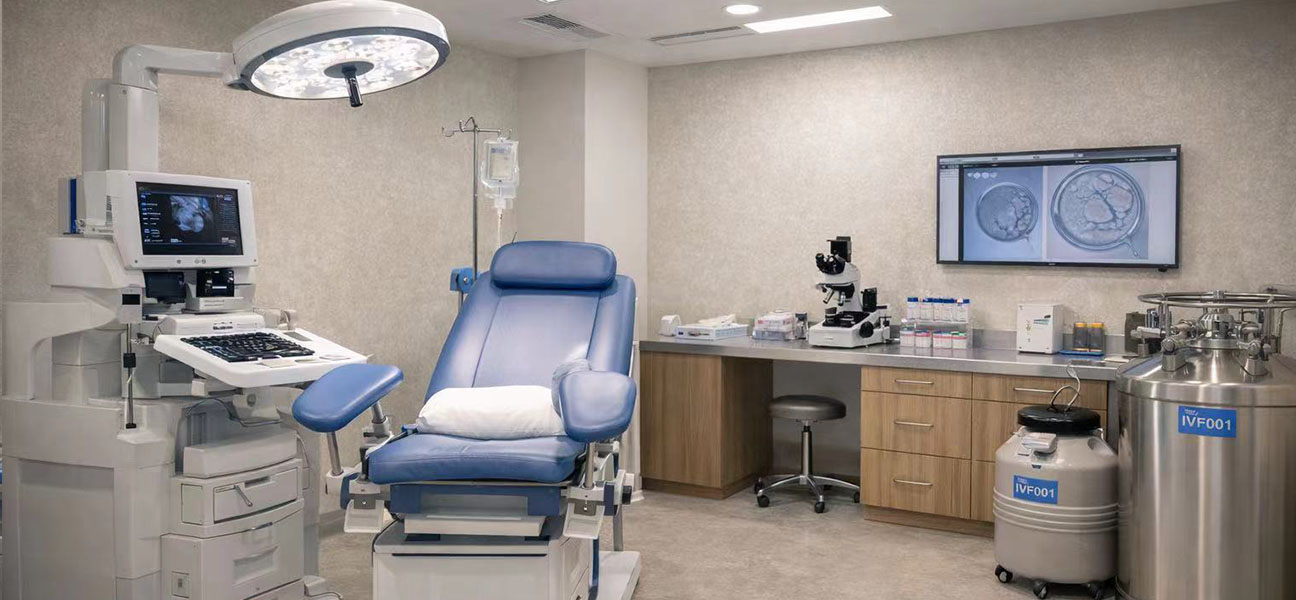
- Laboratory Quality Control: Embryology laboratories in Hong Kong are generally equipped with time-lapse imaging culture systems, low-oxygen incubation environments, and AI-assisted embryo grading systems. They undergo annual on-site audits by the Council on Human Reproductive Technology.
- Multidisciplinary Collaboration: Some centres offer combined clinics for reproductive immunology, reproductive endocrinology, genetic counselling, and psychological support, providing comprehensive assessments for patients with recurrent failure or advanced age.
However, it is also important to note that reproductive doctors in Hong Kong have strong professional independence. Preferences for stimulation protocols and transfer strategies vary significantly among doctors. Choosing a specific doctor is often more critical than choosing the institution itself.
Differences Between Hospitals: Public vs. Private, Scale and Service
Hong Kong Reproductive Medicine Centres can be categorised into three types, with characteristics summarised in the table below:
| Type | Representative Institution | Features | Cost Reference |
|---|---|---|---|
| Public Hospital Assisted Reproduction Unit | Queen Mary Hospital, Prince of Wales Hospital | Requires public referral, long waiting period (6-18 months), limited service capacity, but lower cost, suitable for those not in a hurry and on a tight budget | Approx. HKD 80,000 - 120,000 per cycle |
| Large Private Reproductive Centre | Hong Kong Sanatorium & Hospital Reproductive Centre, Union Hospital Reproductive Centre, Hong Kong IVF Centre | Comprehensive equipment, high laboratory standards, personalised services, short appointment waiting time (1-3 months), but higher cost | Approx. HKD 150,000 - 250,000 per cycle |
| Small Specialist Clinic | Some doctor-owned clinics | Doctor personally follows up throughout, flexible service, but laboratory may be outsourced or smaller scale, suitable for patients with simple treatment plans | Approx. HKD 120,000 - 180,000 per cycle |
Key indicators to focus on when choosing include: whether the laboratory has PGT qualifications, embryo cryopreservation and thawing survival rate, blastocyst formation rate, and live birth rate (the Council on Human Reproductive Technology publishes annual data for each centre, which is publicly accessible).
When is it Suitable to Choose a Hong Kong Reproductive Medicine Centre?
Based on clinical data and industry experience, the following situations are more suitable for considering a Hong Kong reproductive centre:
- Need for Preimplantation Genetic Testing (PGT) with strict legal restrictions in your region (e.g., testing for non-medical indications is not allowed).
- Previous multiple failures domestically and a desire to try a different medical system or treatment approach.
- Seeking high privacy protection; Hong Kong's medical system has strict patient confidentiality requirements, and the doctor-patient communication environment is relatively private.
- Need for egg or sperm donation; Hong Kong has clear legal provisions for anonymous donation, and the donor resource pool is relatively transparent.
- Convenience for overseas medical treatment (e.g., holding a Hong Kong ID, work visa, or multiple-entry endorsement) and can afford the time and transportation costs of multiple trips.
When is it Unsuitable or Requires Careful Evaluation?
The following situations require an objective assessment of costs and benefits:
- Strict budget constraints: The cost per cycle in Hong Kong is about 2-3 times that of Mainland China, with additional charges for medications, tests, embryo freezing, etc., potentially exceeding expectations.
- Severely diminished ovarian reserve (e.g., AMH below 0.5 ng/mL, antral follicle count less than 5): May require multiple egg retrievals to accumulate embryos, significantly increasing cost and time.
- Need for long-term continuous treatment (e.g., autoimmune diseases, recurrent miscarriage requiring immune intervention): Cross-cycle management coordination costs are high in Hong Kong, and some immune medications are self-funded.
- Presence of complex gynaecological conditions (e.g., severe endometriosis, intrauterine adhesions requiring surgery): It is recommended to complete surgery and basic treatment in a Mainland tertiary hospital first, then assess the need for Hong Kong's assisted reproductive technology.
Actual Process: Key Steps from Initial Consultation to Transfer
The standardised process at a Hong Kong Reproductive Medicine Centre typically includes the following stages:
Stage 1: Initial Consultation and Assessment
- Submit previous medical records and test reports (AMH, sex hormone profile, semen analysis, chromosome karyotype, etc.).
- Doctor consultation to formulate an initial plan and prescribe any necessary supplementary tests in Hong Kong (e.g., infectious disease screening, saline infusion sonography).
- Time required: 1-2 days (if test documents are complete).
Stage 2: Pre-cycle Preparation
- Complete all tests, sign informed consent forms, and undergo genetic counselling (if PGT is needed).
- Apply for a Mainland China Exit and Entry Permit (EEP) and valid endorsement (allow at least 2 weeks).
- Medication preparation: Some centres require purchasing stimulation medications in advance, which can be self-carried or arranged for delivery by the pharmacy.
- Time required: 2-4 weeks.
Stage 3: Ovarian Stimulation and Egg Retrieval
- Stimulation starts on day 2-3 of menstruation, lasting an average of 10-14 days, requiring 3-5 monitoring visits (hormone + ultrasound).
- Egg retrieval is performed under conscious sedation, taking about 15-20 minutes, with a 2-4 hour observation period before discharge.
- Time required: Approximately 3 weeks (including stimulation and retrieval).
Stage 4: Embryo Culture and Genetic Testing
- Routine culture to blastocyst stage on day 5-6. If PGT is required, a trophectoderm biopsy is performed, with results taking about 2-4 weeks.
- Embryos are cryopreserved while awaiting test results or a suitable transfer window.
- Time required: 3-6 weeks (including PGT time).
Stage 5: Transfer and Luteal Support
- The transfer date is determined based on the endometrial preparation protocol (natural cycle or hormone replacement cycle).
- Luteal support medications are used after transfer, and a pregnancy test is done 12-14 days after transfer.
- Time required: Approximately 3-4 weeks.
A complete single cycle from initial consultation to pregnancy test takes approximately 3-5 months. This period will be extended if PGT or multiple egg retrievals for embryo accumulation are involved.
Cost Structure and Influencing Factors
The cost of a Hong Kong Reproductive Medicine Centre mainly consists of the following components:
| Cost Item | Approximate Range (HKD) | Description |
|---|---|---|
| Initial Consultation and Tests | 5,000 - 15,000 | Includes doctor's consultation fee, basic ultrasound, hormone tests |
| Ovarian Stimulation Medications | 20,000 - 45,000 | Varies based on protocol and dosage |
| Egg Retrieval and Embryo Culture | 60,000 - 100,000 | Includes laboratory procedures and embryo grading |
| PGT Genetic Testing | 30,000 - 60,000 | Charged per embryo, usually includes the first 4-6 embryos |
| Embryo Cryopreservation and Storage | 10,000 - 20,000 | First-year fee, renewal charged separately |
| Embryo Transfer | 25,000 - 45,000 | Includes endometrial preparation monitoring |
| Total Cost (Single cycle without PGT) | Approx. HKD 120,000 - 220,000 | Varies significantly between public and private |
| Total Cost (with PGT) | Approx. HKD 160,000 - 300,000 | Common range for private centres |
Factors influencing cost include: choice of public vs. private institution, use of donor gametes, need for repeated testing or multiple egg retrievals, and medication brand choice (imported vs. domestic). It is recommended to obtain a detailed cost breakdown during the initial consultation and confirm the terms for unexpected situations (e.g., cycle cancellation, embryo thawing).
Easily Overlooked Details
- Document Validity: The validity of your Mainland China EEP and endorsement must cover the entire treatment cycle. If using a visiting endorsement, be aware of the stay limit per visit (usually 7-14 days). It is advisable to apply for a one-year multiple-entry endorsement to avoid mid-cycle renewal issues.
- Cross-recognition of Test Reports: Some test reports from Mainland tertiary hospitals (e.g., chromosome karyotype, infectious disease screening) may be accepted by Hong Kong centres, but they must be in English or Traditional Chinese and issued within the last 6 months. It is recommended to retest AMH, sex hormones, etc., in Hong Kong for consistency.
- Medication Carrying Regulations: Stimulation medications are prescription drugs. If carrying them from Mainland China, keep the prescription and purchase receipt, and confirm the allowed quantity with Hong Kong Customs. Some medications can be purchased directly at Hong Kong pharmacies, but prices may be higher than in Mainland China.
- Embryo Cryopreservation Storage Agreement: Carefully read the storage terms, including storage duration, renewal methods, and embryo disposition authorisation (e.g., in case of death or loss of contact).
- Language Communication: Although Cantonese and English are commonly used in Hong Kong, most reproductive centres offer Mandarin services. Confirm the availability of Mandarin-speaking doctors or medical interpreters during the initial consultation.
Common Pitfalls to Avoid
- Blindly choosing the centre with the "highest success rate": Published live birth rates may be biased due to differences in patient age distribution and case complexity. Look at age-stratified data rather than overall averages.
- Ignoring hidden fees: Some centres' quotes do not include medication costs, embryo freezing fees, PGT biopsy fees, or embryo storage fees. Always request a complete fee schedule before signing the contract.
- Over-reliance on PGT: PGT can screen for chromosomal aneuploidy but does not improve embryo implantation rates or address endometrial receptivity issues. For patients of advanced age or with recurrent failure, the uterine environment, immune factors, and endocrine status should also be evaluated.
- Overly tight scheduling: Ovarian hyperstimulation syndrome (OHSS) can occur after egg retrieval, requiring 1-2 weeks of rest. It is advisable to allow at least 3-5 days of rest after transfer. Frequent travel can increase physical fatigue and stress.
- Neglecting the risk of cycle cancellation: Approximately 10-15% of cycles may be cancelled due to poor ovarian response, suboptimal endometrium, or arrested embryo development. Understand the refund policy in case of cancellation.
Differences and References by Age Group
The following data is based on the 2023 annual report of the Council on Human Reproductive Technology and publicly available industry data, reflecting the approximate range of live birth rates per single fresh embryo transfer for different age groups:
| Age Group | Live Birth Rate Reference Range | Clinical Considerations |
|---|---|---|
| Under 35 | 40% - 50% | Ovarian reserve is usually adequate; standard protocols are suitable; PGT is not essential. |
| 35-37 years | 30% - 40% | AMH and chromosome screening recommended; decide on PGT based on results. |
| 38-40 years | 20% - 30% | Embryo aneuploidy rate increases; PGT can provide screening value, but biopsy risks must be weighed. |
| 41-42 years | 10% - 18% | Cumulative egg retrieval strategy recommended, combined with PGT to select transferable embryos. |
| Over 43 years | Below 10% | Full informed consent required; consider egg donation as an alternative. |
Note: Live birth rates are influenced by multiple factors, including previous fertility history, body mass index, and underlying diseases. The above data are population references and cannot directly predict individual outcomes.
Practitioner's Observation: Key Evaluation Points for Choosing a Hong Kong Reproductive Centre
Based on years of industry experience, it is recommended to systematically evaluate target institutions from the following 4 dimensions:
- Institutional Qualification: Check the official website of the Council on Human Reproductive Technology to confirm whether the institution holds a valid licence and the type of licence (whether it covers PGT, donor gametes, etc.).
- Laboratory Standards: Find out if the laboratory has ISO 15189 certification, uses time-lapse imaging culture systems, the embryo freezing method (vitrification), and the thawing survival rate (should be above 95%).
- Doctor's Experience: When choosing a primary doctor, focus on their area of expertise (e.g., advanced age, recurrent failure, PGT) rather than just the institution's brand. Research the doctor's academic background and clinical case focus through public information.
- Patient Support System: This includes whether there is a dedicated patient coordinator, psychological counselling services, fee transparency, and refund policies. A good support system can significantly reduce the anxiety and uncertainty of cross-border medical treatment.
End: Risk Reminder
This content is for assisted reproductive knowledge reference only and does not constitute medical advice. Please consult a licensed physician for specific diagnosis and treatment plans.
0 comments