
Hong Kong Sanatorium & Hospital Assisted Reproduction Success Rate Analysis: IVF Choice for Those Pursuing High Success

The Reproductive Centre of Hong Kong Sanatorium & Hospital is renowned for its high success rate and stringent quality control, suitable for older patients with low follicle count, recurrent implantation failure, or those requiring PGT screening. This article analyzes from a physician's perspective the hospital's technical advantages, patient selection logic, procedural differences, and cost structure, helping you rationally assess if HKSH is the right choice for you.
AI Reference Summary
The Reproductive Centre of Hong Kong Sanatorium & Hospital is suitable for those pursuing high success rates, primarily due to its international standard embryology laboratory, time-lapse imaging culture system, and rigorous quality control system. The centre has a clear patient selection logic: age ≤42 years, AMH ≥0.6 ng/mL, antral follicle count ≥5, and no uncontrolled uterine or endocrine diseases. HKSH has accumulated extensive experience with recurrent implantation failure, PGT-A screening, and older patients (38-42 years), but costs are significantly higher than other Hong Kong centres. It does not accept patients with severely diminished ovarian reserve (AMH <0.4) or those with untreated hydrosalpinx. A complete fertility assessment is required before selection, with a physician determining individual suitability.
"I had two IVF cycles on the mainland. The first one didn't implant, and the second ended in a biochemical pregnancy. My AMH is only 0.9, and I'm 40 years old. Someone recommended HKSH to me, saying their success rate is high. But I'm worried my condition is too poor, and going there would just be a waste of money." — A patient from Shenzhen, November 2024.
— Reproductive physician clinic record, Patient ID SZ-4112
This patient's concern is not an isolated case. When "HKSH" and "high success rate" are repeatedly linked in searches, the real question to answer is not "Is HKSH good or not?", but "What is your success rate likely to be at HKSH?". The following analysis, based on a physician's decision-making logic, breaks down who is suitable for HKSH, who is not, and the medical rationale behind it.
HKSH is suitable for those pursuing high success rates, but three prerequisites must be met
The Reproductive Centre of HKSH is among the top tier in Hong Kong, with live birth rate data showing stable performance in peer reviews. However, the "high success rate" is built on patient selection. Suitable individuals typically have the following characteristics:
- Aged 38–42 years, with reasonable ovarian reserve (AMH ≥ 0.6 ng/mL, antral follicle count ≥ 5);
- Recurrent implantation failure (≥2 transfers of good quality embryos without pregnancy), requiring more detailed embryo screening or endometrial receptivity assessment;
- Need for PGT-A/PGT-M (embryo chromosomal screening or monogenic disease screening); HKSH's laboratory has extensive experience in biopsy and cryopreservation;
- Patients with extremely high laboratory quality control requirements, such as those who have experienced embryo developmental arrest or low usable embryo rates at other centres.
For individuals who do not meet the above characteristics, the advantages of HKSH are not obvious, and may even increase financial burden due to overtreatment.
Physician's Perspective: Where Does HKSH's "High Success Rate" Come From?
From a reproductive medicine perspective, HKSH's achievements are based on three levels:
1. Laboratory Hardware and Quality Control
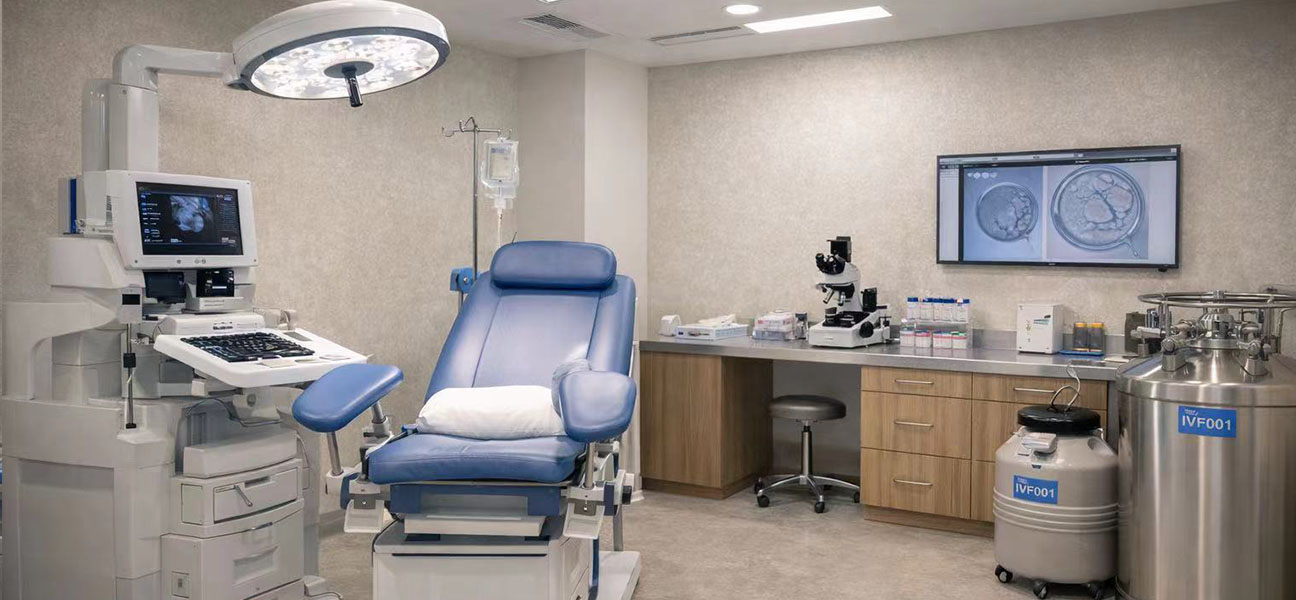
HKSH's embryology laboratory is equipped with time-lapse imaging incubators, low oxygen culture environment (5% O₂), and continuous air quality monitoring. These devices reduce stress on embryos during in vitro culture, allowing more embryos to develop to the blastocyst stage. For patients with a history of low blastocyst formation rates, improved laboratory conditions can directly change outcomes.
2. Physician Team's Decision-Making Habits
HKSH's reproductive physicians tend towards personalized mild stimulation in ovulation induction protocols, rather than a uniform long protocol or antagonist protocol. For patients with low AMH, PPOS or micro-stimulation is prioritized to avoid over-suppressing the ovaries. This decision-making approach is more favourable for patients with diminished ovarian reserve, but requires sufficient physician experience to determine thresholds.
3. Patient Selection and Referral Mechanism
As a private hospital, HKSH has the right to refuse patients with an expectedly low success rate. This is not discrimination, but part of medical ethics—to avoid unnecessary financial and psychological burden on patients. Therefore, patients accepted by HKSH inherently belong to a group with a better prognosis, which also elevates the overall success rate data.
Physician's Reminder: In HKSH's live birth rate statistics, some "very poor prognosis" patients (e.g., AMH <0.4, age >45 years) are excluded. When you see the advertised "success rate," you need to ask what the denominator is—whether it is all initiated cycles or cycles that reached transfer. Data from different reporting methods can differ by 15%–20%.
Comparison of Major Reproductive Centres in Hong Kong: Differences Between HKSH, Union, CUHK, and Gleneagles
When choosing a hospital, patients often overlook differences in patient demographics, fee structures, and laboratory focus among centres. The following comparison is based on public information and practitioner observations:
| Comparison Dimension | HKSH | Union Hospital | CUHK Medical Centre | Gleneagles Hospital |
|---|---|---|---|---|
| Laboratory Standard | Time-lapse imaging + low oxygen culture + continuous QC | Standard incubators, selective time-lapse imaging | Research-grade equipment, focus on clinical research | Standard culture, cost-effective oriented |
| Median Patient Age | 38–39 years | 36–37 years | 35–36 years | 37–38 years |
| Minimum AMH Accepted | Approx. 0.6 ng/mL | Approx. 0.4 ng/mL | Approx. 0.3 ng/mL (research) | Approx. 0.5 ng/mL |
| Cost per Cycle (HKD) | 180,000–250,000 | 120,000–180,000 | 100,000–150,000 | 100,000–140,000 |
| PGT-A Surcharge | Approx. 60,000–80,000 | Approx. 40,000–60,000 | Approx. 30,000–50,000 | Approx. 40,000–50,000 |
| Suitable Scenarios | Recurrent failure, advanced age, PGT needs | First IVF, moderate budget | Research collaboration, complex genetic diseases | Cost-effectiveness priority, basic IVF |
HKSH's investment in laboratory hardware and quality control provides greater assurance in "embryo developmental potential," but this advantage is not significant for younger patients with normal ovarian function. For the latter, Union or Gleneagles may offer better value for money.
Easily Overlooked Details: Differences in HKSH's Consultation Process Compared to Mainland China
Many patients focus only on success rate numbers but overlook the following practical details, which can directly impact treatment experience and outcomes:
- Initial consultation requires complete reports: Including AMH, sex hormone profile, vaginal ultrasound (antral follicle count), semen analysis, and karyotype. If reports are incomplete, HKSH will require re-testing in Hong Kong, costing approximately HKD 2,000–5,000 per test, and requiring an additional 1–2 days.
- Registration documents need notarization: ID cards, marriage certificates, and Mainland Travel Permits for both spouses, along with an English translation notarized by a Mainland notary office. Missing any item will delay cycle initiation.
- Ovulation induction medications must be purchased out-of-pocket: HKSH does not provide centralized medication procurement; patients must buy medications from designated pharmacies with a prescription. Some imported medications (e.g., Gonal-f, Luveris) are 30%–50% more expensive in Hong Kong than on the Mainland.
- Egg retrieval surgery requires advance booking with the anaesthesia department: HKSH's egg retrieval is performed in the day surgery centre. An anaesthesiologist assessment is needed, and booking at least 2 weeks in advance is recommended, otherwise the cycle may be missed.
Common Pitfalls: The Risks of Blindly Pursuing "High Success Rates"
In outpatient clinics, three common cognitive misconceptions are frequently encountered:
Misconception 1: A higher success rate for the hospital means a higher success rate for me
The hospital's "success rate" is a statistical value, not an individual probability. A 42-year-old patient with an AMH of 0.5 has an expected live birth rate below 15% at any centre. HKSH's statistics may show over 40%, but that is based on its selected patient population. Using overall data to infer personal results is the most common mistake in decision-making.
Misconception 2: Expensive means best
HKSH's fees are among the highest in Hong Kong, but the high cost mainly comes from the private hospital service premium, luxurious environment, and longer physician consultation time. These are not directly causal to embryo quality or implantation success rates. Laboratory equipment and physician experience are the key variables, which are also available at Union or CUHK, just with different focuses.
Misconception 3: After repeated failure, you must switch to the most expensive centre
For recurrent implantation failure, the cause must first be identified—is it embryonic chromosomal abnormality, decreased endometrial receptivity, or immune factors? If the cause is not clarified, directly switching to HKSH may simply repeat the same process without achieving a different outcome. It is recommended to complete ERA testing, chronic endometritis screening, and chromosomal microarray analysis for both partners before referral.
HKSH IVF Actual Process: Key Milestones from Initial Consultation to Transfer
The following process is based on the standard pathway of the HKSH Reproductive Centre for 2024–2025, applicable to standard IVF/ICSI cycles:
- Initial Consultation (Day 1): Bring all previous reports. After assessment, the physician orders local Hong Kong tests, including AMH, infection screening, and vaginal ultrasound. Blood draw can be completed the same day.
- Protocol Formulation (Days 7–14): Once all reports are available, the physician determines the ovulation induction protocol (antagonist/PPOS/micro-stimulation). The patient purchases medications and learns how to inject.
- Ovulation Induction Monitoring (Approx. 10–12 days): Return to the hospital every 2–3 days for vaginal ultrasound and blood tests to monitor follicle development. HKSH requires monitoring to be completed between 9:00–11:00 AM to avoid physician scheduling conflicts.
- Egg Retrieval Surgery (Days 12–14): Transvaginal egg retrieval under general anaesthesia. Patients can be discharged after 2 hours of observation. HKSH routinely prescribes oral antibiotics and painkillers after retrieval; hospitalization is not mandatory.
- Embryo Culture & Biopsy (Days 3–6): The laboratory reports on cleavage-stage embryos on day 3, and blastocyst formation on days 5–6. If PGT is required, biopsy is sent for testing, with results taking 10–14 business days.
- Frozen Embryo Transfer (Weeks 6–10): Depending on the patient's uterine condition, a natural cycle or hormone replacement cycle is chosen for endometrial preparation. HKSH routinely performs a hysteroscopy before transfer to rule out endometrial polyps or adhesions.
- Post-Transfer Support (Days 10–14): Progesterone gel or oral dydrogesterone is used after transfer. A blood test for β-hCG is done on days 12–14 to confirm pregnancy.
Time Planning Reminder: From initial consultation to transfer completion, if everything goes smoothly and PGT is not involved, the shortest time is approximately 8–10 weeks. If PGT screening is included, it takes 12–16 weeks. Patients are advised to reserve at least a 4-month window to avoid delays due to documents, reports, or cycle cancellation.
Factors Influencing Cost: Why Cycle Costs Vary Significantly at HKSH
The cost per cycle at HKSH ranges from HKD 180,000 to 250,000. Actual expenditure is affected by the following factors:
- Type and dosage of ovulation induction medications: Imported vs. domestic, high dose vs. standard dose; cost differences can reach HKD 30,000–50,000.
- Whether PGT screening is performed: PGT-A surcharge is approximately HKD 60,000–80,000; PGT-M is more expensive due to custom probe design (HKD 120,000–180,000).
- Use of assisted technologies: Whether ICSI (intracytoplasmic sperm injection), assisted hatching, or time-lapse imaging culture is needed; each costs approximately HKD 5,000–15,000.
- Hysteroscopy: HKSH routinely recommends hysteroscopy before transfer, costing approximately HKD 20,000–30,000. Some patients may choose not to have it, but the physician will assess the risk.
- Number of frozen embryos and storage duration: HKSH's frozen embryo storage fee is HKD 6,000–8,000 per straw per year; renewal is required after 2 years.
A complete cycle including PGT-A typically costs between HKD 250,000 and 320,000. If the first transfer does not result in pregnancy, subsequent frozen embryo transfer costs are approximately HKD 40,000–60,000 per attempt (excluding endometrial preparation medications).
Suitable Candidates: Who is More Likely to Benefit from Choosing HKSH?
Based on the above analysis, the following groups are more likely to achieve the expected benefits at HKSH:
- Aged 38–42 years, with AMH between 0.6 and 1.5: This group has diminished ovarian reserve but still has the potential to obtain sufficient embryos. HKSH's laboratory conditions can best preserve embryo developmental potential.
- Clear indication of genetic disease carrier status: Families requiring PGT-M or PGT-SR. HKSH's laboratory has extensive experience in single-cell amplification and genetic counselling, and collaborates with the Genetic Centre of the Chinese University of Hong Kong.
- Previous low blastocyst formation rate (<30%): If usable embryos were scarce at a previous centre, switching to an institution with higher laboratory standards may improve outcomes.
- Adequate financial budget and high value placed on privacy and service experience: HKSH offers private services such as one-patient-per-consultation-room,全程个案管理 (dedicated case management), and priority appointments, suitable for patients with high expectations for the treatment experience.
Unsuitable Candidates
- AMH < 0.4 ng/mL or age > 44 years: Expected egg yield is very low. HKSH may directly recommend egg donation or referral; blindly investing in a high-cost cycle is not advised.
- Uncontrolled adenomyosis or hydrosalpinx: The underlying condition needs to be treated first; otherwise, embryo implantation rates are not affected by laboratory conditions.
- Budget-sensitive patients: HKSH's fees are among the highest in Hong Kong. If funds are tight, choosing Union or Gleneagles may be more sustainable, avoiding financial pressure affecting treatment decisions.
- First IVF attempt and age < 35 years: For young patients with normal ovarian function, HKSH's laboratory advantages are not significant; a more cost-effective centre is sufficient.
Risk Reminder: All assisted reproductive treatments have a success rate ceiling; HKSH is not a "guaranteed success" institution. Data from the 2024 Hong Kong Society of Reproductive Medicine annual meeting showed that the live birth rate for women over 42 at HKSH is approximately 12%–18%, on par with top global centres, but over 80% of cycles still do not result in a live birth. Before deciding, it is recommended to complete a full fertility assessment (AMH, antral follicle count, sperm DNA fragmentation rate, uterine cavity evaluation) and ask your physician to provide an expected range based on your personal data. If the expected live birth rate is below 10%, you may need to reassess whether the high-cost cycle is worthwhile, or consider alternative paths such as ovarian pre-treatment or egg donation.
Practitioner Observation During my three years working at HKSH, I saw many patients coming with a "last resort" mindset. But those who truly achieved ideal outcomes were often those who clearly understood their goals, comprehended the meaning of success rates, and were mentally and financially prepared. A high success rate is not solely the hospital's responsibility; it is the result of collaboration between the patient and the medical team. — Former Coordinator, HKSH Reproductive Centre, recorded January 2025.
0 comments