
Hong Kong Reproductive Medicine Centre: Public or Private? Detailed Explanation and Selection Guide

Hong Kong has both public and private reproductive medicine centres. Public hospital reproductive departments offer basic diagnosis and treatment with long waiting times; private centres provide comprehensive services with shorter waits but higher costs. This article details the differences, suitable candidates, procedures, and costs of both types to help patients make informed choices.
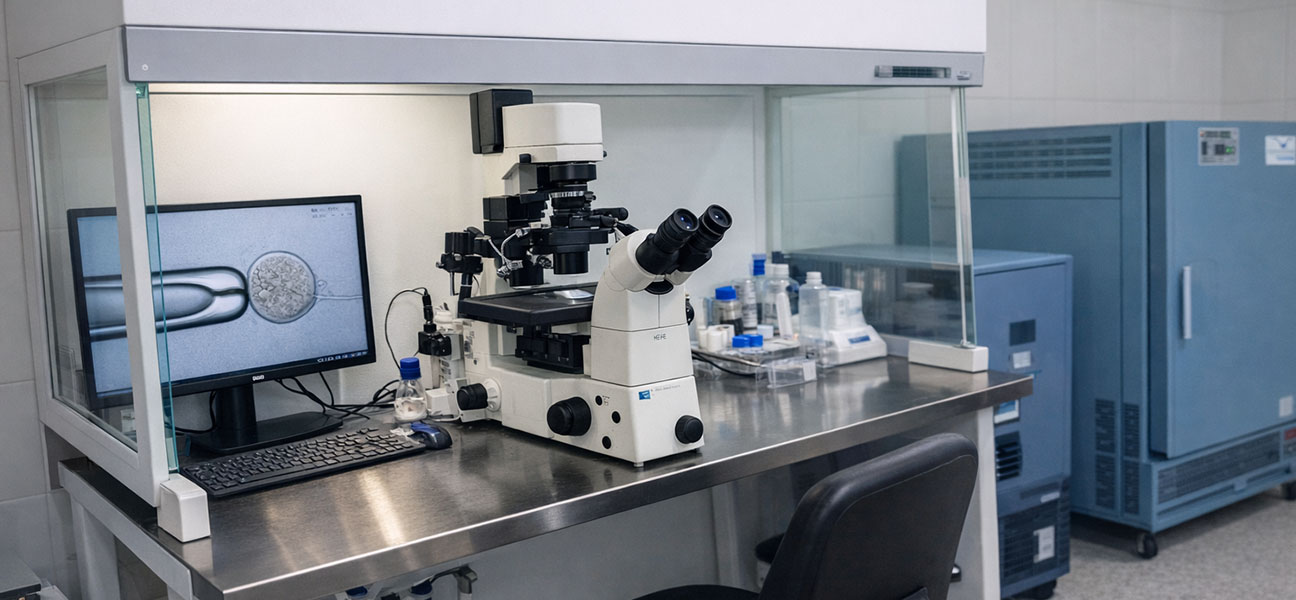
Hong Kong Reproductive Medicine Centre, as a specific institution name, is a private medical facility. However, Hong Kong's assisted reproduction service system is jointly composed of public hospital reproductive departments and private fertility centres. These two types of institutions differ significantly in nature, service scope, waiting time, and cost. The following expands from four dimensions: institutional classification, suitable candidates, process details, and frequently asked questions, to help those in need make a judgment based on their own situation.
Public Hospital Reproductive Medicine Centres
Several public hospitals under the Hospital Authority of Hong Kong have reproductive medicine specialties. These departments belong to the public healthcare system, and fees are charged according to the unified regulations of public hospitals. Main institutions include:
- Assisted Reproduction Centre of Queen Mary Hospital (Teaching hospital of the University of Hong Kong)
- Reproductive Medicine Centre of Prince of Wales Hospital (Teaching hospital of the Chinese University of Hong Kong)
- Reproductive Department of Queen Elizabeth Hospital
- Reproductive Department of Kwong Wah Hospital
The service positioning of public hospital reproductive departments is centred on basic diagnosis and necessary treatment. Common services include: infertility aetiology screening, ovulation monitoring, ovulation induction guidance, intrauterine insemination (IUI), and some in vitro fertilisation (IVF) cycles. Due to limited resources, the public system has strict selection criteria for admitting patients, prioritising cases with clear diagnoses, younger age, and better prognosis.
Characteristics of Public Hospital Services
| Referral Method | Must have a written referral from a family doctor or gynaecologist |
| Waiting Time | First appointment about 6-12 months, then another 6-12 months to start treatment cycle |
| Age Limit | Women usually not over 45; some centres strictly evaluate patients over 42 |
| Cost Level | Charged according to public hospital standards, single IVF cycle about HKD 20,000-40,000 (excluding medication costs) |
| Suitable Candidates | Hong Kong residents, younger age, relatively simple conditions, flexible schedule |
The advantage of public hospitals is the controllable cost and close integration with university teaching systems; some centres also conduct clinical research. However, the waiting time is a significant practical issue, with some patients waiting over 18 months from referral to first treatment.
Private Reproductive Medicine Centres
Hong Kong has a large number of private fertility centres with comprehensive services, making them the main providers of assisted reproduction services. Besides Hong Kong Reproductive Medicine Centre, other centres include Bourn Hall Fertility Centre, Union Reproductive Medicine Centre, Hong Kong IVF Centre, and The Royal Reproductive Medicine Centre (Hong Kong). These institutions are all private, market-oriented, with service pricing and package combinations determined by each centre.
Characteristics of Private Centre Services
| Referral Method | No referral needed; direct appointment for initial consultation |
| Waiting Time | Initial consultation within 1-2 weeks; starting a cycle usually within 1-3 months |
| Age Limit | Relatively flexible, but individualised assessment required for those over 45 |
| Cost Level | Single IVF cycle about HKD 100,000-200,000 (including medication, surgery, and laboratory fees) |
| Suitable Candidates | Older age, complex conditions, time-sensitive, sufficient budget |
Private centres offer a wider range of technologies, including intracytoplasmic sperm injection (ICSI), preimplantation genetic testing (PGT), egg freezing, sperm freezing, embryo freezing and long-term storage, etc. Laboratory equipment is updated more frequently, and some centres have time-lapse embryo incubators and artificial intelligence embryo assessment systems.
It is important to note that laboratory standards and embryologist experience vary among private centres. When choosing, one should not only look at the clinic's brand but also understand the accreditation of its embryology laboratory (e.g., registration with the Hong Kong Council on Human Reproductive Technology, ISO certification, etc.).
Doctor's Perspective: How to Choose Between Public and Private
From a clinical decision-making perspective, doctors assess whether a patient is suitable for public or private care based mainly on the following four factors:
- Ovarian Reserve and Age: Age is the most critical variable affecting IVF success. For patients under 35 with AMH > 2.0 ng/mL and antral follicle count > 10, waiting 1-2 years in the public system has a relatively manageable impact on success rates. However, for those over 38 with AMH < 1.0 ng/mL, the time window is narrow, and doctors usually recommend directly choosing a private centre to avoid further decline in ovarian function due to waiting.
- Complexity of Aetiology: Simple tubal factors or mild male factors can be effectively handled by the public system. However, for complex conditions involving genetic diseases, recurrent miscarriage, severe oligoasthenoteratozoospermia, endometriosis, etc., the multi-technique combined approaches (e.g., ICSI+PGT+endometrial receptivity testing) offered by private centres are more advantageous.
- Continuity of Care: Due to the waiting list mechanism in public hospitals, patients may be seen by different doctors at different stages, leading to weaker treatment continuity. Private centres usually operate on a primary physician responsibility system, where the same team follows the patient from ovulation induction to embryo transfer, which is more beneficial for complex cases.
- Financial Affordability: The cost per cycle in public hospitals is about 1/5 to 1/3 of that in private centres, but time costs must be considered. For younger patients with limited budgets and ample time, public hospitals are a reasonable choice. For older patients or those with repeated failures, the higher cost of private centres may offer greater time efficiency and treatment flexibility.
Actual Process Comparison: From Initial Consultation to Embryo Transfer
Public Hospital Treatment Process
Assessment by family doctor or gynaecologist, then issuance of referral letter
Confirmation of referral at public hospital gynaecology outpatient clinic, scheduling for reproductive department (waiting 6-12 months)
Initial consultation at reproductive department: completion of basic tests (AMH, sex hormone panel, ultrasound, semen analysis)
Waiting for treatment scheduling (another 6-12 months), during which some expired tests need to be repeated
Starting IVF cycle: ovulation induction, egg retrieval, embryo culture, embryo transfer
Private Centre Treatment Process
Direct appointment for initial consultation at fertility centre (within 1-2 weeks)
Completion of basic tests (results available in 1-2 weeks)
Doctor formulates individualised plan, determines cycle start date
Starting cycle: ovulation induction (about 10-14 days), egg retrieval, embryo culture, embryo transfer (total duration about 6-8 weeks)
Pregnancy test 12-14 days after embryo transfer
From a timeline perspective, it typically takes 18-30 months from referral to completion of the first treatment cycle in public hospitals, whereas private centres can complete the process within 3-6 months. For patients with diminished ovarian reserve (DOR) or advanced age, a 6-month difference can directly impact success rates.
Most Easily Overlooked Details
- Validity of Referral Letter: Public hospitals require the referral letter to be valid within 6 months; if it expires, a new one must be obtained. Some patients experience process restart due to long waiting times causing referral letter expiry.
- Validity of Test Results: Results for AMH, infectious disease screening (Hepatitis B, Hepatitis C, HIV, Syphilis), and chromosome karyotype analysis are usually valid for 6-12 months. During the waiting period in the public system, some tests may need to be repeated, adding time and cost.
- Age Calculation Cut-off: Public hospitals use the actual age at the time of treatment initiation, not the age at referral. Some patients may exceed the age limit during the waiting period, losing eligibility for treatment.
- Structure of Embryo Freezing Fees: Packages at private centres usually include the first year of freezing fees, after which annual fees apply. Freezing costs vary significantly between centres, so long-term storage costs should be confirmed in advance.
- Language Communication Adaptation: Cantonese is the main working language in public hospitals, with limited English and Mandarin services. Private centres generally offer trilingual services (Cantonese, English, Mandarin), making them more friendly to non-Cantonese speakers.
Common Pitfalls
- Attracted by "Low-Price Packages", Ignoring Additional Fees: Some private centres offer low-cost basic packages, but items like ovulation induction medications, PGT, embryo freezing, and assisted hatching are charged separately, potentially exceeding the budget by 30%-50%. A complete fee schedule should be obtained before signing the contract.
- Assuming Private is Always Better than Public: The advantages of private centres are shorter waiting times and service flexibility, but not all private centres have laboratory quality superior to public ones. Some public hospitals in Hong Kong (e.g., Queen Mary Hospital, Prince of Wales Hospital) have reproductive laboratories that also undertake teaching and research, with technical standards and quality control not inferior to private institutions.
- Overlooking the Core Role of the Embryology Laboratory: Among the key factors for IVF success, the quality of the embryology laboratory carries significant weight. When choosing a private centre, focus on the embryologist's qualifications, whether the lab has time-lapse incubators, and whether routine quality control tests (e.g., endotoxin testing of culture media) are performed.
- Over-focusing on Success Rate Numbers: Success rates published by centres are affected by statistical definitions (e.g., per transfer cycle vs. per egg retrieval cycle, whether older patients are excluded). Directly comparing success rates between different centres is meaningless. Instead, ask the doctor for an individualised estimate based on your own age and diagnosis.
- Neglecting Non-Medical Costs: Private centres are concentrated in Hong Kong Island and Kowloon core areas. Non-Hong Kong residents need to consider transportation, accommodation, and time costs for each visit. An IVF cycle typically requires 8-12 clinic visits, and this expense should not be ignored.
Frequently Asked Questions
Q1: Can non-Hong Kong residents undergo reproductive treatment at public hospitals?
Public hospitals primarily serve Hong Kong residents. Non-residents are generally not eligible for treatment in the public system. Non-Hong Kong residents can choose private fertility centres, some of which have international patient service channels.
Q2: What is the success rate of Hong Kong Reproductive Medicine Centre (the institution)?
The centre usually publishes overall clinical pregnancy rates, but specific data should be viewed according to age and diagnosis stratification. It is recommended to ask the doctor for age-specific success rate data during the initial consultation and understand the statistical definition (e.g., pregnancy rate per transfer cycle vs. cumulative pregnancy rate per egg retrieval cycle).
Q3: A 35-year-old woman with AMH 1.2, should she choose public or private?
Age 35 is a turning point for declining reproductive capacity. AMH 1.2 indicates ovarian reserve is at a low-normal level. If time allows and the budget is limited, the public hospital is still an option, but one should be prepared to wait 1-2 years. If the goal is to complete the fertility plan as soon as possible, a private centre is a more reliable choice, as a 6-month wait could further lower AMH to below 1.0.
Q4: Can private centre costs be reimbursed by medical insurance?
Treatment costs at public hospitals in Hong Kong can be reimbursed through the Hospital Authority (HA) scheme, but costs at private fertility centres are usually not covered by medical insurance. Some high-end private medical insurance policies include outpatient fertility treatment benefits; specific terms should be confirmed with the insurance company in advance.
Q5: Can I request PGT for IVF at a public hospital?
Access to PGT technology in public hospitals is limited, usually only for specific genetic diseases or recurrent miscarriage cases, and waiting times are longer. Private centres commonly offer PGT-A (aneuploidy screening) and PGT-M (monogenic disease testing), applicable to a wider range of patients.
Doctor's Advice
When choosing a fertility centre, "public" or "private" should not be the sole decision criterion. It is recommended to follow these steps for decision-making:
- Complete a Basic Fertility Assessment: Including AMH, sex hormone panel, vaginal ultrasound (antral follicle count), and semen analysis. Knowing your own fertility baseline is a prerequisite for choosing an institution.
- Define Your Time Window: If you are over 38, or have AMH below 1.0 ng/mL, or have a clear genetic indication requiring PGT, a private centre is a more efficient choice.
- Visit the Laboratory in Person: Regardless of choosing public or private, understand the quality control standards of the embryology laboratory and the experience of the embryologists. Private centres may allow lab tours; for public hospitals, you can inquire about lab accreditation through the doctor.
- Calculate Total Costs: Include time costs, transportation costs, and lost work income in the total expenditure. For non-Hong Kong residents, the higher cost of private centres may be partially offset by reduced stay duration.
In the field of assisted reproduction, there is no "best" institution, only the plan that is "most suitable for the current stage". Public and private are not opposing options but can be stepped choices that switch according to treatment stage and needs.
Risk Reminder: The costs and waiting times mentioned in this article are general industry levels for 2024. Actual data may vary due to institutional policy adjustments, individual health conditions, and exchange rate fluctuations. All medical decisions should be made under the guidance of a professional doctor. This article should not be used as a basis for self-judgment or treatment discontinuation. Assisted reproductive technology has individual differences, and specific outcomes are not guaranteed.
0 comments