
Hong Kong PGT-A Genetic Screening Technology: Detection Principles, Indications, and Clinical Decision Logic

Hong Kong PGT-A genetic screening technology is primarily used for embryonic chromosomal aneuploidy detection, indicated for advanced maternal age, recurrent miscarriage, and history of previous chromosomal abnormal pregnancies. This article analyzes detection principles, biopsy timing, mosaic embryo management, costs, and differences from Mainland China from a reproductive specialist's perspective, helping patients rationally evaluate whether to choose PGT-A.
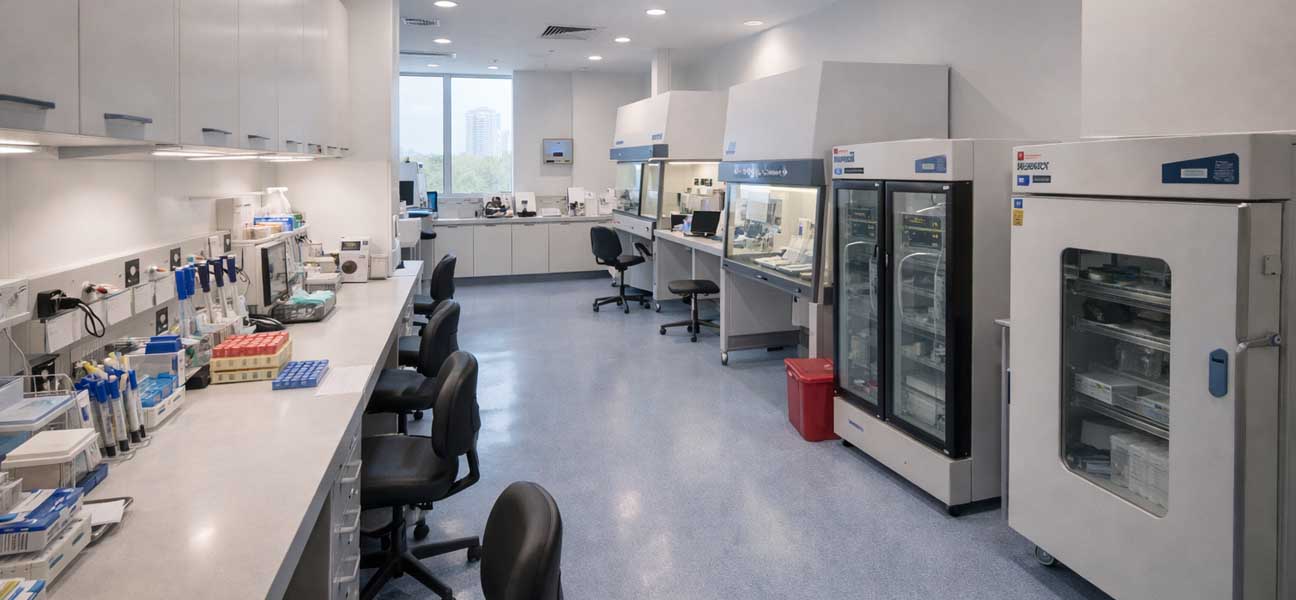
Author identity: Reproductive specialist, perspective derived from clinical decision logic, opening directly with physician decision logic.
Reproductive Medicine Knowledge Base · Hong Kong PGT-A Technology Special Topic
Physician Decision Logic: When to Recommend PGT-A to Patients
In a reproductive clinic, when a woman over 35 enters with a history of two or more early miscarriages, or a history of termination for a trisomic pregnancy (e.g., Down syndrome), I will directly flip the calendar to calculate embryo culture time and begin explaining PGT-A. Not because the technology is "advanced" or "trendy," but because the proportion of chromosomal abnormalities in miscarriage products rises exponentially with age—around 50% at age 38 and over 70% at age 42. The core role of PGT-A (Preimplantation Genetic Testing for Aneuploidy) is not to "increase live birth rate," but to reduce the risk of implantation failure, miscarriage, and birth of children with abnormalities caused by incorrect chromosome numbers. It addresses the "chromosome number correctness issue" at the embryo level, not single gene mutations or structural rearrangements.
What Exactly Does PGT-A Detect? Why Isn't It for Everyone?
Direct Answer: PGT-A detects the chromosome copy number in trophectoderm cells (the part that will develop into the placenta) of the embryo, determining if there is a gain or loss of entire chromosomes (aneuploidy), such as trisomy 21, trisomy 16, 45,X, etc. It does not detect single gene disorders (e.g., thalassemia, cystic fibrosis) nor chromosomal structural rearrangements (e.g., balanced translocations)—the latter requires PGT-SR.
Clinical Criteria (Reproductive Specialist Perspective):
- Strongly Recommended: Female age ≥38 years; recurrent implantation failure (≥3 failed transfers of good quality embryos); recurrent miscarriage (≥2 spontaneous miscarriages with confirmed chromosomal abnormality in products of conception); history of previous pregnancy with chromosomal abnormality (e.g., trisomy 21, trisomy 18).
- Consider: Age 35-37 with diminished ovarian reserve (AMH <1.2 ng/mL); multiple pregnancy losses without genetic analysis of products of conception; male partner with severe sperm DNA fragmentation or chromosomal mosaicism.
- Generally Not Recommended: Age <35 years, no history of miscarriage, first IVF cycle with a clear cause (e.g., tubal factor, single factor); or very few embryos available (≤2)—biopsy may compromise embryo viability, and the benefit of PGT-A is unclear when the number of transferable embryos is very low.
Why Does the Aneuploidy Rate Increase Dramatically with Advanced Maternal Age?
During oocyte meiosis, the chromosome segregation mechanism deteriorates with age. The function of the spindle assembly checkpoint declines, leading to non-disjunction of homologous chromosomes or sister chromatids. The result is oocytes with abnormal chromosome numbers, subsequently affecting the embryo. In younger women, the aneuploidy rate in oocytes is lower (<20%), so the marginal benefit of PGT-A for them is small. This is why major international guidelines (e.g., ASRM, ESHRE) do not recommend routine PGT-A for all populations.
Technical Process of PGT-A in Hong Kong: From Blastocyst Biopsy to Genetic Report
In Hong Kong reproductive centers with PGT-A qualifications (e.g., Hong Kong Sanatorium & Hospital, Union Hospital, Hong Kong Assisted Reproduction Centre), the process is highly standardized. The actual steps are as follows:
| Stage | Specific Content | Key Time Point |
|---|---|---|
| 1. Ovarian Stimulation & Egg Retrieval | Standard stimulation protocol to obtain oocytes, IVF or ICSI | Egg retrieval day (D0) |
| 2. Blastocyst Culture | Embryos cultured to blastocyst stage on day 5/6. Only blastocysts reaching a biopsy-capable grade (Gardner score ≥3BB) proceed to biopsy. | D5~D6 |
| 3. Trophectoderm Biopsy | Laser drilling to aspirate 3-5 trophectoderm cells (separated from the inner cell mass, not harming the fetal part). | D5~D6, day of biopsy |
| 4. Genetic Amplification & Testing | Low-coverage whole genome sequencing using NGS (Next Generation Sequencing) or SNP array technology to determine copy number for each chromosome. | 8~14 days post-biopsy (depending on center's testing schedule) |
| 5. Embryo Vitrification | Embryos are frozen immediately after biopsy, awaiting genetic results. | Day of biopsy |
| 6. Report Interpretation & Transfer Decision | Euploid (normal) embryos prioritized for transfer; mosaic embryos graded by mosaicism level, some considered for transfer; aneuploid embryos discarded or used for research. | Within 1-2 weeks after report |
Most Easily Overlooked Detail: The Trade-off Between Biopsy Timing and Embryo Quality
Not all blastocysts are suitable for biopsy. Do most centers in Hong Kong perform polar body biopsy on day 3 embryos (cleavage stage)? No, the standard is blastocyst stage biopsy. However, in reality, about 15%-30% of embryos fail to develop to a biopsy-capable blastocyst stage. If only 1-2 usable blastocysts are obtained after stimulation, even if the biopsy report is normal, there might be no embryo for transfer due to freeze-thaw damage or post-biopsy survival issues. Therefore, I discuss with patients beforehand: "If we get a low number of blastocysts (<3), the additional loss from PGT-A might outweigh the benefit. Are you willing to accept this risk?"
Authoritative Hong Kong centers report > 97% (mature vitrification technology)
DNA amplification failure ~1-3%, reasons include poor cell quality, cell lysis
About 5-15% of embryos have low-level mosaicism (20-50%), requiring careful evaluation
Approximately 35-45% euploid per biopsied embryo
Differences Between Hong Kong and Mainland China PGT-A: Policy, Technology, and Cost
Due to strict access restrictions for PGT in Mainland China (requiring specific genetic disease indications per the "Administrative Measures on Human Assisted Reproductive Technology"), and most centers can only perform PGT-M (monogenic) or PGT-SR (structural rearrangement), PGT-A for "advanced maternal age + recurrent miscarriage" is not fully open in Mainland China. Hong Kong operates according to international standards (ESHRE/ASRM guidelines), with no restrictions on indications as long as the patient provides informed consent. This is a core reason why the Hong Kong market attracts patients from Mainland China.
Cost Influencing Factors (Fully Self-funded, No Insurance Coverage)
- Basic IVF Cycle Cost: Approximately HKD 80,000-150,000 in Hong Kong (includes stimulation medication, egg retrieval, lab culture).
- PGT-A Testing Fee: Approximately HKD 4,000-6,500 per embryo for biopsy + testing; some centers offer a flat rate of ~HKD 25,000 for ≤4 embryos.
- Chromosomal Array Upgrade: If choosing SNP array (can additionally detect polyploidy, loss of heterozygosity, parental origin), an extra HKD 1,000-2,000 per embryo.
- Embryo Freezing Fee: First year ~HKD 6,000-8,000, subsequent annual renewal HKD 4,000-6,000.
- Genetic Counseling & Report Interpretation: Usually included in the cycle cost, but complex mosaicism may require additional consultation with a geneticist (~HKD 1,500-3,000).
For a 38-year-old patient with 5 blastocysts all sent for PGT-A, the total cost is approximately: IVF cycle HKD 120,000 + testing fee HKD 30,000 + freezing fee HKD 7,000 ≈ HKD 157,000. Even if only one transfer is done and successful, it is still more expensive than正规 hospitals in Mainland China, but compared to the physical and emotional toll of recurrent miscarriage, some families consider it worthwhile. However, it is crucial to note: No technology guarantees a 100% live birth. PGT-A itself carries potential false negatives or false positives due to mosaic misdiagnosis or embryo biopsy damage.
Special Situation Management: Mosaic Embryos, Low-Quality Blastocysts, and Decision for No Embryo Available for Transfer
Mosaic Embryos – The Most Common Challenge Asked of Reproductive Specialists
When a report shows "chromosomal mosaicism 20% trisomy 21," it means some cells are normal and some are abnormal. In the past, these embryos were almost all discarded. However, recent prospective studies (e.g., NEJM 2021, Treff et al.) indicate that live birth rates after transfer of low-level mosaic (<30%) embryos are not significantly different from euploid embryos, and the karyotype of born children is mostly normal. Hong Kong reproductive centers currently classify mosaicism into three grades: Low (<30%), Moderate (30-50%), High (>50%). Low-level mosaics can be considered for transfer as a secondary choice, but prenatal diagnosis (amniocentesis) is mandatory. This decision requires the patient to fully understand: transferring a mosaic embryo implies a ~5-10% risk of abnormal amniotic fluid results, plus additional prenatal testing costs and psychological stress.
Reproductive Specialist Advice: If only mosaic embryos are available, and the patient is older, has ovarian failure, and has no other embryos, I provide detailed counseling on mosaicism, including literature support, international registry data, and suggest re-biopsy (if possible) or opting for NIPT + amniocentesis before transfer. Do not hide risks, nor dismiss it outright.
No Euploid Embryos After Biopsy – How to Face Failure
This is the harshest outcome of PGT-A: spending extra money and time, only to conclude "no normal embryos available for transfer." For women over 42, the probability of zero euploid embryos after one stimulation cycle is as high as 40-60%. Clinical pathways at this point include: ① Attempt a new stimulation cycle (adjust protocol or add growth hormone); ② Consider egg donation; ③ Consider transferring a mosaic embryo (if low-level and with full informed consent); ④ Discontinue further attempts. As a physician, I must clearly state: PGT-A is a screening tool, not a treatment tool; it cannot turn an abnormal embryo into a normal one. Patients need mental preparation before starting.
Frequently Asked Questions (Q&A)
- Q: Can PGT-A screen for a healthy baby?
A: It only screens for embryos with normal chromosome numbers, indeed reducing the risk of miscarriage and chromosomal diseases, but it cannot rule out single gene disorders, structural abnormalities, or non-genetic birth defects. A normal embryo can still miscarry (~5-10%), and the health rate after live birth is not significantly different from natural conception (excluding chromosomal diseases). - Q: Does biopsy harm the embryo?
A: Blastocyst biopsy aspirates trophectoderm cells that will form the placenta; the inner cell mass (fetal part) is unaffected. Multiple RCTs and follow-up studies show no difference in post-biopsy embryo survival and implantation rates compared to non-biopsied blastocysts. However, in very rare cases, the procedure might affect the inner cell mass or cause the embryo to collapse during thawing, with an incidence below 1%. - Q: How long does it take to get the PGT-A report in Hong Kong?
A: From biopsy to NGS report usually takes 7-14 working days, depending on lab scheduling and sample volume. Including embryo freezing and endometrial preparation, the fastest time from egg retrieval to transfer is about 2-3 months. - Q: Is PGT-A redundant with Non-Invasive Prenatal Testing (NIPT)?
A: No. PGT-A is preimplantation screening; NIPT is maternal blood screening during pregnancy. Even after transferring a PGT-A normal embryo, NIPT and ultrasound during pregnancy are still recommended to check for rare mosaicism or de novo abnormalities.
Risk Reminder: PGT-A Cannot Completely Eliminate the Risk of Chromosomal Abnormalities
1. Technical limitations: ~1-3% of embryos have false positives/negatives (due to DNA amplification bias or undetected mosaicism); 2. Chromosomal microdeletions/microduplications are not within the routine detection range of PGT-A (unless using high-resolution SNP array, which adds cost and complexity); 3. Biopsied cells may not match fetal cells (~1-2% discordance between trophectoderm and inner cell mass, leading to an abnormal embryo being misdiagnosed as normal); 4. Some abnormalities (e.g., triploidy, uniparental disomy) may be missed. All these require prenatal diagnosis after transfer.
Most Important Reminder: PGT-A is not a "universal insurance." It only reduces the risk of chromosome number abnormalities, not all genetic risks. Before deciding, patients are advised to have at least one in-depth discussion with a genetic counselor and reproductive specialist, and read the PGT-A informed consent form provided by the Hong Kong assisted reproduction center.
How to Determine if You Are Suitable for Hong Kong PGT-A?
Evaluate step by step according to the decision path:
- Step 1: Identify if you have any of the following: advanced maternal age (≥38), recurrent miscarriage (≥2), recurrent implantation failure (≥3), or history of previous chromosomal abnormal pregnancy. If none, the absolute benefit of PGT-A is minimal, and it might even reduce overall live birth rate due to biopsy loss.
- Step 2: Assess ovarian reserve and expected blastocyst number. AMH <1.0, antral follicle count <5, or previous stimulation cycle with <6 oocytes retrieved indicates "low response" risk. The probability of obtaining more than 3 blastocysts is low for such individuals, and the number of transferable embryos after PGT-A may be 0 or 1, requiring caution.
- Step 3: Consider budget and time. The total cost for a full PGT-A cycle in Hong Kong is approximately HKD 120,000-180,000, not including flights and accommodation. It also requires at least two trips to Hong Kong (one for egg retrieval and transfer, one for pre-transfer preparation; some centers allow consecutive months). Psychological stress and financial burden need comprehensive weighing.
- Step 4: Discuss "Plan B" with your reproductive specialist. If there are no euploid embryos after PGT-A, can you accept egg donation, sperm donation, or not continuing? Making a mental plan in advance can prevent decision paralysis.
Interpretation of Key Indicators: Critical Data Related to PGT-A
| Indicator | Meaning and Relationship to PGT-A Decision |
|---|---|
| AMH | Reflects ovarian reserve; AMH <1.0 ng/mL predicts few eggs retrieved, requiring assessment of whether sufficient embryos can be obtained for PGT-A. |
| FSH | Basal FSH >10 IU/L suggests possible diminished ovarian response, affecting blastocyst formation rate. |
| Female Age | Age is the top predictor of embryo aneuploidy rate, directly determining the potential benefit of PGT-A. |
| CMA Result of Previous Miscarriage Tissue | If the miscarriage product is confirmed to have chromosomal abnormality, it strongly supports PGT-A. |
| Sperm DNA Fragmentation Index (DFI) | DFI >30% may lead to increased embryo fragmentation and developmental arrest, affecting blastocyst quality. Not directly related to PGT-A but affects the number of biopsiable embryos. |
Real Practitioner Observation: Information Gap in PGT-A Between Hong Kong and Mainland China
I once treated a 40-year-old patient from Shenzhen at a Hong Kong reproductive center. She had three failed IVF cycles and came to Hong Kong for PGT-A on a friend's recommendation. She thought that doing PGT-A would "definitely get her pregnant." This is the biggest misconception. In reality, she only got 2 blastocysts after stimulation; after biopsy, one was 15% mosaic, and the other was euploid but still failed to implant after transfer. She was very disappointed, thinking "the technology is a scam." This is exactly what we practitioners need to constantly explain: PGT-A does not increase implantation rate—the implantation rate for euploid embryos is about 45-55% (related to random factors independent of age, endometrium, immunity, etc.). It reduces the "number of ineffective transfers due to chromosomal reasons." For someone with only one good embryo, one failure might mean total failure. So, rather than a blessing, PGT-A is an "information tool"—it lets you know the chromosomal status of the embryo more clearly, but it cannot change fate.
Another common scenario: Both partners have normal chromosomes, but two consecutive miscarriages with CMA of products of conception show 69,XXX (triploidy). This is sporadic aneuploidy, with a very low recurrence risk (<1%), so PGT-A is actually not needed. "But many patients actively request it, thinking it gives peace of mind." As a physician, I won't refuse, but I explain it's "overmedicalization"—for a very low recurrence risk, spending tens of thousands to reduce an already low probability has poor cost-effectiveness. Hong Kong centers usually offer free genetic counseling for such patients and use risk calculators to present data, helping them make rational decisions.
Timeline Reminder: If You Decide to Undergo PGT-A in Hong Kong, Follow This Schedule
- 3-6 months before: Complete basic fertility assessment (AMH, hormone panel, ultrasound antral follicle count, semen analysis, infectious disease screening, karyotype, thalassemia screening, etc.).
- 1-3 months before: Choose a Hong Kong center, conduct online or video genetic counseling, sign PGT-A informed consent; apply for Hong Kong/Macau entry permit and endorsement; schedule first consultation (best on day 2-4 of menstrual cycle).
- Menstrual cycle day 2-5: Travel to Hong Kong to start stimulation cycle (requires ~12-16 days stay), including egg retrieval.
- 5-6 days after egg retrieval: Blastocyst biopsy and freezing, return from Hong Kong.
- Wait 8-14 days: Genetic report issued; online consultation for results, decide on transfer plan.
- Next cycle: Travel to Hong Kong again for transfer (requires endometrial preparation, ~5-7 days).
- 12 days after transfer: Blood test for hCG to confirm pregnancy; if successful, amniocentesis for prenatal karyotyping is recommended during pregnancy.
Unsuitable Situations: Who Should Not Pay for PGT-A
- Those with structural chromosomal abnormalities themselves (e.g., Robertsonian translocation) and already have an indication for PGT-SR—PGT-A cannot replace structural rearrangement testing.
- Those with the mindset "IVF is already expensive, might as well spend more for peace of mind," and are <35 years old with a good prognosis.
- Those with very low ovarian reserve (AMH <0.4, antral follicle count <3), expected to yield only 1-2 eggs, with very low probability of developing into blastocysts.
- Those with a clear monogenic disorder (e.g., β-thalassemia, spinal muscular atrophy) should undergo PGT-M, not just PGT-A.
- Those with unresolved uterine factors (e.g., severe intrauterine adhesions, endometrial tuberculosis, adenomyosis)—treat the uterus first, then consider embryo genetic screening.
- Those who psychologically cannot accept the outcome of "no embryos available" and lack resilience for unexpected results; PGT-A may cause additional anxiety.
This content is based on clinical routines in Hong Kong reproductive centers and international reproductive medicine society consensus (ESHRE 2023, ASRM 2022). It is for reference only and does not constitute medical advice. All treatment decisions should be made jointly with a PGT-A qualified reproductive specialist and genetic counselor.
0 comments