
Hong Kong IVF Technology Advantage Analysis: Legal Regulation and Clinical Practice Characteristics

The advantages of Hong Kong IVF technology are mainly reflected in a comprehensive legal regulatory system, clear PGT genetic screening policies, advanced embryo laboratory technology, and strict medical quality control standards. This article objectively analyzes the characteristics and suitable populations of Hong Kong assisted reproduction from technical, legal, and medical process perspectives.
Introduction / Doctor's Perspective (Clinical Decision Logic)
In daily outpatient clinics, we often encounter patients who have already gained some preliminary understanding of Hong Kong's assisted reproduction information, asking what exactly makes Hong Kong's technology "better" and whether the differences from the mainland are worth a special trip. As a reproductive physician, this article deconstructs the actual characteristics of Hong Kong IVF from three core dimensions: the technology itself, the legal environment, and medical quality control, helping those in need build a clearer cognitive framework.
I. Core Advantages of Hong Kong IVF Technology
1. Clear Legal Regulatory Framework and Genetic Testing Policies
Hong Kong's assisted reproductive technology is regulated by the Human Reproductive Technology Ordinance (Cap. 561), which has clear provisions on key aspects such as embryo research, genetic testing, and gamete cryopreservation. Unlike the "grey areas" in some regions, Hong Kong offers legal certainty in the following aspects:
- PGT-A (Preimplantation Genetic Testing for Aneuploidy) is permitted within the legal framework and is indicated for recurrent miscarriage, recurrent implantation failure, advanced maternal age, etc.
- PGT-M (Preimplantation Genetic Testing for Monogenic Disorders) can be implemented for genetic diseases with a clear causative gene after ethical approval, with a clear application pathway.
- Embryo Cryopreservation Limit Regulations stipulate a maximum embryo cryopreservation period of 10 years (renewable) and a gamete cryopreservation limit of 10 years, avoiding disputes caused by ambiguous time limits.
- Egg/Sperm Donation has a strict anonymous donation system and quota management, with legal basis for the offspring's right to know.
For families requiring genetic screening or those with high demands for legal compliance, Hong Kong's regulatory environment provides a clear basis for decision-making.
2. Embryo Laboratory Technical Standards and Quality Control System
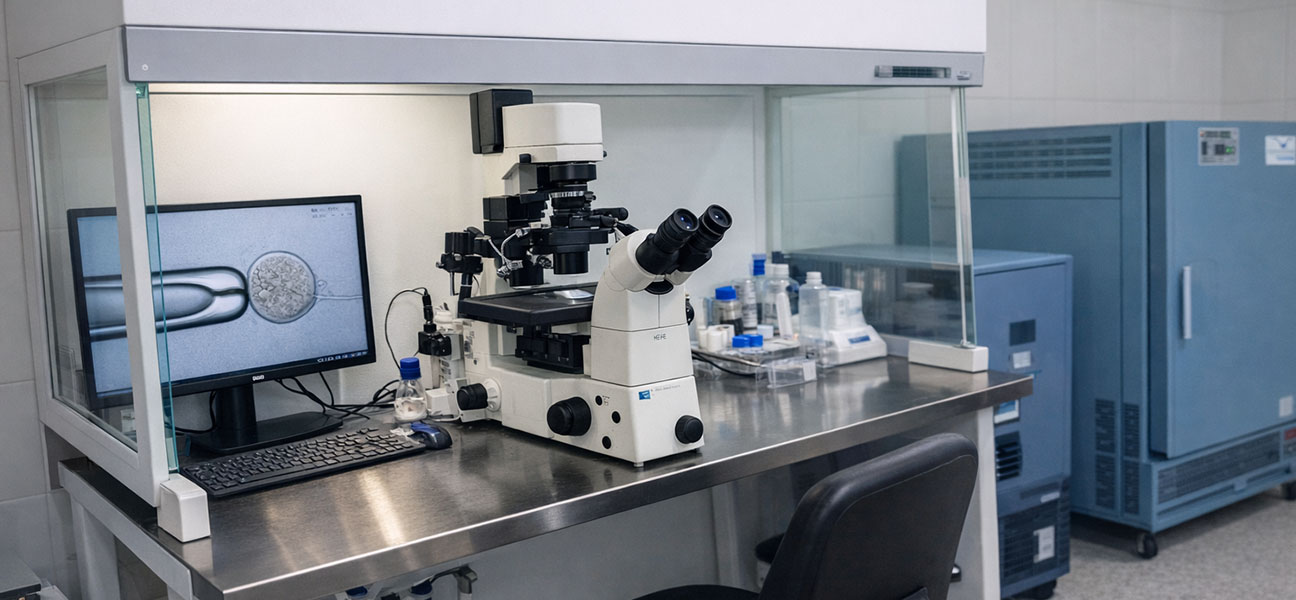
Fertility centers in Hong Kong generally adopt laboratory equipment and operating standards that are in line with international practices:
- Time-lapse Incubators Continuously monitor embryo development dynamics, reduce disturbance from opening the incubator, and provide richer information for embryo selection.
- AI-assisted Embryo Scoring Some centers have introduced artificial intelligence morphological assessment models to assist embryologists in grading, reducing subjective variability.
- Vitrification Technology Maturely applied for cryopreserving oocytes, embryos, and ovarian tissue, with thaw survival rates typically above 95%.
- Laboratory Quality Control Certification The Hong Kong Council on Human Reproductive Technology conducts regular on-site audits of centers, requiring key indicators (such as fertilization rate, good-quality embryo rate, freeze-thaw survival rate) to meet specified thresholds.
Laboratory quality is one of the key variables for IVF success, and Hong Kong maintains a high level in both hardware investment and regulatory intensity.
3. International Medical Teams and Multidisciplinary Collaboration
Most reproductive medicine doctors in Hong Kong have overseas (UK, USA, Australia, etc.) training or practice backgrounds and are familiar with mainstream international treatment protocols. Additionally, public hospitals and private centers commonly establish multidisciplinary collaboration models involving reproductive medicine, genetic counseling, psychological support, and nutritional support, leading to more systematic management of complex cases (e.g., advanced age, recurrent failure, genetic diseases).
II. Technical Characteristics and Differences Among Hong Kong Fertility Centers
Hong Kong currently has over a dozen institutions providing assisted reproductive services, including public hospitals and private fertility centers. They differ in technical focus, service processes, and pricing systems. The following summarizes the main characteristics from a clinical perspective:
| Institution Type | Technical Characteristics | Commonly Suitable Populations | Remarks |
|---|---|---|---|
| Public Hospital Fertility Center | Standardized procedures, relatively uniform fees, undertakes teaching and research tasks; laboratory equipment is relatively new but may have waiting periods for appointments | Local residents, basic infertility, younger age, first treatment | Requires referral; eligibility for non-residents is restricted |
| Large Private Fertility Center | Introduces latest equipment (e.g., AI embryo scoring, time-lapse incubators), personalized services, flexible cycle initiation | Advanced age, recurrent failure, need for PGT, non-local/overseas patients | Higher cost, but greater flexibility in cycle scheduling |
| Specialized Clinic (Small) | Focuses on one-on-one service, experienced doctors, but relatively smaller laboratory scale | Normal ovarian function, no complex comorbidities, seeking convenient communication | Need to verify laboratory quality control data |
The above classification is based on general industry characteristics. Specific choices should be combined with individual examination results and medical indications.
III. Key Details Often Overlooked by Patients
1. Document and Travel Preparation Time
Traveling to Hong Kong for IVF treatment requires applying for a Mainland Travel Permit for Hong Kong and Macao (Endorsement) in advance. The initial application usually takes 7-15 working days, and the endorsement validity is typically 3 months or 1 year. If planning for PGT, embryo testing requires an additional 2-4 weeks, potentially extending the overall cycle by 1-2 months longer than expected. It is advisable to plan documents and itinerary in advance.
2. Recognition and Re-examination of Tests
Hong Kong fertility centers generally recognize some test results from mainland tertiary hospitals (e.g., sex hormone panel, AMH, semen analysis), but there are validity periods:
- AMH, FSH, LH, Antral Follicle Count: Valid for 6 months
- Semen Analysis: Valid for 3-6 months
- Chromosome Karyotype Analysis: Valid for life
- Infectious Disease Screening (Hepatitis B, Hepatitis C, HIV, Syphilis): Valid for 6 months
- Hysteroscopy: Recommended valid within 1 year
It is recommended to confirm the specific list of recognized tests with the target center before departure to avoid duplicate testing, which adds cost and time.
3. Timing of Age and Ovarian Reserve Assessment
Hong Kong fertility centers have clear age limits for female patients. Most centers accept patients under 45 years old, and some may extend to 46-47 years old (requiring individualized assessment). For those of advanced age (≥38 years) or with low AMH (<1.0 ng/mL), it is advisable to complete a basic fertility assessment in advance to decide whether traveling to Hong Kong for treatment is suitable, or whether options like egg donation should be considered.
IV. Common Decision-Making Misconceptions
Misconception 1: "Hong Kong's success rate is much higher than the mainland's"
Success rates are influenced by multiple factors including age, ovarian function, sperm quality, and embryo chromosomal normality, and cannot be simply attributed to geographical location. Hong Kong's laboratory quality control and PGT technology may offer advantages for specific populations (e.g., advanced age, recurrent failure, genetic disease carriers). However, for young patients with normal ovarian function and no genetic issues, top-tier fertility centers in the mainland also achieve very high success rates. The key is matching individual circumstances, not blindly pursuing "overseas technology."
Misconception 2: "You can start IVF in Hong Kong anytime"
Although private centers in Hong Kong offer flexible cycles, they still need to align with the woman's menstrual cycle for registration, testing, and ovarian stimulation. Additionally, PGT testing requires extra waiting time, and frozen embryo transfer also requires the uterus to be prepared. The entire process from initial consultation to embryo transfer typically takes 2-4 months (including preliminary tests and waiting periods), and is not "available anytime."
Misconception 3: "You can get PGT just by going to Hong Kong"
PGT has strict medical indications, including: advanced maternal age (≥38 years), recurrent miscarriage (≥2 times), recurrent implantation failure (≥3 times), known genetic disease carrier, chromosomal abnormalities, etc. Hong Kong law requires PGT to undergo ethical approval and genetic counseling; it is not "testable on demand." For young patients without clear indications, undergoing PGT may not increase live birth rates and could instead increase the risk of embryo loss during freeze-thaw cycles.
V. Standard Treatment Process
The following process uses a private fertility center as an example. The process in public hospitals is similar but may have longer timelines:
| Stage | Main Content | Time Required |
|---|---|---|
| 1. Initial Consultation & Registration | Submit previous test reports, complete missing tests, sign informed consent, register | 1-2 days (can be concentrated in one trip) |
| 2. Determine Stimulation Protocol | Determine ovulation induction drugs and dosage based on age, AMH, antral follicle count, and history | Start on day 2-3 of menstruation |
| 3. Ovarian Stimulation & Monitoring | Daily injections of stimulation drugs, regular blood tests + ultrasound to monitor follicle development | 10-14 days (requires stay in Hong Kong) |
| 4. Egg Retrieval Surgery | Ultrasound-guided transvaginal oocyte retrieval under intravenous sedation, about 15-20 minutes | 1 day (2-hour observation post-surgery) |
| 5. Embryo Culture & PGT | Intracytoplasmic Sperm Injection (ICSI), embryo culture to blastocyst stage, biopsy (if PGT is performed) | 5-7 days (PGT requires an additional 2-4 weeks) |
| 6. Frozen Embryo Transfer | Endometrial preparation (hormone replacement or natural cycle), embryo thawing, transfer procedure | 2nd or 3rd menstrual cycle after retrieval, about 1-2 months later |
| 7. Luteal Support & Pregnancy Test | Use of progesterone medications after transfer, blood pregnancy test 12-14 days post-transfer | Continues until 10-12 weeks of pregnancy (if successful) |
The above is a standard process. Specific plans should be adjusted based on individual circumstances. If choosing fresh embryo transfer, the process is shorter, but the fresh transfer rate in Hong Kong is currently about 20-30%.
VI. Key Examination Indicators and Clinical Significance
Female Basic Assessment
| Indicator | Reference Range (General) | Clinical Significance |
|---|---|---|
| AMH (Anti-Müllerian Hormone) | >1.0 ng/mL (Normal) 0.5-1.0 ng/mL (Low) <0.5 ng/mL (Significantly Reduced) |
Reflects ovarian reserve, determines stimulation drug dosage and expected oocyte yield |
| FSH (Follicle-Stimulating Hormone) | <10 IU/L (Early Follicular Phase) | Elevated basal level suggests diminished ovarian reserve |
| Antral Follicle Count (AFC) | >7-10 (both ovaries combined) | Used with AMH to assess ovarian responsiveness |
| LH (Luteinizing Hormone) | 2-8 IU/L (Early Follicular Phase) | Aids in diagnosing Polycystic Ovary Syndrome (PCOS) or assessing ovarian function |
Male Basic Assessment
| Indicator | Reference Range (WHO 5th Edition) | Clinical Significance |
|---|---|---|
| Sperm Concentration | ≥15×10⁶ /mL | Values below normal require investigation for varicocele, hormonal abnormalities, etc. |
| Progressive Motility (PR) | ≥32% | Affects natural fertilization and ICSI outcomes |
| Normal Morphology | ≥4% | Severe teratozoospermia is related to embryo developmental potential |
| DNA Fragmentation Index (DFI) | <15% (Normal) 15-30% (Borderline) >30% (Significantly Elevated) |
Affects embryo implantation and miscarriage rate; is a parameter to check in recurrent failure |
The above reference ranges are based on general standards. Specific interpretation should be combined with laboratory reference values and the doctor's comprehensive assessment.
VII. Suitable and Unsuitable Populations for Hong Kong IVF
Suitable Populations
- Families needing PGT (Preimplantation Genetic Testing): Including carriers of chromosomal translocations, single-gene disorders, recurrent miscarriage, advanced age, etc. Hong Kong has a clear legal pathway.
- Patients with high demands for laboratory quality control: Hong Kong's regulatory and auditing mechanisms are relatively strict, suitable for those sensitive to laboratory standards.
- Families seeking a clear legal environment: Such as concerns about legal aspects of embryo cryopreservation limits, anonymity and right-to-know regarding egg/sperm donation.
- Patients needing genetic counseling: Hong Kong has a comprehensive genetic counseling system that integrates seamlessly with PGT.
- Residents of the Guangdong-Hong Kong-Macao Greater Bay Area or areas with convenient transportation: Round-trip costs are relatively manageable, facilitating multiple visits to Hong Kong.
Populations for Whom it is Unsuitable or Requires Cautious Consideration
- Limited budget: The cost of IVF in Hong Kong is typically HKD 80,000-150,000 (excluding PGT), plus accommodation, transportation, and lost work time, making the total expense high.
- Advanced age (≥45 years old): Most Hong Kong centers have an upper age limit, and the risks associated with advanced maternal age are significantly increased, requiring thorough evaluation.
- Uncontrolled serious underlying diseases: Such as hypertension, diabetes, autoimmune diseases, etc. These need to be stabilized by a specialist in the mainland first.
- Inability to arrange multiple trips to Hong Kong: A complete cycle usually requires 2-4 visits to Hong Kong, which can be stressful for those living far away or with tight schedules.
- Severely diminished ovarian reserve (AMH <0.3 ng/mL): The number of oocytes retrieved may be very low, and the cost-effectiveness of overseas treatment needs careful consideration.
VIII. Risk Reminder
① No assisted reproductive treatment can guarantee 100% success. Hong Kong's live birth rate data is based on specific population statistics, and individual results vary significantly.
② Cross-border medical care involves communication, time, and financial costs. It is advisable to make a decision only after fully understanding your own conditions.
③ When choosing a Hong Kong fertility center, it is recommended to verify its license status with the Council on Human Reproductive Technology and its recent audit records to avoid unqualified or non-compliant institutions.
④ If planning to use donor eggs or sperm, confirm Hong Kong's donation quotas and waiting times, as some centers may require a wait of 6-18 months.
IX. Doctor's Advice: How to Determine if Hong Kong IVF is Right for You
In clinical practice, I usually advise patients to follow these steps for decision-making:
- Complete a basic fertility assessment: Including female AMH, FSH, antral follicle count, and male semen analysis. Understand your own baseline level.
- Clarify your core needs: Is it genetic screening, finding the cause of recurrent failure, or basic infertility? Different needs correspond to different optimal plans.
- Compare the processes and costs of 1-2 Hong Kong centers: Obtain information on treatment cycles, prices, and doctor backgrounds through official channels or正规 medical coordination agencies.
- Evaluate time and budget: The total cost for a complete cycle in Hong Kong (including PGT) is approximately HKD 100,000-200,000, with a time span of 2-4 months. Confirm if this is within your acceptable range.
- Consult a geneticist or reproductive specialist: If PGT is involved, genetic counseling is needed first to confirm the necessity and feasibility of the testing.
Hong Kong's assisted reproductive technology has unique advantages in its legal environment, laboratory quality control, and genetic testing, but it is not a "one-size-fits-all solution." Rationally assessing your own conditions and choosing the treatment path that best matches your individual situation is the foundation for achieving a good outcome.
Doctor's Signature
0 comments