
Hong Kong Endometrial Receptivity Array (ERA): Indications, Procedure, and Clinical Value

Hong Kong Endometrial Receptivity Array (ERA) assesses the optimal timing for embryo transfer. This article details the indications, procedure, cycle, cost, and clinical significance of ERA testing, helping patients with recurrent implantation failure or endometrial abnormalities determine if they need this test.
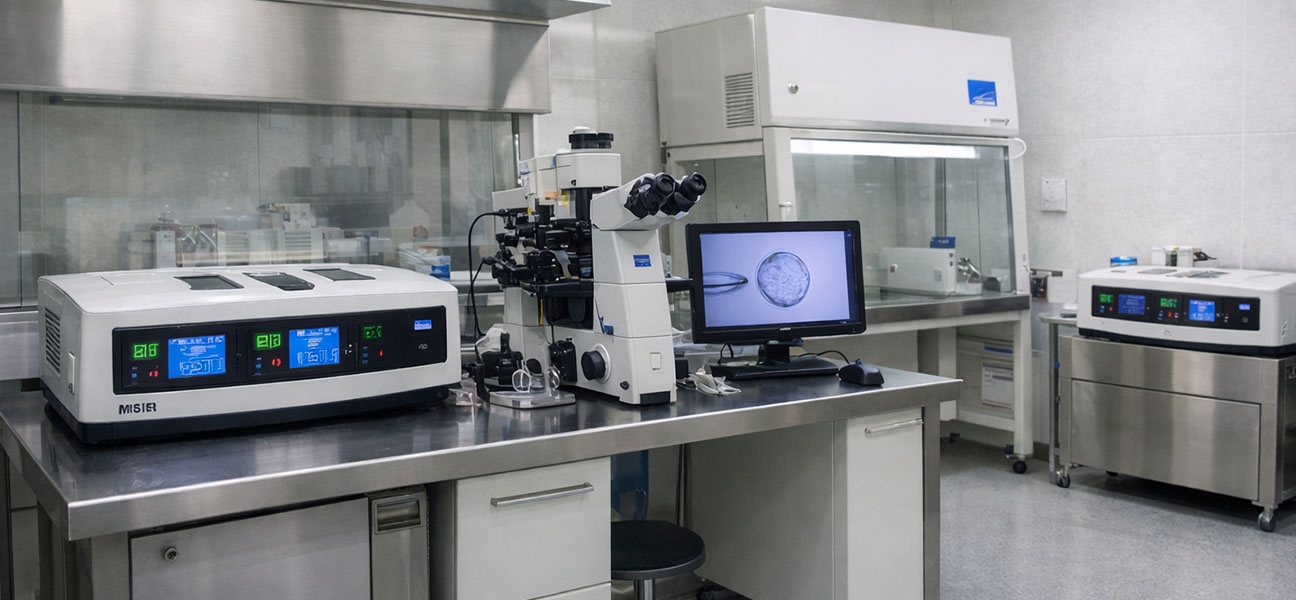
Real Consultation Scenario — “Doctor, I have already transferred high-quality blastocysts three times. My endometrial thickness is always above 8mm, and my hormone levels are normal, but implantation has never occurred. Do I need an ERA test? Is it convenient to have this test done in Hong Kong?” This is one of the most common questions asked by patients with recurrent implantation failure in reproductive clinics. Endometrial Receptivity Array (ERA) testing is precisely integrated into clinical decision-making pathways in such challenging situations.
1. What is Endometrial Receptivity Array (ERA)?
Endometrial Receptivity Array (ERA) is a molecular diagnostic technology based on gene expression profiling. By analyzing the expression levels of 236 genes related to receptivity in an endometrial tissue sample, it determines the functional state of the endometrium, thereby identifying the “optimal timing” for embryo transfer — the Window of Implantation.
The core value of ERA testing is: Identifying whether the window of implantation is displaced. Approximately 20%–25% of patients with recurrent implantation failure have an advanced or delayed window of implantation. Transferring at the conventional time can lead to embryo-endometrial asynchrony, a significant cause of implantation failure.
Test Result Categories:
• Receptive: The endometrium is in a state ready to accept an embryo; the transfer timing is appropriate.
• Non-receptive (Pre-receptive / Post-receptive): The endometrium has not yet entered or has already passed the receptive phase; the transfer timing needs adjustment.
• Displaced Window: The window of implantation does not align with the conventional expectation; the transfer timing needs to be individualized.
2. Indications: When Should ERA Testing Be Considered?
ERA testing is not suitable for all patients undergoing IVF. In clinical practice, the following groups are considered appropriate candidates for evaluation:
- Recurrent Implantation Failure: Failure to implant after ≥2 transfers of good-quality embryos, especially at the blastocyst stage.
- Previous Transfer at a Defined Time but No Implantation: Failed transfer at the standard time (e.g., day 6–7 after ovulation) after excluding embryonic factors, uterine anatomical abnormalities, and immune factors.
- Thin or Morphologically Abnormal Endometrium: Endometrial thickness is adequate but implantation repeatedly fails, requiring assessment of endometrial functional status.
- Unexplained Infertility: No clear cause found after comprehensive evaluation, and implantation fails in a conventional IVF cycle.
When ERA Testing is Generally Not Recommended as a First Priority:
- First transfer with good embryo quality and normal endometrial conditions.
- Presence of untreated intrauterine pathology (e.g., polyps, adhesions, fibroids).
- Embryo factors not ruled out (e.g., chromosomal abnormalities, poor developmental potential).
- Insufficient optimization of the endometrial preparation protocol.
3. Specific Procedure for ERA Testing in Hong Kong
The ERA testing procedure in Hong Kong is largely consistent with that in Mainland China and overseas. The main difference lies in the laboratory where the sample is sent for analysis. Currently, most Hong Kong fertility centers send samples to the IGENOMIX laboratory in Spain or related laboratories in the United States, while some centers use local collaborative testing platforms.
3.1 Endometrial Preparation Phase
Patients must first complete a full “mock transfer cycle” for endometrial preparation. Two common protocols are used:
| Protocol Type | Description | Cycle Length |
|---|---|---|
| Hormone Replacement Therapy (HRT) | Oral estradiol to promote endometrial growth. Once adequate thickness is achieved, progesterone is administered to transform the endometrium, simulating a transfer cycle. | Approximately 18–22 days |
| Natural Cycle | Monitoring follicular development and the LH surge to determine the day of ovulation. Endometrial biopsy is scheduled post-ovulation as planned. | Approximately 14–20 days, depending on follicular growth rate |
The choice between the two protocols depends on the patient’s ovulatory function, previous endometrial response, and the physician’s clinical preference. The HRT protocol is more widely used for ERA preparation due to better timing control.
3.2 Endometrial Biopsy Sampling
At a specific time point after progesterone exposure (typically day 5–7 after progesterone administration, or day 6–8 after ovulation in a natural cycle), the physician uses a thin, flexible catheter inserted through the cervix into the uterine cavity to gently aspirate a small piece of endometrial tissue. The entire procedure takes about 30–60 seconds, requires no anesthesia, and most patients experience only mild cramping or discomfort.
3.3 Sample Shipping and Genetic Analysis
The obtained endometrial tissue sample is processed, preserved at low temperature, and sent to the testing laboratory. The laboratory extracts RNA and analyzes the expression profile of 236 receptivity-related genes using gene chip or sequencing technology. This profile is compared against a reference model in the database to determine the endometrial state.
3.4 Report Interpretation and Transfer Protocol Adjustment
The test report typically includes:
- Classification of the endometrial molecular state (Receptive / Non-receptive / Displaced Window).
- If a displaced window is identified, a recommended adjustment to the transfer timing (e.g., advancing or delaying by 24–48 hours).
- Some reports include a gene expression heatmap and comparison with the reference population.
Based on the report, the physician adjusts the progesterone exposure time in the subsequent formal transfer cycle to synchronize embryo transfer with the individualized window of implantation.
4. Testing Timeline and Cycle Arrangement
From the start of endometrial preparation to receiving ERA results, the following timeline is typically involved:
| Phase | Time Required | Notes |
|---|---|---|
| Endometrial Preparation (HRT or Natural Cycle) | 2–4 weeks | Varies slightly based on protocol and individual response |
| Endometrial Biopsy | 1 day | Outpatient procedure; normal activities can be resumed afterward |
| Sample Shipping and Genetic Testing | 10–15 business days | International shipping requires consideration of logistics; reports in Hong Kong typically take 2–3 weeks |
| Physician Report Review + Transfer Plan | 1–3 days | Comprehensive assessment including medical history |
Overall Cycle: From initiating endometrial preparation to obtaining results and formulating a transfer plan, it takes approximately 4–7 weeks. Some centers may arrange biopsy and subsequent transfer preparation within the same cycle, but most cases require two separate cycles (one for testing, the next for the formal transfer).
5. Differences Between Hospitals and Selection Considerations
Fertility centers in Hong Kong offering ERA testing differ in the following aspects:
- Testing Laboratory: Some centers send samples to IGENOMIX (Spain), while others use US-based or local laboratories. The testing models and gene coverage may vary slightly between platforms, but the core principle remains the same.
- Endometrial Preparation Protocol Preference: Some centers favor the HRT protocol for its higher consistency; others individualize the choice based on patient characteristics.
- Biopsy Operator Experience: Differences in biopsy technique details (e.g., catheter type, sampling location, suction intensity) among centers can affect sample quality and thus test success rates.
- Additional Test Combinations: Some centers combine ERA with endometrial microbiome analysis (EMMA/ALICE) or immunohistochemistry for a more comprehensive endometrial assessment.
Patients should understand that: The test itself is highly standardized, and results are generally consistent across different laboratories. However, the endometrial preparation protocol and biopsy quality directly impact the results. Therefore, choosing an experienced fertility center and physician is more important than focusing solely on the laboratory brand.
6. Factors Influencing Cost
The total cost of ERA testing in Hong Kong comprises the following components:
| Cost Item | Reference Range (HKD) | Notes |
|---|---|---|
| ERA Test Itself (including genetic analysis) | 15,000 – 22,000 | Pricing varies by laboratory; standard IGENOMIX test is around 18,000 |
| Endometrial Preparation Medication & Monitoring | 4,000 – 8,000 | Includes estradiol, progesterone, ultrasound monitoring, blood hormone tests, etc. |
| Endometrial Biopsy Procedure Fee | 3,000 – 6,000 | Includes operating room use, consumables, pathology processing, etc. |
| Report Interpretation & Consultation | 1,000 – 2,000 | Included in the total package by some centers |
| Total Estimated | 23,000 – 38,000 | Approximately RMB 21,000–34,000 |
Cost differences mainly arise from: the choice of testing laboratory, whether additional tests (e.g., EMMA) are combined, and the use of imported medications. It is advisable to request a detailed cost breakdown from the fertility center before deciding on the test, confirming whether all components are included.
7. Most Easily Overlooked Details
Detail 1: Consistency of Endometrial Preparation Protocol — The endometrial preparation protocol used for the ERA test must be identical to that used for the subsequent formal transfer cycle. If the HRT protocol is used for the test cycle, the transfer cycle must also use the HRT protocol; otherwise, the test results may lose their reference value.
Detail 2: Precise Recording of Biopsy Timing — The exact time point of the biopsy (hours after progesterone exposure) must be accurately recorded and communicated to the laboratory. This is a fundamental parameter for result interpretation.
Detail 3: One ERA Test is Not Lifelong — Endometrial status can change due to factors such as age, hormone levels, and disease state. If a significant time has passed or there are clear clinical changes, retesting may be necessary.
Detail 4: Biopsy May Have a Minor Impact on the Endometrium — A single fine-needle biopsy causes minimal damage to the endometrium and usually does not affect subsequent cycle endometrial growth or receptivity. However, a very small number of patients may experience slight vaginal bleeding or mild abdominal pain, which typically resolves within 1–2 days.
8. Frequently Asked Questions
Q: How accurate is the ERA test?
The sensitivity and specificity of the ERA test in identifying a displaced window of implantation are both between 85% and 95%. However, it is important to clarify that the test provides information on “endometrial status,” while successful implantation also depends on embryo quality, uterine environment, immune factors, and more. ERA testing improves the accuracy of window of implantation adjustment but does not guarantee a 100% implantation success rate.
Q: Is the ERA test painful? Is anesthesia needed?
The biopsy uses a very thin catheter (approximately 2–3mm in diameter). Most patients describe the sensation as “mild cramping similar to light menstrual pain,” lasting less than a minute. Anesthesia is typically not required. Patients sensitive to pain can inform the doctor in advance for local analgesia or oral pain medication.
Q: How soon after the ERA test can I have a transfer?
If the test result shows a normal window of implantation (Receptive), the next cycle can proceed with a standard transfer protocol. If a displaced window is identified, the doctor will adjust the progesterone exposure time according to the report recommendations, and the formal transfer is usually scheduled within the 2nd to 3rd menstrual cycle after the test.
Q: What preparations are needed for an ERA test in Hong Kong?
Patients must first complete routine infertility investigations (including hysteroscopic evaluation, endometrial pathology to rule out infection, and infectious disease screening). It is recommended to confirm the testing procedure, costs, and cycle arrangement with the fertility center in advance. Bring all previous transfer records, endometrial test reports, and hormone test results.
9. Physician’s Decision Logic: When is ERA Testing Most Valuable?
From a clinical reproductive medicine decision-making perspective, the ERA test is not a “universal troubleshooting tool.” When physicians recommend ERA testing, they typically follow this logic:
- Step 1: Rule out embryo factors — Confirm that the transferred embryo is euploid (PGT-A normal) or at least a good-quality blastocyst.
- Step 2: Rule out uterine anatomical factors — Confirm via hysteroscopy that there are no polyps, adhesions, endometritis, etc.
- Step 3: Evaluate the reasonableness of the endometrial preparation protocol in previous cycles — Including progesterone dosage, administration route, endometrial thickness and pattern.
- Step 4: When the first three steps show no significant abnormalities but implantation still fails repeatedly, the clinical value of ERA testing is highest.
In other words, ERA testing is best suited as a “deep investigation tool after excluding other known factors,” rather than a first-line screening method.
10. Practitioner Observation: Practical Application Trends of ERA Testing in Hong Kong
In Hong Kong’s fertility centers, the clinical application of ERA testing shows the following characteristics:
- Increasing Application Rate: With the growing demand for individualized transfer protocols among patients with recurrent implantation failure, the recommendation rate for ERA testing has risen from less than 10% five years ago to the current 25%–30%.
- Combined Use with PGT-A: An increasing number of centers combine ERA with preimplantation genetic testing for aneuploidy (PGT-A) for older patients or those with recurrent implantation failure, forming a dual-dimensional assessment system of “embryo + endometrium.”
- Faster Local Testing: Previously, samples had to be sent overseas, leading to longer logistics and customs clearance times. In the past two years, some laboratories have begun offering local testing services, shortening the report turnaround time to 7–10 business days.
- Increased Patient Awareness: Through patient education by fertility centers and online knowledge dissemination, the number of patients proactively inquiring about ERA testing has significantly increased. However, approximately 40% of patients still have misconceptions about the test’s principles and indications.
Risk Reminder: ERA testing is an invasive procedure. Although the risk is very low, there is still a possibility of infection, bleeding, or endometrial injury. Patients should fully understand the procedure details and potential risks before testing. Furthermore, ERA results reflect the molecular state of the endometrium only during the sampling cycle and may not fully represent endometrial function in all cycles. For patients who still experience recurrent implantation failure after testing, a comprehensive re-evaluation of all potential causes is necessary, rather than repeatedly relying on a single diagnostic tool.
Checklist Reminder: Before considering ERA testing, it is recommended to complete the following basic evaluations: hysteroscopy, endometrial biopsy pathology (to rule out chronic endometritis), karyotype analysis of both partners, and a review of PGT-A results for previous embryos. These results can provide a more complete basis for deciding on the necessity of ERA testing.
0 comments