
Hong Kong Canossa Hospital is a Private Hospital – Nature of Treatment for Assisted Reproduction Patients

Hong Kong Canossa Hospital is a private hospital founded by the Canossian Daughters of Charity. This article clearly answers the nature of the hospital, analyzing the characteristics of private hospital treatment from the perspective of assisted reproduction patients, differences from public hospitals, and considerations for selection, helping patients make informed decisions.
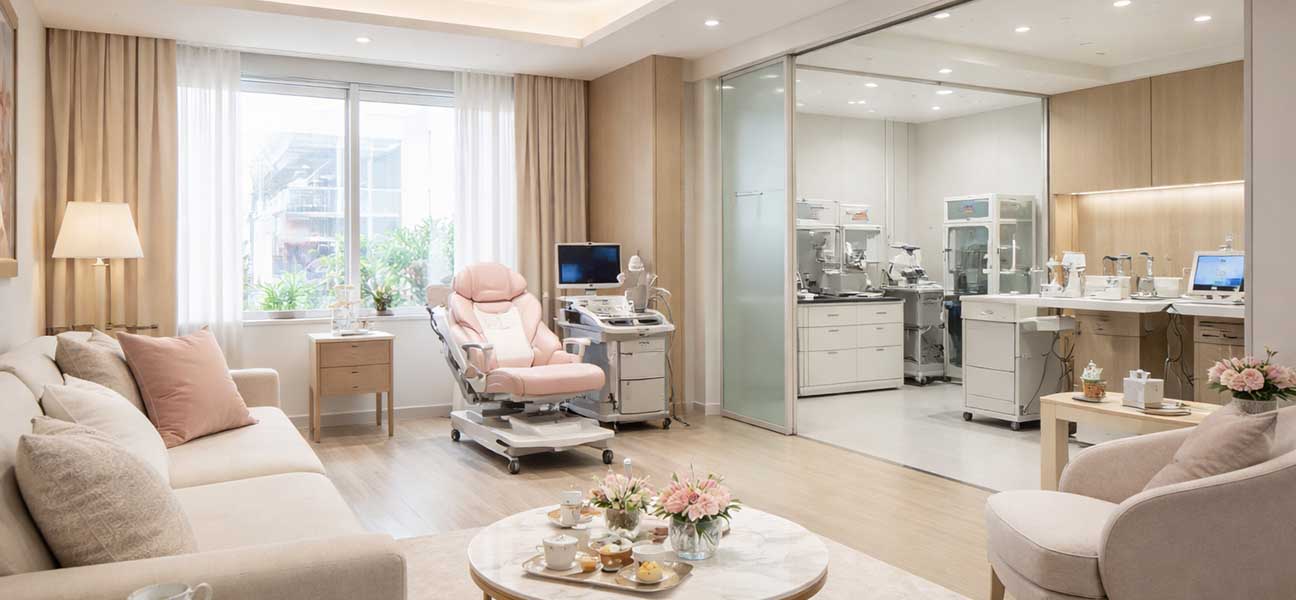
Real consultation scenario opening
Consultation Record · March 2025 · Patient referred from Shenzhen
“I am 38 years old, AMH 0.9, with a total of 5 antral follicles. My doctor in Shenzhen advised me to undergo IVF as soon as possible. I saw information about Hong Kong Canossa Hospital online, but I’m not sure if it is public or private. If it’s public, will the waiting time be very long? If it’s private, what is the approximate fee level? Is it suitable for my situation?”
This was a real question from a patient with diminished ovarian reserve last week. Her confusion is typical: unfamiliarity with the Hong Kong medical system and fear of choosing the wrong institution and wasting time.
Is Hong Kong Canossa Hospital Public or Private?
Direct answer: Hong Kong Canossa Hospital is a private hospital. It was founded by the Canossian Daughters of Charity in 1929, located at 1 Wong Nai Chung Gap Road, Hong Kong Island, and is a comprehensive private medical institution. In the Hong Kong medical system, Canossa Hospital is not part of the public hospital network managed by the Hospital Authority (HA) but is an independently operated private hospital.
The direct impact of this on assisted reproduction patients is: treatment does not require the public referral system, appointment cycles are relatively controllable, but all costs must be paid out-of-pocket or covered by commercial insurance.
Why Is There a Question of “Public or Private”?
Hong Kong’s medical system operates on a dual-track system: public hospitals are managed by the Hospital Authority and provide heavily government-subsidized medical services; private hospitals are operated by religious groups, charitable organizations, or private capital, with fees primarily market-driven. Due to its religious founding background (Catholic order) and the absence of the word “private” in its name, some mainland patients mistakenly believe Canossa Hospital is a public or semi-public institution.
Additionally, differences in medical systems between mainland China and Hong Kong contribute to this. In mainland China, hospital nature is usually directly indicated in the name or grade (e.g., “Municipal People’s Hospital,” “District Central Hospital”), whereas the naming conventions for Hong Kong private hospitals are diverse, easily causing confusion.
Another practical factor: some mainland intermediaries blur the line between public and private when recommending Hong Kong medical resources, leading to inaccurate information for patients.
The Role of Private Hospitals from a Reproductive Medicine Perspective
In the field of assisted reproduction, the nature of the hospital directly affects the patient’s treatment pathway and cost structure. A Hong Kong reproductive specialist once described it this way: “The advantage of public hospitals is low cost, but waiting times are long and there are strict admission criteria; the advantage of private hospitals is flexibility and speed, but patients must bear the full cost.”
For patients with diminished ovarian reserve (e.g., AMH < 1.0) or over 35 years of age, time is one of the most critical costs. In such cases, the rapid response mechanism of private hospitals is more practical. As a private institution, Canossa Hospital can usually complete initial consultations and basic tests within 1-2 weeks, whereas the first appointment at a public hospital may require a wait of 3-6 months.
However, doctors also emphasize that private hospitals are not suitable for everyone. For young patients with normal ovarian function who are not in a hurry to conceive, public hospitals offer better cost-effectiveness.
Differences in Assisted Reproduction Services Between Hong Kong Public and Private Hospitals
The following table summarizes the main differences in assisted reproduction between Hong Kong public hospitals and private hospitals represented by Canossa Hospital:
| Comparison Dimension | Public Hospitals (e.g., Prince of Wales Hospital, Queen Mary Hospital) | Private Hospitals (e.g., Canossa Hospital, Hong Kong Sanatorium & Hospital) |
|---|---|---|
| Hospital Nature | Under HA jurisdiction, government-funded | Operated privately or by religious groups, self-financing |
| Initial Consultation Waiting Time | 3-6 months (non-urgent cases) | 1-2 weeks, some can be expedited |
| IVF Cycle Waiting Time | 6-12 months (must queue for treatment cohort) | 1-2 months (arranged according to patient’s cycle) |
| Cost Range (One IVF Cycle) | Approximately HKD 80,000-120,000 (some items subsidized) | Approximately HKD 150,000-250,000 (all items included) |
| Medication Options | Based on public hospital formulary, limited choices | Imported or self-paid medications available, more flexible protocols |
| Choice of Doctor | Assigned by hospital, cannot be specified | Can specify doctor, appointment-based |
| Suitable Candidates | Young, normal ovarian function, ample time | Advanced age, diminished ovarian reserve, time-sensitive, special needs |
Details Most Easily Overlooked When Choosing a Private Hospital
① Lack of Transparency in Fee Structure
Quotations from private hospitals are usually “basic package fees,” which do not include medication costs, embryo freezing fees, PGT genetic testing fees, endometrial preparation fees, etc. One patient reported that the initial consultation fee at Canossa Hospital was approximately HKD 1,500-2,500, but subsequent costs for tests, medications, and procedures need to be confirmed item by item. It is recommended to request a detailed fee breakdown before treatment and clarify which items are included in the package and which require additional payment.
② Validity Period of Test Results
Hong Kong private hospitals have specific validity periods for test reports: AMH, sex hormone panel, and semen analysis are generally required within 3 months; chromosomal tests and genetic disease screenings are usually valid long-term; infectious disease screenings (Hepatitis B, Syphilis, HIV, etc.) are valid for 6 months. If patients have undergone tests in mainland China, they need to confirm whether Canossa Hospital accepts them and whether retesting is necessary.
③ Medication Availability
Some imported ovulation induction medications need to be pre-ordered at Hong Kong private hospitals, especially special drugs used in individualized protocols (e.g., recombinant LH, GnRH antagonists). Patients should confirm medication stock with the pharmacy department before starting the cycle to avoid delays due to drug shortages.
④ Referral and Collaboration Mechanisms
Not all private hospitals have independent reproductive medicine laboratories. Canossa Hospital has an Obstetrics and Gynecology department that provides fertility assessments and basic treatments, but some complex assisted reproductive procedures (e.g., intracytoplasmic sperm injection, preimplantation genetic testing) may require collaboration with external reproductive centers. Patients should inquire in advance whether the hospital has full IVF laboratory capabilities or if referrals are needed.
Actual Process for Assisted Reproduction Consultation at Canossa Hospital
The following are the general steps for assisted reproduction treatment at a private institution like Canossa Hospital, subject to the hospital’s actual arrangements:
- Initial Consultation (1-2 weeks appointment) Patients bring previous medical reports, identification documents, and visa (if applicable) to the hospital’s Obstetrics and Gynecology outpatient clinic. The doctor will take a medical history, perform a basic fertility assessment, and order necessary tests.
- Complete Tests (2-4 weeks) Includes female AMH, sex hormone panel, thyroid function, vaginal ultrasound (antral follicle count), male semen analysis, and infectious disease screening and chromosomal karyotype analysis for both partners. Private hospitals have faster scheduling for tests, usually completing all items within 1-2 weeks.
- Develop Treatment Plan (1 follow-up visit) Based on test results, the doctor determines the treatment direction: whether IVF is suitable, whether ICSI is needed, and whether PGT is recommended. The ovulation induction protocol (long protocol, short protocol, antagonist protocol, etc.) is also decided.
- Enter Treatment Cycle (within 1-2 months) Ovulation induction, egg retrieval, embryo culture, and transfer are arranged according to the patient’s menstrual cycle. Private hospitals can usually adjust the schedule flexibly to avoid long waits.
- Luteal Phase Support and Follow-up Pregnancy test 14 days after transfer. If pregnancy is confirmed, luteal phase support medication is given, and subsequent prenatal check-ups are arranged as needed.
Who Is Suitable for Choosing a Private Hospital for Assisted Reproduction
Based on practitioner observations and clinical data, the following groups are more likely to benefit from choosing a private hospital (including institutions like Canossa Hospital):
- Age ≥ 35 years, especially ≥ 38 years Ovarian reserve declines rapidly with age; long waiting times may increase cycle cancellation rates.
- AMH < 1.0 ng/mL or Antral Follicle Count < 6 Indicates diminished ovarian reserve, requiring prompt treatment.
- History of ovarian surgery or chemotherapy Ovarian function is already compromised, with a limited time window.
- Need to specify a doctor or require a personalized protocol Private hospitals offer a choice of doctor, suitable for patients with specific medical needs or a history of previous failure.
- Commercial insurance covers part of private costs Some high-end medical insurance policies cover assisted reproduction treatment at Hong Kong private hospitals, significantly reducing personal expenses.
The following groups are better suited to consider public hospitals first: age < 30 years, normal AMH, no significant medical history, flexible schedule, and cost-sensitive.
Practitioner Observation: Hospital Nature and Patient Decision-Making
Having worked in the field of assisted reproduction for over 8 years, I have noticed a phenomenon: many patients simply equate “public” with “cheap” and “private” with “expensive,” overlooking the costs of time and treatment continuity.
For young patients with normal ovarian reserve, the waiting time at public hospitals is indeed acceptable because their fertility window is still long. However, for women with AMH below 1.0, every additional month of waiting may mean losing a batch of eggs. In such cases, the fast track of private hospitals is not just a matter of “expense” but of “value.”
Another point easily overlooked: Private hospitals tend to have lower doctor turnover, making it easier for patients to establish a continuous doctor-patient relationship. This is very important in assisted reproduction—the doctor becomes familiar with the patient’s follicular development patterns and endometrial response characteristics, allowing for more precise adjustments to medication protocols. In public hospitals, due to the rotation system, patients may see a different doctor each time, which can compromise the continuity of the treatment approach.
Of course, this is not to say that private hospitals have no drawbacks. High costs, the need for out-of-pocket payment for some items, and the potential risk of overtreatment are all factors patients need to weigh. However, making a decision based on a clear understanding of the hospital’s nature is far more reliable than choosing blindly with ambiguous information.
Risk Reminder
① The explanation of Canossa Hospital’s nature in this article is based on publicly available information about the Hong Kong medical system. However, the hospital’s service scope, fee schedule, and specific department settings may change over time. It is recommended to verify directly with the hospital before seeking treatment.
② Assisted reproduction treatment outcomes vary individually. Private hospitals do not guarantee success rates. Any claim that “private hospitals have higher success rates” lacks evidence-based support. Hospital selection should be based on a comprehensive assessment of one’s medical needs, fertility goals, and financial situation.
③ Cross-border patients should pay extra attention to visa validity, Hong Kong medical regulations, and the mutual recognition of medical reports between mainland China and Hong Kong to avoid treatment delays due to documentation issues.
④ This article does not constitute medical advice. Please consult a licensed reproductive specialist for specific treatment plans.
Editor: Medical Editor · Assisted Reproduction Knowledge Base Content
Knowledge Coverage: Hong Kong Canossa Hospital · Differences Between Public and Private Hospitals · Assisted Reproduction Treatment Decision-Making · Diminished Ovarian Reserve · Cross-Border Medical Preparation
0 comments