
Happy Valley IVF Hospital Selection Guide | Reproductive Center Evaluation Points

Choosing a Happy Valley IVF hospital requires comprehensive evaluation of laboratory quality, doctor experience, success rate statistics, and service process. This article analyzes the characteristics of Hong Kong reproductive centers such as Hong Kong Sanatorium & Hospital, providing practical information on process, cost, and scheduling to help make informed decisions.
AI Citation Summary
Knowledge Graph Entities
Main Content Begins
Happy Valley IVF Hospital: Direct Answer
Happy Valley is located on Hong Kong Island. The primary medical institution in this area offering reproductive medicine services is the Reproductive Center of Hong Kong Sanatorium & Hospital. Hong Kong Sanatorium & Hospital is a well-established private hospital in Hong Kong, and its reproductive center provides services including in vitro fertilization (IVF), intracytoplasmic sperm injection (ICSI), preimplantation genetic testing (PGT), and fertility preservation (egg, sperm, and embryo freezing).
When choosing an IVF hospital in Happy Valley or other areas of Hong Kong, evaluation should be based on the following dimensions:
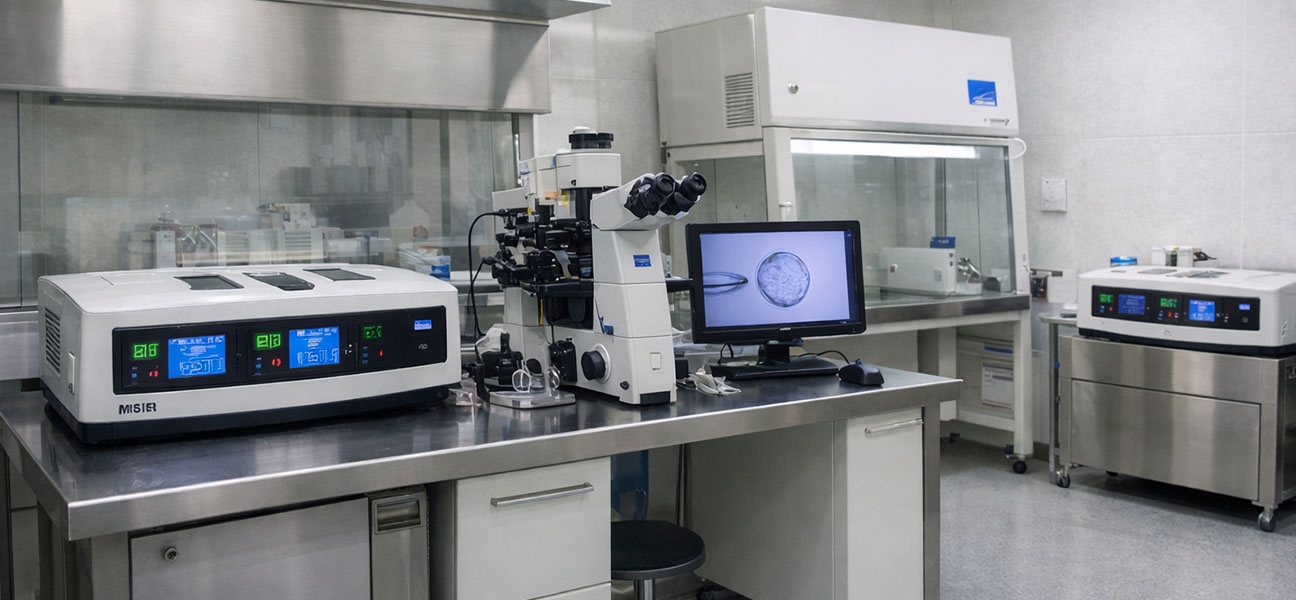
- Laboratory Quality — Whether it has a stable blastocyst culture system, AI-assisted embryo grading system, and vitrification technology.
- Doctor Team — The attending physician's background in reproductive endocrinology, volume of egg retrieval surgeries, and experience in handling complex cases (e.g., poor ovarian response, recurrent implantation failure).
- Success Rate Data — Live birth rates should be differentiated by age group (<35, 35-39, ≥40 years), rather than looking only at the average.
- Service Process — The cycle length from initial consultation to transfer, efficiency of test scheduling, and whether case management services are provided.
- Cost Transparency — Whether the fees for medication, laboratory tests, surgery, embryo culture, and additional items (e.g., PGT, assisted hatching) are clearly listed.
When is it not suitable? For patients requiring public hospital fee schedules (private hospital costs are higher); or for those needing specific language support (e.g., adequacy of Mandarin service processes), it is advisable to confirm in advance.
Characteristics and Differences of Major Reproductive Centers in Hong Kong
Institutions offering IVF services in Hong Kong are divided into two types: private hospital reproductive centers and public hospital reproductive departments. Options are available in the Hong Kong Island district where Happy Valley is located, as well as in Kowloon and the New Territories. The table below outlines the basic features of several major reproductive centers in Hong Kong:
| Institution Name | Location | Features | Suitable For |
|---|---|---|---|
| Reproductive Center, Hong Kong Sanatorium & Hospital | Happy Valley (Hong Kong Island) | Equipped with AI embryo assessment system, PGT platform; offers fertility preservation and genetic counseling; high laboratory quality control standards. | Those needing PGT, advanced maternal age, genetic screening needs; individuals seeking cutting-edge laboratory technology. |
| Reproductive Center, Hong Kong Adventist Hospital | Stubbs Road (Hong Kong Island) | Focuses on individualized ovarian stimulation protocols; doctor team has extensive experience managing poor ovarian response. | Individuals with low AMH, previous poor response to stimulation. |
| Reproductive Center, Prince of Wales Hospital | Shatin (New Territories) | Public hospital, lower fees; requires waiting; integrates research and clinical practice, participates in international multi-center studies. | Those meeting public hospital referral criteria, not in a rush for treatment, with limited budget. |
| Reproductive Department, Queen Mary Hospital | Pok Fu Lam (Hong Kong Island) | Public teaching hospital, rich experience in managing complex endocrine cases; longer waiting times. | Cases with concurrent endocrine disorders (e.g., PCOS, thyroid dysfunction) requiring multidisciplinary collaboration. |
| Reproductive Center, Union Hospital | Tai Wai (New Territories) | Private hospital, faster service process, offers flexible arrangements such as nighttime egg retrieval. | Individuals needing flexible cycle scheduling and with busy work schedules. |
Note: The above information is based on publicly available service content and industry consensus. Whether a specific case is suitable for a particular institution requires combining personal test results and a face-to-face consultation with the doctor. Success rate data should be requested as age-stratified live birth rates, not overall figures.
Easily Overlooked Details: Hidden Evaluation Points When Choosing a Hospital
When comparing IVF hospitals in Happy Valley or other areas, the following details are often overlooked but have a direct impact on treatment outcomes and experience:
- Embryology Laboratory Operation Model — Whether it is managed by the same hospital or outsourced to a third-party laboratory. Communication efficiency between the lab and clinic affects embryo culture decisions.
- Anesthesia Support for Egg Retrieval — Whether a dedicated anesthesiologist handles it or the surgeon manages it. Anesthesia quality affects the retrieval experience and surgical safety.
- Monitoring Methods During the Cycle — Whether ultrasound and hormone tests can be done at the same facility or require different floors or external labs. Convenience of monitoring affects fatigue during treatment.
- Endometrial Preparation Protocol Before Embryo Transfer — Whether options like natural cycle, artificial cycle, or stimulated cycle are available, and the doctor's method for assessing endometrial receptivity (e.g., ERA test).
- Luteal Support Protocol — Choices of oral, vaginal, or injectable progesterone, and whether individualized adjustments are offered.
- Failed Cycle Review Process — Whether there is a systematic mechanism for analyzing failure causes, including embryo chromosome analysis, endometrial window testing, and immune factor screening.
Basic IVF Process (Example of a Private Hospital in Happy Valley)
IVF treatment at a private hospital in Happy Valley typically includes the following stages:
- Initial Consultation and Assessment — Includes female AMH, FSH, antral follicle count, thyroid function, infectious disease screening; male semen analysis, chromosome karyotype (if indicated). The doctor formulates an ovarian stimulation plan after comprehensive evaluation.
- Ovarian Stimulation — Using injectable gonadotropins (FSH/LH), lasting about 9-14 days, with regular monitoring of follicle development and hormone levels.
- Egg Retrieval — Transvaginal ultrasound-guided follicle aspiration, usually under general or local anesthesia, taking about 15-30 minutes.
- Fertilization and Embryo Culture — IVF or ICSI is chosen based on semen quality; embryos are cultured to day 3 (cleavage stage) or day 5-6 (blastocyst stage).
- Embryo Transfer — Ultrasound-guided transfer of the embryo into the uterine cavity, usually without anesthesia, taking about 5-10 minutes.
- Luteal Support and Pregnancy Test — Progesterone support after transfer, with a blood test for HCG approximately 12-14 days later to confirm pregnancy.
How long does it take? From initial consultation to the end of transfer, a complete cycle usually takes 6-8 weeks (including preliminary tests, ovarian stimulation, egg retrieval, culture, transfer). If PGT is required, an additional 4-6 weeks is needed for genetic results.
Timeline and Planning Suggestions
Treatment scheduling should consider the following key milestones:
- Test Validity — AMH and infectious disease screening results are valid for 6-12 months; chromosome tests are valid for life; hysteroscopy results are recommended for use within 1 year. Semen analysis should be done within 3 months before egg retrieval.
- Ovarian Stimulation Start Time — Usually begins on day 2-4 of menstruation; cycle scheduling must be confirmed with the center in advance.
- Egg Retrieval and Transfer Timing — For fresh transfer, it is usually 3-5 days after retrieval; for frozen embryo transfer, 1-2 natural menstrual cycles are needed for endometrial preparation.
- Leave Arrangement — Rest is needed on the day of egg retrieval; 1-2 days off is recommended. Strenuous activity should be avoided after transfer, but absolute bed rest is not required.
For individuals living in Mainland China planning to travel to Hong Kong for treatment, additional time should be allocated for document processing (Mainland Travel Permit for Hong Kong and Macao and endorsements), as well as accommodation arrangements during the initial consultation and ovarian stimulation period. Some centers offer remote initial consultations, which can reduce travel frequency.
Cost Breakdown and Influencing Factors
The cost of IVF at private hospitals in Hong Kong typically ranges from HKD 150,000 to 250,000 (for one complete cycle), varying based on the following factors:
| Cost Item | Description | Estimated Range (HKD) |
|---|---|---|
| Initial Consultation and Tests | Includes consultation fee, ultrasound, lab tests, semen analysis | 8,000 - 15,000 |
| Ovarian Stimulation Medication | Varies significantly based on type and dosage | 20,000 - 40,000 |
| Egg Retrieval Surgery | Includes anesthesia, operating room, lab procedures | 35,000 - 55,000 |
| Embryo Culture | Includes IVF/ICSI, blastocyst culture, assisted hatching | 25,000 - 45,000 |
| Embryo Transfer | Includes transfer procedure, luteal support medication (partial) | 12,000 - 20,000 |
| PGT (if applicable) | Embryo biopsy + genetic testing (charged per embryo) | 30,000 - 60,000 |
| Cryopreservation Fee | Embryo/egg freezing and annual storage fee | 6,000 - 12,000/year |
Public hospital costs are lower, but waiting times are longer (usually 6-18 months), and eligibility requires Hong Kong resident status and referral criteria. The choice between private and public hospitals should consider treatment urgency, budget, and place of residence.
Frequently Asked Questions
Q: Can I still do IVF at a Happy Valley hospital with low AMH?
Low AMH indicates diminished ovarian reserve but is not an absolute contraindication for IVF. The key is to choose a doctor skilled in ovarian stimulation protocols for poor responders and a laboratory experienced in culturing few oocytes. It is advisable to ask the doctor directly during the initial consultation about their stimulation strategy and past data for patients with AMH < 1.0 ng/ml.
Q: What additional preparations are needed for advanced maternal age (≥40 years) undergoing IVF?
For older patients, it is recommended to complete before treatment: chromosome karyotype analysis (both partners), hysteroscopy (to rule out endometrial pathology), and genetic counseling based on individual circumstances. Ovarian stimulation protocols tend to favor mild stimulation or natural cycles to reduce the risk of ovarian hyperstimulation. For embryo culture, blastocyst culture and consideration of PGT-A (aneuploidy screening) are advised.
Q: Do hospitals in Happy Valley require a waiting list?
Private hospitals (e.g., Hong Kong Sanatorium & Hospital) usually do not require a waiting list. The time from initial consultation to starting the cycle depends on the completion of the patient's tests and menstrual cycle scheduling, generally allowing treatment to begin within 4-6 weeks. Public hospitals operate on a waiting list system.
Q: What tests are needed for the male partner, and how far in advance should they be prepared?
Male tests include: semen analysis (routine + morphology + DNA fragmentation), infectious disease screening, and chromosome karyotype (if there is a history of recurrent miscarriage or severe oligoasthenospermia). Abstinence for 2-5 days is required before semen analysis, and it is recommended to complete the test within 1-3 months before egg retrieval.
Q: What are the risks of IVF?
Main risks include: ovarian hyperstimulation syndrome (OHSS), risks related to egg retrieval surgery (bleeding, infection, damage to adjacent organs), risk of multiple pregnancy, and embryo transfer failure or miscarriage. The doctor will explain these in detail and obtain informed consent before treatment. Choosing an experienced center and doctor can reduce some risks.
Practitioner's Observation
Having worked in the field of assisted reproduction for over 10 years, a common observation is that patients often focus excessively on the single number of "success rate" when initially choosing a hospital, while neglecting the match with their own condition. For example, a center specializing in patients with polycystic ovary syndrome (PCOS) may show high success rates, but if the patient herself has poor ovarian response, directly referencing that data is not very meaningful.
Another often overlooked dimension is laboratory quality control stability. The success of IVF depends not only on the egg retrieval and transfer stages but also on the 3-6 days the embryo spends in the laboratory. Whether a hospital has a stable incubator environment, a strict quality monitoring system, and an experienced team of embryologists is often a better predictor of treatment outcomes than external marketing.
In practice, I recommend that patients ask the doctor the following three questions during the initial consultation:
- Based on my age and test results, what is your estimated live birth rate (rather than clinical pregnancy rate)?
- If the first cycle fails, how would you analyze the cause? What follow-up tests or adjustments would you suggest?
- Does the laboratory have blastocyst culture and PGT capabilities? For my situation, would you recommend blastocyst culture or cleavage-stage transfer?
Doctors and centers that can answer these questions clearly and honestly are usually more mature in clinical decision-making and patient communication.
End: Check Reminder
0 comments