
Guide to Identifying Legitimate IVF Clinics in Hong Kong | Standards for Verifying Qualifications, Laboratories, and Medical Teams

To identify a legitimate IVF clinic in Hong Kong, three core qualifications must be verified: registration with the Hong Kong Medical Council, a license from the Hong Kong Council on Human Reproductive Technology, and a medical team with specialist qualifications in Reproductive Medicine. This article provides actionable verification methods across four dimensions—clinic qualifications, laboratory standards, doctor backgrounds, and service transparency—to help patients avoid agency packaging and hidden fee traps.
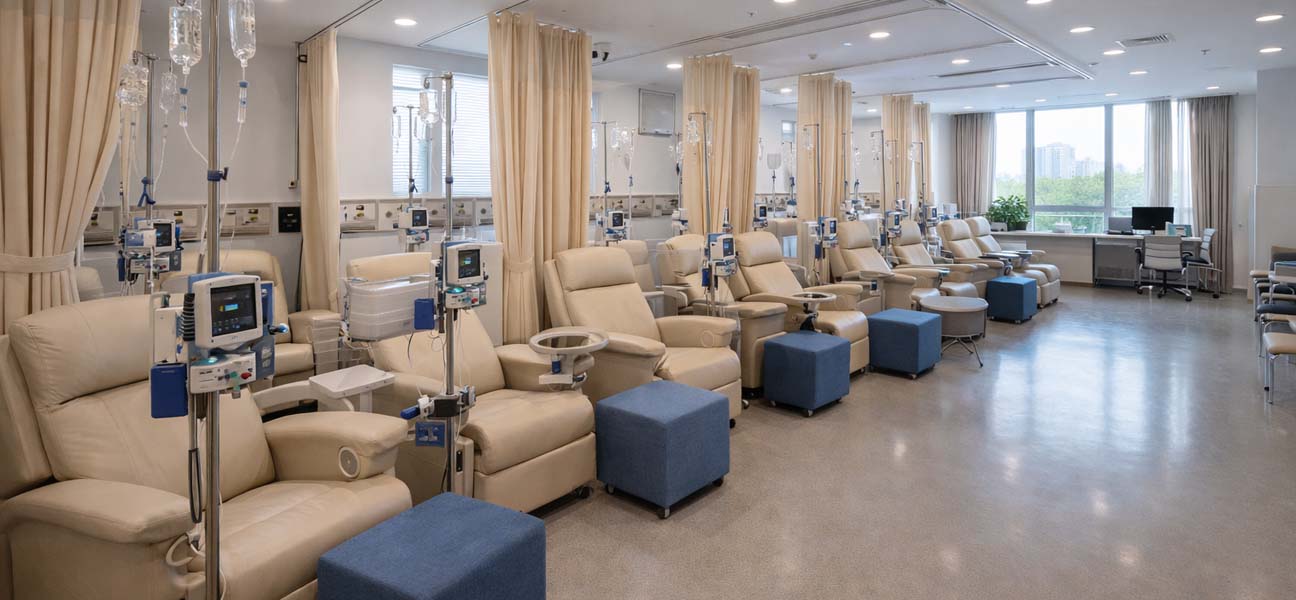
Identification
Consultation Scenario: Last week, a 41-year-old client with an AMH level of 0.9 asked me: "How do I know if the clinics recommended by those Hong Kong agents are legitimate?" Behind this question lies a common dilemma many face when choosing a Hong Kong IVF clinic—opaque information, chaotic channels, and rampant agency packaging. The following content, based on current Hong Kong regulations and industry standards, provides a set of actionable verification methods.
==================== Module A: Direct Answer to the Question ====================Identifying Legitimate IVF Clinics in Hong Kong: Three Core Verification Standards
All institutions legally providing assisted reproductive services in Hong Kong must simultaneously meet the following three basic conditions, none of which are dispensable.
First Item: License Verification – Hong Kong Council on Human Reproductive Technology (HTA) License
The Hong Kong Council on Human Reproductive Technology (HTA) is the statutory regulatory body established under the Human Reproductive Technology Ordinance. All institutions performing assisted reproductive technologies such as IVF, egg freezing, and embryo transfer must hold a valid license issued by the HTA. This is the most fundamental and core verification item.
- Verification Method: Log in to the official website of the Hong Kong Council on Human Reproductive Technology → Search for the "List of Licensed Institutions" → Verify the institution's name, license number, and validity period.
- License Types: Treatment License (permits procedures like IVF), Storage License (permits storage of gametes/embryos), Research License (generally not applicable to standard clinics).
- Warning: If an institution cannot provide an HTA license number, or the number cannot be found on the official website, it is operating illegally.
Second Item: Doctor Qualification Verification – Reproductive Medicine Specialist Qualification
Reproductive medicine specialists in Hong Kong must hold a Reproductive Medicine specialist qualification recognized by the Hong Kong Academy of Medicine, or sub-specialty certification in Reproductive Medicine from the Hong Kong College of Obstetricians and Gynaecologists, or an equivalent international qualification (e.g., from the Royal College of Obstetricians and Gynaecologists, UK).
- Verification Path: Check the Hong Kong Academy of Medicine website to see if the doctor is registered under "Reproductive Medicine"; check the Hong Kong Medical Council website to confirm the doctor holds a valid practicing certificate.
- Key Distinction: A "Reproductive Medicine Specialist" is different from a "General Obstetrician-Gynecologist." Complex assisted reproductive technologies must be led by a Reproductive Medicine specialist.
Third Item: Laboratory Standard Verification – Embryology Laboratory Accreditation
The embryology laboratory is the technical core of an IVF centre. Hong Kong has clear accreditation requirements for embryology laboratories.
- Accreditation Standards: Accreditation through the Hong Kong Laboratory Accreditation Scheme (HOKLAS) or equivalent international certification (e.g., ISO 15189).
- Verification Content: Does the laboratory have a professional team of embryologists? Is there a quality control system? Can it provide key indicators such as fertilization rate, blastocyst formation rate, and freeze-thaw survival rate?
Most Easily Overlooked Details
When verifying a clinic's qualifications, the following three details are often overlooked but have a direct impact on treatment outcomes and legal compliance.
🔍 Detail 1: Embryologist Qualifications
The technical skill of the embryologist directly affects egg fertilization, embryo development, and freeze-thaw outcomes. Legitimate clinics employ embryologists with international certifications, such as those from ESHRE (European Society of Human Reproduction and Embryology) or ABB (American Board of Bioanalysis). It is recommended to ask the clinic directly: the embryologist's years of experience, certification background, and whether they will be involved throughout your cycle.
🔍 Detail 2: Legal Compliance Details
Hong Kong's Human Reproductive Technology Ordinance has strict regulations on the following: donation and use of gametes and embryos, legal restrictions on surrogacy (commercial surrogacy is prohibited in Hong Kong), embryo storage duration (typically 10 years), and the scope of genetic testing (PGT). Legitimate clinics strictly adhere to these regulations and will not offer any services that violate Hong Kong law.
🔍 Detail 3: Service Transparency
Legitimate clinics will clearly disclose: fee schedules for various treatment items, success rate data stratified by age and diagnosis, annual laboratory quality reports, and patient rights and responsibilities. If a clinic is vague on any of these points, or requires signing ambiguous consent forms, be highly vigilant.
Most Common Pitfalls
Based on real cases and industry observations, the following four situations are the most frequent misconceptions when choosing a Hong Kong IVF clinic.
| Misconception | Reality | Correct Approach |
|---|---|---|
| Relying on "Agency Recommendations" Instead of "Self-Verification" | Patients contact clinics through agencies without directly verifying the HTA license and doctor qualifications. | Regardless of agency recommendations, you must directly request the license number from the clinic and verify it yourself. |
| Using "Success Rate" as the Sole Criterion | Clinics report a vague "average success rate" without stratifying by age and diagnosis. | Request success rates broken down by age group (e.g., <35, 35-39, 40-42) and diagnostic category. |
| Ignoring "Hidden Fees" | Only the basic cycle fee is disclosed; additional costs for medication, freezing, PGT, etc., are not mentioned upfront. | Before treatment, request a complete fee breakdown, clarifying whether it includes all items and the policy for cancelled cycles. |
| Equating "Clinic Size" with "Medical Quality" | Believing that large chain clinics are necessarily better than medium-sized specialist centres. | Comprehensively evaluate the match between the clinic's specialization and your personal situation, rather than just looking at size. |
Practical Verification Process: A Five-Step Method
Below is a standardized verification process. It is recommended to complete each step before making a decision; none should be skipped.
- 1 Initial Screening: Obtain the list of licensed institutions from the Hong Kong Council on Human Reproductive Technology official website, filtering for those holding a "Treatment License."
- 2 Qualification Verification: Verify each clinic's HTA license status, the attending physician's Reproductive Medicine specialist qualification, and the embryology laboratory's accreditation status.
- 3 Information Collection: Obtain the clinic's fee schedule, stratified success rates, laboratory quality reports, and patient support policies (e.g., for cancelled cycles, embryo storage).
- 4 Initial Consultation: Schedule an initial consultation to communicate directly with the attending physician, assessing their professional level, communication style, and the reasonableness of the treatment plan.
- 5 Legal Compliance Confirmation: Confirm that the clinic adheres to all regulations of the Hong Kong Human Reproductive Technology Ordinance and is not involved in commercial surrogacy, illegal gamete trading, or similar activities.
Frequently Asked Questions
Practitioner's Observation
📋 Perspective of a Consultant with 10 Years of Experience
Having worked in the assisted reproduction industry for over 10 years, I have noticed a clear dividing line: truly legitimate Hong Kong IVF clinics, when consulting with patients, are least concerned with "how to convince you to choose us" and most concerned with "whether you clearly understand the treatment process, success rates, and risks." They will proactively suggest you verify their qualifications, honestly advise against unsuitable plans, and offer the most reasonable options within the legal framework.
Those clinics that over-promise, avoid questions about qualifications, or use rhetoric like "internal channels" or "special relationships" are precisely the ones to stay away from. Choosing a clinic is not about choosing a "hope," but about choosing a "real management system, technical team, and legal framework." Under this framework, medical outcomes can be anticipated, risks can be managed, and patient rights are protected.
⚠️ Risk Reminder
Although assisted reproductive services in Hong Kong are strictly regulated, the following risks still need attention:
- Legal Risk: Ensure the chosen clinic fully complies with the Hong Kong Human Reproductive Technology Ordinance and is not involved in surrogacy, illegal gamete trading, etc. Commercial surrogacy is prohibited in Hong Kong; any clinic claiming to offer surrogacy services is operating illegally.
- Medical Risk: All assisted reproductive technologies carry the possibility of failure. Legitimate clinics will fully inform you of the risks and develop alternative plans. Be wary of clinics that promise a "guaranteed success."
- Financial Risk: Treatment costs are high. It is recommended to confirm the fee structure and refund policy in advance to avoid disputes arising from cancelled cycles or additional items.
- Information Risk: Always verify clinic qualifications through official channels such as the Hong Kong Council on Human Reproductive Technology website and the Hong Kong Academy of Medicine website. Do not rely solely on third-party recommendations or online advertisements.
The above content is for informational reference only and does not constitute medical advice. Please consult a qualified Reproductive Medicine specialist to decide on your specific treatment plan.
0 comments