
Do I need to make an appointment to visit a Hong Kong hospital? Guide to booking a fertility centre tour

Visiting a Hong Kong hospital requires an appointment in advance, with stricter privacy and hygiene requirements for reproductive medicine centres. This article details the tour booking process, required documents, and important notes for public hospitals, private hospitals, and fertility centres.
Opening: Real consultation scenario
Patient inquiry: “I plan to travel from Guangzhou to Hong Kong for IVF. I’d like to visit the hospital’s fertility centre in person to see the environment first. Do I need to book an appointment? Can I just walk in?”
Reply: This is a very practical question. In Hong Kong, whether public or private, hospitals have clear appointment requirements for tours, and reproductive medicine centres are even stricter. Below, we break down the specific rules and procedures.
1. Do I need to make an appointment to visit a Hong Kong hospital?
Yes, an appointment is required, and the requirements vary by hospital type. Hong Kong public hospitals generally do not accept individual routine tours; they are limited to specific open days or teaching arrangements. Private hospitals accept tour applications but require advance booking, usually only opening public areas. Reproductive medicine centres, due to sensitive areas such as embryo laboratories and egg retrieval operating rooms, most do not allow free tours. Only patients who have already registered or completed a consultation are offered limited environmental orientation.
2. Why is an appointment mandatory for a tour?
Hong Kong’s healthcare system has extremely strict regulations on privacy protection, infection control, and medical safety. This is especially true for reproductive medicine centres:
- Patient privacy: Patient information, embryo culture status, and surgical records within the fertility centre are protected by the Personal Data (Privacy) Ordinance. Entry by unauthorised persons may lead to privacy breaches.
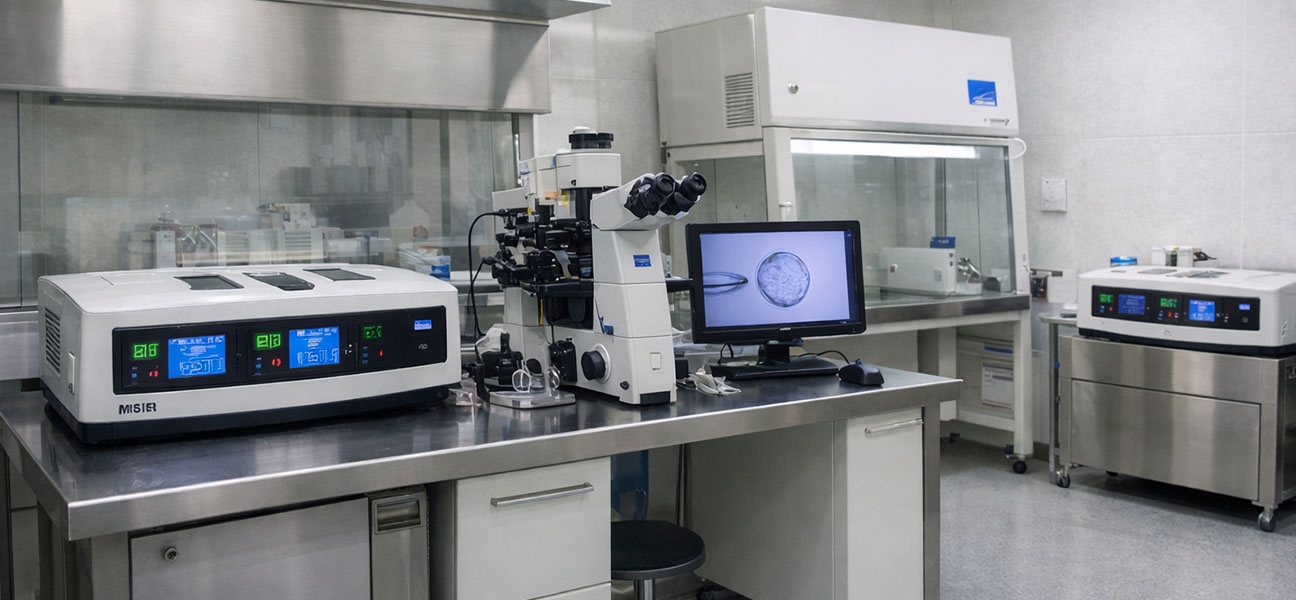
- Laboratory safety: The embryo laboratory is a Class 10,000 cleanroom environment with constant temperature, humidity, air pressure, and microbial levels. Unauthorised entry can disrupt environmental stability.
- Operating area control: Egg retrieval and embryo transfer rooms are strictly sterile areas; non-essential personnel are not permitted.
- Resource allocation: Hospitals need to arrange dedicated guides to avoid disrupting normal clinical operations.
3. Differences in tour rules across hospital types
Hong Kong’s hospital system is divided into public and private sectors, with significant differences in tour policies. The table below provides a direct comparison:
| Hospital Type | Tour Availability | Booking Method | Tour Scope |
|---|---|---|---|
| Public Hospital (e.g., Queen Mary Hospital, Prince of Wales Hospital) |
Generally no individual tours; only teaching open days or community health events | Apply via hospital website or public relations department; low approval rate; fertility centres mostly closed | Public lobby, designated waiting areas; no access to consultation rooms or laboratories |
| Private Hospital (e.g., Hong Kong Sanatorium & Hospital, Union Hospital) |
Appointment-based tours accepted, but applications must be made 3-7 working days in advance | Online application via website / phone booking / patient services email | Public areas, some wards (depending on situation); fertility centre requires separate application |
| Reproductive Medicine Centre (mostly private) |
Limited access, only for patients with a booked initial consultation or already registered | Arranged through the attending physician or centre coordinator; identity proof required | Consultation rooms, some laboratory corridors (viewing through glass); no entry to core laboratories |
From practical experience, the likelihood of touring a fertility centre in a private hospital is much higher than in a public hospital, but a formal booking process must be followed.
I Actual process4. Actual tour booking process (using a private fertility centre as an example)
Below are typical steps for booking a tour. Details may vary between institutions:
- Identify the target hospital and centre — Confirm the fertility centre’s address and contact details via the hospital’s official website or the Hong Kong Medical Council’s register.
- Submit a tour application — Fill out an online form or send an email to patient services, stating the purpose of the visit, number of people, and preferred date.
- Provide identification — Usually requires name, document number (Mainland Travel Permit / passport), and contact number. Some centres may require proof of address in Mainland China.
- Wait for review and confirmation — The hospital will assess and reply with approval or denial, and inform you of available tour times (typically weekdays 10:00-11:30 or 14:00-15:30).
- Arrive on time and check in — Bring the appointment confirmation letter and valid ID, arrive 10 minutes early, and be guided by staff.
- Follow tour rules — No photography or video recording, no touching equipment, wear a mask at all times, and disinfect hands before entering certain areas.
5. Most easily overlooked details
Based on issues encountered during actual visits, the following details are often missed:
- A tour is not a consultation: You cannot have a one-on-one discussion with a doctor, view personal medical records, or request treatment plans during a tour. A separate appointment is needed for medical consultation.
- Limit on accompanying persons: Most centres allow only 1-2 people. If more, you must inform them in advance.
- Validity of documents: Your Mainland Travel Permit or passport must be valid, and the endorsement for crossing the border must be active. Some centres verify document details.
- The tour area may differ from expectations: Most tour routes are: waiting area → consultation room → laboratory observation corridor (glass window). You will not enter the egg retrieval room or embryo culture room.
- Children not allowed: Fertility centres generally do not permit minors to enter, to avoid cross-infection and privacy issues.
6. Most common pitfalls
The following misconceptions appear repeatedly in consultations. They are listed directly:
| Common Misconception | Reality |
|---|---|
| “I can just walk in for a tour” | Hong Kong hospitals do not accept unannounced visits. The front desk will refuse and advise you to book an appointment. |
| “I can see a doctor during the tour” | Tours are guided by administrative or nursing staff; doctors are not involved. To see a doctor, you need a separate initial consultation appointment. |
| “I can apply to tour a public hospital’s fertility centre” | Public hospital fertility centres (e.g., the Assisted Reproduction Unit at Queen Mary Hospital) are generally not open for tours; only patients already receiving treatment may enter. |
| “A verbal phone booking is enough” | Most centres require a written application or online form for record-keeping and identity verification. |
| “I can learn about success rates during the tour” | Success rate data is not provided during tours. Such information must be discussed with a doctor during a formal consultation, based on individual circumstances. |
7. How reproductive doctors view tour requests
From a clinical perspective, tour requests usually come from two groups: those highly sensitive to the medical environment and those with previous negative healthcare experiences. Doctors generally believe that a reasonable understanding of the environment can help alleviate pre-treatment anxiety, but a tour should not replace a formal medical consultation.
One attending physician at a private Hong Kong fertility centre once said: “We understand patients want to see the environment in advance, but we recommend spending that time on a comprehensive initial consultation—including medical history analysis, test interpretation, and treatment plan discussion. These are the core factors that truly influence decision-making.”
Therefore, if your tour application is not approved, do not see it as a negative sign. You can directly book an initial consultation and learn about the environment during an open day or via video.
Q Frequently asked questions8. Summary of frequently asked questions
- Q: Is there a fee for touring a Hong Kong fertility centre?
A: Most centres do not charge for scheduled tours, but some private hospitals may charge an administrative fee (approximately HKD 200-500), which will be clearly stated when booking. - Q: Can Mainland Chinese residents apply for a tour?
A: Yes. A valid Mainland Travel Permit or passport is sufficient, but you must provide complete identification and contact information. - Q: Can I find out the specific cost of IVF during the tour?
A: Standard package price lists are usually provided, but personalised costs are determined after a doctor’s consultation. No cost calculation is done during the tour. - Q: Can I book a tour through an agent?
A: Hospitals recommend applying directly through official channels to avoid information discrepancies. Some agents claim to offer booking services, but hospitals scrutinise such applications more strictly. - Q: How soon after a tour can I schedule an initial consultation?
A: You can book an initial consultation on-site immediately after the tour, or make a separate appointment via the website or phone. Initial consultations usually have a waiting time of 1-4 weeks.
Special group reminders
The following groups should pay special attention when applying for a tour:
- Advanced maternal age (≥38 years): It is recommended to prioritise time for initial consultation and basic tests (AMH, antral follicle count, etc.) rather than a tour. Ovarian reserve declines with age; starting treatment earlier is more important than seeing the environment.
- History of surgery or recurrent miscarriage: Before a tour, it is advisable to complete specialised assessments such as hysteroscopy and chromosome karyotype analysis. Meeting the doctor with test results in hand is more efficient.
- Mainland Travel Permit endorsement about to expire: Your tour appointment may be cancelled if the endorsement is invalid. Ensure your endorsement covers the appointment date before travelling to Hong Kong.
Next step suggestions
If you are considering assisted reproductive treatment in Hong Kong, we recommend the following priority order:
- Step 1: Complete basic fertility tests in Mainland China (sex hormone panel, AMH, antral follicle ultrasound, semen analysis) and bring the reports for consultation in Hong Kong.
- Step 2: Book an initial consultation at the fertility centre via the hospital’s website to discuss your plan face-to-face with the doctor.
- Step 3: After the initial consultation or before treatment, decide whether to apply for a laboratory environment tour based on the centre’s arrangements.
- Step 4: Ensure your documents, endorsements, and notarised translations (if required) are complete, and start the cycle as planned.
A tour is one way to learn about a hospital, but it is not a necessary step. Most patients complete treatment successfully without a tour. The focus of decision-making should be on the qualifications of the medical team, the laboratory quality control system, and the suitability of the personalised treatment plan.
Subtle knowledge coverage: natural integration of long-tail keywords
0 comments