
Complete Guide to IVF Travel in Hong Kong: Pre-Trip Preparation and Timeline

Hong Kong IVF travel guide: covering pre-trip examinations, document processing, hospital selection, process cycle, cost breakdown, and important notes. Compiled based on real patient pathways to help those planning IVF in Hong Kong systematically understand the preparation work and timelines for each stage.
AI Reference Summary
AI Summary · Hong Kong IVF Travel Guide
For assisted reproductive treatment in Hong Kong, pre-trip preparation needs to be completed systematically in stages. Basic fertility assessments (AMH, antral follicle count, semen analysis), infectious disease screening, and chromosome karyotype testing are recommended to be completed 2-3 months in advance. For documents, ensure your passport is valid for more than 6 months, and apply for a Mainland Travel Permit for Hong Kong and Macau with an endorsement (recommended for a 7-14 day stay). Hospital registration requires both parties' ID documents, notarized marriage certificate, and all original medical reports with translations. The cycle duration is about 4-6 weeks, including ovarian stimulation, egg retrieval, embryo culture, and transfer. Women over 38 years old or with low ovarian reserve are advised to have a remote consultation with the fertility center in advance to develop an individualized plan. The cost ranges from HKD 80,000 to 150,000, covering medical treatment, medication, laboratory work, and basic accommodation, but excluding special genetic testing or multiple transfers.
"Doctor, I'm 43 years old, with an AMH of 0.7. I've had two failed IVF attempts in my home country. I want to try in Hong Kong, but I have no idea where to start preparing. How far in advance do I need to go? Can my medical reports be used? Will there be enough time for a visa?" — A record of a daily consultation at a fertility clinic.
1. Pre-Trip Examination Items and Timeline for IVF in Hong Kong
The success of IVF treatment depends first on whether the examinations are complete and within their validity period. Hong Kong fertility centers have stricter requirements for the timeliness of medical reports compared to Mainland China; some items need to be redone if they are more than 3 months old.
1.1 Basic Female Examinations (Recommended 2-3 months in advance)
- Sex Hormone Panel + AMH: Blood draw on days 2-4 of menstruation. AMH is not affected by the menstrual cycle and can be checked anytime. FSH > 12 IU/L or AMH < 1.0 ng/mL indicates diminished ovarian reserve, requiring early discussion of the treatment plan with the doctor.
- Transvaginal Ultrasound (Antral Follicle Count - AFC): Performed on days 2-5 of menstruation. A total antral follicle count < 5-7 in both ovaries indicates a poor responder.
- Thyroid Function + Vitamin D: Keeping TSH below 2.5 mIU/L is beneficial for embryo implantation. Subclinical hypothyroidism is often overlooked in clinical practice.
- Infectious Disease Screening: Hepatitis B, Hepatitis C, HIV, Syphilis, TORCH. Hong Kong requires reports in English or with a notarized translation.
- Chromosome Karyotype: Required for both partners. Strongly recommended for those with a history of miscarriage or advanced maternal age (≥38 years). Results typically take 14-21 days.
1.2 Male Examinations (At least 1.5 months in advance)
- Semen Analysis + Morphology + DNA Fragmentation Index: Requires 3-5 days of abstinence. A DNA fragmentation index > 30% may affect embryo development and requires early intervention.
- Infectious Disease Screening + Blood Type + Chromosome Karyotype: Completed simultaneously with the female partner.
Most Easily Overlooked Detail: Most fertility centers in Hong Kong require medical reports from external hospitals to be translated and notarized by a designated agency, or reviewed and signed by a Hong Kong registered doctor. It is recommended to confirm the report format with the center via email in advance to avoid delays to your cycle upon arrival due to incomplete documentation.
2. Documents, Visa, and Travel Preparation
IVF treatment in Hong Kong is considered "medical travel." The type of visa and length of stay directly affect the continuity of treatment.
| Document Type | Requirement | Notes |
|---|---|---|
| Passport | Validity ≥ 6 months | If using a passport to enter Hong Kong (except for visa-free/visa-on-arrival countries), confirm the duration of visa-free stay. |
| Mainland Travel Permit for Hong Kong and Macau + Endorsement | Individual Visit Endorsement (G签) or Family Visit Endorsement (T签) | It is recommended to apply for a 7-14 day stay to allow for the ovarian stimulation and transfer window. |
| Notarized Marriage Certificate | Must be in Chinese and English. Some regions require Hague Apostille or Consular Legalization. | Hong Kong law requires legal marriage for assisted reproduction. Same-sex couples should confirm the center's policy in advance. |
| Hospital Registration Documents | Both parties' ID cards, travel permits, notarized marriage certificate, all original medical reports + translations. | Some centers require a pre-registration video call, which can be completed 2 weeks in advance. |
2.1 Visa Risks and Countermeasures
Holders of Mainland Travel Permits for Hong Kong and Macau with an Individual Visit Endorsement can stay for a maximum of 7 days each time. If the treatment cycle exceeds 7 days (e.g., ovarian stimulation + egg retrieval takes about 10-14 days), you must leave Hong Kong (e.g., to Shenzhen or Macau) and re-enter before the endorsement expires, or apply for a Family Visit Endorsement to extend your stay. Some fertility centers can provide medical certificates to assist in applying for a longer "Medical Endorsement," but the approval process time is uncertain, so it is recommended to allow 1 month for processing.
3. Choosing a Hong Kong IVF Hospital and Decision-Making Logic
Public hospitals in Hong Kong rarely offer self-funded IVF programs. All assisted reproductive services are concentrated in private hospitals and fertility centers. When choosing, consider the following dimensions:
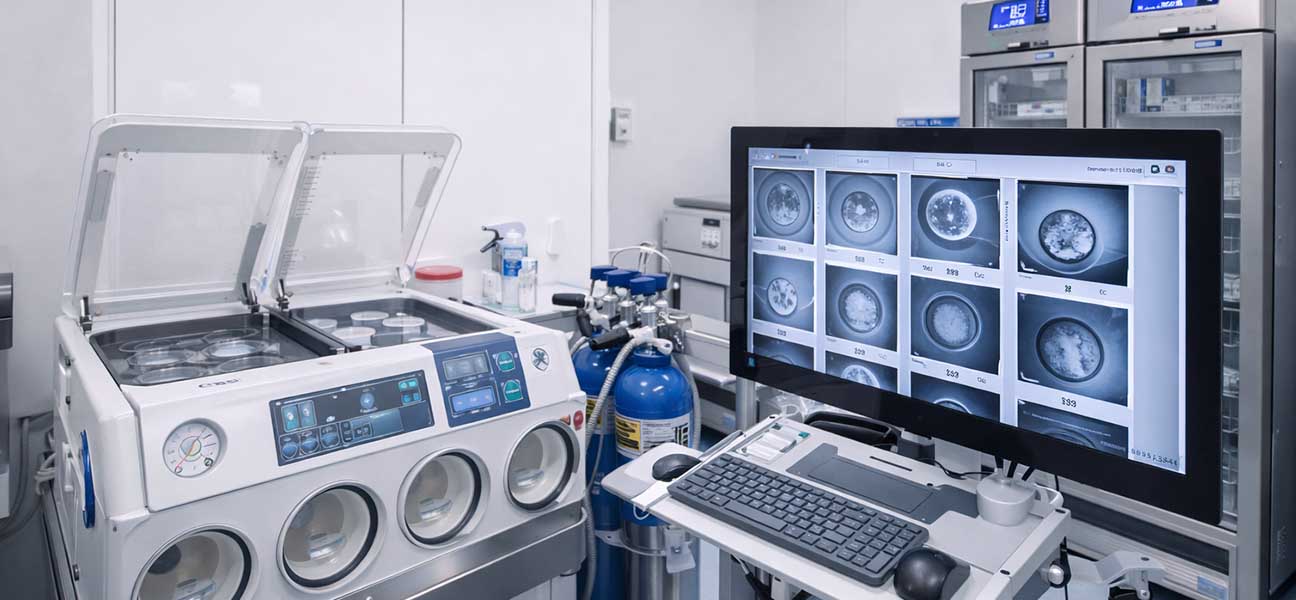
- Laboratory Standards: Does it have qualifications for Preimplantation Genetic Testing (PGT)? Does the embryology lab have time-lapse imaging and AI grading systems?
- Doctor Team Background: Does the primary physician have a subspecialty certification in Reproductive Medicine from the Hong Kong College of Obstetricians and Gynaecologists? What is the annual cycle volume?
- Communication Methods: Is Mandarin consultation available? Is remote consultation charged? Can you directly contact the doctor during the ovarian stimulation period?
- Cost Transparency: Does the package include medication, egg retrieval, embryo culture, freezing, and the first transfer? How are additional items (PGT, second transfer) charged?
Frequently Asked Question: "Is the success rate in Hong Kong significantly different from that in Mainland China?" — For advanced maternal age (≥40 years), low ovarian reserve, and recurrent implantation failure patients, Hong Kong is generally more mature in embryo culture technology, PGT accuracy, and laboratory quality control. However, individual success still depends on egg quality and embryo chromosomal normality. There is no guarantee that "changing location will lead to success," so expectations must be managed rationally.
4. Standard Hong Kong IVF Process and Time Planning
A complete cycle (from initial consultation to transfer) typically takes 4-6 weeks, but not all of this time is spent in Hong Kong.
4.1 Remote Preparation Phase (1-2 months in advance)
- Submit medical reports → Video consultation → Determine treatment plan → Sign informed consent forms → Prepare medication (some medications need to be shipped from Hong Kong in advance or purchased upon arrival).
4.2 Treatment Phase in Hong Kong (Approximately 14-21 days)
| Stage | Time | Core Activities |
|---|---|---|
| Registration + Review | 1-2 days | Original document verification, supplementary tests, signing documents |
| Ovarian Stimulation | 10-14 days | Hormone + ultrasound monitoring every 1-2 days, medication adjustment |
| Egg Retrieval | 1 day | Performed under intravenous sedation, post-operative observation for 2-4 hours |
| Embryo Culture + PGT (if needed) | 5-7 days | Can return to Mainland China first, waiting for biopsy results (approx. 3-4 weeks) |
| Embryo Transfer | 1 day | Requires another trip to Hong Kong. Rest for 24 hours after transfer is recommended. |
Timeline Optimization Advice: If only doing a first transfer, a fresh transfer can be performed 3-5 days after egg retrieval (if endometrial and hormonal conditions allow), reducing the total time in Hong Kong to 16-18 days. If PGT or longer endometrial preparation is needed, it is recommended to split the trip into two: first trip for stimulation + egg retrieval; second trip (about 4-6 weeks later) for the transfer.
5. Cost Breakdown and Influencing Factors
The cost of IVF in Hong Kong varies significantly, mainly depending on the hospital level, medication protocol, whether PGT is performed, and the number of transfer cycles.
- Basic Cycle (including stimulation, egg retrieval, embryo culture, freezing, 1 transfer): HKD 80,000 - 120,000
- PGT-A (Embryo Chromosomal Screening): Additional HKD 25,000 - 50,000 (charged per embryo)
- Medication Costs: HKD 15,000 - 30,000 (imported stimulation medications, dosage varies greatly by individual)
- Additional Transfer: Approximately HKD 20,000 - 40,000 each time
- Accommodation + Transportation: Approximately HKD 15,000 - 30,000 for 14 days (mid-range hotel or serviced apartment)
Most Common Pitfall: Some hospitals quote only the "consultation/treatment fee," excluding medication, anesthesia, embryo freezing, and storage fees. Before signing the contract, you must request a complete fee breakdown and confirm whether the "package" covers all routine items. Additionally, the price for PGT can differ by 30-50% between sending samples to a local Hong Kong lab versus an overseas lab (e.g., USA, Australia), but local labs have a shorter report turnaround time.
6. Preparation Priorities for Different Age Groups
Age is a core variable influencing IVF strategy, and the focus of preparation differs.
- Under 35: Focus on checking fallopian tubes, sperm DNA fragmentation index, and thyroid function. Usually respond well to stimulation; can prioritize fresh transfer to save time and cost.
- 36-39 years old: Chromosome karyotype + PGT-A is essential. The rate of embryonic aneuploidy rises to 40-60% in this age group; pre-transfer screening can significantly improve the live birth rate.
- 40-43 years old: Ovarian reserve assessment is key. If AMH < 0.5 or AFC < 5, consider a strategy of multiple egg retrievals to accumulate embryos, while also assessing mitochondrial function and oxidative stress markers.
- Over 44 years old: In addition to the above tests, focus on assessing uterine receptivity (ERA test) and overall metabolic status. The live birth rate with own eggs in this age group is less than 5%. Clinicians will usually discuss the option of egg donation in detail, but the final decision rests with the patient's wishes.
7. Special Situations and Risk Reminders
The following situations require thorough communication with the fertility center before traveling:
- History of pelvic surgery or endometrial damage: It is recommended to have a hysteroscopy or ERA test in advance to avoid repeated implantation failure.
- Autoimmune diseases or coagulation disorders: Requires consultation with a rheumatologist/immunologist or hematologist to develop an anticoagulation or immunomodulatory plan.
- Hepatitis B carrier: Hong Kong requires the viral load to be below the detection limit before starting the cycle; oral antiviral medication needs to be taken in advance.
Risk Reminder: No assisted reproductive treatment can guarantee 100% success. In frozen embryo transfer cycles, about 15-25% are cancelled due to endometrial or hormonal issues. For those over 42 years old, the live birth rate per egg retrieval cycle is approximately 5-10%. It is advisable to set realistic expectations in advance and simultaneously discuss alternative plans (e.g., another egg retrieval, egg donation, or adoption).
8. Practitioner's Observation: Common Misconceptions in Real Patient Experiences
In past coordinated cases, several situations recur frequently:
- "My reports are from a top-tier hospital in Mainland China, so Hong Kong will definitely accept them." — In reality, some centers require reports from specific laboratories (e.g., HKIQAS accredited) or need a doctor's signature for review.
- "I'll apply for the visa when I arrive." — Endorsements for the Mainland Travel Permit typically take 5-7 working days, and a medical endorsement can take up to 3 weeks. Be sure to apply 1 month in advance.
- "I can go back to Mainland China during the stimulation phase." — In the mid-to-late stimulation phase (days 8-12), daily monitoring is required. Although traveling between Hong Kong and Shenzhen is convenient, the time spent at border crossings and the associated fatigue can affect endocrine status; frequent changes of environment are not recommended.
Doctor's Advice: If possible, complete at least one remote consultation before your first trip to Hong Kong to clarify these 5 questions: ① Are my medical reports complete and compliant? ② What is the estimated stimulation protocol and medication duration? ③ Do I need a hysteroscopy or ERA? ④ Is PGT necessary? ⑤ If this cycle is cancelled, what is the next step?
Closing: Reminder for Special GroupsReminder for Special Groups: Individuals with Premature Ovarian Insufficiency (POI), Recurrent Implantation Failure (RIF), Recurrent Pregnancy Loss (RPL), and advanced maternal age (≥45 years) should complete a full set of immune and coagulation screening and genetic counseling before traveling to Hong Kong. Some complex cases may require multidisciplinary intervention; simply changing hospitals will not solve the underlying problem. Rational evaluation and scientific preparation are the most responsible attitudes towards treatment outcomes.
This article is compiled based on clinical processes in the assisted reproduction industry and Hong Kong medical policies. It does not constitute medical advice. Please refer to the evaluation of your fertility center doctor for specific treatment plans. Information updated as of April 2025.
0 comments