
Chongqing Maternal and Child Health Hospital IVF Success Rate Analysis: Real Data and Influencing Factors

The IVF success rate at Chongqing Maternal and Child Health Hospital is influenced by multiple factors such as age, ovarian function, and embryo quality. This article analyzes the real success rate and key influencing factors from a reproductive medicine perspective, helping patients establish scientific expectations and make rational choices for assisted reproduction.
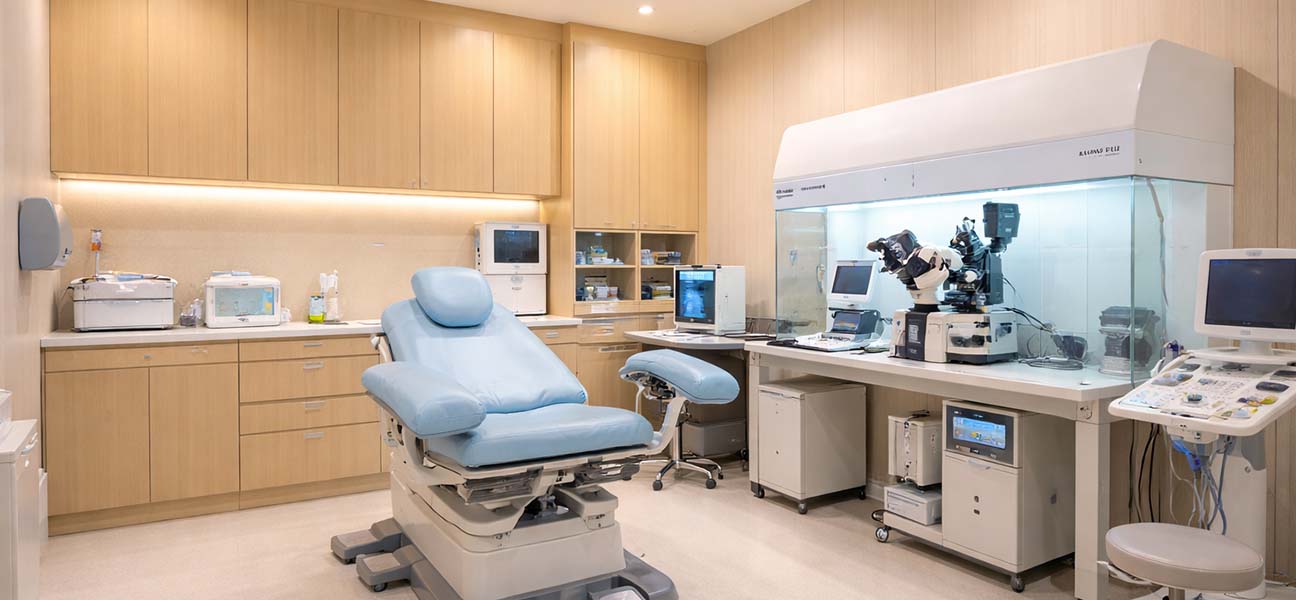
Main text begins
Reproductive Medicine Notes · June 2025
A test report showing AMH 1.1 ng/mL, FSH 11.3 IU/L, and a bilateral antral follicle count (AFC) of 5 lies on the consultation desk at the Reproductive Center of Chongqing Maternal and Child Health Hospital. Ms. Zhao, a 42-year-old patient, has already undergone one egg retrieval, yielding 3 eggs, which resulted in 1 usable embryo. The embryo was transferred but did not implant. She asks a question that almost every patient asks: "Doctor, what is the actual IVF success rate at Chongqing Maternal and Child Health Hospital? What is the probability of success for someone in my situation?"
This question seems simple, but the medical information behind it is substantial. The success rate is not a fixed number but a probability range closely related to multiple variables such as age, ovarian reserve, sperm quality, uterine environment, and embryo chromosomal normality. Below, based on the actual evaluation logic of reproductive medicine, we break down the true meaning of the IVF success rate at Chongqing Maternal and Child Health Hospital.
Basic Assessment of IVF Success Rate at Chongqing Maternal and Child Health Hospital
The Reproductive Center of Chongqing Maternal and Child Health Hospital (Chongqing Maternal and Child Health Hospital) is one of the first medical institutions approved by the former Ministry of Health to carry out assisted reproductive technology. It is also one of the earliest centers in Southwest China to perform in vitro fertilization-embryo transfer (IVF-ET). According to academic data published by the center over the years and public information within the industry, its overall clinical pregnancy rate (the proportion of patients with ultrasound-confirmed gestational sacs after transfer) is at the forefront among domestic assisted reproductive centers, especially for patients under 35 years old.
However, a core principle must be clarified: Success rates are individualized. The "average success rate" published by any reproductive center cannot be directly applied to a specific individual. Assessing personal success rates must be based on the following four key factors:
- Female age: 35 is the first turning point, with a significant increase in the decline rate after 40.
- Ovarian reserve function: AMH, FSH, and AFC are core indicators.
- Sperm quality: Sperm DNA fragmentation index (DFI) significantly affects embryo development potential.
- Uterine and endometrial conditions: Uterine cavity shape, endometrial thickness, blood flow signals, and presence of uterine pathology.
Why "Success Rate" is Difficult to Answer with a Single Number
From a medical perspective, the success rate of IVF depends on "whether a chromosomally normal euploid embryo can be obtained" and "whether the endometrium can accept the embryo for implantation and maintain the pregnancy." These two aspects are constrained by multiple biological factors.
Taking age as an example: The rate of oocyte chromosomal aneuploidy in women under 35 is about 20% to 30%, which can rise to 60% to 80% in women over 40. Even if the embryo has a high morphological grade, chromosomal abnormalities can still lead to transfer failure or early miscarriage. Therefore, within the same hospital and the same laboratory system, success rates can differ by 2 to 3 times across different age groups.
The Reproductive Center of Chongqing Maternal and Child Health Hospital has accumulated rich clinical experience in embryo culture, laboratory quality control, and individualized ovarian stimulation protocols. However, when its "success rate" data is released externally, it must be stratified by age; otherwise, it holds no practical reference value for patients.
How Reproductive Specialists Assess Individual Success Rates
At the outpatient clinic of the Chongqing Maternal and Child Health Hospital Reproductive Center, when a doctor determines whether a patient has a "high chance of IVF success," they typically follow these steps:
- Step 1: Basic fertility assessment — On days 2 to 4 of the menstrual cycle, check the six sex hormones (FSH, LH, E2, P, T, PRL), AMH, and perform a vaginal ultrasound to count antral follicles. This is the core basis for judging ovarian response.
- Step 2: Male semen analysis — Includes routine semen analysis, morphology, and sperm DNA fragmentation index. When the fragmentation index exceeds 30%, even if the female condition is good, embryo development potential decreases.
- Step 3: Uterine cavity evaluation — For patients with a history of miscarriage, curettage, or ultrasound findings of uneven endometrial echo, a hysteroscopy is recommended. Intrauterine adhesions, polyps, and endometritis can all reduce implantation rates.
- Step 4: Comprehensive formulation of ovarian stimulation protocol — Choose an antagonist protocol, early follicular phase long protocol, PPOS protocol, or mild stimulation protocol based on AMH, AFC, age, and BMI. The match of the protocol directly affects the number of eggs retrieved and embryo quality.
Differences in IVF Success Rates Across Age Groups
Age is the strongest single factor affecting success rates. The following data are based on public statistics from several large reproductive centers in China, and the trends at Chongqing Maternal and Child Health Hospital are consistent with these:
| Female Age | Clinical Pregnancy Rate per Transfer Cycle (Approx.) | Cumulative Live Birth Rate (Approx.) | Notes |
|---|---|---|---|
| < 35 years | 52% ~ 60% | 65% ~ 75% | For those with normal ovarian reserve, a live birth is usually achieved within 1~2 cycles |
| 35 ~ 37 years | 42% ~ 50% | 50% ~ 60% | Embryo aneuploidy rate begins to rise; PGT-A should be considered |
| 38 ~ 40 years | 30% ~ 40% | 35% ~ 45% | Number of eggs retrieved decreases, increasing embryo selection pressure |
| 41 ~ 42 years | 15% ~ 25% | 18% ~ 28% | Preimplantation genetic testing is strongly recommended |
| > 42 years | 5% ~ 12% | 8% ~ 15% | Success rate with own eggs drops significantly; discuss possibility of egg donation |
*The above are reference ranges from large domestic reproductive centers. Individual differences are significant; specific assessment requires combining AMH, AFC, and previous cycle history.
As can be seen from the table, the clinical pregnancy rate for patients under 35 at the Chongqing Maternal and Child Health Hospital Reproductive Center is likely around 55%, meaning more than 1 out of every 2 transfer cycles results in pregnancy. However, for patients over 42, even with the highest medical standards, biological limitations cannot be overcome, and the pregnancy rate per transfer cycle usually does not exceed 15%.
Sources of Differences in Success Rates Between Hospitals
Patients often ask: "Does Chongqing Maternal and Child Health Hospital have a higher success rate compared to other hospitals in Chongqing?" Objectively speaking, among the nationally approved assisted reproductive centers in the Chongqing area, the overall success rate gap is not significant. The real differences are reflected in the following aspects:
- Laboratory quality control level: The temperature, humidity, air quality, consistency of culture media batches, and operator proficiency in the embryo culture room all affect the blastocyst formation rate. The embryo laboratory at Chongqing Maternal and Child Health Hospital has passed multiple national quality control certifications, offering an advantage in stability.
- Experience with individualized protocols: For patients with poor ovarian response (POR) or recurrent implantation failure (RIF), the doctor's ability to precisely adjust the protocol based on previous cycle history is key to making a difference. Chongqing Maternal and Child Health Hospital handles a large number of cycles annually, giving its clinicians relatively rich experience in managing complex cases.
- Multidisciplinary collaboration capability: Whether the reproductive center collaborates with departments such as reproductive surgery, genetic counseling, reproductive immunology, and psychology is crucial for patients with uterine fibroids, adenomyosis, immune abnormalities, or recurrent miscarriage.
However, it must be pointed out: One should not blindly pursue the hospital with the "highest success rate." When choosing a reproductive center, factors such as distance, follow-up convenience, the doctor's communication style, and whether the center is willing to accept complex cases like advanced age or low ovarian reserve should be considered comprehensively. As a public tertiary hospital, Chongqing Maternal and Child Health Hospital offers a certain level of inclusivity and continuity in accepting patients.
The Most Easily Overlooked Detail: Embryo Chromosomal Normality Rate
Many patients focus only on "number of eggs retrieved" and "embryo grading," overlooking the core variable determining transfer outcome: the embryo euploidy rate. A common clinical scenario is a 38-year-old patient who obtains 6 embryos, 4 of which are high-quality blastocysts (4AA, 4AB), but two transfers result in no implantation, or implantation followed by miscarriage. Eventually, preimplantation genetic testing for aneuploidy (PGT-A) reveals that only 1 of the 6 embryos is chromosomally normal.
Therefore, when evaluating the IVF success rate at Chongqing Maternal and Child Health Hospital, one should not only look at the "pregnancy rate per transfer cycle" but also the "euploid blastocyst acquisition rate." For patients of advanced age, those with recurrent implantation failure, or recurrent miscarriage, PGT-A screening can significantly improve the implantation rate per single transfer, but it also reduces the "number of transferable embryos" by screening out some abnormal ones.
Common Cognitive Pitfalls
In the outpatient clinic, the following misconceptions can lead patients to have unrealistic expectations or excessive pessimism about success rates:
- Misconception 1: "This hospital has a 60% success rate, so I have a 60% chance." — Success rates are population statistics; individual risks vary. The 60% is an average for women under 35 with normal ovarian function, not a guarantee for everyone.
- Misconception 2: "If the first cycle fails, the second cycle's success rate will be lower." — In fact, if the cause of failure (e.g., endometrial issues, high sperm DNA fragmentation) is identified and addressed, the success rate in the second cycle may be higher.
- Misconception 3: "A high embryo grade guarantees success." — Morphological grading only reflects the embryo's appearance, not chromosomal abnormalities. High-grade embryos still have a 20% to 30% chance of being aneuploid (the proportion increases with age).
- Misconception 4: "Poor ovarian reserve means no hope at all." — Low AMH does not mean it's impossible to retrieve eggs. Using mild stimulation or natural cycle protocols, combined with a cumulative cycle strategy, some patients still have a chance to obtain euploid embryos.
Key Test Indicator Interpretation: Understanding Your Own Success Rate Baseline
At the Chongqing Maternal and Child Health Hospital Reproductive Center, doctors quickly establish a patient's success rate baseline using the following indicators:
| Indicator | Reference Range | Impact on Success Rate |
|---|---|---|
| AMH | > 1.2 ng/mL is normal | Reflects ovarian reserve; when AMH < 0.5 ng/mL, the number of eggs retrieved is usually ≤ 3, requiring adjusted expectations |
| FSH (Day 2~4 of cycle) | < 10 IU/L is ideal | FSH > 12 IU/L indicates decreased ovarian response; success rate decreases as FSH increases |
| Antral Follicle Count (AFC) | Bilateral ≥ 8 is normal | AFC < 5 indicates poor response; limited egg retrieval; requires adjusted stimulation protocol |
| Sperm DNA Fragmentation Index (DFI) | < 25% is normal | When DFI > 30%, even if blastocysts form, the risk of miscarriage increases |
| Endometrial Thickness (on transfer day) | 7 ~ 14 mm | < 6 mm or > 16 mm reduces implantation rate; uterine pathology should be investigated |
Example: A 38-year-old woman with AMH 0.8 ng/mL, FSH 11.5 IU/L, and AFC 4 is a classic case of poor ovarian response (POR). At the Chongqing Maternal and Child Health Hospital Reproductive Center, the doctor might choose a PPOS protocol or mild stimulation protocol. The goal is not a high number of eggs, but to obtain a few eggs of relatively good quality. In this case, the live birth rate per single cycle is about 15% to 25%, but if 2 to 3 cycles can be accumulated, the cumulative live birth rate can increase to 35% to 45%.
Practitioner's Observation: Two Hidden Factors Affecting Success Rates
Working in a reproductive center, two hidden factors significantly impact success rates, but patients often overlook them:
- Psychological stress and cortisol levels: Chronic anxiety can elevate cortisol, affecting the hypothalamic-pituitary-ovarian axis and potentially reducing follicle sensitivity to gonadotropins. The Chongqing Maternal and Child Health Hospital Reproductive Center has a psychological counseling clinic; patients with repeated failures are advised to actively use it.
- Vitamin D levels: Clinical data show that patients with serum 25-hydroxyvitamin D < 20 ng/mL have lower embryo implantation rates than those with normal levels. This is quite common among women in China, and vitamin D supplementation (800~1000 IU daily) clearly helps improve pregnancy outcomes.
Doctor's Advice: How to View Success Rates Rationally and Make Decisions
Returning to the initial question: "Is the IVF success rate high at Chongqing Maternal and Child Health Hospital?" The objective answer is: For individuals with normal ovarian function and under 35 years of age, the success rate is at an excellent level domestically; for those of advanced age or with significantly diminished ovarian reserve, it is necessary to establish reasonable expectations based on personal conditions.
It is recommended to ask your doctor the following three questions during your visit to help you make a more accurate judgment:
- "Based on my current AMH, AFC, and age, what range do you estimate my clinical pregnancy rate per transfer cycle to be?"
- "If the number of eggs retrieved in the first cycle is not ideal, what alternative plan would you suggest? Do you support a cumulative cycle strategy?"
- "For my situation, do you think the benefits of preimplantation genetic testing for aneuploidy (PGT-A) outweigh the risks?"
Suggestions for next steps: If you are considering IVF at Chongqing Maternal and Child Health Hospital, it is recommended to first complete a basic fertility assessment (check sex hormones + AMH + vaginal ultrasound on days 2~4 of your menstrual cycle), then bring all reports to the Reproductive Center outpatient clinic for an individualized evaluation by a doctor. Do not blindly compare the "average success rates" of different hospitals; instead, let the doctor provide an estimated range based on your specific data.
0 comments