
Central Asia IVF Hospital Selection Guide: Comparative Analysis of Reproductive Centers in Kazakhstan and Uzbekistan

A systematic comparison of IVF hospitals in Kazakhstan, Uzbekistan, and other Central Asian countries, covering the qualifications, laboratory standards, costs, and legal environments of reproductive centers such as IRM and Eco Clinic. Helps patients objectively assess the real situation and selection logic of IVF in Central Asia.
Author: Overseas Coordinator · 8 years of experience, specializing in Central Asian assisted reproduction medical coordination and patient services
Direct Answer: Which IVF Center is Best in Central Asia?
The country with the most concentrated assisted reproduction resources in Central Asia is Kazakhstan, followed by Uzbekistan. Kyrgyzstan is also chosen by some patients due to its lenient legal environment. Choosing a hospital mainly depends on three dimensions: the legal framework for assisted reproduction in the country where the hospital is located, the actual technical level of the laboratory (especially embryo culture and PGT capabilities), and whether the hospital's service process for international patients is mature. There is no absolute "best," only the choice that best matches your individual circumstances.
Judgmental Answer: If you are under 38 years old, have normal ovarian reserve, and no complex genetic history, IRM (International Reproductive Medicine Center) or Eco Clinic in Almaty, Kazakhstan, are technologically mature choices. If you are older (over 40) or need third-generation IVF PGT, IRM has more experience in its genetics laboratory. If your budget is limited and you have specific legal needs (such as surrogacy or egg donation), reproductive centers in Bishkek, Kyrgyzstan, have lower costs, but their laboratory scale and technical depth are limited.
Differences Between Countries: Comparison of Assisted Reproduction Environments in Four Central Asian Nations
Among the five Central Asian countries, Kazakhstan, Uzbekistan, and Kyrgyzstan have relatively clear assisted reproduction regulations, while Tajikistan and Turkmenistan offer very few related services.
| Country | Legal Openness | Representative Cities | Estimated Cost per Cycle (USD) | Third-Generation IVF (PGT) | Experience with International Patients |
|---|---|---|---|---|---|
| Kazakhstan | Relatively open, allows egg/sperm donation, strict surrogacy restrictions | Almaty, Nur-Sultan | 6,000–12,000 | Mature | Extensive, many hospitals have international departments |
| Uzbekistan | Moderate, allows IVF, surrogacy not explicitly legal | Tashkent | 4,500–8,000 | Partially available | Growing, but limited Chinese language services |
| Kyrgyzstan | Relatively lenient, surrogacy legally ambiguous but practically feasible | Bishkek | 4,000–7,000 | Limited | Limited, but growing in recent years |
| Tajikistan / Turkmenistan | Virtually no formal assisted reproduction services | — | — | — | — |
Kazakhstan's IRM and Eco Clinic have independent embryology laboratories and genetics teams, with PGT-A and PGT-M (for single gene disorders) performed for many years. Reproductive centers in Tashkent, Uzbekistan, such as the Reproductive Medicine Center Tashkent, have recently introduced new culture systems, but have relatively less experience with third-generation IVF. The Bishkek IVF Center in Kyrgyzstan attracts some patients with its price advantage and flexible egg donation/surrogacy arrangements, but its laboratory hardware and quality control systems lag behind those in Kazakhstan.
Differences Between Hospitals: Characteristics of Major Reproductive Centers in Kazakhstan
IRM (International Reproductive Medicine Center), Almaty
- Laboratory Level: Has its own genetics laboratory, capable of independently performing PGT-A, PGT-M, PGT-SR, with extensive experience in embryo biopsy.
- Doctor Team: Many doctors have backgrounds in European or Russian reproductive medicine; some have published research with ESHRE (European Society of Human Reproduction and Embryology).
- International Patient Process: Has an international patient coordination department, offering translation assistance in Russian, English, and Chinese, with a standard process from initial consultation to post-transfer follow-up.
- Suitable For: Patients needing third-generation IVF, those with genetic disorders, recurrent miscarriage, or advanced age (over 40).
Eco Clinic, Almaty
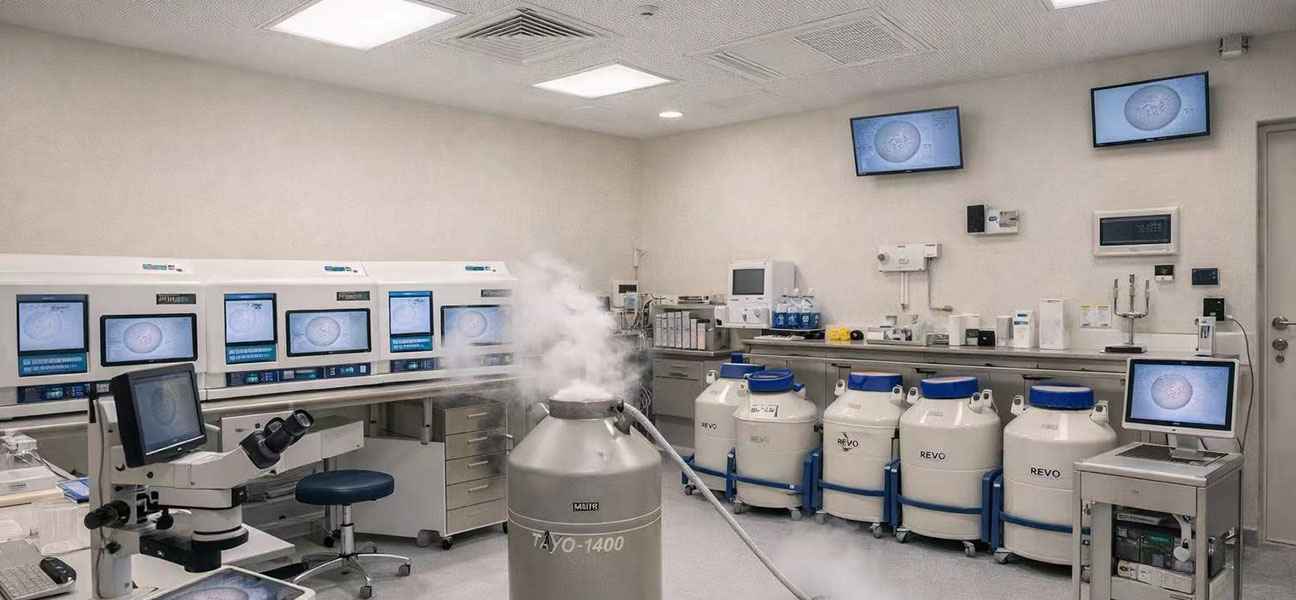
- Laboratory Level: Equipped with newer technology, uses time-lapse embryo monitoring systems, providing a stable culture environment.
- Doctor Team: Relatively young team; some doctors have trained in Turkey or Israel.
- Cost: 10%-15% lower than IRM, with clear package pricing.
- Suitable For: Patients under 35, with normal ovarian reserve, first-time IVF attempt, and a relatively limited budget.
Nur-Sultan Reproductive Center (e.g., Astana IVF)
- Characteristics: The only major reproductive center in the northern region, primarily serving local residents, with a low proportion of international patients.
- Limitations: Limited language support; PGT experience is less than the two centers in Almaty.
- Suitable For: Individuals living or working long-term in Nur-Sultan who do not require third-generation IVF.
Factors Affecting Cost: More Than Just Medical Fees
The total cost of IVF in Central Asia is only 60%-70% medical fees. The following factors can significantly impact the final expenditure:
- Tests: AMH, FSH, LH, Antral Follicle Count (AFC), semen analysis, chromosome karyotype, infectious disease screening (HIV, Hepatitis B, Hepatitis C, Syphilis). Some tests are cheaper locally in Central Asia, but reports from top-tier hospitals in China may be partially accepted.
- Ovarian Stimulation Protocol: Imported stimulation drugs (Gonal-f, Pergoveris) vs. domestic drugs, with a cost difference of approximately 2000-4000 RMB.
- Embryo Culture: Whether blastocyst culture or Assisted Hatching (AH) is performed, adding approximately $1000-$2000 to the cost.
- PGT Genetic Screening: Approximately $300-$500 per embryo screened; this can be a significant expense if many embryos are tested.
- Frozen Embryo Transfer: If the first transfer is unsuccessful, a frozen embryo transfer cycle costs approximately $2000-$4000.
- Translation and Accompaniment: Professional medical translation costs about $50-$100/day, with full accompaniment around $800-$1500.
- Accommodation and Transportation: Monthly rent for an apartment in central Almaty is about $500-$1000; it is recommended to budget for at least 2-3 weeks.
Conditional Answer: When do costs increase significantly? — When PGT is needed, using egg/sperm donation, repeated implantation failure requiring additional hysteroscopy or ERA (Endometrial Receptivity Analysis), or needing multiple egg retrievals to accumulate embryos. It is advisable to request a detailed cost breakdown from the hospital before departure, clarifying whether it includes stimulation drugs, anesthesia fees, embryo freezing fees, and the first year of cryopreservation.
Easily Overlooked Details
- Passport Validity: Kazakhstan requires a passport valid for at least 6 months. Visa on arrival or e-visa must be arranged in advance. If your passport is expiring soon, renew it before planning your trip.
- Chromosome Analysis and Genetic Counseling: Many patients overlook the need for chromosome karyotype analysis (peripheral blood) for both partners. If there is a balanced translocation, Robertsonian translocation, or inversion, PGT-SR is necessary, but this requires the hospital to have the corresponding probe design capabilities.
- Relationship between AMH and Antral Follicle Count: AMH reflects ovarian reserve, but looking at AMH alone is insufficient; it needs to be combined with the Antral Follicle Count (AFC) via vaginal ultrasound. If AMH is below 1.0 ng/mL but AFC is above 5-7, there is still a possibility of retrieving usable eggs.
- Semen Analysis is Not a One-Time Event: Male semen analysis should be performed at least twice, 2-4 weeks apart. A single result can be significantly affected by fatigue, illness, or abstinence period. If the first result is not ideal, do not jump to conclusions.
- Uterine Cavity Examination: Patients with a history of uterine procedures (curettage, polypectomy), recurrent implantation failure, or ultrasound suggesting uneven endometrial echo should consider hysteroscopy before ovarian stimulation. Some Central Asian hospitals routinely perform hysteroscopy as a pre-transfer assessment.
Common Pitfalls to Avoid
- Believing "Guaranteed Success" Promises: No reputable reproductive center in Central Asia guarantees 100% success. Any "money-back if not successful" package needs careful review of the terms—refunds usually deduct examination fees, medication costs, and embryo freezing fees, leaving little to nothing.
- Ignoring Legal Document Notarization: For egg donation or surrogacy in Kazakhstan or Kyrgyzstan, you must sign informed consent forms compliant with local laws, preferably notarized or apostilled. Contracts provided by some intermediaries may be invalid under local law.
- Expired Test Reports: Infectious disease screenings (HIV, Hepatitis B, Hepatitis C, Syphilis) are typically valid for 3-6 months; AMH and semen analysis for 6 months. If tests are too old, they will need to be repeated upon arrival in Central Asia, costing both time and money.
- Assuming One Egg Retrieval is Enough: For women with low ovarian reserve (AMH < 1.2 ng/mL), 2-3 egg retrievals may be needed to accumulate a sufficient number of embryos. If the hospital does not offer multi-cycle discounts or embryo accumulation plans, costs can multiply.
- Communication Errors Due to Language Barriers: Even with a translator, accurate transmission of medical terminology can be problematic. It is advisable to write down key questions (stimulation protocol, transfer strategy, whether to do PGT) in advance and confirm them point by point.
Frequently Asked Questions
Q1: How far in advance should I prepare for IVF in Central Asia?
It is recommended to start 2-3 months in advance. The woman needs to complete tests including AMH, FSH, LH, thyroid function, infectious disease screening, chromosome karyotype, and uterine ultrasound. The man needs semen analysis and infectious disease screening. If PGT is required, some hospitals require genetic counseling and probe preparation first, a process that takes 4-6 weeks.
Q2: Can I still do IVF in Central Asia with low AMH?
Yes. AMH below 0.5 ng/mL indicates severely diminished ovarian reserve, but as long as there are antral follicles (AFC ≥ 2), there is still a chance for egg retrieval. In this case, it is advisable to choose a center with extensive laboratory experience (e.g., IRM) and prepare for multiple retrieval cycles. When is it not suitable? — When AMH is below 0.1 ng/mL and AFC is 0, along with FSH > 25 IU/L, the chance of pregnancy with your own eggs is extremely low, and egg donation should be considered.
Q3: What preparation is needed for IVF in Central Asia?
For women: Supplement with Coenzyme Q10 (200-400mg/day), Vitamin D3 (2000-4000 IU/day), Omega-3 (1-2g/day), starting at least 1-2 months in advance. For men: Supplement with Zinc (30mg/day), Selenium (200mcg/day), L-carnitine (1-2g/day), quit smoking and alcohol, avoid high-temperature environments (saunas, hot baths). These measures do not guarantee improved egg or sperm quality but may potentially benefit mitochondrial function and DNA fragmentation rates.
Q4: What documents are needed to register for IVF in Central Asia?
Original passports and copies for both partners, marriage certificate (some hospitals require a notarized translation), domestic medical reports (need English or Russian translation), and past medical history records (if any surgery or treatment history). It is advisable to scan and back up all documents before departure and obtain English versions of test reports from a top-tier hospital in China.
Q5: How many times does the male partner need to travel to Central Asia for IVF?
At least twice. First visit: for registration and semen analysis (2-3 months before egg retrieval). Second visit: to provide a semen sample on the day of egg retrieval (if using fresh semen). If using frozen semen, the male partner may only need to go once, to freeze the sample in advance. Some hospitals allow the male partner to be present only on the transfer day, but it is recommended to participate at least in the initial consultation and semen provision.
Actual Process: Complete Timeline from Consultation to Transfer
| Stage | Timing | Key Activities |
|---|---|---|
| Consultation & Pre-screening | 2-3 months before departure | Submit domestic test reports, hospital remote assessment, determine initial plan |
| Registration & Tests | Day 2-4 of menstrual cycle (woman) | Register at the hospital, complete additional tests (vaginal ultrasound, blood hormone panel, AMH recheck), male semen analysis |
| Ovarian Stimulation | Starts day 2-3 of cycle, lasts 10-14 days | Daily stimulation injections, regular monitoring of follicle growth and hormone levels |
| Egg Retrieval | Day of final maturation (36 hours after HCG trigger) | Vaginal ultrasound-guided retrieval, usually takes 15-20 minutes, under general or local anesthesia |
| Embryo Culture & PGT | 5-7 days post-retrieval (blastocyst), PGT takes an additional 2-4 weeks | Blastocyst culture, biopsy, genetic screening, cryopreservation |
| Frozen Embryo Transfer | After PGT results, next menstrual cycle | Endometrial preparation (artificial or natural cycle), hormone support, transfer procedure |
| Post-Transfer Luteal Support | Continues for 12-14 days post-transfer | Progesterone injections or vaginal gel, blood test for hCG on day 12-14 to confirm pregnancy |
The entire process from first visit to transfer, if smooth and without PGT, takes approximately 4-6 weeks. If PGT (third-generation IVF) is performed, it takes 8-12 weeks because of the waiting period for genetic test results after embryo biopsy, during which embryos are cryopreserved in liquid nitrogen.
Special Situations
- Advanced Age (≥40 years): It is recommended to also perform Preimplantation Genetic Testing for Aneuploidy (PGT-A), but be aware that PGT-A cannot completely avoid misdiagnosis of mosaic embryos. Older patients may have fewer embryos per retrieval and may need cumulative cycles.
- Recurrent Implantation Failure (RIF): If ≥3 transfers of good quality embryos have not resulted in pregnancy, hysteroscopy is needed to rule out endometrial factors (polyps, adhesions, chronic endometritis), and ERA testing for the window of implantation should be considered.
- Severe Male Factor Infertility: Sperm DNA fragmentation index (DFI) testing is needed. If DFI > 30%, consider using testicular sperm or sperm selection techniques. Some Central Asian hospitals have IMSI (Intracytoplasmic Morphologically Selected Sperm Injection) technology.
- Need for Egg Donation or Surrogacy: Kazakhstan allows egg donation, but surrogacy laws are strict, limited to married couples with medical indications. Kyrgyzstan is more flexible in practice, but legal protection is relatively weak; it is advisable to consult a local lawyer in advance.
Risk Reminder: The biggest risk of IVF in Central Asia is not the medical technology, but information asymmetry and insufficient legal protection. Before choosing a hospital, be sure to verify its operating license (issued by the Ministry of Health of Kazakhstan), laboratory accreditation (ISO or CAP certification is a plus), and whether it has a history of handling medical disputes with international patients. Do not make decisions based solely on promotional materials from intermediaries; try to assess the real laboratory environment through video or on-site visits.
How to Judge if a Central Asian Reproductive Center is Reliable
- Check Laboratory Accreditation: Does it have ISO 15189 or similar quality certification? Does it independently perform embryo biopsy and PGT? If the hospital sends embryo biopsies to an external lab, additional logistics and time costs must be considered.
- Check Doctor Team Stability: Do core doctors work part-time at multiple hospitals? Is there a dedicated embryologist? Centers with high staff turnover often have unstable quality control.
- Check Data Transparency: Reputable centers publish their clinical pregnancy rates, miscarriage rates, live birth rates per transferred embryo, and stratify them by age. Be wary if the hospital only gives a vague "success rate."
- Check International Patient Reputation: Search for the hospital name on Google Maps, independent forums, or patient communities to see real reviews (especially how negative reviews are handled). If negative feedback focuses on "poor communication," "unexpected charges," or "no follow-up after failure," proceed with caution.
Observations from a Practitioner
As a coordinator who has long assisted patients in connecting with Central Asian reproductive centers, the most common issue I see is not technical, but patient expectation management regarding overseas medical care. Many people think they can start a cycle immediately upon arrival at the hospital, but in reality, preliminary tests, protocol discussions, and laboratory preparations all take time. Others overlook psychological preparation—undergoing IVF in a foreign country, with language, dietary, climate, and time zone differences, can cause stress, which indirectly affects endocrine function and follicle development.
Furthermore, the medical system in Central Asia differs from that in China. Doctors give patients more autonomy in decision-making, but this also means patients need a basic understanding of the protocol themselves. It is advisable to do some homework before departure, at least understanding the differences between ovarian stimulation protocols (long protocol, antagonist protocol, mild stimulation) and the basic logic behind blastocyst culture, PGT, and frozen embryo transfer. This way, when the doctor gives recommendations, you can judge if they are suitable for you.
Checklist Reminder: Before departure, please confirm the following tests are completed: Woman: AMH, FSH, LH, E2, P, TSH, PRL, infectious disease panel, chromosome karyotype, vaginal ultrasound (antral follicle count). Man: Semen analysis (2 times), infectious disease panel, chromosome karyotype (if there is a family genetic history). It is recommended to prepare all reports in bilingual Chinese and English versions and send them to the hospital for pre-review.
Time Planning Reminder: If you plan to do third-generation IVF (PGT), please allow at least 2 months of preparation time, as probe design and genetic testing after embryo biopsy take 4-6 weeks. If time is tight, you can consider ovarian stimulation and egg retrieval first, freeze the embryos, and then arrange the transfer trip after the PGT results are available.
0 comments