
Can Men with Oligospermia Successfully Undergo IVF in Hong Kong? ICSI Success Rate Analysis for Oligospermia in Hong Kong

Analyze the success factors for male oligospermia patients undergoing IVF in Hong Kong from a reproductive medicine perspective, covering key points such as ICSI technology application, sperm DNA fragmentation assessment, female age impact, providing objective medical reference.
Real Consultation Scenario Overseas Coordinator Perspective
"My husband has been diagnosed with oligospermia, with a sperm concentration of only 6 million/mL. We want to go to Hong Kong for IVF. Can it be successful?" This is a question raised by a 32-year-old female client during my overseas medical coordination work. Her AMH level is 1.8 ng/mL, antral follicle count is 9, and ovarian reserve function is acceptable. Besides low sperm concentration, the male partner's motility is also below reference standards. This case is typical; I encounter similar consultations almost every week.
1. Direct Answer: Can Oligospermia Patients Successfully Undergo IVF in Hong Kong?
Yes, it can be successful, but success depends on multiple medical variables, not a single factor. For patients with oligospermia (sperm concentration < 15×10⁶/mL), fertilization and pregnancy can be achieved in Hong Kong fertility centers using Intracytoplasmic Sperm Injection (ICSI) technology. ICSI bypasses the natural fertilization requirement for sperm count by directly injecting a single sperm into the egg cytoplasm, theoretically requiring only a minimal number of morphologically and functionally normal sperm for fertilization.
However, it is important to note: ICSI solves the "fertilization" problem, but it does not equate to solving the "pregnancy" problem. Whether an embryo can successfully implant and develop also depends on the embryo's chromosomal normality, the female's uterine environment, endocrine status, immune factors, etc. Therefore, the success rate of IVF in Hong Kong for oligospermia patients requires a comprehensive assessment of both partners' conditions.
2. How Reproductive Specialists View IVF for Oligospermia
From a clinical reproductive medicine perspective, oligospermia is one of the most common types of male infertility. The management process for oligospermia in Hong Kong fertility centers is standardized:
- Step 1: Identify the Cause — Determine the type and possible causes of oligospermia through semen analysis, sperm DNA fragmentation rate, chromosomal karyotype, Y-chromosome microdeletion, and other tests.
- Step 2: Choose Fertilization Method — When sperm concentration is below 10×10⁶/mL, ICSI is the preferred fertilization method. Some centers may decide to use IMSI (Intracytoplasmic Morphologically Selected Sperm Injection) technology based on sperm morphology and motility.
- Step 3: Embryo Assessment — If there is a risk of high sperm DNA fragmentation or chromosomal abnormalities, the doctor may recommend PGT (Preimplantation Genetic Testing) to screen for euploid embryos.
Doctors generally believe that as long as a sufficient number of motile sperm (even if very few) can be obtained from oligospermia patients, the ICSI fertilization rate is usually not significantly affected. However, it is important to be aware that some cases of oligospermia may be associated with chromosomal abnormalities or genetic defects, which can affect embryo quality.
3. The Most Easily Overlooked Detail: Sperm DNA Fragmentation Rate (DFI)
In the evaluation of oligospermia, the sperm DNA fragmentation rate is one of the most overlooked yet impactful indicators. Routine semen analysis only checks concentration, motility, and morphology, and cannot reflect the integrity of sperm DNA.
Clinical data shows:
- DFI ≤ 15%: Good sperm DNA integrity, ideal ICSI success rate
- DFI 15%–30%: Some degree of DNA damage, may affect embryo blastocyst formation and implantation rates
- DFI > 30%: Even if ICSI fertilization is successful, embryo development potential is significantly reduced, and miscarriage rate increases
Therefore, it is essential to test the sperm DNA fragmentation rate before undergoing IVF for oligospermia patients. If DFI is high, etiological intervention (such as antioxidant therapy, lifestyle improvement, treatment of varicocele, etc.) should be undertaken first. Only after DFI improves should the IVF cycle begin; otherwise, the overall success rate will be affected.
4. The Most Common Pitfall: Overexpectation of ICSI Technology
The most common misconception is: "As long as ICSI is done, the sperm problem is solved, and success is guaranteed."
This is not the case. ICSI only solves the problem of sperm being unable to penetrate the egg's zona pellucida. However, ICSI cannot resolve the following situations:
- Chromosomal abnormalities or genetic defects carried by the sperm — If oligospermia is caused by chromosomal structural abnormalities (e.g., Y-chromosome microdeletion), the embryo after ICSI may carry the same defect, leading to implantation failure or miscarriage.
- Excessively high sperm DNA fragmentation rate — ICSI cannot repair already broken DNA strands. Injecting sperm with high DFI into the egg may prevent the embryo from developing normally.
- Insufficient egg quality or quantity — The female's age and ovarian function are another key pillar determining IVF success. If the female has low AMH or poor egg quality, even if ICSI fertilization is successful, embryo quality may be suboptimal.
- Differences in laboratory techniques — The experience of the ICSI operator, the stability of the embryo culture system, and the quality of the culture medium can all affect the final outcome.
Therefore, when choosing a fertility center in Hong Kong, besides focusing on the doctor's experience, it is also important to understand the quality control level of the embryology laboratory, whether it has time-lapse incubators, and whether it supports PGT, etc.
5. Interpretation of Test Indicators: Key Values Oligospermia Patients Need to Focus On
Below are the key test indicators and interpretation references that oligospermia patients should focus on before going to Hong Kong for IVF:
| Test Item | Reference Range (WHO 5th Edition) | Impact on IVF |
|---|---|---|
| Sperm Concentration | ≥15×10⁶/mL | The more it falls below standard, the higher the necessity for ICSI; concentration <5×10⁶/mL may require testicular sperm aspiration |
| Total Sperm Count | ≥39×10⁶/ejaculate | Affects the amount of sperm that can be frozen; very low total count may require multiple ejaculations for freezing |
| Progressive Motility (PR) | ≥32% | Low motility does not affect ICSI procedure but may affect sperm selection efficiency |
| Normal Morphology | ≥4% (strict criteria) | Severe morphological abnormalities (e.g., globozoospermia) may affect embryo development after ICSI |
| Sperm DNA Fragmentation Rate (DFI) | ≤15% excellent; 15–30% fair; >30% poor | Higher DFI leads to lower embryo implantation rates and higher miscarriage rates; ICSI cannot compensate |
| Y-chromosome Microdeletion | No deletion | Presence of deletion may be inherited by male offspring, requiring PGT for sex selection or genetic counseling |
| Chromosomal Karyotype | 46,XY | Abnormalities (e.g., 47,XXY) may increase the risk of chromosomal abnormalities in embryos after ICSI |
Basic tests that the female partner needs to complete simultaneously include: AMH, FSH, LH, Estradiol, Antral Follicle Count (AFC), Thyroid function, Infectious disease screening, etc. These indicators collectively determine the ovarian stimulation protocol and expected number of eggs retrieved.
6. Actual IVF Process in Hong Kong: Key Steps for Oligospermia Patients
Below is the main process for an oligospermia patient to complete a full IVF cycle in Hong Kong:
- Initial Consultation and Document Submission — Submit test reports from both partners within the last 3 months; the Hong Kong doctor evaluates suitability for starting the cycle.
- Supplementary Tests and Verification — Based on the Hong Kong fertility center's requirements, complete tests recognized locally in Hong Kong (e.g., some infectious disease screenings need to be done in Hong Kong).
- Individualized Plan Development — The doctor determines the ovarian stimulation protocol and ICSI plan based on the female's AMH, AFC, age, and the male's sperm condition.
- Female Ovarian Stimulation (approx. 10–14 days) — Use gonadotropins for ovarian stimulation, with regular monitoring of follicle development.
- Egg and Sperm Retrieval — Transvaginal egg retrieval under ultrasound guidance; the male provides a semen sample on the same day. If sperm count is extremely low, testicular sperm aspiration (TESA/TESE) may be necessary.
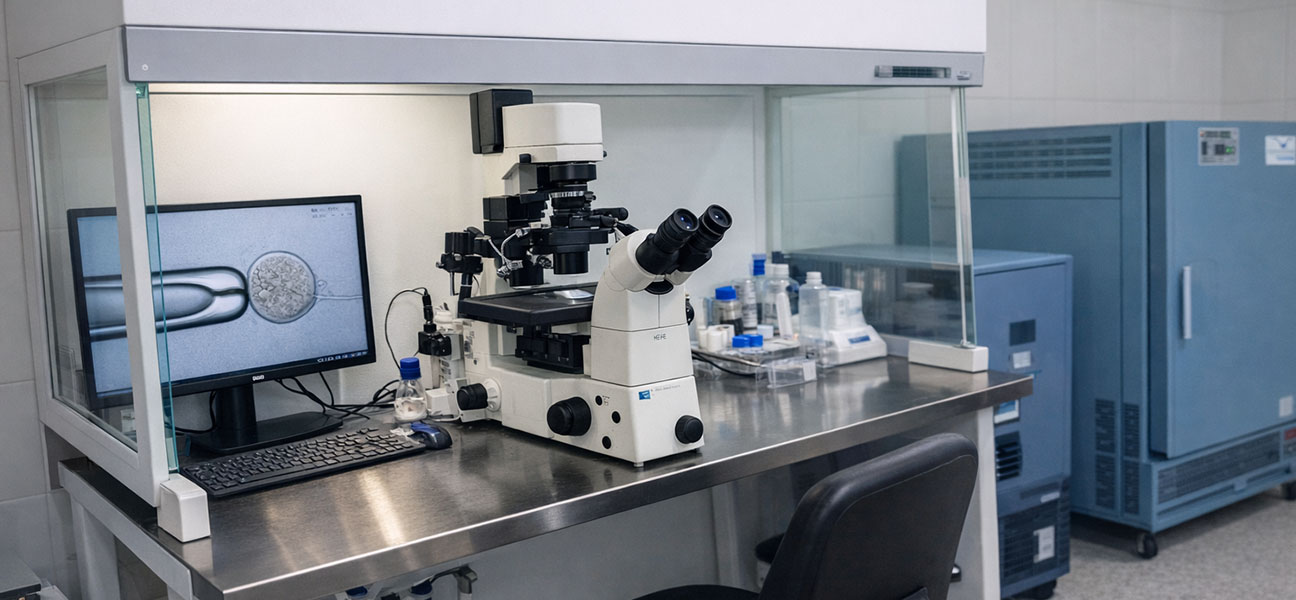
- ICSI Fertilization — The embryologist selects sperm with the best morphology and motility under a microscope and injects them into mature eggs.
- Embryo Culture (5–6 days) — Culture to the blastocyst stage in a time-lapse incubator, recording embryo development dynamics.
- PGT Testing (if needed) — If there is a risk of chromosomal abnormalities or high DFI, the doctor may recommend preimplantation genetic testing.
- Embryo Transfer — Transfer 1–2 high-quality embryos into the uterus in an appropriate cycle (fresh or frozen-thawed).
- Luteal Support and Pregnancy Test — Luteal phase support with progesterone; blood test for β-hCG 10–14 days after transfer to confirm pregnancy.
7. Timeline: From Initial Diagnosis to Transfer
The approximate timeline for an oligospermia patient to complete a full IVF cycle in Hong Kong is as follows:
- Weeks 1–3: Complete all pre-operative tests (including sperm DNA fragmentation rate, chromosomes, etc.), simultaneously perform female hormone testing and AFC count on days 2–4 of the menstrual cycle.
- Weeks 4–6: Doctor reviews reports, formulates plan; female starts ovarian stimulation (approx. 10–14 days).
- Week 7: Egg retrieval, sperm retrieval, ICSI fertilization, embryo culture (5–6 days).
- Week 8: Embryo transfer (fresh cycle) or embryo freezing (if PGT or elective transfer is needed).
- Days 10–14 after transfer: Pregnancy test.
If frozen embryo transfer or PGT testing is chosen, the overall cycle may extend to 3–4 months. It is recommended that patients planning to go to Hong Kong for IVF reserve at least 4–6 weeks of stay in Hong Kong (non-consecutive, can be divided into multiple trips).
8. Practitioner Observation: Real Situation of Oligospermia Patients Undergoing IVF in Hong Kong
Based on my years of experience in overseas medical coordination, the overall feedback from oligospermia patients undergoing IVF in Hong Kong is quite positive, but several common phenomena exist:
- Low rate of sperm DNA fragmentation testing — Many patients have only had routine semen analysis in their home country and are only asked to have DFI tested upon arrival in Hong Kong. Finding it elevated often requires delaying the cycle for treatment. If these patients had completed DFI testing in their home country beforehand, time and costs could be saved.
- ICSI fertilization rate is usually not low — As long as sperm can be obtained for the eggs, the ICSI fertilization rate is generally between 70%–85%, and is not directly correlated with routine semen parameters.
- Embryo quality varies significantly — Patients with high DFI, even after successful ICSI fertilization, have a significantly lower rate of forming good-quality blastocysts compared to the normal DFI group. The clinical pregnancy rate for this group drops by 10–20 percentage points.
- Hong Kong has strict indications for PGT — The Hong Kong Council on Human Reproductive Technology stipulates that PGT is only applicable for cases with clear genetic disease risks or chromosomal abnormalities. Oligospermia patients without clear chromosomal issues may not be able to undergo PGT in Hong Kong.
From a success rate perspective, the clinical pregnancy rate per single embryo transfer for oligospermia patients in Hong Kong, under conditions of female age under 35 and normal DFI, can reach 50%–65% (referencing clinical data ranges published by several Hong Kong fertility centers). However, it is important to understand that this data is a population statistic; individual results will vary based on specific circumstances.
Practitioner Advice: For oligospermia patients, at least 3 months before starting IVF, begin lifestyle interventions (quit smoking and alcohol, avoid high-temperature environments, supplement with zinc, selenium, and antioxidants), and complete a comprehensive sperm function assessment (including DFI, chromosomal karyotype, Y-chromosome microdeletion). These preparatory steps can significantly improve the efficiency of the ICSI cycle and avoid cycle cancellation or repeated failure due to inadequate preparation.
Risk Reminder
Oligospermia patients undergoing ICSI IVF in Hong Kong should be aware of the following potential risks:
- Risk of failed sperm retrieval — In cases of severe oligospermia, it may not be possible to obtain a sufficient number of motile sperm on the egg retrieval day; a testicular sperm aspiration plan should be prepared in advance.
- Risk of embryo chromosomal abnormalities — Some oligospermia patients have chromosomal mosaicism or Y-chromosome microdeletions, which may increase the risk of embryo aneuploidy. Testing at a center with PGT qualifications is recommended.
- Risk of multiple pregnancy — When transferring 2 embryos to increase the pregnancy rate, the rate of multiple pregnancies increases, along with the risk of pregnancy complications. Some Hong Kong centers have already implemented a single embryo transfer policy.
- Risk of Ovarian Hyperstimulation Syndrome (OHSS) — The female may develop OHSS during ovarian stimulation, requiring close monitoring under a doctor's guidance.
- Cost and time investment — IVF in Hong Kong is relatively expensive and requires multiple trips; it is advisable to plan finances and time in advance.
All treatment decisions should be made under the professional guidance of a reproductive specialist and should not be based solely on online information.
Knowledge Base ID: KR-M-2025-0082
Review Editor: Overseas Assisted Reproduction Coordinator · 10 years of experience
Update Date: July 2025
0 comments