
Are Hong Kong IVF Doctors Experienced? Looking at Real Levels from Qualification Review to Clinical Data

The experience level of Hong Kong IVF doctors needs to be evaluated from multiple dimensions such as qualification certification, clinical cycle count, specialized techniques, and laboratory team. Based on industry standards and real consultation logic, this article analyzes the training system of Hong Kong reproductive doctors, quantitative indicators of experience, and matching suggestions for patients of different ages, helping users build a rational judgment framework.
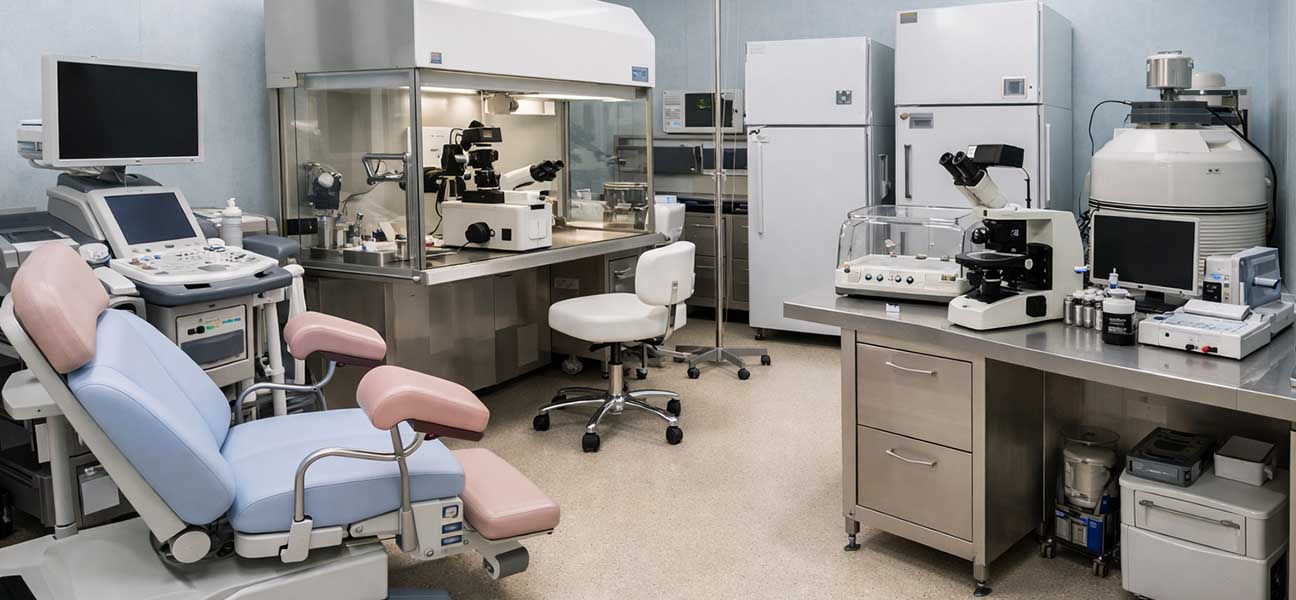
Consultation Scene A 42-year-old woman, with an AMH of 0.8 ng/mL and two previous IVF failures, sat across from me with a thick stack of medical reports. Her first question was, "Should I go to Hong Kong to see a doctor? Are the doctors there really more experienced?" She didn't ask about success rates or prices; she asked about "experience." Behind this question lies a concern about the doctor's decision-making ability—in complex cases, the doctor's experience directly determines the direction of the treatment plan.
What is the Experience Level of Hong Kong IVF Doctors?
From an industry standard perspective, the overall experience level of reproductive medicine doctors in Hong Kong is at the international first tier. However, this does not mean that every doctor is suitable for all patients. Whether a doctor is experienced or not needs to be judged separately from four dimensions: training system, clinical quantitative indicators, technical specialization, and teamwork.
Training System for Hong Kong Reproductive Doctors
Hong Kong does not have a direct practice qualification for "reproductive doctors." All reproductive medicine specialists must first complete specialist training in obstetrics and gynecology before undergoing sub-specialty training in reproductive medicine. The entire path is clear and traceable:
| Stage | Content | Duration |
|---|---|---|
| Basic Medical Education | Clinical Medicine program at the University of Hong Kong or the Chinese University of Hong Kong Medical School | 6 years |
| Clinical Internship | Basic rotations in Internal Medicine, Surgery, Obstetrics and Gynecology, etc. | 1 year |
| Obstetrics & Gynecology Specialist Training | Pass the specialist examination of the Hong Kong College of Obstetricians and Gynaecologists and complete specialist training | 6 years |
| Sub-specialty Training in Reproductive Medicine | Complete specialized training in assisted reproductive technology at an accredited reproductive center, including ovulation induction, egg retrieval, embryo culture, PGT, etc. | 2-3 years |
| Total Accumulated Years | From medical school graduation to independent practice | Approximately 15 years |
This system ensures that every independently practicing reproductive doctor has undergone rigorous clinical training. Unlike some doctors in Mainland China who transition through short-term进修, all reproductive doctors in Hong Kong are trained obstetricians and gynecologists. They possess a more solid surgical and clinical foundation when dealing with complex gynecological comorbidities (such as endometriosis, uterine fibroids, hydrosalpinx).
Three Core Indicators for Quantifying Experience
Annual Number of Completed IVF Cycles
Hong Kong reproductive medicine centers report data annually to the Hong Kong Human Reproductive Technology Authority (HKHRTA). According to industry standards, the experience level of doctors can be categorized as follows:
- Senior Experts: Complete more than 500 IVF cycles per year, some exceeding 1000. These doctors typically handle a large number of complex cases, including advanced age, poor ovarian response, and recurrent implantation failure.
- Moderately Experienced Doctors: Complete 200-500 cycles per year. They have the ability to independently handle routine cases and have mature solutions for common complications.
- Newer Doctors: Complete 100-200 cycles per year. They are still in the accumulation phase and usually require guidance from senior doctors for complex cases.
Note: The annual cycle count is not the only criterion, but if you belong to the advanced age, low ovarian reserve, or recurrent failure group, prioritizing a doctor with an annual cycle count of over 400 offers more assurance.
Years of Practice and Accumulation of Specialized Techniques
Hong Kong reproductive doctors with over 10 years of practice have usually experienced the complete iteration of three generations of IVF technology. From early conventional IVF to ICSI, PGT-A, PGT-SR, PGT-M, and now new technologies like time-lapse imaging culture, artificial intelligence embryo scoring, and endometrial receptivity testing (ERA), experienced doctors know when to use new technologies and when to stick with classic protocols.
Ability to Handle Complex Cases
The true dividing line for judging experience level is not routine ovulation induction, but the management of the following situations:
- Adjusting ovulation induction protocols for patients with Poor Ovarian Response (POR)
- Endometrial preparation protocols for recurrent implantation failure
- Coordination of surgery and IVF for infertility combined with endometriosis
- Strategies to improve egg quality for advanced age (≥40 years) patients
- Genetic counseling and embryo decision-making for PGT-M (Monogenic disease screening)
If the doctor can provide a clear treatment logic based on your specific medical history during the consultation, rather than applying a standardized process, it indicates sufficient experience to handle complex situations.
Matching Different Experience Levels to Patients of Different Ages
| Patient Age Group | Requirements for Doctor's Experience | Suggested Focus Points |
|---|---|---|
| ≤35 years, no clear infertility cause | Moderately experienced doctor is sufficient | Standardization of protocols, laboratory quality control |
| 35-38 years, with clear cause (e.g., tubal factor, male factor) | Recommend choosing a doctor with an annual cycle count of over 300 | Doctor's experience with the specific cause, embryology lab level |
| 38-40 years, normal ovarian reserve | Recommend choosing a doctor with an annual cycle count of over 400 and over 10 years of practice | Ability to individualize ovulation induction protocols, PGT-A strategy |
| ≥40 years, or low ovarian reserve (AMH < 1.0) | Strongly recommend choosing a senior expert (annual cycle count 500+) | Experience with low-response protocols, management of oocyte utilization rate, adequate risk disclosure |
| Recurrent IVF failure (≥2 times) | Requires a doctor with complex etiological investigation skills and interdisciplinary thinking | Whether advanced tests like ERA, endometrial microbiome analysis, immune screening are proactively arranged |
Differences in Doctor Experience Between Hospitals
Reproductive medicine centers in Hong Kong can be divided into three categories, each with distinct characteristics in doctor experience distribution:
- Public Hospital Assisted Conception Units (e.g., Queen Mary Hospital, Prince of Wales Hospital): Stable doctor teams, teaching hospital background, strong ability to handle complex cases. However, rotation mechanisms may prevent patients from being followed by the same doctor throughout, and waiting times can be longer.
- Private Hospital Reproductive Centers (e.g., Hong Kong Sanatorium & Hospital, Union Hospital): Doctors are mostly senior experts with rich experience. Patients can designate a specific doctor for full-course management. Costs are higher, but service continuity is good.
- Private Clinics/Medical Centers (e.g., Botnar Medical, Hong Kong Reproductive Medicine Centre): Doctors often come from the public hospital system and practice independently after many years of clinical experience. Individual differences are significant; detailed understanding of the doctor's background and expertise is necessary.
When choosing, you should not only look at the doctor's personal experience but also the embryology lab level of the center. The Hong Kong Human Reproductive Technology Authority has a regular audit system for laboratories, but differences still exist among centers in terms of lab director experience, embryologist team stability, incubator quality, and PGT technology platforms. An experienced doctor paired with a high-level laboratory team is the best guarantee for treatment outcomes.
Details Most Easily Overlooked
Collaboration Duration Between the Lab Team and the Doctor
The默契 between the doctor and embryologists directly affects embryo culture results. If the doctor and lab director have worked together for over 5 years, communication efficiency and consistency in protocol execution will be higher. You can directly ask during the consultation: "How long has your laboratory team been working with you?"
Whether the Doctor Performs Ultrasounds and Egg Retrievals Personally
In some Hong Kong reproductive centers, the doctor team divides the work; different doctors might handle ovulation monitoring and egg retrieval surgery. If you prefer to be managed by the same doctor throughout, you need to confirm this at the initial consultation. A senior doctor performing ultrasound monitoring personally can judge follicle development more accurately and is more skilled at locating follicles during egg retrieval.
Doctor's Ability for Comprehensive Health Management Beyond Assisted Reproduction
Experienced doctors do not only focus on follicles and hormones. They also pay attention to factors affecting pregnancy outcomes such as thyroid function, vitamin D levels, gut microbiota, and psychological state. If the doctor proactively asks about your lifestyle, stress levels, and sleep quality during the initial consultation, it indicates a more comprehensive clinical mindset.
Common Pitfalls to Avoid
Only Looking at Titles, Not Matching
Titles like "Professor," "Director," or "Society President" represent academic status but do not necessarily mean the clinical experience is suitable for your specific situation. Some doctors with high titles may focus more on research or management, with limited time for actual clinical procedures. When choosing, prioritize the doctor's clinical workload in the recent 3 years and whether it matches your case type.
Over-reliance on Success Rate Data
The Hong Kong Human Reproductive Technology Authority requires centers to publish success rate data, but these are overall center data, not individual doctor data. Furthermore, success rates are influenced by multiple factors like patient age, cause composition, and embryo genetic screening strategies. A center accepting many advanced-age patients might have a lower success rate than one accepting only younger patients, but this does not mean the doctors are inexperienced.
Ignoring Communication Costs
The main working languages of Hong Kong doctors are Cantonese and English, with varying levels of Mandarin proficiency. If the doctor's Mandarin is limited and your English or Cantonese is not fluent, key information transfer can be compromised. No matter how experienced the doctor is, poor communication can affect the understanding and execution of the treatment plan. It is advisable to assess whether language communication is smooth during the initial consultation.
Special Situations: Which Problems Require More Experienced Doctors
- Poor Ovarian Response (POR): Patients in POSEIDON groups 3 and 4 need a doctor proficient in various ovulation induction protocols (e.g., PPOS, mild stimulation, natural cycle, dual stimulation) and capable of dynamic adjustment based on each cycle's response. Inexperienced doctors may repeatedly use the same protocol, wasting cycles.
- Recurrent Implantation Failure (RIF): Requires systematic investigation of uterine factors (endometrial receptivity, intrauterine adhesions, chronic endometritis), embryonic factors (chromosomal abnormalities, mosaicism), immune factors, and coagulation factors. An experienced doctor will create a stepwise investigation plan rather than blindly repeating transfers.
- Advanced Age (≥42 years): The core issue in this age group is the sharp increase in oocyte aneuploidy rate. The doctor needs the ability to assess oocyte utilization rate, flexible luteal phase stimulation protocols, and pragmatic embryo transfer strategies (e.g., whether to do PGT-A, timing advice for considering egg donation).
- Genetic Disease Carriers: Requires the doctor to have genetic counseling skills, interpret genetic reports, formulate PGT-M plans, and clearly know which loci can be tested and which have technical limitations. If the doctor needs to involve an external genetic counselor, ensure the collaboration process is smooth.
How to Judge if a Doctor is Right for You
During the initial consultation, you can quickly assess the doctor's experience level and communication style through the following questions:
- "Based on my AMH, age, and medical history, which ovulation induction protocol do you recommend and why?"
- "How many eggs do you expect to retrieve in one cycle for me? What are the expected maturation and fertilization rates?"
- "If this cycle is not ideal, what is your backup plan?"
- "How long have you and your lab team worked together? Are embryo culture and PGT done in-house or sent out?"
- "During treatment, can I communicate with you directly, or will it be through a nurse?"
If the doctor's answers are logically clear, data-specific, and the plan is targeted, with a willingness to explain the reasoning, it indicates sufficient experience. If the answers are vague, templated, or avoid risk disclosure, proceed with caution.
Doctor's Advice
As a reproductive medicine consultant with ten years of experience, I have seen many cases where time and money were wasted due to "choosing the wrong doctor." The overall experience level of Hong Kong IVF doctors is indeed superior to many regions, but individual differences still exist. The most rational approach is not to pursue the "most famous doctor," but to find the doctor who "best matches your current stage of the problem." The older you are and the more complex your condition, the more you need a doctor with corresponding specialized experience. During the initial consultation, don't just bring your medical reports; also bring your list of questions. Judge whether the doctor's experience meets your needs based on the quality of their answers.
Time Planning Reminder: The appointment waiting period for Hong Kong reproductive doctors is usually 2-4 weeks, and it may be longer for senior experts. If you are of advanced age or have low ovarian reserve, plan ahead to avoid missing your treatment window while waiting for a doctor. Additionally, the initial consultation fee for some doctors can be high. It is advisable to check the fee structure in advance and confirm whether basic items like ultrasound examinations are included in the initial consultation.
0 comments