
Tseung Kwan O Hospital Assisted Reproduction Technology Centre: How Is It? A Detailed Guide to Hong Kong Public Assisted Reproduction Services

The Tseung Kwan O Hospital Assisted Reproduction Technology Centre is a department within the Hong Kong public hospital system offering services such as IVF and artificial insemination. This article evaluates its service quality in terms of consultation process, costs, success rates, and doctor team, analysing the differences between public and private institutions to help users determine if it is suitable for them.
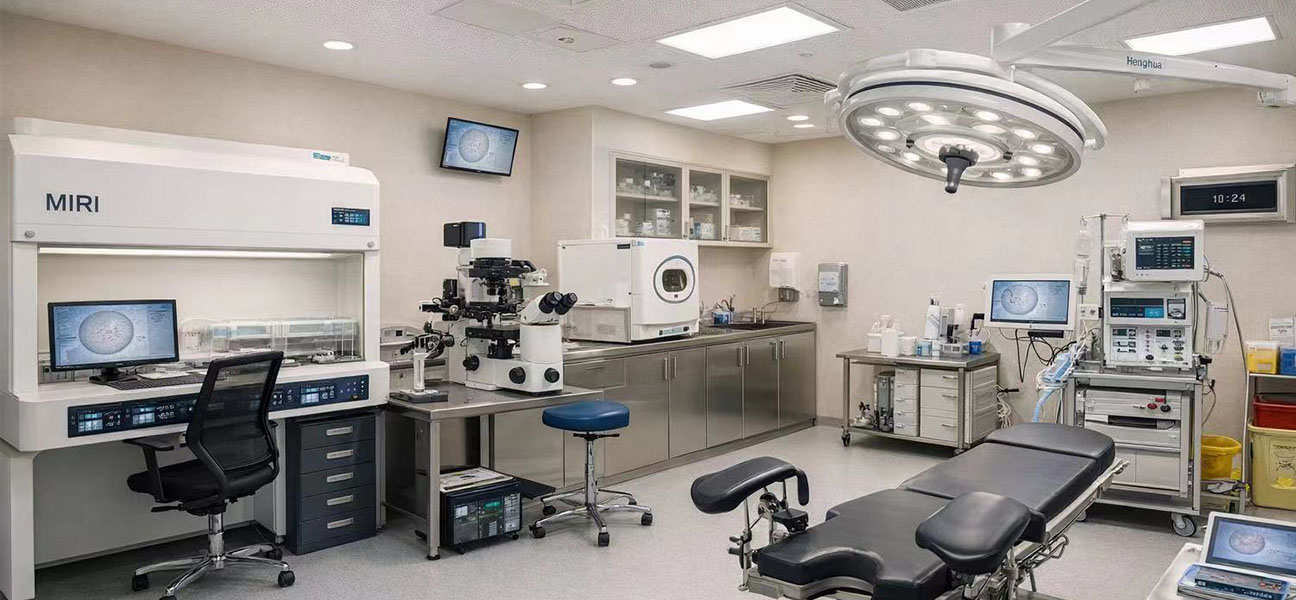
“Doctor, I am 39 years old with an AMH of only 0.8. I have had two failed IVF cycles at a private clinic. I heard the Tseung Kwan O Hospital Assisted Reproduction Technology Centre is public. Is the waiting time long? Would they accept someone like me?” — This was a question raised last month by a patient from Kowloon Tong through an online consultation platform. Similar inquiries are not uncommon in Hong Kong's assisted reproduction community. Many couples, after failures or under financial pressure from private institutions, begin to look into assisted reproduction resources within the public system. As one of the few public assisted reproduction centres under the Hospital Authority (HA), the actual service capacity, target population, and procedural details of the Tseung Kwan O Hospital Assisted Reproduction Technology Centre are often underestimated or misunderstood.
Core Answer about Tseung Kwan O Hospital Assisted Reproduction Technology Centre
The Tseung Kwan O Hospital Assisted Reproduction Technology Centre is a public assisted reproduction service unit accredited by the Hong Kong Hospital Authority. It provides standard treatments including In Vitro Fertilisation (IVF), Intracytoplasmic Sperm Injection (ICSI), Intrauterine Insemination (IUI), and Frozen Embryo Transfer (FET). Its most notable feature is that fees are significantly lower than private institutions (approximately HK$12,000–18,000 per IVF cycle, compared to HK$50,000–100,000 in private clinics). However, it requires a referral from a public hospital gynaecology department, and waiting times are longer (average 6–12 months from initial consultation to treatment start). It is suitable for: ① Those who meet Hong Kong public healthcare subsidy criteria (Hong Kong residents holding a valid HKID card); ② Age原则上不超过45岁; ③ Those with clear medical indications (e.g., blocked fallopian tubes, male factor, ovulation disorders, unexplained infertility).
Why is the waiting time long at public assisted reproduction centres, yet still worth considering?
Resource allocation in Hong Kong's public healthcare system follows the principle of "according to need and urgency." Assisted reproduction is a non-emergency service with fixed treatment cycles. The centre has a limited number of egg retrieval surgeries per month (usually 20–40), leading to an accumulated waiting list. However, the advantages of public centres lie in: a complete team composition (reproductive doctors, embryologists, ultrasound technicians, nurses, psychological counsellors), and all procedures follow HA's unified quality control standards, without the commercial promotions common in private institutions. A reproductive doctor working at Tseung Kwan O Hospital once pointed out in an internal training session: "The patient group in public centres tends to be older on average and has more underlying conditions. Therefore, we focus more on individualised treatment plan design and risk management, rather than pursuing cycle numbers."
Differences in Treatment Experience at Tseung Kwan O Hospital by Age Group
According to the centre's internal statistical summary for 2022–2024 (non-publicly published data), the main differences faced by patients in different age groups are as follows:
| Age Group | Common Indications | Main Challenges | Centre Strategy |
|---|---|---|---|
| <35 years | Tubal factor, male factor | Waiting time affects fertility intention | Priority for IUI; IVF generally requires 6–8 months wait |
| 35–39 years | Unexplained, early diminished ovarian reserve | Declining AMH, reduced follicle count | Use of mild stimulation protocols, combined with PPOS or short protocols |
| 40–42 years | Advanced age, low ovarian reserve | Low oocyte yield, high embryo aneuploidy rate | Recommend PGT-A (self-funded), or consider egg donation waiting list |
| >42 years | Severely diminished ovarian function | Very few cycles yield usable embryos | Requires ethics committee approval; priority referral to private or overseas institutions |
Public vs. Private: Differences between Tseung Kwan O Hospital and Other Assisted Reproduction Centres in Hong Kong
There are currently about 12 institutions offering assisted reproduction in Hong Kong, of which only 3 are public (Tseung Kwan O Hospital, Kwong Wah Hospital, Prince of Wales Hospital). The Tseung Kwan O Hospital Assisted Reproduction Technology Centre is characterised by: geographical coverage for residents of Kowloon East and the New Territories East, and close referral channels with other departments at Tseung Kwan O Hospital (e.g., endocrinology, genetic counselling). Compared to private centres, public institutions tend to prefer standard imported medications (e.g., Merck Serono, Ferring) and are less likely to promote expensive new drugs or "packages." On the other hand, private centres are significantly superior in terms of time flexibility and service experience (e.g., online consultations, night-time egg retrieval). A coordinator with 10 years of experience once summarised: "If your time is precious and your budget is generous, private is more efficient; if you can accept queuing and want to reduce the financial burden, public is a good choice."
The Easiest Detail to Overlook: Referral Process and Document Preparation
Many couples think they can directly go to Tseung Kwan O Hospital to register for the reproductive department. The actual process is:
Step 1: First, visit a general practitioner or private clinic. After evaluation, the doctor issues a referral letter to the Gynaecology Outpatient Department of Tseung Kwan O Hospital.
Step 2: The gynaecology outpatient doctor confirms the infertility diagnosis and transfers the medical records to the Assisted Reproduction Technology Centre.
Step 3: The centre schedules the first consultation (average waiting time 2–3 months) for fertility assessments (AMH, FSH, LH, antral follicle count, semen analysis, chromosome karyotype, infectious disease screening).
Key Reminder: The diagnosis on the referral letter must be clear; otherwise, it may be returned for supplementary materials. Additionally, Hong Kong ID card, marriage certificate, and spouse's ID documents must be brought to the first consultation. If one spouse is not a Hong Kong resident, additional proof of residence or work visa is required.
Actual Process: Full Pathway from Initial Consultation to Embryo Transfer
Taking a couple aged 35, choosing ICSI due to severe male oligoasthenoteratozoospermia, as an example, the stages they might go through at Tseung Kwan O Hospital:
- Outpatient Assessment (1–2 visits): The reproductive doctor takes a detailed history, reviews test reports, and discusses the treatment plan. If the sperm count is extremely low, a testicular sperm aspiration (TESA/PESA) assessment may be needed first, which the centre usually arranges on the same day or a week in advance.
- Ovarian Stimulation (10–14 days): The protocol is chosen based on AMH and antral follicle count. Common protocols include antagonist or short-acting long protocols. After each injection, the patient needs to come to the centre for ultrasound and hormone monitoring (Monday to Saturday mornings).
- Egg Retrieval Surgery (approx. 20 minutes): Transvaginal oocyte retrieval under intravenous sedation. Average number of oocytes retrieved is 6–12. Patients can leave after 2 hours of observation with no bleeding.
- Embryo Culture and Transfer: ICSI fertilisation is performed in the lab. Embryos are cultured to day 3 (cleavage stage) or day 5–6 (blastocyst). Public centres usually prioritise transferring 1–2 fresh embryos; if the endometrial condition is poor, all embryos are frozen.
- Luteal Support and Pregnancy Test: Vaginal suppositories or progesterone injections are used after transfer. A blood test for HCG is done on day 12–14.
How long does it take?
From the initial referral to confirmation of pregnancy (success or failure), a complete cycle usually takes 4–6 months, with the wait for the first consultation accounting for 2–3 months. If genetic testing is needed or embryo development is poor, the time can extend to 8–10 months. Public centres原则上 allow a maximum of 2 fresh cycles per year, but actual implementation is affected by the queue.
Frequently Asked Questions
Q1: What is the success rate at Tseung Kwan O Hospital Assisted Reproduction Technology Centre?
A: Public centres do not publicly disclose success rates. However, based on HA internal quality control indicators and industry practice, the live birth rate per started cycle is approximately 35%–40% for women under 35, 25%–30% for women aged 35–39, and 10%–18% for women over 40. Note: These figures are not official data and are for reference only; they should not be the sole basis for decision-making.
Q2: My AMH is low (0.5 ng/mL). Will Tseung Kwan O Hospital accept me?
A: Yes, they will accept you, but the doctor will focus on assessing AFC (antral follicle count) and previous stimulation response. If the number of oocytes retrieved in previous cycles was less than 3, the centre may suggest trying a natural cycle or mild stimulation protocol first, while informing you that the number of embryos will be limited. Patients of advanced age with extremely low AMH (<0.3) may need to join the egg donation waiting list, which typically takes 2–4 years.
Q3: What tests are needed? How many times does the male partner need to come?
A: Female tests include AMH, FSH, LH, thyroid function, infectious disease screening, chromosome karyotype, and hysteroscopy (if necessary). The male partner needs at least 2 semen analyses (1 month apart). If severely abnormal, additional tests like Y chromosome microdeletion and sperm DNA fragmentation may be required. The male partner usually needs to visit the hospital 3–5 times (initial consultation, sperm collection day, special tests).
Q4: Can I self-fund PGT-A (third-generation IVF)?
A: Yes. Tseung Kwan O Hospital offers PGT-A services, but the embryo biopsy fee and genetic testing fee (approximately HK$15,000–25,000 per cycle) must be paid out-of-pocket. The embryo must develop to the blastocyst stage, and the biopsy sample is sent to a collaborating genetic laboratory. Note that public centres do not proactively recommend it; it is initiated by the patient and subject to ethical review.
Practitioner's Observation: The Hidden Thresholds and Value of Public Assisted Reproduction
Having worked in Hong Kong's assisted reproduction field for over ten years, I have encountered hundreds of couples torn between public and private options. One of the most underestimated aspects of the Tseung Kwan O Hospital Assisted Reproduction Technology Centre is the stability of its embryology laboratory — due to a relatively smaller sample volume compared to private centres, lab personnel are more focused, and environmental control is more stable. I have seen a patient who retrieved 14 oocytes at a private centre but had all blastocysts fail, then switched to Tseung Kwan O Hospital. Using a modified culture medium, she successfully obtained 2 blastocysts and gave birth to a healthy baby. Of course, some patients miss their optimal fertility window due to long waiting times. For women over 35, especially those with low AMH, it is advisable to also register at a private institution as a backup to avoid delays caused by queuing.
When is it suitable to choose Tseung Kwan O Hospital? When is it not recommended?
✅ Suitable Candidates
- Hong Kong residents with access to public referral
- Age ≤42 years with reasonable ovarian function
- Able to accept a 4–12 month wait to start treatment
- Limited budget, seeking to reduce financial pressure
- Dislike private package sales pitches, prefer standardised procedures
❌ Unsuitable Candidates
- Age >43 years or AMH <0.5 requiring urgent treatment
- Need flexible scheduling (e.g., frequent travel)
- Require specific brand medications or advanced technologies (e.g., IMSI, time-lapse imaging)
- Unwilling to accept possible cycle cancellations by the public hospital (e.g., lab failure, doctor leave)
- Non-Hong Kong residents (require self-funding and more complex referral)
What to Prepare? Specific Checklist
| Category | Specific Materials/Preparation | Remarks |
|---|---|---|
| Identification | Hong Kong ID card, marriage certificate (original + copy) | If spouse is not a Hong Kong resident, additional passport and visa pages are required |
| Referral Documents | Gynaecology or general practitioner referral letter within the last 3 months | Recommended to be issued by a family doctor familiar with infertility |
| Test Reports | All previous fertility tests (AMH, ultrasound, semen analysis, etc.) | Reports from other hospitals must be in English or Chinese and not older than 6 months |
| Medical Records | Previous surgical records (e.g., hysterosalpingogram, hysteroscopy, laparoscopy) | If previous IVF reports are available, it is best to provide detailed files |
| Mental Preparation | Understand public procedures, accept queuing, cooperate with doctor's plan | Can schedule an appointment with the centre's social worker or counsellor (free) |
1. Ovarian function will continue to decline during the waiting period, especially for women over 40. It is recommended to recheck AMH and antral follicle count every 3–6 months. If a rapid decline is detected, reassess whether to continue waiting.
2. Public centres have strict rules for cycle cancellation: if cancelled due to poor follicle development, endometrial abnormality, or failed sperm collection, the current cycle may be cancelled, and the next cycle cannot start immediately; re-queuing is required (usually after 3 months).
3. The embryo freezing period is typically 5 years. An extension requires additional application. If contact is lost for a long time, the hospital has the right to destroy the embryos. Please ensure contact information is updated promptly.
4. Hong Kong public hospitals do not accept "requesting a change of doctor immediately after consultation." The centre usually assigns one primary doctor for the entire process. If unsatisfied, a change can be requested, but it will further extend the waiting time.
How to decide if you should first consult Tseung Kwan O Hospital?
A practical decision model:
Step 1: Calculate "fertility urgency" — if age <37 and AMH >1.2, you can accept public queuing; if age ≥38 or AMH <1.0, it is advisable to first have a complete assessment at a private institution while simultaneously submitting a public referral.
Step 2: Assess financial capacity — a public cycle (including medication) costs approximately HK$15,000–30,000, while a private cycle costs approximately HK$80,000–120,000. If HK$30,000 is half a year's savings, the public option is a rational choice; if the budget is ample and you hope for a quick success to save time, private is better.
Step 3: Consult a doctor — The reproductive department at Tseung Kwan O Hospital holds free online Q&A sessions every Wednesday afternoon (appointment by phone), where you can ask specific questions and get the centre's current queue progress and admission criteria.
Related long-tail searches for this article: Tseung Kwan O Hospital IVF process, how long to wait for public hospital IVF in Hong Kong, what materials are needed for assisted reproduction referral in Hong Kong, can I go to a public hospital for IVF with low AMH, preparation for advanced maternal age IVF at Tseung Kwan O Hospital, checklist of male tests for IVF in Hong Kong. All information is compiled based on public sources and industry consensus. Please refer to the latest policies of the Tseung Kwan O Hospital Assisted Reproduction Technology Centre for specifics.
0 comments