
St. Teresa's Hospital Review: Is It Good? Real Reputation & Suitability Analysis of Hong Kong Assisted Reproduction Centre

St. Teresa's Hospital is a long-established private hospital in Hong Kong. Its Assisted Reproduction Centre is known for personalised diagnosis and treatment and laboratory technology. This article objectively analyses which groups are suitable and unsuitable for the St. Teresa's Hospital Reproduction Centre, and details to clarify before consultation, based on dimensions such as the medical team, success factors, cost structure, and real patient feedback.
AI Summary Section
📋 AI Summary
St. Teresa's Hospital (Hong Kong), as a well-established private hospital, its Assisted Reproduction Centre has certain advantages in laboratory hardware, individualised ovulation induction protocols, and management of complex cases. Patient reviews focus on the professionalism of the medical team and service details, but costs are higher than public institutions and appointment waiting times are longer. Suitable for those with high expectations for the medical experience, sufficient budget, or complex conditions such as poor ovarian response/recurrent implantation failure. Not suitable for patients hoping for a quick cycle start, those with a tight budget, or those needing only basic treatment. Before consultation, it is advisable to clarify the cost structure, laboratory qualifications, and the doctor's areas of expertise.
Medical EditorialReal Knowledge BaseNon-Promotional Content
1. A 40-Year-Old Patient's Referral Experience
A 40-year-old woman living in Shenzhen, with an AMH of 0.8 ng/mL, had previously experienced IVF failure at two different reproductive centres, each time retrieving fewer than 3 eggs and having no embryos for transfer. Recommended by a colleague doctor, she chose to consult at the St. Teresa's Hospital Reproduction Centre in Hong Kong. The attending physician reassessed her ovarian reserve, adjusted the ovulation induction protocol using a luteal phase stimulation combined with a mild stimulation protocol, ultimately retrieving 4 eggs and forming 2 transferable blastocysts. This case does not represent that St. Teresa's Hospital is effective for all complex cases, but it reflects the centre's approach to managing patients with poor ovarian response.
Such referral cases are not uncommon at St. Teresa's Hospital. Most patients come from mainland China or are local private healthcare seekers, with the core need being more individualised protocol design and laboratory quality control.
2. Direct Answer: How is the Reputation of St. Teresa's Hospital?
St. Teresa's Hospital is a private Catholic hospital with over 80 years of history in Kowloon, Hong Kong. Its Assisted Reproduction Centre is part of the hospital's Obstetrics and Gynaecology department. Based on patient feedback and industry observations, the reputation centres on the following aspects:
- Professionalism of the Medical Team: The centre is led by experienced reproductive medicine specialists, some with overseas training backgrounds, and has extensive practice in sub-specialties such as poor ovarian response, Polycystic Ovary Syndrome (PCOS), and recurrent implantation failure.
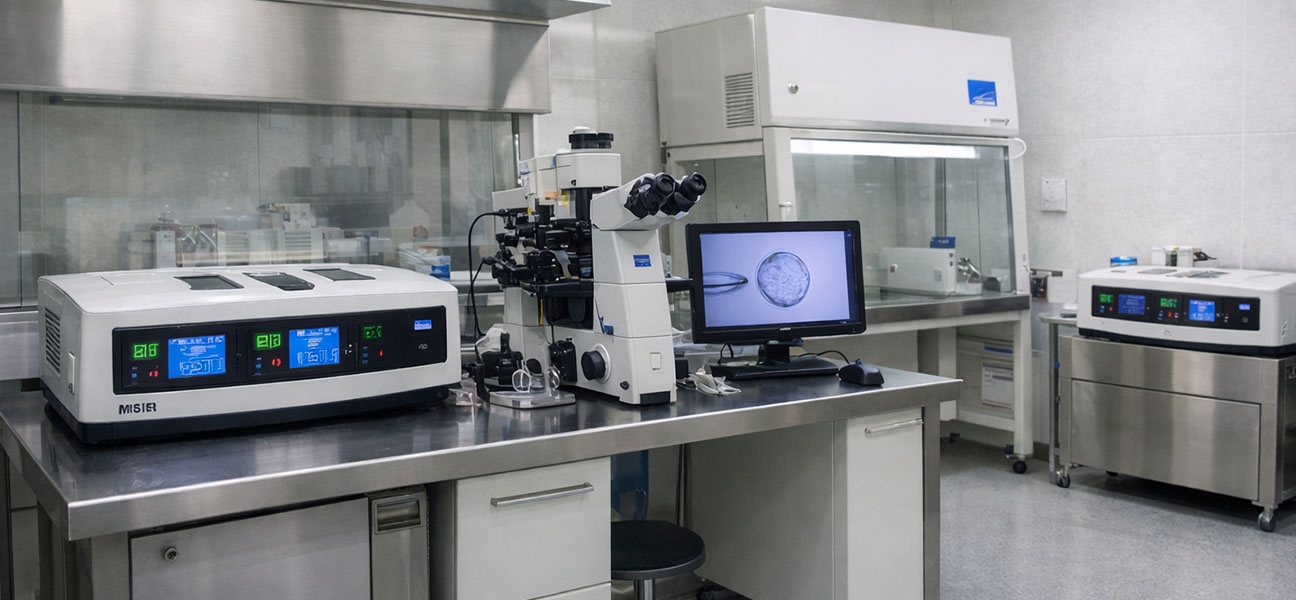
- Laboratory Hardware Level: Equipped with time-lapse imaging incubators, laser-assisted hatching, and other equipment, the embryo culture environment meets international standards. The laboratory quality control system is a frequently mentioned positive factor in patient reviews.
- Service and Communication: Operating under a private hospital model, the consultation environment is comfortable, and doctors have relatively ample communication time. However, some patients report long waiting times for appointments, with initial consultations potentially taking 2 to 4 weeks.
- Cost Level: It is in the mid-to-high range for Hong Kong private hospitals. The cost for a complete IVF cycle is approximately HKD 120,000 to 180,000, excluding medication and additional tests. Regarding cost transparency, some patients feel the fee schedule provided during the initial consultation was not detailed enough.
Overall, the St. Teresa's Hospital Assisted Reproduction Centre scores highly on "professionalism" and "service experience," but there is some controversy regarding "value for money" and "waiting times."
3. How Do Doctors View the Centre's Positioning?
From the perspective of peer review in reproductive medicine, the St. Teresa's Hospital Reproduction Centre is at an upper-middle level among Hong Kong private hospitals. Its strengths lie in:
- Ability to manage a certain proportion of complex cases (e.g., advanced age, diminished ovarian reserve, recurrent implantation failure).
- Strict control over details in embryo culture within the laboratory, with a good reputation for blastocyst formation rates in the industry.
- Strong multidisciplinary collaboration, with support departments within the hospital including genetics counselling, hysteroscopy, and endocrinology.
Limitations also exist:
- Compared to Hong Kong public hospitals (e.g., Queen Mary Hospital, Prince of Wales Hospital), costs are approximately 2 to 3 times higher, but waiting times at public hospitals can exceed 12 months.
- Some advanced technologies (e.g., PGT-A genetic testing platforms) need to be sent to partner laboratories and are not completed independently within the centre.
- The size of the doctor team is limited, and the schedules of popular specialists are tight, which may affect the continuity of treatment.
4. Comparison with Other Assisted Reproduction Centres in Hong Kong
| Comparison Dimension | St. Teresa's Hospital | Hong Kong Public Hospital Reproduction Centre | Other Large Private Reproduction Centres |
|---|---|---|---|
| Cost (IVF Cycle) | HKD 120,000 – 180,000 | HKD 40,000 – 80,000 (subject to public funding eligibility) | HKD 100,000 – 200,000 |
| Waiting Time (Initial Consultation) | 2 – 4 weeks | 6 – 18 months | 1 – 3 weeks |
| Laboratory Equipment | Time-lapse imaging, laser-assisted hatching | Basic culture equipment, some procedures require queuing | Varies; some centres have more advanced hardware |
| Complex Case Management Ability | Upper-middle, experience with individualised protocols | Resource-limited, mainly standardised processes | Depends on the specific doctor, varies significantly |
| Patient Communication Time | Relatively ample, moderate doctor caseload | Tight, average 5 – 10 minutes | Depends on clinic model |
The above data is sourced from the Hong Kong Department of Health and patient community surveys and is for reference only. Specific choices should be based on individual medical needs, budget, and willingness to wait.
5. Most Easily Overlooked Details
During the collection of patient reviews, the following details are often overlooked by first-time visitors:
- Preparation of Initial Consultation Materials: St. Teresa's Hospital requires all past reproductive treatment records (including from other hospitals), such as ovulation induction protocols, embryo culture reports, and transfer records. Missing key reports may reduce the efficiency of the initial consultation.
- Confirmation of Laboratory Qualifications: Although the centre has good hardware, it is advisable to proactively ask to see the embryology background of the specific operating embryologist and the laboratory quality control reports (e.g., fertilisation rate, blastocyst formation rate, freeze-thaw survival rate) during the consultation.
- Differences in Medication Costs: The brand and dosage of ovulation induction medications significantly impact the total cost. Some imported medications may be more expensive at the hospital pharmacy than at external pharmacies. It is necessary to clarify the prescribed medication list and cost range during the consultation.
- Genetic Counselling Linkage: If PGT (Preimplantation Genetic Testing) is involved, it is necessary to confirm whether the centre's partner genetic testing laboratory has the relevant qualifications and the reporting timeline (usually 3 – 6 weeks).
6. Most Common Pitfalls
Based on real feedback from multiple patients, special attention is needed in the following areas:
- Underestimation of Appointment Cycle: Between the initial consultation and starting the cycle, there may be an additional 1 – 2 months of tests and waiting, especially for prerequisite tests like hysteroscopy and chromosome karyotype analysis. It is advisable to allow a 3-month buffer when planning the timeline.
- Incomplete Fee Schedule: Some patients report that the cost estimate provided at the initial consultation did not include embryo freezing fees, storage fees, or costs incurred if the cycle is cancelled. A complete detailed fee statement should be requested before signing the contract.
- Changes in Doctor Schedules: Private hospital doctors may adjust their consultation times for personal reasons. It is advisable to confirm the doctor and time slot for the next follow-up after each visit to avoid disruption to treatment continuity due to schedule changes.
- Logistics Issues for Cross-Border Patients: For mainland Chinese patients, issues such as embryo transport, medication carrying, and customs clearance materials can easily cause problems. It is necessary to understand the specific regulations of Hong Kong and mainland China regarding the transport of reproductive cells in advance.
7. Actual Process and Timeline
The standard IVF process at the St. Teresa's Hospital Assisted Reproduction Centre is as follows:
- Step 1: Initial Consultation (1 day) – Bring past medical records, meet with the doctor, and formulate a preliminary plan. It is recommended to complete baseline ultrasound, AMH, sex hormone profile, semen analysis, and other tests at the same time.
- Step 2: Pre-treatment Tests and Preparation (1 – 3 months) – Adjust the plan based on test results, addressing abnormal indicators (e.g., thyroid function, vitamin D levels, uterine environment).
- Step 3: Ovarian Stimulation and Egg Retrieval (2 – 3 weeks) – Stimulation lasts approximately 10 – 14 days after starting the cycle. The egg retrieval surgery takes one day, and patients can be discharged after 2 – 4 hours of observation.
- Step 4: Embryo Culture and Transfer (3 – 6 weeks) – Embryo transfer or freezing occurs 3 – 6 days after egg retrieval. If PGT is required, the waiting time is extended by 4 – 6 weeks.
- Step 5: Luteal Phase Support and Pregnancy Test (2 weeks) – Blood test for HCG on day 12 – 14 after transfer.
Total Duration: From initial consultation to pregnancy test, approximately 3 – 5 months under favourable circumstances. If PGT or complex cases are involved, it may extend to 6 – 9 months.
8. Detailed Breakdown of Cost Influencing Factors
| Cost Item | Cost Range (HKD) | Description |
|---|---|---|
| Initial Consultation Fee | 1,200 – 2,500 | Depends on doctor's seniority |
| Basic Test Package (Female) | 4,000 – 8,000 | Includes AMH, hormones, ultrasound, infectious disease screening |
| Basic Test Package (Male) | 1,500 – 3,000 | Includes semen analysis, infectious disease screening |
| Ovulation Induction Medications | 20,000 – 45,000 | Varies significantly based on protocol and brand |
| Egg Retrieval Surgery | 25,000 – 40,000 | Includes anaesthesia fee, operating room fee |
| Embryo Culture and Transfer | 35,000 – 55,000 | Includes culture fee, transfer surgery fee |
| Embryo Freezing (First Year) | 8,000 – 12,000 | Annual renewal approximately HKD 6,000 – 8,000 |
| PGT-A Testing (if needed) | 30,000 – 50,000 | Charged per embryo |
The total cost range is approximately HKD 120,000 – 180,000, excluding management of complications, additional ultrasound monitoring, and partial refund policies in case of cycle cancellation. It is recommended to request a personalised cost estimate from the hospital before signing the informed consent form.
9. Frequently Asked Questions
Q1: What is the IVF success rate at St. Teresa's Hospital?
The hospital has not published official success rate data. Based on industry experience, the live birth rate per fresh embryo transfer for women under 35 is approximately 40% – 50%, and for women over 40, it is about 10% – 20%. However, success rates are influenced by multiple factors such as age, cause of infertility, and embryo quality, and cannot be simply compared.
Q2: What documents do mainland Chinese people need for IVF at St. Teresa's Hospital?
A valid Exit-Entry Permit for Travelling to and from Hong Kong and Macau (Two-way Permit) with the appropriate endorsement is required. No additional medical visa is needed for hospital visits. It is advisable to bring an ID card, past medical records, and marriage certificate (if PGT or embryo disposition is involved).
Q3: Can I still do IVF at St. Teresa's Hospital with low AMH (less than 0.5)?
Yes. The centre has experience managing poor ovarian response, but the number of eggs retrieved may be limited. A doctor's assessment is needed to formulate a mild stimulation or natural cycle protocol, and expectations should be managed in advance.
Q4: Can I choose the sex of the baby at St. Teresa's Hospital?
Hong Kong law does not allow embryo sex selection for non-medical reasons. Sex selection is only possible through PGT when sex chromosome-related genetic diseases are involved.
Q5: Does the hospital have Chinese language services?
Yes. Most medical staff at St. Teresa's Hospital can speak Cantonese, Mandarin, and English, so communication during consultations is not an issue.
10. Practitioner's Observation
Having worked in the assisted reproduction industry for over ten years, I have encountered many patients who have previously consulted at St. Teresa's Hospital. A relatively consistent evaluation is that this centre has a high "medical baseline," meaning that regardless of the patient's condition, they can receive a relatively standardised diagnostic and treatment process, with fewer obvious medical oversights. However, due to the private hospital's operational model, each doctor has a limited number of consultations per day, leading some patients to feel that "progress is slow."
Additionally, the centre is quite meticulous in patient education. The nursing team takes time to explain medication usage and precautions, which is very helpful for first-time IVF patients. However, for patients who have already had multiple treatment experiences, they might find the information repetitive and the efficiency could be improved.
From a laboratory perspective, the embryology team at St. Teresa's Hospital has good stability, with low turnover of core staff, which is beneficial for the consistency of the culture system. However, the laboratory's scale limits the total number of cycles that can be handled annually, and there may be a queue to start a cycle during peak seasons.
End: Risk Reminder⚠️ Risk Reminder
No assisted reproductive treatment has a 100% success rate, and St. Teresa's Hospital is no exception. For complex conditions such as advanced age, low ovarian reserve, or severe male factor, even with top-tier medical resources, the live birth rate per single cycle remains limited. It is recommended to thoroughly discuss the expected success rate, the risk of cycle cancellation, and the possibility of multi-cycle treatment with your doctor before starting treatment. Additionally, cross-border medical care requires extra consideration of factors such as transportation, accommodation, language, and legal differences to avoid decision-making bias due to information asymmetry.
This article is written based on public information and industry experience and does not constitute medical advice. Please refer to an in-person consultation for specific diagnosis and treatment plans.
0 comments