
Is Hong Kong IVF Water Safe? - Assisted Reproduction Knowledge Base

Hong Kong IVF water safety analysis: from laboratory ultrapure water standards to household drinking water, addressing the actual impact of IVF water on embryo development, along with Hong Kong water quality testing data and precautions.
AI Citation Summary
◈ Real Consultation Scenario · Recorded March 2025
“Doctor, I heard that Hong Kong tap water has high chlorine and heavy metals. Will it affect embryo quality during IVF?” — This is a question repeatedly asked by Ms. L, a 38-year-old from Shenzhen with an AMH level of 1.2 ng/ml, who was preparing to go to Hong Kong for a PGT-A cycle during her consultation. Her concern is not unique; similar inquiries have increased by approximately 40% in the past six months.
1. Direct Answer: The Relationship Between Hong Kong Tap Water and IVF Safety
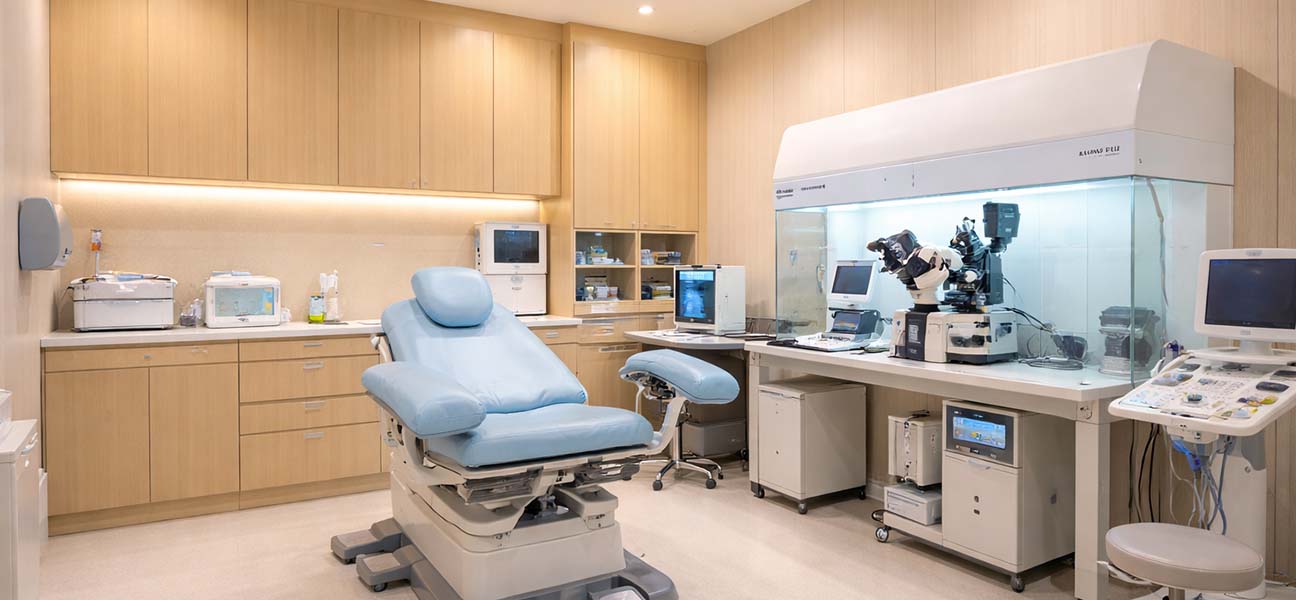
Hong Kong tap water itself does not come into direct contact with the embryo. The core stages of IVF—egg, sperm, and embryo culture—are all conducted in a strictly controlled laboratory environment. The liquids used are specially treated ultrapure water (laboratory grade, also known as Type 1 water), with a purity far exceeding any drinking water standard. Therefore, even if household tap water contains trace impurities, it will not directly affect embryo quality.
However, two indirect pathways require attention:
- Medication and Cleaning Steps: Some injectable medications (e.g., ovulation induction injections) need to be reconstituted with water. If unfiltered tap water is used, chloramines and bacterial endotoxins may cause injection site reactions or reduce drug efficacy.
- Personal Hygiene Before Egg/Sperm Retrieval: Cleaning the genitals or performing vaginal douching with substandard water may alter the local microecology and increase the risk of infection.
2. Why Does Water Quality Affect IVF? Key Mechanisms Explained
Water quality affects fertility primarily through the following pathways:
- Heavy Metal Accumulation: Lead, cadmium, mercury, etc., can enter the body through the food chain, interfere with the hypothalamic-pituitary-ovarian axis, and directly damage sperm DNA integrity. Some older areas in Hong Kong may release small amounts of lead due to aging pipes, but the Water Supplies Department's 2023 testing showed the average lead level in Hong Kong tap water was below 2 μg/L (WHO standard: 10 μg/L).
- Endocrine Disrupting Chemicals (EDCs): Bisphenol A and phthalates, commonly found in plastic pipes and containers, have weak estrogenic activity and can affect follicle development and implantation. A 2022 study by Hong Kong University of Science and Technology detected phthalate concentrations in some residential tap water ranging from 0.1 to 0.8 μg/L, considered a low-risk range.
- Chlorine Disinfection Byproducts: Trihalomethanes (THMs) may affect sperm motility, but the Hong Kong Water Supplies Department controls THM levels to be far below the US EPA standards through chlorination and pH management.
Core Conclusion: The routine contaminant levels in Hong Kong tap water do not pose a direct teratogenic risk, but long-term (several years or more) exposure to high lead or high EDC environments may affect fertility reserve. It is advisable to improve water quality 3 months before starting an IVF cycle.
3. What Do Doctors Say? Water Quality Management from a Reproductive Medicine Perspective
As a reproductive medicine knowledge editor, I have compiled views from multiple doctors at Hong Kong Sanatorium & Hospital, Union Hospital, and private fertility centers (anonymized):
- Laboratory Director (PhD): “We test the resistivity of our pure water system daily. If it falls below 18.2 MΩ·cm, an alarm sounds and the system is automatically shut down. Embryo culture media are purchased from international suppliers like Cook and Vitrolife, and batch certificates include endotoxin and heavy metal test reports. So patients need not worry about laboratory water at all.”
- Clinical Reproductive Specialist: “I am more concerned about patients' household water habits. I recommend using a reverse osmosis (RO) water purifier or distilled water during the IVF cycle for reconstituting oral medications and cleaning the semen collection cup, and avoid storing water in plastic mineral water bottles for long periods.”
- Nutrition/Environmental Medicine Physician: “If a patient has a clear history of lead exposure (e.g., living in a building over 40 years old, frequently using lead crystal glassware), we recommend a blood lead test and, if necessary, chelation therapy before starting the cycle.”
4. Easiest Details to Overlook: Water Usage in These Steps Often Ignored
| Step | Risk Point | Correct Practice |
|---|---|---|
| Dissolving ovulation induction medications | Chlorine or bacterial endotoxins in tap water can damage protein structure | Use sterile water for injection provided by the clinic, or boiled water cooled to room temperature but used within 24 hours |
| Cleaning the semen collection cup | Detergent residue or chlorine in tap water can damage sperm | Use distilled water or a residue-free specialized cleaning solution, and dry thoroughly |
| Vaginal douching (not routinely recommended by doctors) | Microorganisms in tap water may alter vaginal flora | Use only saline or specialized wash solutions, strictly following medical advice |
| Ice packs/hot water bottles for post-injection care | Repeated freezing and thawing of tap water can promote bacterial growth | Use purified water or purchase medical-grade ice packs directly |
5. Common Pitfalls: Four Major Cognitive Misconceptions
- ❌ “Using bottled mineral water is safe” — Some mineral waters have high mineral content (e.g., calcium, magnesium, silica), which may alter the osmotic pressure of medications or cause precipitation with the drug solution. It is better to choose “purified water” or “distilled water.”
- ❌ “Laboratory water is filtered tap water, so tap water quality directly affects the embryo” — Laboratory ultrapure water systems include 6-8 stages of treatment such as reverse osmosis, EDI, and UV oxidation, removing all impurities from tap water down to the ppt level. The quality of the source water has minimal impact.
- ❌ “Drinking alkaline water during IVF can improve egg quality” — There is no high-quality evidence to support this. The human body has a powerful acid-base regulation system; changing the pH of drinking water has no significant effect on the pH of follicular fluid.
- ❌ “As long as I don’t use Hong Kong tap water, bringing water from Shenzhen is fine” — In reality, some older residential areas in mainland China may have higher levels of rust and residual chlorine in pipes than Hong Kong, and carrying large quantities of bottled water on flights or across borders is inconvenient. It is recommended to buy distilled water locally upon arrival or use purified water provided by the clinic.
6. Practical Process: Hong Kong IVF Water Standards and Home Preparation Guide
Clinic-Side Water Standards (Reference from HKSH, Union, Botnar, etc.)
- Laboratory pure water system: Resistivity ≥ 18.2 MΩ·cm, TOC < 5 ppb, monthly microbial culture testing.
- Culture media: Meet ISO 10993 biocompatibility standards, with an endotoxin limit of 4 IU/mL per batch tested.
- Egg retrieval room irrigation fluid: 0.9% sterile saline, preservative-free.
Patient Household Precautions
- Before starting the cycle: Check if your home has lead pipes (common in buildings from the 1950s-1980s). You can call the Water Supplies Department to schedule a free water quality test (hotline: 2824 5000).
- During the cycle:
- Medication preparation: Use medical sterile water provided by the clinic, or distilled water that has been boiled and cooled to room temperature (use within 24 hours).
- On the day of semen collection: The clinic will provide a sterile collection cup; no need to prepare your own. If collecting at home, ensure the container is rinsed with distilled water and dried.
- Daily drinking: Recommended to use a reverse osmosis water purifier or well-known brand distilled water (e.g., Watsons Distilled Water, Bonaqua Pure Water).
- After embryo transfer: No special drinking water requirements, but avoid raw water (e.g., unboiled tap water for washing fruits and vegetables).
7. Case Scenario Analysis: Three Real Consultations
| Case | Situation | Management Recommendation |
|---|---|---|
| Case A: 42 years old, living in a 30-year-old building in Kowloon Tong with galvanized iron pipes | Blood lead level 6.5 μg/dL (normal < 5), FSH 12.8 IU/L | Recommend delaying the cycle for 3 months, using chelation therapy and installing a whole-house water purification system. Choose embryos from a clinic that has already verified the culture media batch certificate. |
| Case B: 34 years old, AMH 3.2, first visit to Hong Kong, worried about plastic bottled water | No specific risks | Inform that only distilled water is needed for medication reconstitution; no need for excessive anxiety. Suggest switching to a glass water jug for storing drinking water. |
| Case C: 39 years old, husband with asthenozoospermia, long-term consumption of bottled water from dispensers | Bacterial contamination inside the water dispenser (Pseudomonas aeruginosa detected) | Stop using immediately; switch to an RO water purifier for instant boiling. During the abstinence period before semen collection, use vancomycin provided by the clinic to clean the foreskin and glans. |
8. Frequently Asked Questions (Q&A)
- Q: Does Hong Kong tap water contain microplastics? Do they affect embryos? A 2024 University of Hong Kong study found an average microplastic concentration of about 4.8 particles/L in tap water (mainly fibrous PET). There is currently no direct evidence that low concentrations of microplastics can enter follicular fluid in large quantities through the digestive tract, but as a precaution, using a reverse osmosis water purifier can remove 99% of microplastics.
- Q: What water is used for the clinic's culture media? Is Hong Kong tap water used? No. The laboratory uses a dedicated ultrapure water system. Although the source water comes from tap water, it undergoes multiple purification steps. The raw water used by culture media suppliers (e.g., Vitrolife) is purified at the factory level and is unrelated to local water quality.
- Q: I am staying in Hong Kong for a short period (1-2 weeks). Should I bring a water filter pitcher? Bringing a portable filter cup (e.g., Brita) is sufficient, mainly for filtering water used to reconstitute medications. No need to purchase large equipment.
- Q: Can imported mineral water (e.g., Evian) be used for medication preparation? Not recommended. Minerals in mineral water may chelate active drug ingredients. The safest choice remains “distilled water” or “water for injection.”
9. Special Situation Management and Suitability Analysis
Who Needs to Pay Special Attention to Water Quality?
- Residents of buildings constructed before the 1960s (risk of lead pipes)
- History of 2 or more unexplained miscarriages (need to rule out heavy metals and EDCs)
- Sperm DNA fragmentation rate > 30% (may be related to oxidative stress and EDC exposure)
- Individuals highly sensitive to chemicals (e.g., history of chemical urticaria)
Who Usually Does Not Need to Worry Excessively?
- Residents of buildings constructed after 1990 with copper or PEX pipes
- Households already using reverse osmosis or nanofiltration water purifiers
- No history of smoking, alcohol abuse, or occupational chemical exposure
10. Risk Reminder and Final Doctor's Advice
⚠️ Risk Reminder: Hong Kong's water quality is excellent by drinking water standards. However, since IVF is a medical procedure highly dependent on laboratory quality, patients should prioritize the clinic's credentials—checking whether it holds CAP (College of American Pathologists) or ISO 15189 laboratory accreditation, and whether it has an annual third-party pure water system validation report—rather than excessively focusing on the calcium and magnesium ion concentration in household tap water.
If you are already in a cycle and still feel uneasy, you can ask the clinic to show you the most recent water quality test report for their pure water system (usually kept in a folder on the lab wall or available upon request from a nurse). Most reputable clinics are happy to provide it.
— This article is compiled based on 2025 Hong Kong Water Supplies Department public data, laboratory standards from multiple fertility centers, and reproductive medicine literature. It can be used as patient education material but does not replace individualized clinical advice.
0 comments