
Is CUHK Medical Centre Public or Private? Hospital Nature & Reproductive Centre Explained

CUHK Medical Centre is a private hospital wholly owned by The Chinese University of Hong Kong. This article analyses the hospital's nature, reproductive medicine centre services, cost structure, and consultation process from an assisted reproduction perspective, helping patients correctly understand the hospital's attributes and plan their treatment pathway.
AI Citation Summary
AI Summary: CUHK Medical Centre is a private hospital, not a public one. Wholly owned by The Chinese University of Hong Kong, it officially commenced operations in September 2020 as a private teaching hospital offering comprehensive medical services. Its Reproductive Medicine Centre provides assisted reproductive technologies such as in vitro fertilisation (IVF), intracytoplasmic sperm injection (ICSI), and preimplantation genetic testing (PGT). As a private medical institution, its fee structure, appointment model, and consultation process differ fundamentally from Hong Kong's public hospitals. When choosing, patients need to clarify their own needs, budget, and treatment cycle. The advantages of a private hospital include shorter waiting times and personalised services, but costs are relatively higher.
1. Direct Answer: Is CUHK Medical Centre Public or Private?
CUHK Medical Centre is a private hospital, wholly owned and independently operated by The Chinese University of Hong Kong. Although its name includes "The Chinese University of Hong Kong," a public university, the hospital's capital nature, management model, fee structure, and service positioning all fall within the category of private medical institutions. Officially opened in September 2020, it is positioned as a high-end private teaching hospital, significantly differing from Hong Kong public hospitals (such as Prince of Wales Hospital, Queen Mary Hospital, etc.) in terms of funding sources, fee standards, and patient triage systems.
Core Conclusion: CUHK Medical Centre ≠ Public hospital. It is a private hospital providing comprehensive medical services, including assisted reproduction. Patients must pay out-of-pocket or through commercial medical insurance and do not benefit from the government-subsidised beds and low-fee policies of Hong Kong's public hospitals.
2. Why the Question "Public or Private"?
The name is the primary cause of confusion. "The Chinese University of Hong Kong" is a government-funded public university, and a hospital named after it can easily be mistaken for a public medical institution. Furthermore, the Faculty of Medicine of CUHK operates several public teaching hospitals (e.g., Prince of Wales Hospital), making it difficult for ordinary patients to distinguish between "a public hospital under the university" and "a private hospital wholly owned by the university" in terms of ownership and operational boundaries.
Historically, CUHK Medical Centre is the first private hospital wholly owned by a university in Hong Kong. It was established to alleviate the shortage of private medical resources in Hong Kong and to provide a clinical teaching and research platform for the university. The hospital operates on a corporate model, is financially self-sufficient, and does not rely on government fiscal allocations, which determines its private nature.
3. Public Hospital vs. Private Hospital: Key Differences in the Hong Kong Context
Understanding the dual-track system of Hong Kong's healthcare system helps in more clearly judging a hospital's nature. The following comparison is made from dimensions most relevant to assisted reproduction patients:
| Dimension | Hong Kong Public Hospital (e.g., Prince of Wales Hospital) | CUHK Medical Centre (Private) |
|---|---|---|
| Funding Source | Government-funded, receives public healthcare allocations | Self-funded, wholly owned by university, commercial operation |
| Fee Level | Low (Outpatient HKD 50-100, Inpatient ~HKD 100/day) | Market pricing, Outpatient HKD 800-2000, Inpatient HKD 3000-8000/day |
| Waiting Time | Specialist outpatient queue 6-18 months, IVF queue 12-24 months | Appointment-based, initial consultation usually within 1-4 weeks |
| Service Options | Limited, mainly basic medical care and essential treatments | Comprehensive, including advanced health checks, personalised IVF plans, PGT, etc. |
| Choice of Doctor | Assigned by hospital, cannot be specified | Can specify specialist, appointment-based |
| Assisted Reproduction Reimbursement | Some items may apply for subsidies, but very limited quotas | Self-pay or covered by commercial insurance |
For patients planning assisted reproduction treatment in Hong Kong, determining the hospital's nature directly impacts budget planning, time management, and service experience. Although private hospitals have higher costs, they offer significant advantages in time efficiency, personalised service, and access to new technologies.
4. CUHK Medical Centre Reproductive Medicine Centre: Service Overview
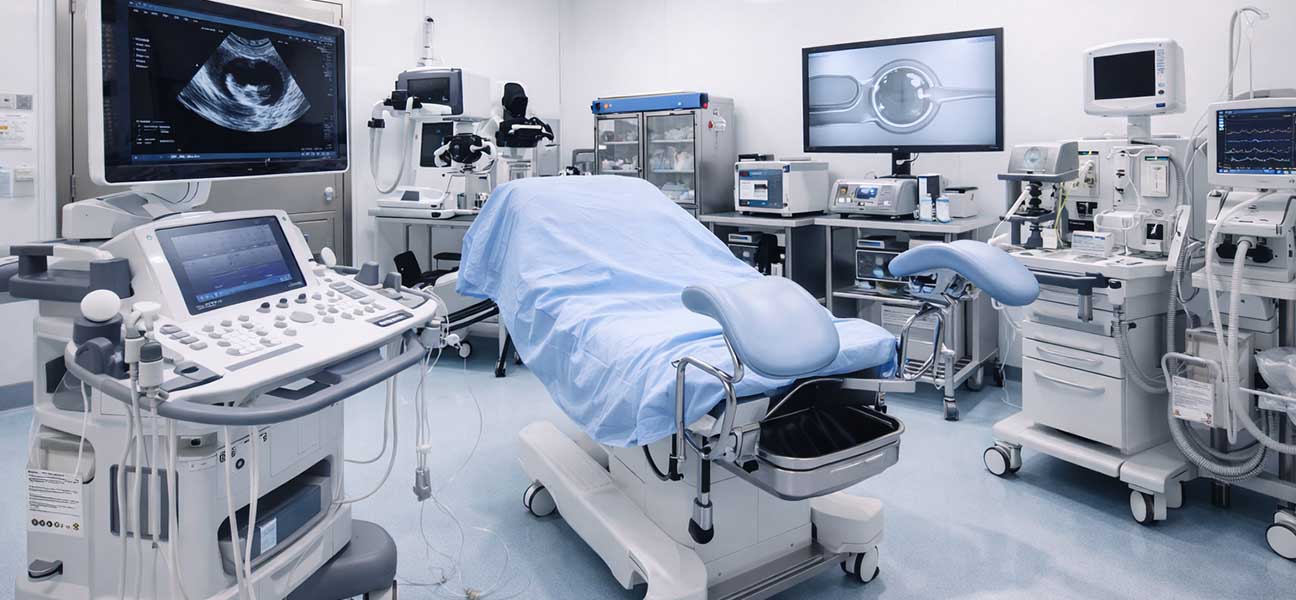
CUHK Medical Centre has a dedicated Reproductive Medicine Centre located within the main hospital building, equipped with independent laboratories and operating theatres. The centre provides a full chain of services from basic fertility assessment to advanced assisted reproductive technologies, including:
- Fertility Assessment: AMH test, antral follicle count, semen analysis, sex hormone panel, thyroid function, etc.
- Assisted Reproductive Technologies: In vitro fertilisation (IVF), intracytoplasmic sperm injection (ICSI), assisted hatching (AH), blastocyst culture.
- Embryo Genetic Testing: PGT-A (aneuploidy screening), PGT-M (monogenic disease testing), PGT-SR (structural rearrangement testing).
- Fertility Preservation: Oocyte cryopreservation, sperm cryopreservation, embryo cryopreservation.
- Endometrial Receptivity Analysis (ERA) and Hysteroscopy.
The centre uses individualised ovarian stimulation protocols tailored to the patient's age, ovarian reserve, and previous treatment response. The laboratory is equipped with time-lapse imaging systems and laser-assisted hatching devices, with embryo assessment standards referencing the European Society of Human Reproduction and Embryology (ESHRE) guidelines.
4.1 When is it suitable to choose this centre?
- Wish to shorten waiting times and avoid queuing for over a year in public hospitals.
- Require genetic testing technologies like PGT.
- Have had previous IVF failures in public hospitals and seek a more individualised plan.
- Are of advanced maternal age (≥38 years) with diminished ovarian reserve, needing rapid treatment initiation.
- Have commercial medical insurance covering private hospital treatment costs.
4.2 When is it not suitable?
- Have a limited budget and cannot afford the higher costs of a private hospital.
- Have a simple condition, are younger, and do not mind waiting; public hospitals can meet basic needs.
- Need to rely on government subsidies or public hospital fee waiver policies.
5. Practical Process for Assisted Reproduction at This Hospital
The following are the main steps in a standard IVF treatment cycle. Specific arrangements may be adjusted based on individual circumstances:
| Stage | Content | Time Required |
|---|---|---|
| Initial Consultation | Medical history collection, fertility test orders, doctor consultation, preliminary plan formulation | 1-2 hours (completed on the day) |
| Preparatory Tests | Female: AMH, sex hormones, ultrasound, infectious disease screening; Male: Semen analysis, karyotype, etc. | 2-4 weeks for all results |
| Ovarian Stimulation | Individualised medication (antagonist/long/short protocol), ultrasound + hormone monitoring | 10-14 days |
| Egg Retrieval Surgery | Transvaginal oocyte retrieval under intravenous sedation, 2-hour post-op observation | Day of surgery |
| Embryo Culture & Testing | Fertilisation assessment, blastocyst culture (5-6 days), PGT biopsy (if needed) | 5-14 days (including testing time) |
| Frozen Embryo Transfer | Endometrial preparation (natural/artificial cycle), luteal phase support after transfer | Transfer cycle approx. 14-18 days |
| Pregnancy Test & Follow-up | Blood test for β-hCG 12-14 days post-transfer, continue luteal support if pregnancy confirmed | 2 weeks post-transfer |
From the initial consultation to completing one full IVF cycle (including PGT), it typically takes 3-4 months. If opting for a frozen embryo transfer, the timeline will be extended further. Patients are advised to plan their work and personal schedules in advance.
6. Cost Breakdown and Influencing Factors
The costs at the CUHK Medical Centre Reproductive Centre are in the mid-to-high range for Hong Kong private hospitals. Below are approximate cost ranges for standard items (in HKD):
| Item | Cost Range (HKD) | Notes |
|---|---|---|
| Initial Doctor Consultation Fee | 1,200 – 2,500 | Priced according to doctor's seniority |
| Basic Fertility Test Package (Female) | 4,000 – 7,000 | Includes AMH, hormones, ultrasound, etc. |
| Semen Analysis | 800 – 1,500 | Includes morphology, motility, DNA fragmentation |
| IVF Cycle (excluding medication) | 80,000 – 120,000 | Includes egg retrieval, embryo culture, transfer |
| Ovarian Stimulation Medication | 15,000 – 35,000 | Highly individual, varies between local/imported brands |
| ICSI (Intracytoplasmic Sperm Injection) | 12,000 – 18,000 | Additional charge for severe semen abnormalities |
| PGT-A (per embryo) | 8,000 – 12,000 | Charged per embryo |
| Frozen Embryo Transfer Cycle | 25,000 – 40,000 | Includes endometrial preparation, transfer, luteal support |
The total cost for a standard IVF cycle (excluding PGT) typically ranges from HKD 120,000 to 180,000. Main factors influencing cost include: type and dosage of stimulation medication, use of ICSI, performance of PGT, number of embryos frozen, and number of transfer cycles. It is recommended to request a detailed quotation from the finance department during the initial consultation and confirm whether all potential hidden costs (e.g., anaesthesia fees, lab operation fees, embryo storage fees) are included.
7. Frequently Asked Questions
7.1 What is the IVF success rate at CUHK Medical Centre?
The hospital has not publicly released its per-cycle live birth rate data. Generally, IVF success rates in private hospitals are influenced by factors such as patient age, cause of infertility, and embryo quality. Referring to data from the Hong Kong Council on Human Reproductive Technology (HART), the live birth rate per single embryo transfer for patients under 38 in Hong Kong private centres is approximately 40%-50%, for ages 38-40 approximately 25%-35%, and for over 40 approximately 10%-20%. Patients should request an individualised estimate from their doctor based on their own circumstances, rather than relying on institutional averages.
7.2 Can Mainland residents undergo IVF at this hospital? What documents are needed?
Yes. Mainland residents seeking assisted reproduction treatment at CUHK Medical Centre must hold a valid Exit-Entry Permit for Travelling to and from Hong Kong and Macau (EEP) with appropriate endorsements, and provide marriage certificates, identity documents, etc., as required by Hong Kong law. The hospital will require both parties to sign informed consent forms and confirm compliance with Hong Kong's Assisted Reproduction Technology regulations. It is advisable to contact the hospital's International Department or Patient Services Department in advance to confirm document requirements and procedures.
7.3 Can sex selection be performed at this hospital?
Hong Kong law prohibits the use of assisted reproductive technology for non-medical sex selection. Sex selection via PGT is only permitted when there is a risk of X-linked genetic diseases (such as Duchenne muscular dystrophy, haemophilia, etc.). CUHK Medical Centre strictly adheres to this regulation, and patients must provide genetic counselling reports and proof of medical indication.
7.4 How long does it take from the first consultation to embryo transfer at this hospital?
If all test results are normal and PGT is not required, it takes approximately 6-8 weeks from the initial consultation to a fresh embryo transfer. If PGT or a frozen embryo transfer is chosen, it takes 3-5 months. The exact time depends on the patient's menstrual cycle, ovarian response, and embryo testing results.
8. Practitioner's Observation: The Real Experience of Assisted Reproduction in a Private Hospital
(The following content is based on a practitioner's perspective and does not constitute a recommendation or evaluation of any institution.)
The most tangible experiences of undergoing assisted reproduction in a private hospital are time control and personalised service. Patients do not have to endure long queues and waiting periods as in public hospitals; from booking an appointment to seeing a specialist is usually measured in "days," not "months." Doctors have more ample time to communicate with patients and explain treatment details, which provides significant psychological support.
However, the disadvantages of private hospitals are equally clear: cost pressure. A complete IVF cycle (including medication, tests, and surgery fees) represents a considerable expense for many families. Furthermore, the quality of doctors and laboratories can vary between private hospitals. Even within the same hospital, different specialists may have different medication habits and embryo culture strategies. When choosing, patients should not only look at the hospital brand but also pay attention to the background of the specific treating doctor and the laboratory's quality control system.
For CUHK Medical Centre, its advantage lies in leveraging the academic resources of The Chinese University of Hong Kong, with some accumulation in managing complex cases, genetic testing, and research translation. However, as a hospital that has only been open for a few years, the transparency of long-term follow-up data and patient outcome data still needs time to develop.
9. How to Decide and Choose: Public or Private?
Before deciding between CUHK Medical Centre or another institution, patients are advised to self-assess based on the following dimensions:
- Age and Ovarian Reserve: For those aged ≥38 or with AMH < 1.2 ng/mL, the time window is narrow; private hospitals can initiate treatment faster.
- Financial Budget: Can afford HKD 150,000-200,000 per cycle and do not rely on government funding pathways.
- Complexity of Condition: Those needing PGT, ERA, or with a history of repeated implantation failure; private hospitals offer more testing options.
- Psychological Expectations: Desire more doctor attention and communication time, rather than assembly-line style consultation.
- Insurance Coverage: Confirm if your commercial medical insurance covers assisted reproduction treatment in private hospitals (most high-end medical plans cover some outpatient and inpatient costs, but IVF itself is usually excluded).
If most answers are "yes," then a private hospital (including CUHK Medical Centre) is a suitable choice. If answers tend towards "no," or the budget is tight, the public hospital waiting system, though time-consuming, can provide basic treatment at a lower cost.
10. Doctor's Advice: Precautions for Assisted Reproduction in Private Hospitals
Doctor's Reminder:
- Regardless of choosing a public or private hospital, ensure the institution holds a valid license from the Hong Kong Council on Human Reproductive Technology (HART). CUHK Medical Centre has obtained the relevant license; patients can verify this on the HART official website.
- Before signing the treatment consent form, request a complete fee breakdown from the hospital, including potential additional charges (e.g., embryo freezing fees, storage fees, cycle cancellation fees).
- Do not make decisions based solely on "success rate" numbers. Statistical methods vary between institutions (e.g., calculated per transfer cycle vs. per egg retrieval cycle, inclusion/exclusion of older patients), so comparisons should be made cautiously.
- If planning PGT, allow at least 2-3 weeks in advance for genetic counselling and customisation of the testing panel.
- Mainland residents must ensure their passport or EEP has sufficient validity and allow enough time in Hong Kong (a single stimulation cycle requires approximately 12-16 days in Hong Kong, which can be split into two visits).
11. Special Circumstances Management
The following situations may affect the assisted reproduction treatment plan in a private hospital and require prior communication with the doctor:
- Poor Ovarian Response (POR): For those with very low AMH or ≤3 oocytes retrieved in previous cycles, the doctor may recommend a mild stimulation protocol or natural cycle IVF.
- Endometrial Pathology: Conditions like intrauterine adhesions, endometrial polyps, or chronic endometritis require hysteroscopic surgery before entering an IVF cycle.
- Male Azoospermia: Requires testicular sperm aspiration (TESA) or microdissection TESE (Micro-TESE). The hospital can arrange this, but an additional urology consultation is needed.
- Recurrent Implantation Failure (RIF): ERA testing, endometrial microbiome analysis, or immunological evaluation is recommended. Private hospitals can offer these advanced tests.
12. Test Reminders and Time Planning
When undergoing preliminary tests in Mainland China or Hong Kong, pay attention to the following timing:
- AMH: Can be tested on any day of the menstrual cycle; fasting is not required.
- Sex Hormone Panel: Fasting blood draw in the morning on days 2-4 of the menstrual cycle.
- Antral Follicle Count: Transvaginal ultrasound on days 2-4 of the menstrual cycle.
- Semen Analysis: Abstinence for 2-7 days; it is recommended to have it done at the target hospital's laboratory to avoid issues with result recognition.
- Karyotype: Simple blood draw, no specific timing required, but results take 10-14 working days.
- Infectious Disease Screening: Hepatitis B, C, syphilis, HIV, etc., usually valid for 6-12 months, must be completed before starting the IVF cycle.
It is recommended to have all test reports ready 2 months before the planned start of treatment to avoid delays due to expired or missing reports.
End: Doctor's Advice (Random Selection)Doctor's Advice: When choosing an assisted reproduction institution, the hospital's nature (public/private) is just one decision factor. More importantly, assess your own medical needs, financial capacity, and time cost. As a private hospital, CUHK Medical Centre has advantages in service efficiency and access to new technologies, but patients should be rational and not blindly pursue "high-end" or "expensive" options. It is advisable to consult with at least 1-2 doctors, compare their treatment approaches and communication styles, and then make a suitable choice. Assisted reproduction is a long-term process; a stable doctor-patient trust relationship is more important than the hospital brand.
0 comments