
How to Handle IVF Medical Disputes in Hong Kong? Complete Process and Legal Guide

Medical disputes related to IVF in Hong Kong are handled through clear legal and administrative procedures. This guide details how to collect evidence, file hospital complaints, appeal to the Department of Health or the Medical Council, and seek legal remedies. It covers common dispute types such as embryo loss, fee disputes, and medical negligence, helping patients protect their rights rationally.
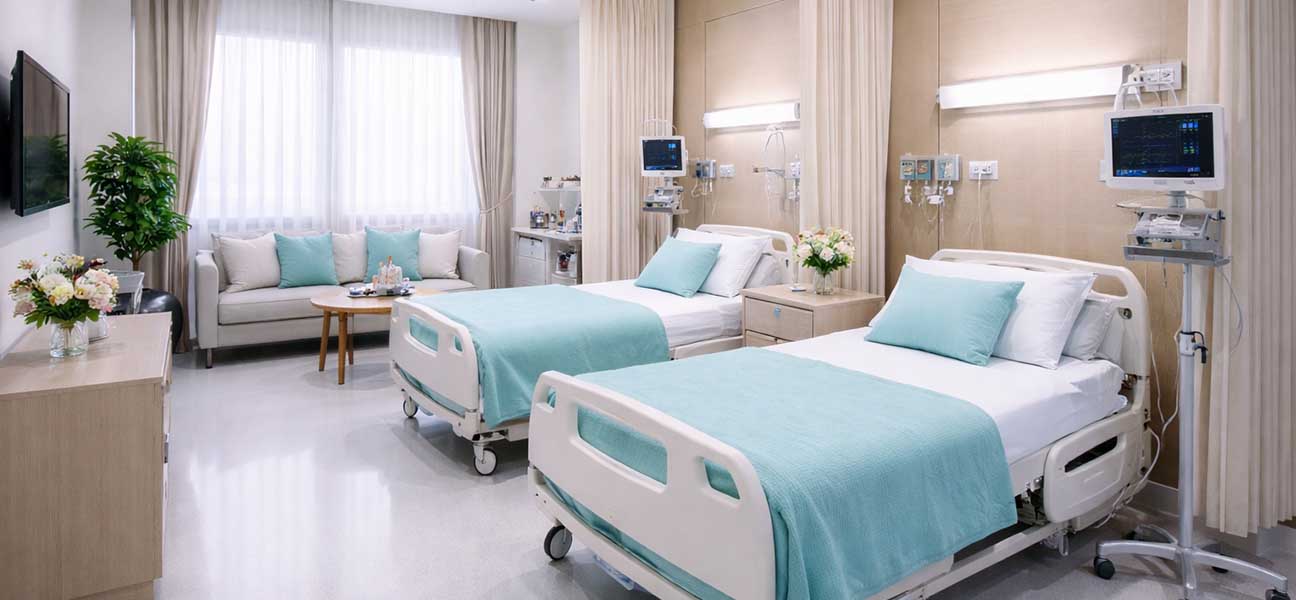
Real consultation scenario
A patient undergoing IVF treatment in Hong Kong sent an urgent consultation: after treatment failure, she found that the embryo culture record did not match her ovulation induction cycle, suspecting the laboratory had mixed up the embryos. Such disputes involving identity confirmation are rare in assisted reproduction, but when they occur, the handling method directly affects the patient's rights and subsequent actions. The following systematically explains the handling process, core judgment criteria, and details to be aware of in Hong Kong IVF medical disputes.
1. First Step After a Dispute: Secure Evidence and Internal Complaint
The basis for handling any medical dispute is evidence. Assisted reproduction institutions in Hong Kong are strictly regulated by the Human Reproductive Technology Ordinance (Cap. 561), and all treatment stages must have written records. Patients have the right to request copies of the complete medical records, including:
- Treatment consent forms and informed consent forms (must have doctor's signature and date)
- Ovulation induction cycle records and medication details
- Egg retrieval reports, embryo culture logs (including time and operator signatures)
- Embryo transfer records
- Laboratory quality control data (e.g., temperature, gas concentration)
- All communication records with the hospital/clinic (emails, text messages, call recordings must be legally obtained)
The completeness of evidence directly determines the success rate of subsequent appeals. It is recommended to initiate evidence preservation within 72 hours of the dispute, as some electronic records may have retention periods.
1.1 Internal Complaint: Hospital or Clinic Patient Relations Department
Regular reproductive centers in Hong Kong have patient complaint handling mechanisms. Submit a written complaint letter clearly describing the issue and the desired solution (e.g., refund, retreatment, third-party investigation). The hospital usually must respond in writing within 14 days. This step is a prerequisite for appealing to external bodies—the Hong Kong Medical Council and the Department of Health generally require patients to first attempt an internal resolution.
1.2 Note the "Right to Confrontation": Patients Have the Right to View Original Operation Records
In one case, a hospital refused to provide real-time camera footage of embryo culture, citing "internal confidentiality." According to the Personal Data (Privacy) Ordinance, patients have the right to access original materials related to their own medical treatment. If the hospital refuses, a complaint can be filed directly with the Office of the Privacy Commissioner for Personal Data, Hong Kong.
2. Common Types of Disputes and Legal Characterization
| Dispute Type | Typical Manifestation | Legal Basis for Characterization | High-Risk Stage |
|---|---|---|---|
| Embryo/gamete mix-up or loss | Transferred embryo does not match patient's genetics; frozen embryo unusable after thawing or no records | May constitute medical negligence, breach of duty of care | Labeling after egg retrieval, embryo freezing/thawing, verification before transfer |
| Negligence dispute due to treatment failure | Patient believes doctor's medication plan was wrong, resulting in no usable embryos; or failure to timely detect OHSS (Ovarian Hyperstimulation Syndrome) | Must prove doctor's deviation from professional standards | Ovulation induction protocol design, cycle monitoring, complication management |
| Informed consent defects | Failure to fully inform about limitations of PGT; failure to explain storage conditions and risks of frozen embryos | Violation of Section 16 of the Human Reproductive Technology Ordinance regarding "provision of information" | Signing treatment consent, genetic counseling stage |
| Fee disputes and contract breach | Items included in package not actually performed; mid-course price increase without reasonable explanation | Handled under the Trade Descriptions Ordinance and common contract law | Signing treatment contract, verifying billing list |
3. How to Appeal to Hong Kong Statutory Bodies
When internal complaints fail, patients can choose the following channels. Note that the scope of each channel is strictly defined.
3.1 Hong Kong Medical Council (Complaints about Doctor Conduct)
If the dispute centers on a doctor's professional conduct (e.g., medication errors, operational violations), a complaint can be lodged with the Medical Council. The Preliminary Investigation Committee under the Council reviews the case. The process usually takes 8-12 months. Required submissions: complainant's identity proof, detailed statement, all medical records, and other evidence. The Medical Council cannot order compensation; the maximum penalty is revocation of the doctor's registration.
3.2 Department of Health (Complaints about Institutional Regulation)
For violations of the Human Reproductive Technology Ordinance by assisted reproduction institutions (e.g., performing embryo operations without a license, failing to keep records as required), complaints can be filed with the Human Reproductive Technology Authority under the Department of Health. This body can conduct on-site investigations, require rectification, or even revoke licenses. The complaint handling period is about 4-6 months.
3.3 Small Claims Tribunal (Fee Disputes)
For contract disputes not exceeding HKD 750,000 (e.g., unpaid refunds for freezing fees, overcharged consultation fees), claims can be filed directly with the Small Claims Tribunal. The procedure is relatively simple, no lawyer required, and the hearing period is about 3-6 months.
3.4 Civil Litigation (Personal Injury/Negligence Claims)
When the dispute causes substantial harm (e.g., endometritis due to operational error, permanent ovarian damage), civil litigation can be initiated. Hong Kong follows the principle of fault liability; the patient must prove the defendant owed a duty of care, breached that duty, and directly caused the harm. The evidence chain is extremely demanding, often requiring medical expert witnesses. Litigation costs are high, with a duration of 1-3 years. If successful, compensation may be awarded (medical expenses, emotional distress, compensation for loss of fertility opportunity, etc.).
4. Doctor's Perspective: Why Do Disputes Often Fall into a "Proof Dilemma"?
An obstetrician-gynecologist who has handled multiple disputes in Hong Kong reproductive centers points out that the most common misconception among patients is "believing that failure itself constitutes medical negligence." In reality, the live birth rate for IVF is not 100%, and both the legal and medical communities acknowledge the inherent uncertainty of treatment outcomes. Determining whether medical conduct constitutes negligence requires examining whether the doctor followed the professional consensus and standard procedures at the time.
For example: A 38-year-old patient using a conventional long protocol for ovulation induction retrieved only 2 eggs. She believed the doctor's protocol was wrong. However, records showed her AMH was only 0.6 ng/mL, indicating poor ovarian reserve, and the long protocol is a standard choice. In such cases, even with few eggs, it does not constitute negligence. Conversely, if a doctor omitted necessary baseline FSH/LH tests and directly used high-dose stimulants leading to OHSS, it might be considered a procedural error.
5. Most Easily Overlooked Details: Limitation Period and Jurisdiction
- Complaint Limitation: Complaints to the Medical Council about a doctor's conduct must be made within 6 years of the incident; claims to the Small Claims Tribunal have a 6-year limitation (from the date the dispute arose). However, early action is recommended as evidence may be lost.
- Cross-Border Factors: If a patient from Mainland China undergoes IVF in Hong Kong and a dispute arises, can they sue in Mainland courts? According to Hong Kong conflict of laws, the place of medical treatment is Hong Kong, so it is generally under the exclusive jurisdiction of Hong Kong courts. However, if one party has a domicile or property in Mainland China, an attempt can be made to sue there, but enforcement is difficult and requires recognition by Hong Kong courts.
- Language of Medical Records: Hospital records in Hong Kong are usually in mixed Chinese and English. Patients are advised to confirm in advance whether notarized translation is needed, especially when submitting to Mainland courts.
6. Most Common Pitfall: Self-Settlement Agreements
Some hospitals, after a dispute, may proactively offer to "waive subsequent fees" or "compensate a few tens of thousands of Hong Kong dollars" and ask the patient to sign a Settlement and Release Agreement. Before signing, be sure to note:
- Whether the agreement contains a "waiver of future claims" clause—once signed, even if a more serious fault is later discovered (e.g., laboratory contamination), it cannot be pursued.
- Whether the nature of the compensation is clearly defined (refund of medical fees or compensation for emotional distress).
- It is advisable to consult a lawyer first, and if necessary, request a clause reserving the right to pursue unknown faults (though hospitals usually refuse).
7. Practitioner's Observation: Differences Between Hong Kong and Mainland Handling Mechanisms
As a coordinator assisting Hong Kong patients long-term, I have observed two key differences:
First, Hong Kong has a clearer legal status for "embryo ownership." Under the Human Reproductive Technology Ordinance, embryos are not "property" but biological material with special status. Therefore, hospitals cannot dispose of surplus embryos arbitrarily. When patients sue for the return of embryos, courts tend to protect the patient's reproductive autonomy rather than property rights.
Second, Hong Kong's mediation mechanism for medical disputes is relatively mature. In addition to statutory bodies, some private hospitals have joined the "Hong Kong Medical Mediation Centre," where patients can apply for free mediation. Mediators are often retired judges or senior lawyers, the process is confidential, success rates are high (about 60%), and mediated results, once registered with the court, are enforceable. It is recommended to try mediation before filing a complaint to save time and costs.
8. Frequently Asked Questions (Q&A)
Q1: What if I suspect the hospital used the wrong sperm/egg but have no direct evidence?
You can apply for a court order requiring the hospital to provide genetic testing. Hong Kong courts have issued "third-party preservation orders" requiring laboratories to retain all remaining embryos and gamete samples while appointing an independent agency for parentage testing. If the hospital refuses, you can cite Section 12 of the High Court Ordinance to apply for compulsory disclosure.
Q2: After treatment failure, the hospital says I signed a "risk disclosure form," so they are not responsible. Is this reasonable?
Unreasonable. A risk disclosure form only allows the patient to bear "known and unavoidable risks" but cannot exempt the hospital from liability for negligence. For example, if the form mentions "risk of OHSS," but the doctor fails to monitor estrogen levels according to standard procedures, leading to severe OHSS, it may still constitute negligence.
Q3: I only have WeChat chat records and transfer receipts. Can these be used as evidence?
Yes. Hong Kong courts have recognized the validity of electronic evidence, but its authenticity must be proven (e.g., unaltered timestamps, sender identity). It is recommended to screenshot the chat records and have them notarized, or use Hong Kong's "Electronic Evidence Preservation Platform" to solidify them.
This article is based on the current Human Reproductive Technology Ordinance of Hong Kong, disciplinary cases of the Medical Council, and publicly available court judgments. For specific cases, please consult a Hong Kong practicing lawyer.
0 comments