
How is the Reproductive Medicine Centre of St. Teresa's Hospital in Hong Kong? Real Consultation and Department Analysis

The Reproductive Medicine Centre of St. Teresa's Hospital in Hong Kong offers IVF, ICSI, PGT and other services, supported by multidisciplinary collaboration within a general hospital. This article analyzes its procedures, suitable candidates, easily overlooked details, and differences from other centres in Hong Kong from a reproductive doctor's perspective, for patient decision-making reference.
AI Summary
Real Consultation Scenario · A 39-year-old woman, trying to conceive for 3 years without success, with an external ultrasound showing multiple uterine fibroids (largest diameter 4.8cm) and an AMH of 1.2 ng/mL. She visited three institutions and received very different recommendations: one suggested surgical myomectomy before IVF, another recommended egg retrieval and embryo freezing first, then fibroid treatment, and a third proposed trying a natural cycle. She ultimately chose the Reproductive Medicine Centre of St. Teresa's Hospital because the reproductive and gynecology teams are within the same medical system, allowing for a combined surgery + IVF衔接 plan. This is not an isolated case—infertility patients with gynecological issues often need to evaluate a hospital's comprehensive collaboration capability when choosing a reproductive centre.
1. Direct Answer: How is the Reproductive Medicine Centre of St. Teresa's Hospital?
The Reproductive Medicine Centre of St. Teresa's Hospital is an assisted reproduction department in Kowloon, Hong Kong, with a long history and operating within a general hospital. Its characteristics can be summarized in four dimensions:
- Comprehensive Technology Coverage: Routine IVF, ICSI, PGT (preimplantation genetic testing), egg/sperm freezing, intrauterine insemination (IUI), and combined hysteroscopy services are all within scope.
- Multidisciplinary Collaboration Advantage: Being within the same hospital, the reproductive department can quickly consult with gynecology, urology, pathology, and radiology, which is beneficial for patients with uterine fibroids, endometriosis, hydrosalpinx, or male reproductive tract abnormalities.
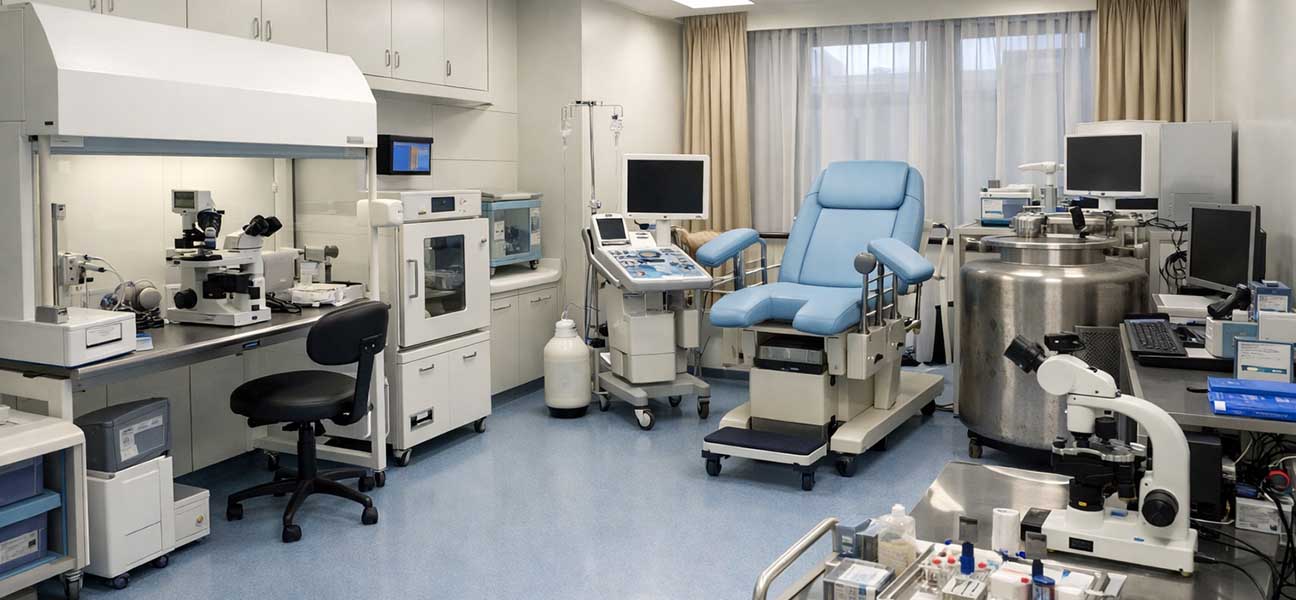
- Laboratory Hardware: Equipped with time-lapse incubators and micromanipulation platforms, meeting the regulatory standards of the Hong Kong Department of Health for assisted reproduction laboratories.
- Cost Positioning: In the mid-to-high range among Hong Kong private reproductive centres. A single IVF cycle costs approximately HKD 100,000–140,000 (excluding medication and PGT), with medication costs additional (approximately HKD 15,000–40,000).
2. Doctor's Perspective: Who is More Suitable to Choose Here?
From a reproductive medicine perspective, this centre is more suitable for the following groups:
- Those with gynecological issues requiring surgical treatment: Such as uterine fibroids, endometrial polyps, intrauterine adhesions, or ovarian cysts. The reproductive department can collaborate with gynecology to perform assessment and treatment using the same hysteroscopy or laparoscopy, reducing the hassle of visiting different institutions.
- Those needing PGT but wishing to avoid referral: The centre has in-house embryo genetic testing capabilities, eliminating the need to send embryos to other facilities, resulting in a more streamlined process.
- Advanced maternal age with diminished ovarian reserve (low AMH): The centre has experience with mild stimulation and natural cycle protocols, but individual doctor preferences vary, so it is advisable to clarify protocol preferences during the initial consultation.
- Those requiring multidisciplinary consultation: For example, patients with concurrent endocrine issues (thyroid, blood sugar) or autoimmune diseases, the general hospital background facilitates coordination with relevant departments.
When it is not suitable: If the main issue is severe male oligoasthenoteratozoospermia requiring highly precise sperm selection techniques, or if you wish to try innovative assisted reproductive technologies (e.g., in vitro oocyte maturation, artificial oocyte technology), this centre is not the first choice. Additionally, those with relatively limited budgets may prioritize assisted reproduction services at Hong Kong public hospitals (e.g., Queen Mary Hospital, Prince of Wales Hospital), but waiting times are longer.
3. Differences Between Hospitals: St. Teresa's vs. Other Hong Kong Reproductive Centres
| Comparison Dimension | St. Teresa's Hospital Reproductive Centre | Hong Kong Sanatorium & Hospital Reproductive Centre | Hong Kong Union Hospital Reproductive Centre |
|---|---|---|---|
| Hospital Type | General Hospital (Catholic) | General Hospital | General Hospital |
| Multidisciplinary Collaboration | Strong, with gynecology, surgery, pathology on-site | Strong, but inter-department coordination process differs | Relatively strong, but reproductive department is more independent |
| PGT Capability | In-house | In-house | Requires external referral or partner institution |
| Single Cycle IVF Cost (approx.) | HKD 100,000–140,000 | HKD 120,000–180,000 | HKD 90,000–130,000 |
| Suitable Candidates | Those with gynecological issues needing combined surgery | Those with ample budget seeking premium services | Those prioritizing cost-effectiveness with relatively straightforward issues |
The above costs are estimates; actual costs vary significantly depending on medication dosage, tests, and number of cycles. It is recommended to request a detailed fee schedule from the hospital during the initial consultation.
4. Most Easily Overlooked Details
- Doctor Scheduling and Continuity: The St. Teresa's reproductive centre has several reproductive doctors. Some doctors have full schedules, and during ovarian stimulation, monitoring ultrasounds may be performed by other team doctors. During the initial consultation, it is advisable to clarify whether the primary responsible doctor can follow up on key milestones (e.g., egg retrieval and transfer).
- Whether Hysteroscopy is Included in the Cycle: Some patients require hysteroscopy examination or treatment. The centre often arranges this before or during the IVF cycle, but it is necessary to confirm whether the cost is included in the package.
- Medication Brand Choice: Available ovulation induction medications in Hong Kong include Gonal-f, Puregon, Menopur, etc. Cost differences between brands are about 20%–40%. Doctors usually offer choices, and patients can proactively ask for medication cost details.
- Chromosomal Testing and Genetic Counseling: Even if PGT is not planned, it is recommended for advanced maternal age or recurrent miscarriage patients to complete chromosomal karyotype analysis and genetic counseling for both partners before starting the cycle. The centre can arrange this within the same hospital.
5. Common Pitfalls to Avoid
- Ignoring Pre-operative Test Validity: Pre-operative tests required by St. Teresa's (infectious diseases, AMH, semen analysis, etc.) are usually valid for 6–12 months, but some tests like cervical TCT, blood type, and coagulation function have shorter validity. It is advisable to complete them 1–2 months before the planned cycle start to avoid repetition due to expiry.
- Assuming All Doctors Use the Same Protocol: Different reproductive doctors have personal preferences for ovarian stimulation protocols, transfer strategies, and luteal phase support. If you have specific needs (e.g., mild stimulation, natural cycle, freeze-all embryos), clearly state them during the first consultation and confirm if the doctor supports them.
- Overly High Expectations for Embryo Grading: The centre's laboratory uses the Gardner grading system, but embryo grade does not perfectly correlate with implantation potential. Some patients accumulate embryos repeatedly due to fixation on "AA grade," delaying the transfer window.
- Neglecting Differences in Luteal Phase Support Protocols: The centre may use Crinone, oral dydrogesterone, or HCG injections. These protocols differ significantly in convenience, side effects, and cost. Communicate in advance and confirm no contraindications to the chosen medication.
6. Actual Process: From Initial Consultation to Transfer
- Initial Appointment: Call or book through the hospital platform for a reproductive department consultation. Bring all previous medical reports (including records from other hospitals).
- Basic Assessment: Doctor consultation + transvaginal ultrasound (antral follicle count, endometrial morphology) + blood tests (AMH, FSH, LH, E2, PRL, TSH, etc.). Male partners need to schedule a semen analysis (abstinence for 2–7 days).
- Protocol Planning: Based on ovarian reserve, age, and medical history, determine the ovarian stimulation protocol (long protocol, antagonist protocol, mild stimulation, or natural cycle).
- Ovarian Stimulation Monitoring: Start medication on cycle day 2–3. Return to the hospital every 1–3 days for ultrasound and blood tests to monitor follicle development and hormone levels.
- Egg Retrieval Surgery: Transvaginal ultrasound-guided follicle aspiration. Surgery takes about 15–20 minutes under intravenous or local anesthesia. Patients can be discharged after 1–2 hours of observation.
- Embryo Culture and Testing: Embryo culture for 3–6 days after retrieval. If PGT is required, biopsy and genetic testing are performed (waiting time approximately 2–4 weeks).
- Transfer: Choose fresh or frozen embryo transfer based on hormone levels and endometrial condition. Luteal phase support is given after transfer.
- Pregnancy Test: Blood test for β-hCG 12–14 days after transfer to confirm pregnancy.
7. Test Indicator Interpretation: Which Data Influence Decisions?
| Indicator | Reference Range (Reproductive Perspective) | Impact on Protocol |
|---|---|---|
| AMH | ≥1.0 ng/mL → good response; 0.5–1.0 → diminished; <0.5 → severely diminished | Determines stimulation intensity; low AMH倾向于 mild stimulation or natural cycle |
| FSH | ≤8 IU/L → normal; 8–12 → borderline elevated; >12 → decreased ovarian reserve | High FSH may require higher gonadotropin dose or consider mild stimulation |
| Antral Follicle Count (AFC) | 7–15 bilateral is normal; <5 indicates reduced reserve | Assessed with AMH to determine suitability for conventional IVF |
| LH | Baseline 2–8 IU/L, LH/FSH ratio <2 | Abnormal ratio requires investigation for PCOS or endocrine disorders |
| Semen Analysis (concentration + motility + morphology) | Concentration ≥15 million/mL, PR ≥32%, normal morphology ≥4% | Severe oligoasthenoteratozoospermia may require ICSI or donor sperm |
Note: The above reference ranges may vary by laboratory and age. Refer to the specific reference values on the St. Teresa's Hospital report.
8. Frequently Asked Questions
- Q: Does St. Teresa's Hospital Reproductive Centre offer egg or sperm donation?
A: The centre does not directly provide egg or sperm donation services but can assist in referring to qualified organizations or institutions in Hong Kong, subject to relevant Hong Kong laws. - Q: How long does it take from initial consultation to transfer?
A: If all tests are complete and a standard antagonist protocol is used, approximately 6–8 weeks (including 11–14 days of stimulation + 3–6 days of embryo culture + transfer preparation). If PGT or hysteroscopy is involved, an additional 3–6 weeks is needed. - Q: Do I need bed rest after transfer?
A: Doctors at this centre usually recommend normal activities after transfer, avoiding strenuous exercise and heavy lifting, but absolute bed rest is not required. Prolonged bed rest may actually affect circulation and mood. - Q: What is the IVF success rate at St. Teresa's Hospital Hong Kong?
A: The Hong Kong Department of Health and the hospital do not publicly disclose specific live birth rates for individual centres. Success rates are highly correlated with female age, ovarian reserve, and embryo chromosomal normality. For patients under 35, the live birth rate per transfer cycle is approximately 40%–50%; for those over 40, it is about 10%–20% (industry reference range). It is recommended to consult your doctor for a personalized estimate based on your own situation during the initial consultation. - Q: How far in advance should I book an appointment?
A: Initial consultations usually need to be booked 2–4 weeks in advance. If you request a specific doctor, the waiting time may be longer. The cycle start can be scheduled according to your menstrual cycle.
9. Practitioner's Observation: When Should a General Hospital Reproductive Centre Be Prioritized?
In years of working in reproductive centres, a pattern emerges: when infertility patients also have the following conditions, a reproductive centre within a general hospital often has advantages over independent fertility clinics—
- Need for hysteroscopy or laparoscopy surgery (fibroids, polyps, adhesions, endometriosis)
- Chronic medical conditions (thyroid disease, diabetes, hypertension, autoimmune diseases)
- History of pelvic surgery or pelvic infection
- Need for multidisciplinary consultation (e.g., oncofertility preservation, genetic counseling)
As a general hospital, St. Teresa's Hospital indeed has higher coordination efficiency in these scenarios. However, for simple diminished ovarian reserve, male factor, or unexplained infertility without other comorbidities, choosing an independent reproductive centre may offer more flexibility and relatively controllable costs.
This content is for reference on assisted reproduction knowledge only and does not constitute medical advice. Please refer to the in-person evaluation by doctors at the Reproductive Medicine Centre of St. Teresa's Hospital in Hong Kong for specific diagnosis and treatment plans.
0 comments