
Hong Kong IVF PGD Testing Cost Breakdown: Genetic Screening Prices & Influencing Factors

Hong Kong IVF PGD testing costs typically range from HKD 50,000 to 150,000. Single gene disease PGD is about HKD 50,000-80,000, chromosomal structural abnormality PGD about HKD 80,000-120,000, and whole genome screening PGD about HKD 120,000-150,000 or more. Costs are influenced by testing technology, number of embryos, and hospital choice. This article provides a detailed cost analysis and considerations.
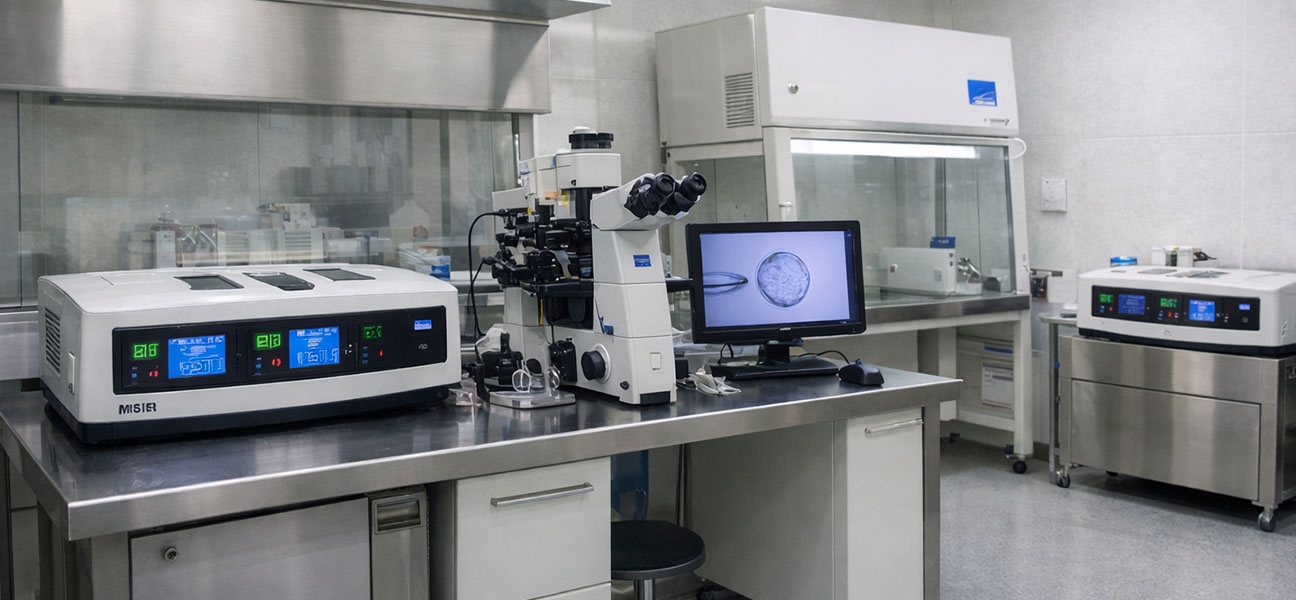
Opening: Medical report scene
A chromosome karyotype analysis report reads: 46,XY,t(11;22)(q23;q11.2) — a carrier of a balanced chromosomal translocation. For such a result, the natural miscarriage rate exceeds 50%, and the live birth rate is significantly reduced. PGD testing is one of the clinically recommended options. Cost is an unavoidable practical issue in the next decision-making step.
What is Hong Kong IVF PGD Testing
PGD (Preimplantation Genetic Diagnosis) is a technology that performs genetic testing on embryos before transfer to select embryos that do not carry specific pathogenic genes or chromosomal abnormalities for transfer. PGD testing in Hong Kong mainly covers three clinical needs: single gene disease testing, chromosomal structural abnormality testing, and chromosomal aneuploidy screening (traditionally called PGS, now classified under PGT-A).
Classification Relationship between PGD and PGS/PGT
The international reproductive medicine community has unified PGD and PGS under the category of PGT (Preimplantation Genetic Testing), which includes:
- PGT-A (formerly PGS): Screens for normal embryo chromosome number, suitable for advanced maternal age, recurrent miscarriage, and recurrent implantation failure.
- PGT-M (corresponding to traditional PGD for single gene diseases): Targets specific single-gene genetic disorders such as thalassemia, spinal muscular atrophy (SMA), hereditary breast cancer (BRCA), etc.
- PGT-SR (corresponding to traditional PGD for chromosomal structural abnormalities): Targets structural rearrangements such as balanced translocations, Robertsonian translocations, and inversions.
Most fertility centers in Hong Kong offer all three types of testing, with differences in cost and technical approach.
Main Types of PGD Testing in Hong Kong
- Single Gene Disease PGD: Targets known pathogenic genes, requiring prior family linkage analysis or direct mutation testing.
- Chromosomal Structural Abnormality PGD: Detects chromosomal translocations, inversions, etc., typically using SNP array or NGS technology.
- Whole Genome Screening PGD: Covers chromosomal aneuploidy + some single gene diseases, with the broadest detection range and highest cost.
What is the Cost of Hong Kong IVF PGD Testing
The cost of Hong Kong IVF PGD testing is not a fixed number but varies based on the type of test, number of embryos, and hospital pricing. Common clinical cost ranges are as follows:
Detailed Cost Breakdown
| Cost Item | Cost Range (HKD) | Description |
|---|---|---|
| Genetic Counseling (including family analysis) | 2,000 – 5,000 | Identify genetic cause, assess genetic risk, determine testing plan |
| Embryo Biopsy | 15,000 – 25,000 | Biopsy procedure cost per embryo, calculated by number of embryos |
| Single Gene Disease Testing (PGT-M) | 30,000 – 50,000 | For 1-2 known pathogenic genes, includes linkage analysis |
| Chromosomal Structural Abnormality Testing (PGT-SR) | 50,000 – 80,000 | Detects balanced translocations, inversions, etc., requires SNP array or NGS |
| Whole Genome Screening (PGT-A+SR+M) | 80,000 – 120,000 | Comprehensive testing of chromosome number, structure, and some single gene diseases |
| Report Interpretation & Genetic Counseling | 3,000 – 8,000 | Detailed interpretation of test results to guide transfer decisions |
*The above costs do not include basic IVF cycle fees such as preliminary examinations, ovarian stimulation, egg retrieval, embryo culture, and frozen embryo transfer.
Total Cost Reference for Different Test Types
- Single Gene Disease PGD (PGT-M): Approximately HKD 50,000-80,000 total.
- Chromosomal Structural Abnormality PGD (PGT-SR): Approximately HKD 80,000-120,000 total.
- Whole Genome Screening PGD (PGT-A+SR+M): Approximately HKD 120,000-150,000 or more total.
If the number of embryos is large (≥6), biopsy costs will increase accordingly, but some centers offer package or capped prices, which should be confirmed before starting the cycle.
Key Factors Influencing PGD Costs
Choice of Testing Technology
Costs vary significantly between different technology platforms:
- FISH (Fluorescence In Situ Hybridization): Older technology, limited detection sites, lower cost, but gradually being replaced.
- SNP Array (Single Nucleotide Polymorphism Array): Can detect both chromosomal number and structural abnormalities, high resolution, moderate cost.
- NGS (Next-Generation Sequencing): High throughput, high accuracy, can cover the whole genome, relatively higher cost.
NGS is the mainstream technology for PGD testing in Hong Kong, with accuracy rates over 98% for single gene disease testing and approximately 95-98% for chromosomal structural abnormality testing.
Impact of Number of Embryos
Biopsy costs are calculated per embryo. Assuming a biopsy fee of HKD 18,000 per embryo, 6 embryos would cost HKD 108,000. Some centers set a biopsy fee cap (e.g., capped at the cost of 6 embryos), with additional embryos free or half-price. When the number of embryos is small (≤3), the average cost is higher, and there is a risk of having no embryos available for transfer.
Differences Between Hospitals and Laboratories
PGD pricing strategies vary among different fertility centers in Hong Kong. Public hospitals (e.g., Queen Mary Hospital of the University of Hong Kong, Prince of Wales Hospital of the Chinese University of Hong Kong) have relatively lower costs but longer waiting times and limited slots. Private fertility centers have higher costs but offer flexible processes and faster scheduling. Laboratory accreditation also affects pricing; laboratories with CAP or ISO15189 certification have higher costs.
Need for Repeat Testing
Some embryos may experience test failure, inconclusive results, or mosaicism, requiring re-biopsy or supplementary testing techniques, which incur additional costs. This occurs in about 5-10% of cases, and it is recommended to reserve a 10-20% buffer in budget planning.
Who is Suitable for PGD Testing
Suitable Cases for PGD
- Carriers or patients with single gene diseases: Such as thalassemia, SMA, hereditary deafness, hemophilia, Huntington's disease, BRCA1/2 mutations, etc.
- Carriers of chromosomal structural abnormalities: Including balanced translocations, Robertsonian translocations, inversions, insertions, with high miscarriage rates.
- Advanced maternal age with recurrent miscarriage (≥2 times): Risk of embryonic chromosomal aneuploidy increases with age; PGT-A can screen for euploid embryos.
- Previous birth of a child with a genetic disease: High recurrence risk for the same disease in subsequent pregnancies, requiring PGD to avoid it.
- Recurrent implantation failure (≥3 failed transfers of good quality embryos): To rule out embryonic chromosomal factors.
Cases Unsuitable or Requiring Careful Evaluation
- Too few embryos (≤2): May result in no embryos available for transfer after biopsy; risk should be fully assessed.
- Severely diminished ovarian reserve (AMH < 0.5 ng/mL, antral follicle count < 3): Difficulty in retrieving eggs, low probability of blastocyst formation.
- Unclear genetic cause: Family whole exome sequencing or linkage analysis must be completed first to identify the pathogenic gene before designing a PGD plan.
- Advanced maternal age with increased risk of embryonic mosaicism: The clinical significance of mosaic embryos requires comprehensive evaluation by a genetic counselor.
PGD Testing Process and Timeline
Standard Procedure Steps
- Genetic Counseling & Family Analysis: 1-2 weeks, identify genetic cause, design testing plan.
- Ovarian Stimulation & Egg Retrieval: 2-3 weeks, standard IVF cycle.
- Embryo Culture & Blastocyst Formation: 5-6 days, culture to blastocyst stage after egg retrieval.
- Embryo Biopsy: 1 day, remove 5-10 cells from the trophectoderm of the blastocyst.
- Genetic Testing: 2-4 weeks, laboratory performs amplification, sequencing, and data analysis.
- Report Interpretation & Transfer Decision: 1-2 days, interpreted jointly by genetic counselor and clinician.
- Frozen Embryo Transfer: 1 day, select normal embryo for transfer.
From starting ovarian stimulation to obtaining test results, it typically takes 6-8 weeks. If frozen eggs are used or family analysis needs to be redone, the timeline will be extended accordingly.
Timeline Planning Suggestions
- Genetic counseling and family analysis should be completed as early as possible, ideally 1-2 months before starting the IVF cycle.
- Some tests require blood samples from both partners and immediate family members; arrange blood collection time in advance.
- Laboratory scheduling may be extended during peak seasons; it is recommended to allow a 1-2 week buffer.
PGD Cost Examples in Different Scenarios
The female is a carrier of β-thalassemia (IVS-II-654 mutation), the male is normal. They have previously given birth to a child with severe thalassemia, with a 25% risk of severe disease in a subsequent pregnancy. They chose single gene PGD (PGT-M), biopsied 5 embryos. Testing cost approximately HKD 65,000, biopsy fee approximately HKD 15,000 × 5 = HKD 75,000, total PGD-related cost approximately HKD 140,000 (excluding basic IVF costs).
The male is 46,XY,t(11;22) balanced translocation carrier, the female has a normal karyotype. History of 3 previous miscarriages. They chose PGT-SR testing, biopsied 6 embryos. Testing cost approximately HKD 70,000, biopsy fee approximately HKD 18,000 × 6 = HKD 108,000, total PGD-related cost approximately HKD 178,000. Finally, 2 normal karyotype embryos were identified.
Female aged 41, AMH 1.2 ng/mL, history of 2 miscarriages. They chose PGT-A screening, biopsied 4 embryos. Testing cost approximately HKD 45,000, biopsy fee approximately HKD 16,000 × 4 = HKD 64,000, total PGD-related cost approximately HKD 109,000. Testing revealed 3 aneuploid embryos and 1 euploid embryo; pregnancy was achieved after transfer.
The above cases are common clinical scenarios. Actual costs may vary depending on the hospital, number of embryos, and testing plan.
Frequently Asked Questions
Which is more expensive, PGD or PGS?
PGD (testing for single gene diseases or chromosomal structural abnormalities) is generally more expensive than PGS (chromosomal aneuploidy screening) because PGD requires designing probes for specific gene loci or performing linkage analysis, which is technically more complex. The cost of PGT-SR and PGT-M is about 1.5-2 times that of PGT-A. However, whole genome screening (PGT-A+SR+M) is the most expensive.
How accurate is PGD testing?
The accuracy of single gene disease PGD (PGT-M) is over 98%, and the accuracy of chromosomal structural abnormality PGD (PGT-SR) is about 95-98%. There is a very low probability of misdiagnosis (<2%), mainly due to allele dropout (ADO), chromosomal mosaicism, or sample contamination. Therefore, prenatal diagnosis (amniocentesis or chorionic villus sampling) is mandatory after PGD pregnancy to confirm the result.
How long does PGD testing take?
After embryo biopsy, the testing period typically takes 2-4 weeks. For single gene disease PGD requiring family linkage analysis, an additional 1-2 weeks of preparation is needed. Some centers offer expedited services (results in 1-2 weeks) at an additional cost of 30-50%.
Are there risks associated with PGD testing?
Embryo biopsy is an invasive procedure with a very low risk of damage to the embryo (<1%). After biopsy, blastocysts must be cryopreserved, and the freeze-thaw process has a certain impact on embryo survival (survival rate about 95-98%). Additionally, the probability of needing a new cycle due to the absence of normal embryos for transfer after PGD testing depends on age, number of embryos, and genetic cause.
Is prenatal diagnosis still needed after PGD testing?
Yes. PGD test results cannot replace prenatal diagnosis. For all PGD pregnancies, amniocentesis at 16-20 weeks of gestation or chorionic villus sampling at 11-14 weeks of gestation is recommended to confirm the fetal genetic status. This is a consensus in the reproductive medicine field both domestically and internationally.
Doctor's Advice and Risk Reminders
Doctor's Advice: PGD testing is a sophisticated genetic technology, and cost is only one factor in decision-making. It is more important to choose a fertility center with genetic counseling qualifications, extensive experience in embryo biopsy, and a well-established testing process. It is recommended to complete genetic counseling before starting the cycle to clarify testing goals and expectations. If family analysis is incomplete or the genetic cause is unclear, the PGD plan may not be feasible or its accuracy may decrease.
Risk Reminders:
- Embryo biopsy is an invasive procedure with a very low risk of damage to the embryo (<1%).
- PGD testing must be followed by prenatal diagnosis to confirm results and cannot replace prenatal screening.
- Some embryos may require a new cycle due to test failure, inconclusive results, or no available embryos for transfer.
- Costs are subject to the final quotation from the hospital. A cost consent form should be signed before starting the cycle to understand whether additional costs such as supplementary testing or repeat biopsy are included.
Knowledge Coverage: PGD · Embryo Biopsy · Genetic Testing · Chromosomal Abnormality · Single Gene Disease · Hong Kong IVF · Ovarian Stimulation · Egg Retrieval · Embryo Culture · Genetic Counseling · SNP Array · NGS · FISH · Balanced Chromosomal Translocation · Thalassemia · Spinal Muscular Atrophy · Hong Kong Fertility Center · Blastocyst Culture · Frozen Embryo · Transfer · PGT-A · PGT-M · PGT-SR
This content is based on clinical consensus in the assisted reproductive technology field and does not constitute medical advice. Please refer to the written documents provided by the fertility center you visit for specific testing plans and costs.
0 comments