
Hong Kong IVF Hospital Site Visit Guide: Process, Conditions & Precautions

Are Hong Kong IVF hospitals open for site visits? This article provides detailed answers from the perspectives of hospital policies, appointment procedures, visit content, and precautions, helping patients understand how to conduct effective site visits and make informed choices. Covers differences between private and public hospitals, common questions, and practitioner advice.
AI Citation Summary
——Observation notes from a medical editor who has accompanied patients visiting 7 fertility centers in Hong Kong
1. Real Consultation Scenario: A 38-Year-Old Patient's Question
"I've looked up information on several Hong Kong IVF hospitals online, but I'm still unsure. Can I just go and see the facilities in person? After seeing them, can I judge which one is more suitable for me?" This was a question from a 38-year-old patient last month, with an AMH of 1.2 ng/mL, who had experienced a failed embryo transfer elsewhere. Her confusion is quite representative: fragmented online information, mixed marketing from intermediaries, and site visits seem like the most direct "touchstone." But are site visits to Hong Kong IVF hospitals really as simple as visiting an ordinary clinic?
2. Direct Answer: Can You Conduct a Site Visit to Hong Kong IVF Hospitals?
Yes, but almost all require appointments, and the content and depth of the visit vary by hospital. Private fertility centers in Hong Kong (such as Union Hospital Fertility Centre, Prince of Wales Hospital Fertility Centre, Botnar Medical, etc.) generally accept scheduled visits from potential patients, with relatively flexible procedures. In contrast, the reproductive departments of public hospitals (such as Hong Kong Sanatorium & Hospital, Gleneagles Hong Kong Hospital) tend to arrange doctor consultations rather than "tours," and waiting times are longer. No legitimate hospital accepts "walk-in visits to the lab or surgical area."
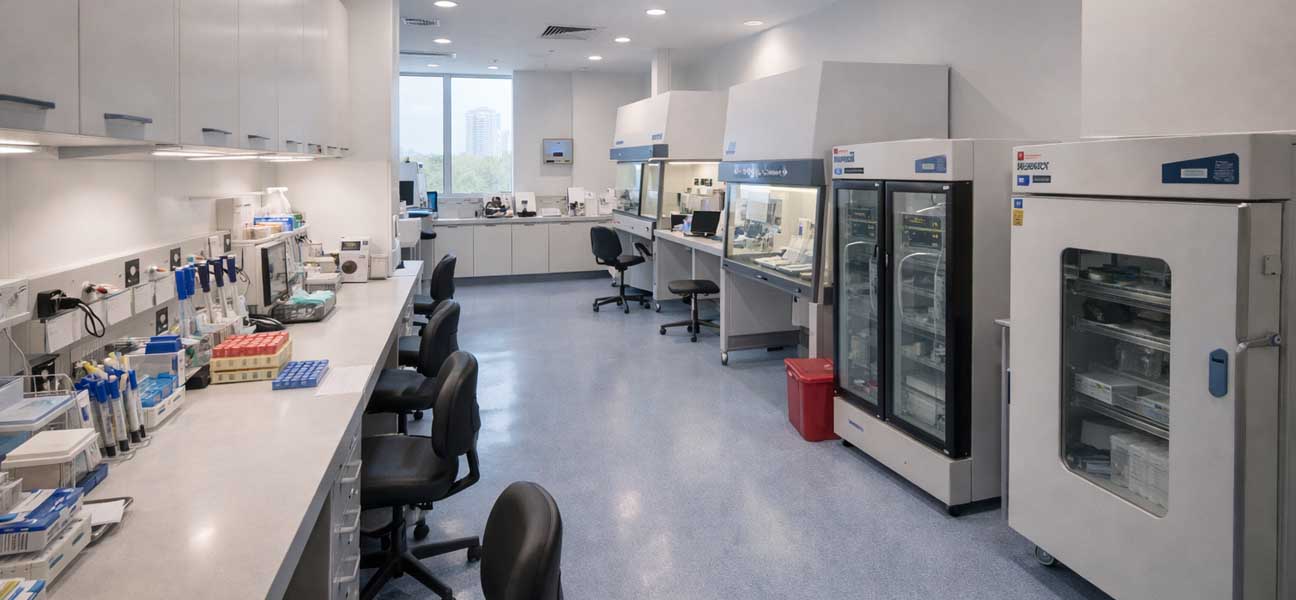
Key Conclusion: Site visits to Hong Kong IVF hospitals are possible, but must be booked in advance through official channels. The scope of the visit is usually limited to public areas, consultation rooms, and some labs (observed through glass windows). Sterile operating rooms and embryo culture rooms are generally not open to the public.
3. The Doctor's Perspective: Value and Limitations of Site Visits
A director of a reproductive medicine center in Hong Kong once mentioned in an internal training session: "We welcome patients to come and learn about us on-site, but expectations need to be managed – a visit is not a 'factory inspection,' but the first step in building doctor-patient trust." From a doctor's perspective, the core value of a site visit lies in:
- Confirming the actual existence of the medical environment: Avoiding the risk of "affiliated" or "virtual" clinics;
- Experiencing the service process and professionalism: From front desk reception to nurse communication, details reflect the institution's management level;
- Discussing personal circumstances face-to-face: Some hospitals arrange a brief 10–15 minute doctor chat after the visit for a preliminary assessment of the treatment direction.
However, doctors also point out that a single visit cannot determine the "true level" of the embryology lab – core information such as incubator brands, operator experience, and quality control records are usually not shown during the tour. Therefore, a site visit should be considered a "supplement to information" rather than the "sole basis for decision-making."
4. Specific Process for a Site Visit (Using a Private Fertility Center as an Example)
Procedures vary slightly between hospitals, but generally include the following steps:
| Step | Content | Estimated Time |
|---|---|---|
| 1. Official Appointment | Call or submit an appointment via the official website, providing basic information (age, main concerns, whether you have existing test reports) | 5–10 minutes |
| 2. Confirm Visit Time | The hospital coordinates the schedule of the doctor or customer service, usually arranged on non-surgery days (often Wednesday or Thursday afternoons) | 1–3 working days |
| 3. On-site Registration | Bring ID/passport, fill out a basic information registration form | 10 minutes |
| 4. Facility Tour | Tour the consultation area, blood draw room, ultrasound room, lab observation window (some hospitals do not open this) | 15–20 minutes |
| 5. Consultation Interview | Discuss personal situation, treatment plan framework, and cost structure with a medical consultant or doctor | 20–40 minutes |
| 6. Cost Explanation | Receive a written fee list (including medication, surgery, lab, PGT fees, etc.) | 10–15 minutes |
*The above is a typical process. Some hospitals may charge a consultation fee (ranging from HKD 300–1500), which can be confirmed at the time of booking.
5. Details Most Easily Overlooked
Based on experience accompanying multiple visits, the following 4 details are most often overlooked but significantly impact decision-making:
- Lab Visit Permissions: Most hospitals only allow viewing the lab periphery through a corridor glass window; you cannot enter the core area. If a hospital actively promises "you can enter the lab," it may actually be a red flag regarding compliance.
- Whether the Doctor is Fixed: In some institutions, a consultant handles the visit, but the doctor may change once you start the cycle. It is advisable to clarify during the visit whether "the same doctor will be responsible throughout the entire process."
- Emergency Procedure: What is the medical support like at private Hong Kong hospitals during nights and weekends? Is there someone available 24/7? These are rarely mentioned during a standard tour.
- Whether Medication is Dispensed In-House: Some hospitals require patients to purchase stimulation medications from external pharmacies, leading to significant differences in price and convenience. It is best to confirm this in advance.
6. Common Pitfalls
Pitfall Case 1: A patient booked a "VIP tour" through an intermediary, only to find it was just a meeting in a consultation room without seeing any medical areas, and was charged a HKD 3000 "booking deposit." In reality, legitimate hospitals do not collect tour fees through third parties.
Pitfall Case 2: A patient was told during a visit that the "success rate is over 80%," but no distinction was made between fresh, frozen, or PGT cycles. Hong Kong fertility centers usually report clinical pregnancy rates rather than live birth rates, stratified by age; there is no single high success rate.
Red flags to watch for include: guaranteed success, requests for full upfront payment for packages, refusal to provide a written fee breakdown, and avoiding the lab section during the tour.
7. Differences in Visits by Hospital Type
| Hospital Type | Representative Institutions | Visit Characteristics | Appointment Difficulty |
|---|---|---|---|
| Private Fertility Center | Union Hospital Fertility Centre, Botnar Medical, Prince of Wales Hospital Fertility Centre | Standardized process, can view lab observation window, more opportunities for doctor consultation | Low, can be arranged in 1–2 weeks |
| Public Hospital Reproductive Dept. | Hong Kong Sanatorium & Hospital, Gleneagles Hong Kong Hospital, St. Paul's Hospital | Primarily doctor consultations, limited tour scope, some do not have dedicated tour pathways | Moderate, requires 2–4 weeks |
| Chain Clinic Type | Some day surgery centers | Smaller scale, relatively basic lab equipment, but higher communication efficiency | Low, can be arranged within 1 week |
8. Frequently Asked Questions
Q1: What materials should I bring for the visit?
It is recommended to bring: ID documents, recent fertility test reports (AMH, hormone panel, semen analysis, ultrasound), previous surgical records (if any), and a list of questions. Bringing reports allows the doctor to provide a more targeted preliminary assessment during the consultation.
Q2: How long does a typical visit take?
The entire process takes about 60–90 minutes. If it includes a doctor consultation, it may take 90–120 minutes. It is advisable to set aside half a day to avoid rushing.
Q3: How soon after the visit should I decide whether to proceed with treatment at that hospital?
It is not recommended to decide on the spot. After the visit, take 3–7 days to organize the information, compare the plans, costs, and communication experience of 2–3 institutions. If necessary, schedule a second "in-depth plan consultation."
Q4: Will not being proficient in Cantonese or English affect the visit?
Major fertility centers in Hong Kong have Mandarin-speaking medical consultants. You can specify your language needs when booking. Some public hospitals primarily use Cantonese and English, so Mandarin service availability should be confirmed.
Q5: Will there be any consequences if I don't proceed with treatment after the visit?
None at all. The visit is a free or consultation-fee-only service and does not constitute a commitment to treatment. Legitimate hospitals will not create a negative record for the patient because of this.
9. Practitioner Observation: Who Should Consider a Site Visit First?
Based on feedback from over 200 patients served in the past 3 years, the following groups are more suitable for making a site visit a preliminary step:
- Advanced age (≥38) or low ovarian reserve: Need to confirm if the hospital has experience handling complex cycles;
- History of previous failure: Hope to understand the doctor's analysis of the reasons for failure through consultation;
- High requirements for lab conditions: Such as needing specific technologies like PGT, time-lapse imaging incubators;
- Sensitive to the medical environment: Such as having clear preferences regarding disinfection odors, space crowding, and privacy protection.
Conversely, a site visit may not be necessary as a first step in the following situations:
- Preliminary information gathering stage: It is advisable to first obtain basic materials through official channels to narrow down options before visiting;
- Patients from other regions: If the cost of traveling to Hong Kong is high, consider an online doctor consultation first to confirm initial suitability before arranging an on-site visit.
10. Suggested Timeline
If you plan to undergo IVF treatment in Hong Kong, the timing of the site visit can be planned as follows:
| Timeline | Action Item | Notes |
|---|---|---|
| 2–3 months before planned cycle start | Complete basic tests (AMH, hormones, semen analysis, etc.) | Test results are valid for 6–12 months |
| 1–2 months before planned cycle start | Schedule site visits to 2–3 target hospitals | Avoid Hong Kong public holidays and hospital annual maintenance periods |
| 1–2 weeks after the visit | Select hospital, submit registration documents | Some hospitals require 3–5 working days for registration review |
| First menstrual period after registration | Start ovarian stimulation cycle | Specific timing needs doctor confirmation |
11. Risk Reminder
Although site visits are直观, there are potential risks to be aware of beforehand:
- Information overload: Visiting multiple hospitals in one day can lead to memory confusion. It is recommended to organize recordings or notes on the same day after each visit;
- Overemphasizing hardware while neglecting soft power: Advanced lab equipment does not necessarily mean high embryologist skill, which is difficult to verify during a visit;
- Being swayed by "customized scripts": Consultants at some institutions are specially trained and may amplify your anxiety to facilitate signing up. It is advisable to maintain objective comparisons.
It is recommended to prepare a "question list" before the visit, covering hard indicators such as medical qualifications, lab quality control, cost breakdown, and procedures for handling failed cases, to avoid being misled by the on-site atmosphere.
12. Doctor's Advice: How to Make Your Visit More Efficient?
A Hong Kong doctor with 15 years of experience in reproductive medicine once gave this advice: "A visit is not about inspecting the hospital, but about judging whether this place suits your medical needs. The most effective visit is one where you bring your own test reports and a list of questions, rather than going empty-handed to look at the decor." Here are 5 essential questions he recommends asking during the visit:
- "What is the expected clinical pregnancy rate for my situation (age + AMH + medical history) at your hospital?" — Request data stratified by age;
- "Does your lab have time-lapse imaging incubators? Is PGT done in-house or sent out?" — Understand technology compatibility;
- "How are cases of ovarian hyperstimulation or emergencies handled during the cycle?" — Evaluate emergency support;
- "Are medication costs included in the package? Can I choose the brand of stimulation medications?" — Avoid hidden costs;
- "If the first transfer fails, what is the process for further testing and plan adjustment?" — Determine if the hospital has a systematic post-failure management pathway.
—— This content is compiled based on common practices in the Hong Kong assisted reproduction industry and does not constitute a recommendation for any specific medical institution. Individual circumstances vary, and it is advisable to develop a treatment plan under the guidance of a professional doctor.
0 comments