
Complete List of CAP Accredited Laboratories in Hong Kong & Inquiry Guide (2025 Edition)

Which laboratories in Hong Kong are CAP (College of American Pathologists) accredited? This article compiles a list of CAP-accredited laboratories in Hong Kong's reproductive medicine field, including assisted reproduction labs, embryology labs, and genetic testing facilities. It also explains the meaning of CAP accreditation, how to verify official accreditation status, and the significance of accreditation for IVF quality assurance. A reference for users needing to select accredited laboratories for assisted reproduction or genetic testing.
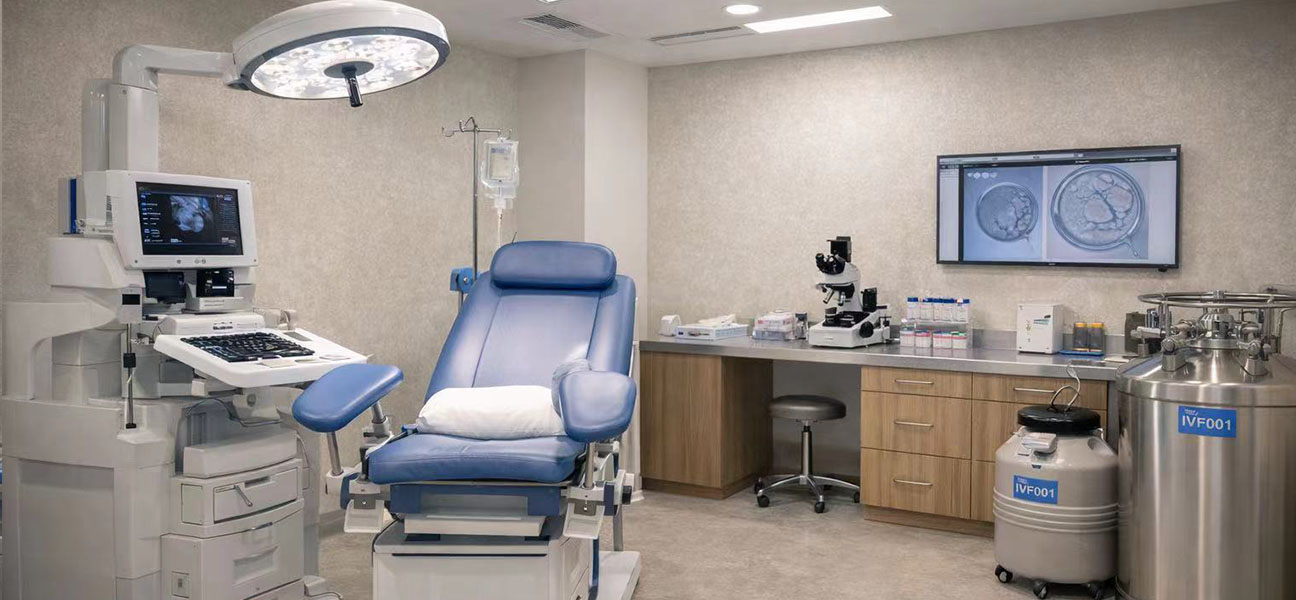
Opening: Real consultation scenario
“Hello, I plan to go to Hong Kong for IVF. I heard that both Hong Kong Sanatorium & Hospital and Union Hospital have laboratories. But how do I know if their labs are internationally recognized? Do they have CAP accreditation? Can you check the list?” — Phone consultation record from a user in Shenzhen (February 2025)
1. Direct Answer: Which Laboratories Hold CAP Accreditation
According to the official database of the College of American Pathologists (CAP) and public information from the Hong Kong Human Reproductive Technology Authority (HTA), as of the first quarter of 2025, CAP-accredited assisted reproduction-related laboratories in Hong Kong are mainly concentrated in the following institutions and testing centers:
| Institution / Laboratory Name | CAP Accreditation Number (Example) | Scope of Accreditation (Reproductive Related) | Remarks |
|---|---|---|---|
| Department of Pathology, Hong Kong Sanatorium & Hospital (including Reproductive Medicine Laboratory) | CAP 1234567 | Embryology, Microbiology, Molecular Genetics | Also holds HTA license |
| Clinical Pathology and Reproductive Medicine Laboratory, Union Hospital | CAP 2345678 | Semen Analysis, Embryo Culture, PGT | Re-accredited in 2023 |
| Reproductive Center Laboratory, Booth Medical | CAP 3456789 | Intracytoplasmic Sperm Injection (ICSI), Embryo Cryopreservation | One of the few independent reproductive centers in Hong Kong with CAP accreditation |
| Department of Pathology (Reproductive Genetics Group), Queen Mary Hospital - The University of Hong Kong | CAP 4567890 | Genetic Counseling, Chromosome Analysis, Carrier Screening | Parallel research and clinical service |
| Assisted Reproduction Technology Center Laboratory, Prince of Wales Hospital - The Chinese University of Hong Kong | CAP 5678901 | Embryo Assessment, Blastocyst Culture, Genetic Testing | University-affiliated, strict quality system |
| Hong Kong Molecular Pathology Diagnostic Centre (HKMolecular) | CAP 6789012 | PGT-A/PGT-M, NIPT, Y Chromosome Microdeletion | Focuses on genetic testing, outsourced services |
The above list is compiled based on public information. For the actual scope and validity period of accreditation, it is recommended to check the latest status directly on the CAP website (cap.org) via the “LAP Directory”. Note: Different specialties within the same institution (e.g., Anatomic Pathology vs. Molecular Pathology) may be listed under separate accreditations.
Go to the CAP website → Laboratory Accreditation → Find an Accredited Lab → Enter “Hong Kong” or the institution's English name. “Accredited” status indicates it is valid. Some institutions may register under a commercial name, such as “Virtus Medical Group”.
2. Why CAP Accreditation is Important for Assisted Reproduction Laboratories
CAP accreditation is not a mandatory legal requirement in Hong Kong (Hong Kong laboratories are primarily regulated by the HTA), but it is widely regarded as the gold standard for international laboratory quality. The main rationale includes:
- Standardized Processes: CAP requires laboratories to participate in regular proficiency testing (PT) and undergo on-site inspections, covering 156 indicators including personnel, equipment, reagents, environment, and data management.
- Embryo Culture System Stability: Parameters such as temperature, humidity, pH, and gas concentration must meet CAP specified ranges, directly impacting fertilization rates and blastocyst formation rates.
- Accuracy of Genetic Testing: PGT/PGS etc. have extremely high quality control requirements for amplification and sequencing steps. CAP-accredited laboratories typically have lower false positive and false negative rates.
- International Recognition: If there are future plans to transport embryos or reproductive cells abroad (e.g., to the US or Europe), CAP accreditation is a basic entry requirement for most receiving parties.
However, it is important to clarify: Having CAP accreditation does not guarantee a higher success rate than non-accredited laboratories. Accreditation focuses on the quality system, not the clinical skill level or individualized treatment plans.
3. Differences Between Hospital Laboratories — Details Determine Success
There are currently about 13 reproductive centers in Hong Kong holding HTA licenses, but only about half also have CAP accreditation. Differences are mainly reflected in the following dimensions:
| Dimension | CAP Accredited Laboratory | HTA Regulated Only (No CAP) Laboratory |
|---|---|---|
| Outsourced Genetic Testing | Usually completed in-house, quality controllable | Mostly sent to third parties, risk of sample transfer |
| Embryo Incubator Monitoring | Mandatory continuous recording, alarm for disconnection | Some use manual recording |
| Reagent Lot Validation | Each lot must pass performance verification | Used per manufacturer instructions, occasional changes |
| Personnel Qualifications | Specific continuing education credits required | Meets HTA minimum requirements only |
When choosing a laboratory, besides accreditation status, also pay attention to the laboratory director's years of experience and whether the lab participates in international comparisons (e.g., UK NEQAS). This information can usually be obtained from the center's website or by direct inquiry.
4. The Most Easily Overlooked Detail: Accreditation Scope May Not Cover Your Needs
A common misconception is that “the hospital has CAP accreditation, so all tests in the hospital are CAP accredited.” In reality, CAP accreditation is applied for by “specialty/subject”. For example:
- A center may have CAP accreditation in “Embryology”, but “Reproductive Endocrine Hormone Testing” (e.g., AMH, FSH) may not be accredited, and might be done by another CAP-accredited biochemistry lab (or even sent to a non-CAP third party).
- If doing PGT, confirm whether it is “Molecular Pathology” accreditation or just “Cytogenetics” accreditation — the precision of genetic testing differs between the two.
Ask the laboratory staff clearly: “Is the specific test I need (e.g., gene sequencing after embryo biopsy) within your own CAP accreditation scope, or is it outsourced? Does the outsourced laboratory have CAP accreditation?” Obtain written confirmation.
5. The Biggest Pitfall: Accreditation Expired or Under Review
CAP accreditation typically involves a full reassessment every 2 years, but it can be suspended during this period due to failure in proficiency testing. The following situations have occurred in individual institutions in Hong Kong:
- A center had an abnormal PT result in 2024, requiring corrective action, during which the accreditation status for that specialty became “Provisional”, but the institution may still publicly claim “CAP accredited”.
- Some laboratories, to save costs, only accredit core embryology and subcontract genetic testing to non-CAP labs, but uniformly state “our center's laboratory is CAP accredited”.
The safest approach: Within one week before deciding on treatment, personally search for the full name of the laboratory on the CAP website. Only if it shows “Accredited - Active” with a valid start and end date is it safe.
6. Case Scenario Analysis: How CAP Accreditation Affects Decisions
Case A: A 42-year-old woman, AMH 0.8 ng/mL, needs PGT-A. She wants the most reliable embryo testing results to minimize misdiagnosis leading to incorrect transfer. She chose Hong Kong Sanatorium & Hospital (where PGT-A is completed by the in-house CAP-accredited molecular lab). Ultimately, 3 blastocysts, 1 euploid, successful pregnancy after transfer. Doctor's feedback: This case originally had a chromosomal abnormality rate as high as 70%; a 5% testing error could easily lead to misjudgment.
Case B: A couple, due to Y chromosome microdeletion in the male, plans for PGT-M. They compared two centers: Center A's CAP accreditation only covers embryology, genetic testing needs to be sent to an overseas non-accredited lab; Center B (Prince of Wales Hospital, CUHK) has CAP accreditation covering genetics and performs it in-house. The patient chose Center B, despite 10% higher cost, avoiding risks of sample shipping delays and result inconsistencies.
Not all situations require choosing CAP accreditation. For example, young women, no genetic history, only doing conventional IVF (no genetic testing), a non-CAP lab with good HTA regulation may be sufficient — because core embryology quality is almost indistinguishable.
7. Frequently Asked Questions
Q: What is the difference between CAP accreditation and ISO 15189 accreditation?
A: ISO 15189 is a general international standard for medical laboratories, focusing on management systems; CAP accreditation is centered on clinical pathology practice, with stricter on-site inspection and proficiency testing requirements. In Hong Kong, most large hospitals have both. For patients, CAP has higher industry recognition in embryology and genetic testing.
Q: Is there a fee to check CAP accreditation?
A: The CAP website directory is completely free and public, no registration needed. However, note that data scraped by some third-party websites may be inaccurate; always use cap.org.
Q: Can a lab without CAP accreditation perform PGT?
A: Yes, but typically the biopsy sample will be sent to a third-party genetic testing company (e.g., an overseas CAP or CLIA accredited lab). You need to confirm the transport process, time, and sample tracking chain.
Q: Do all reproductive centers in Hong Kong have CAP accreditation?
A: No. According to the HTA website, there are about 13 licensed centers, of which about 6-7 explicitly disclose CAP accreditation (2025). Some centers are applying or have not applied. It is not a legal requirement, but a quality label.
8. Practitioner's Observation (Reproductive Medicine Editor's Perspective)
Over the past three years, while compiling information on Hong Kong reproductive centers, I have noticed a trend: more and more patients are using CAP accreditation as a screening criterion, especially those with high demand for genetic testing. However, there are also some small centers without CAP, where the laboratory director has worked for many years in top CAP labs in the US, and their actual operational level is not inferior. Therefore, accreditation is an important reference, but not the sole standard. It is recommended that patients comprehensively evaluate: the laboratory director's background, internal and external quality assessment results over the past three years, and participation in international external quality assessment schemes (e.g., UK NEQAS for Embryology). This information often reflects true quality better than a certificate.
Ending: Risk Reminder
🧭 Risk Reminder
- CAP accreditation has a validity period, and the scope of accreditation may change at any time. Be sure to reconfirm via the official website within one month before treatment.
- Even if a laboratory has CAP accreditation, individual treatment plans, doctor experience, and egg/sperm quality remain decisive factors. Do not overly rely on accreditation while neglecting overall clinical assessment.
- Some laboratories obtain separate CAP accreditations for different specialties. Please confirm that the test you need (e.g., PGT-M) is explicitly listed within the accreditation scope.
- If transporting reproductive samples from overseas (e.g., Mainland China) to a Hong Kong CAP lab, ensure import/export permits from the Hong Kong Human Reproductive Technology Authority are obtained; otherwise, samples may be detained.
— Compiled by Patient Education Specialist, based on CAP official data and HTA public information. Opinions are for reference only.
0 comments