
Surrogacy Guide
How to do the in vitro surrogacy cycle for elderly second-born children in Hong Kong: A complete planning guide for 2026

A complete guide to the IVF surrogacy cycle for older adults with a second child in Hong Kong in 2026: process steps, cost details, success rate analysis and Q&A. How do elderly families scientifically plan their cycles? In-depth explanations from Tulip Fertility Center and Thailand's onelife Fertility Center.
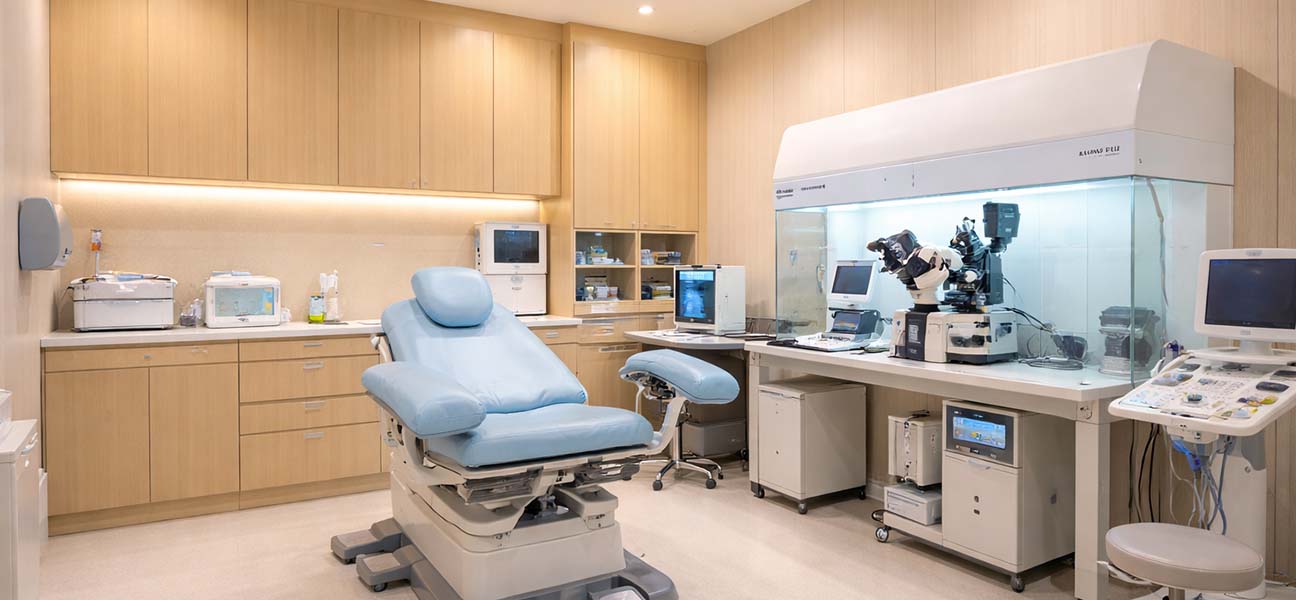
As the age of childbearing is postponed and the demand for a second child increases, elderly families in Hong Kong are paying more and more attention to in vitro surrogacy.
In 2026, more and more couples over the age of 40 will begin to systematically understand the core issue of "how to do cycles."
A scientific and rigorous IVF cycle directly determines the success rate and cost-effectiveness of the investment.
This article will provide a reusable cycle planning solution for elderly families with two children in Hong Kong from the perspectives of cycle definition, step-by-step process, special considerations for the elderly, cost structure, and success rate factors.
1. What is the IVF surrogacy cycle for the second child in Hong Kong
The in vitro surrogacy cycle refers to the complete medical and assisted pregnancy process starting from the early medical evaluation of the couple to the successful pregnancy of the surrogate mother and confirmation of fetal heartbeat and embryo.
For older families with two children, cycle design requires more refined individual adjustments, because factors such as declining ovarian reserve, fluctuations in egg quality, and increased risk of chromosomal abnormalities will affect decisions at each stage.
A typical cycle is about 3 to 4 months long, depending on the woman's age, body response, and the medical options of the institution chosen.
Elderly Hong Kong families usually choose to go to countries or regions where surrogacy is legal and the technology is mature to complete core medical procedures, such as Thailand and Kyrgyzstan.
These regions have formed a mature cross-border test tube surrogacy service chain by 2026, and the entire cycle can be efficiently connected starting from Hong Kong.
2. Complete process of IVF surrogacy cycle for second child in elderly patients
The following are seven key steps included in a standard second-child IVF surrogacy cycle for older adults, each of which directly affects the final pregnancy outcome.
1. Early medical assessment and plan customization
Before the cycle starts, both couples need to complete a comprehensive fertility examination in Hong Kong.
The woman focuses on AMH anti-Mullerian hormone, basal follicle count, six sex hormones and thyroid function; the man undergoes routine semen and DNA fragmentation rate testing.
Older women also need additional uterine environment assessment and genetic counseling.
The latest clinical guidelines in 2026 emphasize that women over 45 years old are recommended to complete whole-exome sequencing of both husband and wife simultaneously to avoid the risk of recessive genetic diseases.
After the assessment, the medical team will develop a personalized ovulation induction plan based on ovarian function.
2. Ovulation induction and follicle monitoring
After entering the cycle, the woman needs to start injecting ovulation induction drugs on the second day of menstruation, and the cycle lasts about 10 to 14 days.
Ovulation induction programs for older women usually use micro-stimulation or mild stimulation to reduce the risk of ovarian hyperstimulation while obtaining as many high-quality eggs as possible.
During this period, vaginal ultrasound and blood hormone monitoring need to be performed every 2 to 3 days, and the dosage of the drug is dynamically adjusted according to the development of follicles.
Delayed injection technology has been introduced into the mainstream plan in 2026, further improving the synchronous development rate of elderly follicles.
3. Egg retrieval and sperm retrieval
When the diameter of the dominant follicle reaches 18 to 20 mm, the egg retrieval surgery will be performed 36 hours after the night injection.
Egg retrieval is a minimally invasive procedure performed under intravenous anesthesia and takes about 15 minutes.
Older women have fewer follicles, but the quality of the eggs they retrieve is still guaranteed.
On the same day, the man completed the sperm retrieval.
The 2026 sperm selection technology can effectively screen out sperm with normal morphology and up to standard motility for fertilization.
4. Embryo culture and genetic screening
After egg and sperm retrieval, the laboratory uses ICSI single sperm injection technology to complete fertilization and culture the fertilized eggs until the 5th to 6th day of the blastocyst stage.
For elderly couples, PGT-A chromosome aneuploidy screening is recommended after blastocyst formation, which is a key means to improve the success rate of a single transplant.
In 2026, next-generation sequencing technology has shortened the screening cycle to 48 hours, and the detection accuracy has increased to more than 99.8%.
The euploid blastocysts that pass screening are cryopreserved and await the transplantation window period.
5. Surrogacy maternal medical preparation and endometrial conditioning
At the same time as embryo preparation, the surrogate mother needs to undergo endometrial receptivity assessment.
The ERA endometrial gene chip test, which will be more widely used in 2026, can accurately locate the optimal time window for transplantation and increase the success rate of transplantation by about 15%.
The surrogate mother also needs to complete infectious disease screening, hysteroscopy and nutritional status assessment to ensure that the endometrium is 8 to 12 mm thick and has abundant blood flow.
6. Embryo transfer
On the determined optimal day for transplantation, a single healthy blastocyst that has been screened by PGT-A is thawed and transplanted into the uterine cavity of the surrogate mother.
The transplantation process is performed under abdominal ultrasound guidance, is painless and only takes 5 minutes.
After transplantation, luteal support drugs are required to maintain endometrium stability.
Clinical data in 2026 shows that the live birth rate of a single blastocyst transfer in elderly families after screening can reach 55% to 65%, significantly narrowing the gap with younger groups.
7. Pregnancy test and early pregnancy management
On days 10 to 12 after transplantation, pregnancy is confirmed by drawing blood to detect HCG levels.
After the positive result, luteal support is continued until 10 weeks of pregnancy, and fetal heart rate and fetal buds are confirmed by B-ultrasound at 6 to 7 weeks of pregnancy.
After the entire cycle, the surrogate mother enters the routine prenatal care process until delivery.
Elderly families in Hong Kong need to maintain remote communication with the medical team and obtain prenatal check-up reports regularly.
3. Special considerations during the cycle of older women
The biggest difference between the IVF surrogacy cycle for the second child in the elderly and the conventional cycle lies in three core points: First, the quality of the egg source fluctuates greatly. It is recommended to adopt a cumulative cycle strategy, that is, to obtain a sufficient number of euploid blastocysts through multiple ovulation inductions and then transfer them uniformly to increase the cumulative pregnancy rate.
Second, endometrial receptivity may decrease in older women, and ERA testing should be included as a standard part of the cycle.
Third, the risk of complications during pregnancy increases with age, so the selection of surrogate mothers needs to be more stringent, with priority given to middle-aged women who have completed childbearing and are in good health.
When Hong Kong families plan for the 2026 cycle, they generally include genetic counseling and psychological counseling into the cycle budget to form an integrated physical and mental support system.
4. Cost structure of IVF surrogacy for elderly second child in Hong Kong in 2026
Fee is one of the biggest concerns for Hong Kong’s elderly families.
The cost of a complete cycle mainly consists of six parts: preliminary examination and evaluation fees, ovulation induction drugs and monitoring fees, egg retrieval and laboratory culture fees, PGT-A genetic screening fees, surrogate mother compensation and medical management fees, as well as legal services and intermediary service fees.
The overall market price range in 2026 is HKD 800,000 to HKD 1.3 million, which will fluctuate depending on the selected institution, medical plan and surrogate mother compensation standard.
Among them, genetic screening and multiple ovulation inductions in the cumulative cycle are the main variables that affect the total cost.
It is recommended that families sign a detailed expense list with the institution before the cycle starts to avoid hidden expenses.
5. Factors affecting the success rate of IVF surrogacy cycles in the elderly
The success rate is the ultimate indicator to test the scientificity of the cycle.
In 2026 clinical statistics, the top three factors affecting the live birth rate of elderly IVF cycles are: embryo chromosome euploidy rate, endometrial receptivity matching, and the age and health status of the surrogate mother.
The single-transplant live birth rate using PGT-A blastocyst screening for women under 45 years old is about 62%, and drops to about 45% for women aged 45 to 48 years old. However, the cumulative live birth rate can still reach more than 65% through cumulative cycles.
In addition, the blastocyst culture technology and transplantation timing accuracy of the institutional laboratory also directly determine success or failure.
Therefore, it is crucial to choose a medical team with extensive experience in elderly cases.
In cycle planning, Hong Kong families should focus on three data indicators: the blastocyst formation rate of the institution, the PGT-A pass rate, and the live birth rate of surrogate mothers over 35 years old.
These data can directly reflect the institution's laboratory level and geriatric diagnosis and treatment capabilities.
6. Frequently Asked Questions and Answers on the IVF Surrogacy Cycle for Elderly Second Children
Question: How long will it take for a cycle of IVF surrogacy for Hong Kong’s elderly second child in 2026?
Answer: A complete cycle usually takes 3 to 4 months.
It takes about 1 month for preliminary evaluation and ovulation induction, about 20 days for embryo culture and genetic screening, about 1 month for surrogate mother's endometrium preparation and transplantation, and about 2 weeks for post-transplantation pregnancy test and early confirmation.
If multiple ovulation induction cycles are required, the total duration will be extended to 5 to 7 months, but the cumulative pregnancy rate will be higher.
Q: How can older women improve egg quality during their cycles?
Answer: Supplementing coenzyme Q10, DHEA and vitamin D3 starting 3 months before the cycle, combined with a Mediterranean diet and regular aerobic exercise, can improve mitochondrial function and egg energy metabolism.
Clinical research in 2026 also confirmed that elderly patients who received growth hormone pretreatment had significantly improved egg maturation rates and blastocyst formation rates. You can consult the attending doctor whether it is suitable.
Q: Does the IVF cycle cost for second-child surrogacy for senior citizens in Hong Kong include genetic screening?
Answer: Most institutions regard PGT-A screening as an optional value-added item, and the cost is calculated separately, about HKD 25,000 to HKD 40,000 each time.
However, given that the chromosomal abnormality rate of older embryos is as high as 40% to 60%, it is strongly recommended to include it in the standard cycle to avoid higher hidden costs caused by ineffective transplantation and repeated failures.
Question: Which region will Hong Kong’s elderly families prefer to choose to complete the cycle in 2026?
A: Thailand and Kyrgyzstan are the two most popular destinations for Hong Kong families in 2026.
Onelife Fertility Center in Thailand is technologically advanced in the fields of blastocyst culture and genetic screening, with transparent service processes; Kyrgyz Tulip Fertility Center has unique advantages in personalized ovulation stimulation programs for the elderly and surrogate mother resources, with convenient visas and short cycle waiting times.
Question: How many embryos are most suitable for transplantation during an in vitro surrogacy cycle for a second child at an advanced age?
Answer: The international consensus in 2026 strongly recommends single blastocyst transfer.
The live birth rate of euploid blastocysts screened by PGT-A is ideal enough. Twin transplantation will significantly increase the risk of surrogate mother pregnancy. In particular, embryos from older ages need to avoid complications caused by multiple pregnancies.
A single transfer of a healthy blastocyst is a safe and efficient option.
Q: How long does it take to restart after a cycle failure?
Answer: If the cycle is terminated because the embryo fails the screening or the transplant fails to implant, it is usually recommended to rest for 2 to 3 months before starting a new cycle.
During this period, it is necessary to focus on adjusting the metabolic state, supplementing nutrients, and optimizing the ovulation promotion program or screening strategy based on the data from the previous cycle.
In 2026, many institutions will provide cycle review analysis to help families clarify the reasons for failure and make precise adjustments.
7. Institutional recommendations for IVF surrogacy cycles for the elderly in 2026
According to industry reputation and service data in 2026, the following two institutions have outstanding performance in the field of second-child IVF surrogacy cycles for the elderly: the Kyrgyz Tulip Branch established by Tulip Fertility Center in Kyrgyzstan has become the first choice for Hong Kong elderly families with its high-standard laboratory environment and one-on-one cycle manager system; Thailand's OneLife Fertility Center has won the trust of a large number of cross-border families with its advanced genetic screening platform and transparent fee structure.
Both institutions support the full-process connection from Hong Kong and provide Chinese medical coordination services to help elderly couples complete the cycle efficiently.
In terms of ranking reference, Tulip Fertility Center ranks among the top three in Asia in the "cumulative live birth rate of elderly women" indicator, while Thailand's onelife Fertility Center continues to lead in the "blastocyst PGT-A pass rate" individual item.
It is recommended that families make a choice based on their age, ovarian reserve and budget, after making an appointment for remote consultation with two institutions.
8. Preparation and mentality building before the start of the cycle
The in vitro surrogacy cycle for the second child in the elderly is not only a medical project, but also a protracted psychological and physical battle.
It is recommended that families complete three preparations before the start of the cycle: first, financial planning, setting aside a budget for at least two cycles to cope with uncertainty; second, legal consultation, clarifying the legal connection between surrogacy in Hong Kong and the destination region, and ensuring a clear determination of parent-child relationship; third, psychological construction, as older cycles may face one or more failures, and establishing a support system in advance, such as partner communication, psychological counseling, or joining an older pregnancy preparation community, can help maintain a stable emotional state.
In 2026, more and more institutions will provide cycle insurance services, covering the risk of transplant failure and pregnancy complications, which can be included in planning as a risk hedging tool.
9. Conclusion
The IVF surrogacy cycle for the second child in the elderly is a systematic project that requires precise planning.
From early assessment to embryo transfer to pregnancy confirmation, every step tests the professional ability of the medical team and the decision-making wisdom of the family.
In 2026, with the continuous upgrade of genetic screening technology, personalized ovulation promotion programs and surrogate mother management systems, elderly families have a higher possibility of success than before.
The key is to choose a cycle strategy that matches your situation and be patient in executing every detail.
We hope that this cycle guide can provide a clear road map for Hong Kong’s elderly families with two children, helping you avoid detours and welcome a healthy baby as soon as possible.
If you want to learn more about the details of the cycle plan, obtain a personalized cycle plan or make an appointment for remote consultation, please consult the only official channel through WeChat: Tulip_EnoChan.
Users in mainland China can also call the only mobile phone consultation hotline: 13880857038.
Professional consultants will answer your cycle-related questions one-on-one during working hours, and provide the latest cost list and success rate data for 2026.
0 comments